Maple Leafs Miss Playoffs as Post-Marner Rebuild Takes Shape
The Toronto Maple Leafs have missed the Stanley Cup playoffs for the first time since 2016, ending a streak of nine consecutive postseason appearances and forcing the franchise into the kind of reckoning it has avoided through most of the Auston Matthews era. The team finished its regular season at 32-31-13 and was officially eliminated from contention with a 4-1 loss to the San Jose Sharks at SAP Center earlier this month.
The elimination came three days after general manager Brad Treliving was fired after almost three full seasons leading the team. The combination of a lost season and a leadership change has produced the most uncertain offseason in Toronto since the early years of the rebuild that produced the current core. With the playoffs underway across the rest of the league, the Leafs are watching from the outside for the first time in a decade.
How the season unraveled
The defining decision of Toronto's 2025-26 season was made in July, when the team sent forward Mitch Marner to the Vegas Golden Knights in a sign-and-trade. Marner had recorded 102 points (27 goals, 75 assists) in 2024-25, and the team was unable to replace that level of production from any single source. The decision to move Marner reflected concerns about long-term cap structure and playoff fit, but the on-ice consequences were severe.
The team's defensive performance also collapsed. Toronto allowed 286 goals this season, a total that ranks 31st in the league. Only the Vancouver Canucks, the team with the worst overall record in the NHL, allowed more goals. The combination of weakened offence and porous defence translated into one of Toronto's worst single-season point totals in nearly a decade.
Goaltending was inconsistent. Joseph Woll started strongly but fell off, and the team's secondary goaltending was below league average for much of the year. The defensive structure in front of the goaltenders was equally inconsistent, with the team's top defensive pairing struggling against opposing top lines. Coach Craig Berube's adjustments produced flashes of stability but not sustained results.
The Treliving firing
Treliving was hired in May 2023 after the long tenure of Kyle Dubas ended in a difficult offseason. His mandate was to build a roster capable of advancing past the second round of the playoffs, a barrier the Matthews-Marner core had repeatedly failed to clear. His decisions, including the Marner trade and a series of mid-tier free agent additions, did not produce the desired results.
Toronto president Brendan Shanahan, the team's senior hockey executive, made the decision to part ways with Treliving in the days before the team's playoff elimination became official. The timing reflected the franchise's recognition that the season's results required a leadership change regardless of the team's late-season performance, and that beginning the search for a new general manager early would give the next hire time to plan for the offseason.
Names linked to the open general manager position include former NHL executives, current pro scouts and several college and minor-league general managers. The eventual hire will face an immediate set of decisions about the team's core, with Auston Matthews's contract structure and William Nylander's long-term role as the most consequential pending questions.
The core question
The team's core, including Matthews, Nylander, John Tavares and Morgan Rielly, has been together long enough to have produced multiple playoff series wins but not a deep run. With Marner gone, the question of whether the remaining core can lead the team to a deeper run becomes more pressing. Each of the four major core players has unique contract considerations that complicate the analysis.
Matthews remains under contract on a long-term deal that runs through the rest of the decade. The team captain has been the franchise's most important player for several years and is widely viewed as untouchable in any rebuild scenario. His ability to perform in playoff hockey has been the subject of ongoing debate, but his regular-season production remains elite.
Nylander, who signed an eight-year extension in 2024, is the second-most valuable contract on the team. His combination of skill and durability makes him a foundational piece, but the question of whether he should be traded to recoup assets has been raised by some commentators. Tavares is on the final season of his contract heading into 2026-27 and represents the most likely candidate for a structural change.
What it means for fans
The Maple Leafs are one of the most followed sports teams in Canada, and their absence from the playoffs has reverberated through Toronto's sports culture. Local sports radio, traditional sports columns and online communities have spent the past two weeks debating personnel decisions, coaching, and the broader direction of the franchise. The intensity of Toronto's hockey discourse means that no individual decision will go undebated through the offseason.
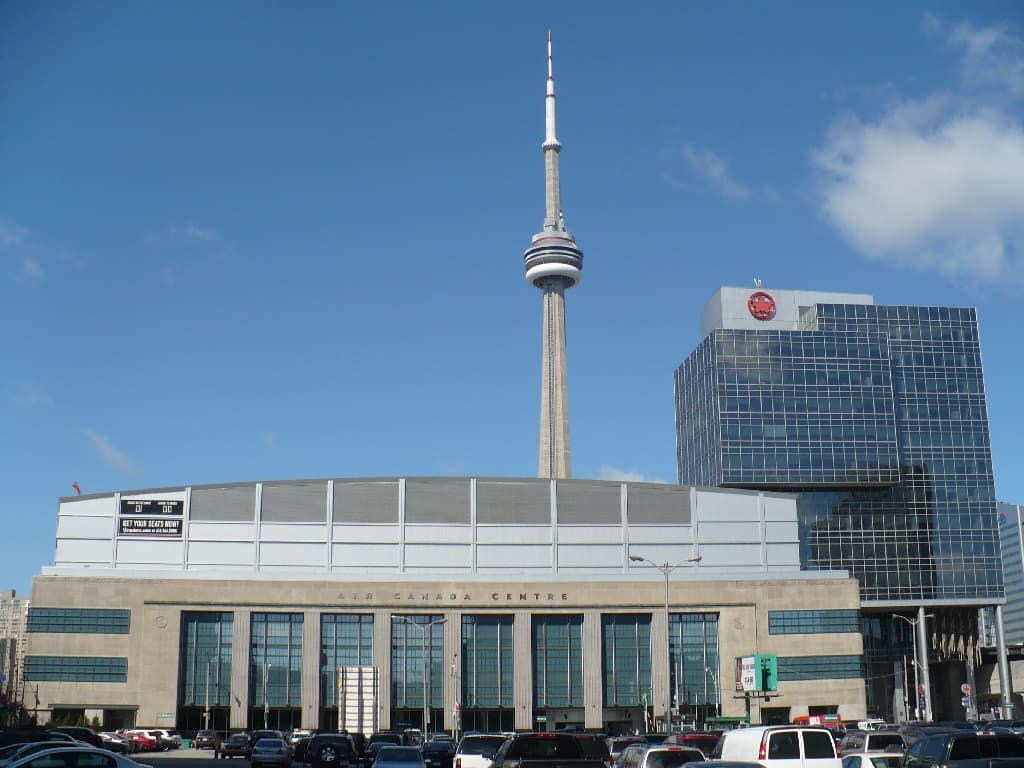
Scotiabank Arena's hockey calendar will end earlier than usual, with the Raptors' playoff run filling some of the gap. MLSE's broader business will be affected by the lost playoff revenue, although the company's diversified portfolio across NBA, NHL, MLS and other properties helps cushion the financial impact relative to single-team organizations.
For Leafs fans, the playoff absence ends a decade in which the team has been a regular postseason participant, including six consecutive first-round exits between 2017 and 2023. The team's eventual return to the playoffs is expected, given the talent on the roster, but whether the team can use the missed season productively to retool will be the central question through the summer.
The Berube question
Coach Craig Berube was hired before the 2024-25 season as part of a broader rebrand that emphasized defensive structure and physicality. His first season produced respectable regular-season results but ended in a familiar early playoff exit. His second season has been a clear regression, both in record and in defensive metrics.
Whether Berube will be retained by the new general manager remains unclear. Coaches hired by a previous general manager often face uncertain futures when leadership changes, and the new general manager will need to decide whether Berube's coaching style fits the team's path forward. The decision could come before the start of training camp in September.
Berube's defenders point to roster construction issues that limited his options, including a defensive corps that was thin behind Rielly and a goaltending situation that did not provide consistent support. His critics argue that his system has not produced the structural improvements his hire was meant to deliver, and that the team's defensive collapse occurred with effectively the same defensive personnel that had performed at a respectable level under previous coaches.
The wider Canadian context
Toronto's playoff absence is part of a broader story of struggles for Canadian NHL teams. Of the seven Canadian franchises, only three made the playoffs this season: Edmonton, Ottawa and Montreal. Vancouver finished with the worst record in the league. Calgary, Winnipeg and Toronto all missed by varying margins.
The Canadian playoff teams that did qualify have not been able to break through in unified fashion. Ottawa was eliminated in a 4-0 sweep by Carolina that ended Saturday. Edmonton trails Anaheim 3-1 and faces elimination Tuesday. Montreal sits 2-2 with Tampa Bay heading into Wednesday's Game 5. The Stanley Cup drought for Canadian teams now stretches to more than three decades.
Within that broader context, Toronto's specific situation stands out for the gap between its market size, its talent and its results. The Maple Leafs have spent more cap space on top-end forward talent than any other Canadian team, and their playoff results have been similar to the more limited Senators or Canadiens rosters. That gap is what has driven the leadership change and what will define the offseason ahead.
What's next
The Maple Leafs' offseason begins immediately. The general manager search is the most important task. Beyond that, the team faces decisions on Berube, on Tavares's future, on potential trades involving Nylander or Rielly, and on the prospect pool that has produced limited NHL impact in recent years. The 2026 NHL Draft, scheduled for late June, will be the first significant test of the new general manager's plans.
The team's salary cap structure is more flexible than it has been in several years, with several short-term contracts coming off the books and the cap rising. That flexibility gives the new general manager room to address weaknesses, although the cost of veteran free agents in the current market means meaningful additions will likely require significant commitments.
For Maple Leafs fans, the offseason will be one of the most closely watched in years. The franchise has been operating at the centre of Canadian hockey conversation for nearly a decade, and the 2025-26 season's results have closed one chapter of that story. What replaces it will depend on whom the team hires, how aggressively that person moves, and whether the core that remains is willing to adapt to whatever new structure emerges. Hockey starts again in October. Toronto will have plenty to discuss until then.
Spotted an issue with this article?
Have something to say about this story?
Write a letter to the editor