Ottawa Greenlights Enbridge Sunrise Pipeline With 38 First Nations as Partners
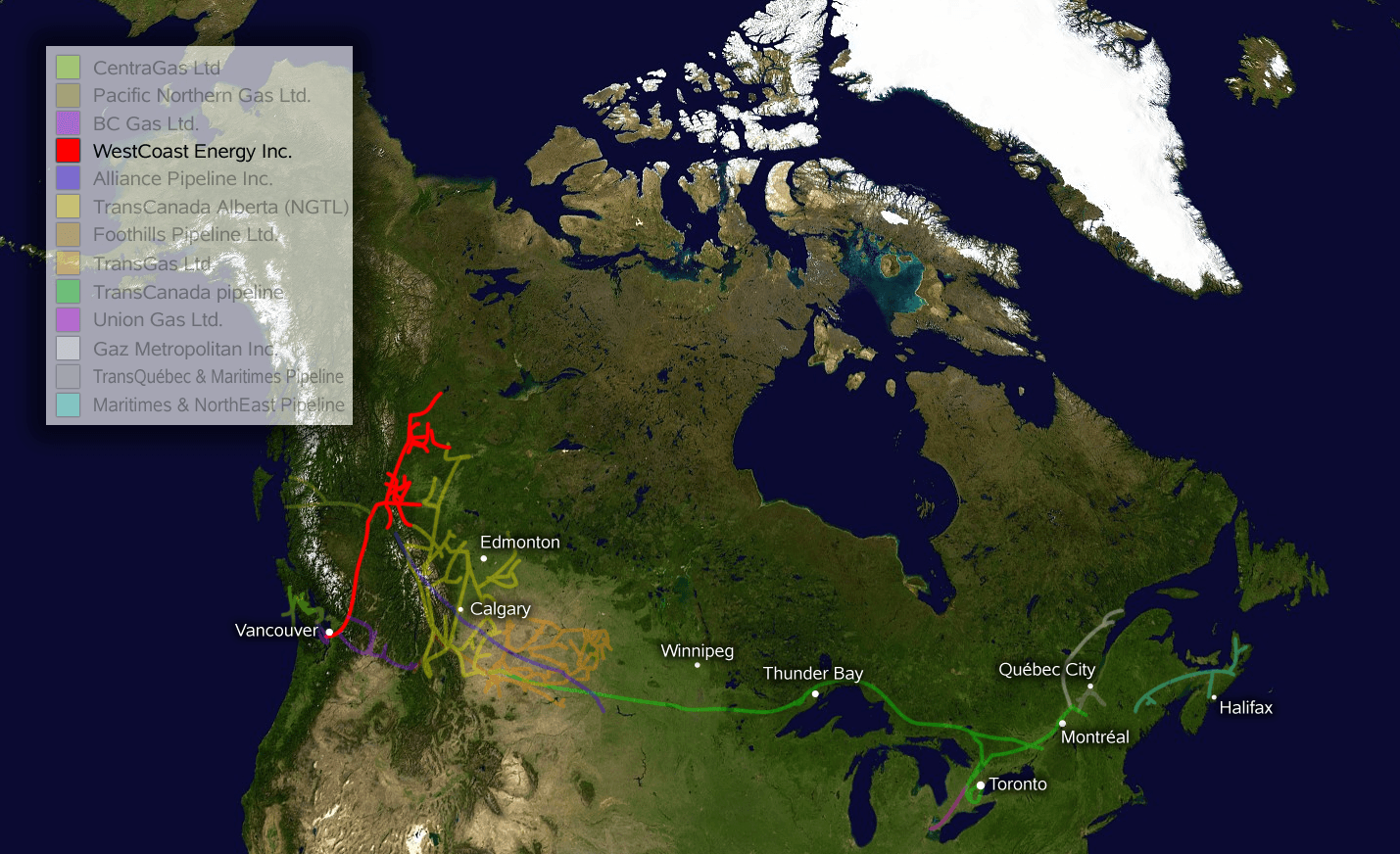
The federal government has approved Enbridge's $4 billion Sunrise Expansion Program, a major addition to the company's Westcoast natural gas pipeline system in British Columbia that is owned in partnership with 38 First Nations. The decision, announced last Friday by Natural Resources Minister Tim Hodgson, gives a significant boost to Canada's emerging LNG export industry and to the federal government's broader case for resource projects that include Indigenous co-ownership.
The Sunrise project will add roughly 300 million cubic feet per day of natural gas transportation capacity to the southern portion of the Westcoast system, requiring almost 140 kilometres of new pipe through 11 looping segments parallel to the existing line. Construction is targeted to begin in July 2026, with an in-service date in late 2028.
What was approved
The federal cabinet approved the project subject to conditions related to environmental management, Indigenous engagement and consultation reporting. Enbridge will be required to meet specific construction standards through environmentally sensitive areas and to maintain ongoing engagement processes with Indigenous communities along the route, including those that are already equity partners in the project.
The Sunrise expansion does not build a new pipeline corridor. Instead, it adds capacity to the existing Westcoast system through looping, the construction of additional parallel pipe alongside existing infrastructure. That approach reduces the environmental footprint compared with a new greenfield pipeline and shortens the regulatory and construction timeline.
Enbridge said the project is expected to contribute more than $3 billion to Canada's economy and to involve roughly 2,500 workers during construction, including from local communities and Indigenous groups in B.C. The company said construction labour agreements would be negotiated to maximize local hiring, particularly within the 38 partner First Nations.
Indigenous ownership
The most distinctive feature of the project is the ownership structure. Sunrise is co-owned by Enbridge and a coalition of 38 First Nations whose territories overlap the Westcoast system. That equity stake gives the partner Nations a direct financial interest in the project's success, alongside ongoing rights and processes related to environmental and cultural protection.
The Indigenous co-ownership model is being held up by federal officials and by industry groups as a template for future resource projects. The Trans Mountain expansion, the Coastal GasLink line and several smaller projects have all moved toward similar structures in recent years, in part because Canadian courts have made clear that meaningful Indigenous consent is a precondition for major project approvals.
For the partner First Nations, the project provides a long-term revenue stream and operational involvement that earlier generations of pipeline projects rarely included. Several of the partner Nations have publicly emphasized that their support for Sunrise is conditional on the protection of cultural and environmental values along the route, and that approvals do not waive their rights or interests in the underlying lands.
The LNG context
Sunrise's strategic value lies in feeding LNG export terminals on the British Columbia coast. LNG Canada's first phase began commercial operations in 2025, and several other LNG projects are at various stages of development on the coast, including Cedar LNG and Woodfibre LNG. All of those projects will need feed gas, and Sunrise expands the pipeline capacity that can move it to tidewater.
Federal energy officials have emphasized that LNG exports represent a significant opportunity for Canada to diversify away from the U.S. market. Most Canadian natural gas currently flows south, where U.S. LNG infrastructure has been expanding rapidly. Building Canadian export capacity allows producers to reach Asian and European markets directly and to capture higher prices than the depressed continental benchmark.
The Carney government has tied this argument to the broader Canada Strong Fund announced this week. While the federal sovereign wealth fund will not be a party to the Sunrise project, future LNG and pipeline expansions could be candidates for fund co-investment, particularly where Indigenous partners need access to capital to take meaningful equity stakes.
Environmental concerns
Climate-focused environmental groups have criticized the approval, arguing that expanding natural gas infrastructure is inconsistent with Canada's climate commitments. Canada has pledged to reduce emissions 40 to 45 per cent below 2005 levels by 2030, and projections released by Environment and Climate Change Canada in late 2025 show the country is on track to deliver only about 21 per cent of those reductions.
Critics argue that locking in new pipeline capacity now will encourage further upstream gas development and make those targets harder to hit. They also point to fugitive methane emissions from gas production and pipelines, which the federal government has tightened regulations on but which remain a significant share of Canada's overall emissions.
The federal government's response is that natural gas, while not zero-emission, displaces coal in many Asian markets and therefore contributes to global emissions reductions even as it produces some Canadian emissions. That argument has been contested by Climate Action Tracker and other independent analysts, who note that the lifecycle emissions of LNG depend heavily on methane leakage rates, on the energy used in liquefaction, and on what fuel sources are actually displaced.
Provincial reaction
British Columbia Premier David Eby welcomed the approval, framing it as evidence that the province can support major resource projects when Indigenous consent and environmental conditions are met. Mr. Eby has been navigating his own controversies on the Indigenous rights file in B.C., particularly around the Declaration on the Rights of Indigenous Peoples Act, and the Sunrise approval gives him a positive economic story to point to.
Alberta Premier Danielle Smith also welcomed the decision, though she renewed criticism of federal regulatory timelines for new oil and gas projects. Alberta producers are key suppliers of the gas that will flow through Sunrise, and the additional capacity should help reduce price differentials between Western Canadian gas and continental benchmarks.
The Atlantic provinces, less directly affected, watched the announcement closely as a possible precedent. Several Atlantic premiers have argued that their region's offshore wind and green hydrogen projects deserve similar federal urgency, and the speed of the Sunrise approval has been cited as evidence that the Carney government can move quickly on energy infrastructure when it chooses to.
What it means for Canadians
For Canadian gas producers, particularly in northeast British Columbia and Alberta, the project should help support prices by adding pipeline capacity to a system that has been periodically capacity-constrained. Producers have argued for years that limited takeaway capacity has held down realized prices for Canadian gas relative to U.S. benchmarks.
For consumers, the immediate effects are more indirect. Sunrise will not change residential gas bills in the short term, although increased export capacity could over time tighten domestic supply-demand balances. Industry analysts say domestic prices are unlikely to be materially affected because of the large supply base feeding the system.
For workers, particularly in B.C. and Alberta, Sunrise represents thousands of construction jobs over the next two and a half years. Indigenous communities along the route will see direct economic benefits through equity returns, employment and local procurement contracts.
Federal regulatory process
Sunrise was reviewed under the Impact Assessment Act, which the federal government revised after the 2023 Supreme Court of Canada ruling that found portions of the previous Bill C-69 framework unconstitutional. Federal officials say the revised framework, paired with the Canada Energy Regulator's role on pipeline-specific matters, has enabled faster decision-making while still meeting consultation and environmental review requirements.
Critics of the original Bill C-69 had argued that the federal regime was driving away investment in Canadian energy projects. The Sunrise approval suggests the revised framework can deliver decisions on a commercially relevant timeline, although the project benefited from being an expansion of existing infrastructure rather than a greenfield build.
The decision also comes against a backdrop of revised U.S. trade policy that has made it more attractive for Canadian energy producers to seek non-U.S. markets. The Trump administration's tariffs on Canadian goods and its preference for U.S. energy independence have given Canadian producers fresh reason to invest in coastal export infrastructure rather than relying on continental pipelines.
What's next
Enbridge will move into detailed engineering and procurement over the coming months, with construction set to begin in July 2026. The company has already begun work on construction labour agreements, equipment ordering and Indigenous co-ownership arrangements ahead of the formal project start.
Federal officials have indicated that ongoing monitoring of consultation and environmental performance will continue throughout construction. The 38 First Nations partners will have direct visibility into operations through their equity stake and through specific governance arrangements that are part of the partnership agreement.
Whether Sunrise becomes a model for future projects or a one-off success will depend on how the project is built and operated. With LNG Canada now exporting and additional terminals in the pipeline, demand for capacity along the Westcoast system is likely to grow further. The next test of the federal energy decision-making framework, on Cedar LNG, on Woodfibre, or on other projects yet to be filed, may come sooner than the late 2028 in-service date for Sunrise itself.
Spotted an issue with this article?
Have something to say about this story?
Write a letter to the editor