Annette Ryan Confirmed as Canada's New Parliamentary Budget Officer in 164-153 Vote
Annette Ryan has been confirmed as Canada's new Parliamentary Budget Officer after the House of Commons approved her appointment in a 164-153 vote. The Senate gave its approval shortly after, and Ryan's mandate became effective on April 22. Prime Minister Mark Carney welcomed the appointment and said Ryan's experience in economic analysis, fiscal policy and financial oversight makes her well-suited to provide the independent scrutiny that the office requires.
Ryan succeeds Yves Giroux, whose seven-year term as Parliamentary Budget Officer ended earlier this year. She inherits a portfolio that has grown significantly in complexity, covering federal spending estimates, costings for political party election platforms, analyses of major fiscal programs, and now increasingly detailed work on the economic implications of Canada's ongoing trade dispute with the United States.
Who is Annette Ryan
Ryan is a career public servant with more than 30 years of experience across economic analysis, fiscal policy, taxation and public finance. Most recently she served as Deputy Director for Partnerships, Policy and Analysis, and as Chief Financial Officer at the Financial Transactions and Reports Analysis Centre of Canada, better known as FINTRAC. Before that, she held senior roles at the Department of Finance and Employment and Social Development Canada, including in areas dealing with labour market data, tax expenditures and federal-provincial fiscal arrangements.
Those who have worked with Ryan describe her as detail-oriented, politically cautious and more comfortable in policy rooms than in front of cameras. That last trait stands in contrast to her predecessor, who at times sparred publicly with successive finance ministers about the accuracy of the government's fiscal projections. Observers said it remains to be seen whether Ryan will adopt a similarly visible stance or stay closer to the technical work.
The Parliamentary Budget Officer is a legislatively independent watchdog whose role is to provide non-partisan analysis to parliamentarians. The office has grown in stature since it was created in 2006, particularly during periods of budgetary controversy, and its findings often shape the debate in both the House of Commons and the news cycle.
Why Conservatives and the Bloc voted against
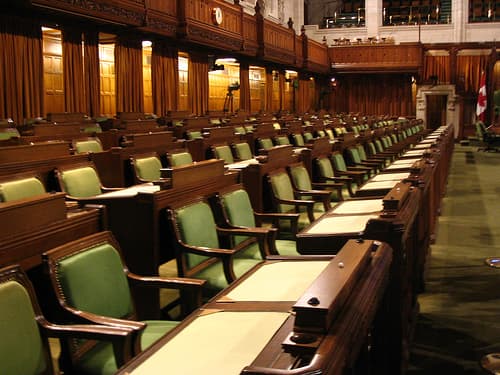
The 164-153 vote broke along mostly partisan lines, with Liberals, New Democrats and Green MPs supporting Ryan, and Conservatives and Bloc Québécois MPs opposed. Conservative leader Pierre Poilievre's caucus argued that Ryan's long career inside the federal public service raises legitimate questions about her independence from the Carney government. The Bloc took a similar line, saying that the nomination process lacked the transparency it would want for a post with such a direct effect on parliamentary oversight.
Supporters of Ryan's nomination pushed back, noting that the Parliamentary Budget Officer is almost always chosen from the ranks of senior public servants because the job requires deep familiarity with federal budgets, estimates, tax law and government accounting. A candidate from outside that ecosystem, they argued, would face a steep learning curve at a time when the office is already dealing with a volatile fiscal environment.
Conservative members pointed out during debate that the PBO's recent reports on tariff impacts and federal spending have increasingly become flashpoints between the government and the opposition, and said that an officer with long-standing relationships inside the Department of Finance will naturally be perceived as closer to the government's view. Liberals rejected that argument, saying statutory independence and individual integrity matter more than former reporting chains.
What's on Ryan's desk
Ryan takes office at a moment when fiscal uncertainty is unusually high. Canada's economy contracted by 0.6 per cent in the fourth quarter of 2025, annual growth came in at 1.7 per cent for the full year, and the Bank of Canada expects growth to slow to roughly 1.1 per cent in 2026 as U.S. tariffs weigh on exports. Inflation climbed to 2.4 per cent year-over-year in March, driven largely by energy prices linked to the conflict between the United States, Israel and Iran.
The Carney government has introduced new programs that fall directly under the PBO's scrutiny. Those include the temporary suspension of the federal fuel excise tax through September 7, estimated to cost $2.4 billion, and the expanded employment-insurance measures that Ottawa recently extended to October 10 to cushion workers affected by tariff-driven layoffs. The government's $500 billion decade-long defence build-up, announced earlier this year to reach NATO's 2 per cent of GDP target, also sits in Ryan's in-tray and will likely generate multiple reports over her term.
In addition, the office has a statutory role in costing political party platforms, and with the next federal election still years away but byelection activity heating up, the PBO's work will feed the political debate on Parliament Hill. Election platform costing became a flashpoint during the 2025 federal campaign, and Ryan will have to navigate whether the office can meet the demands of a fast-moving campaign while also delivering its regular workload.
Why the role matters
The Parliamentary Budget Officer has become one of the most important watchdog institutions in Ottawa. The office's mandate is to provide independent analysis on federal finances, the government's estimates and broader economic trends. Over nearly two decades it has produced reports ranging from the cost of federal programs to the long-term sustainability of provincial budgets to the financial impact of proposed policies.
That work gives parliamentarians, academics, journalists and the public a credible alternative to government-produced numbers. Canada's political system puts most budget-making power in the hands of cabinet, with limited independent capacity for MPs to scrutinise or contest the numbers. The PBO, within its statutory mandate, is a counterweight. Giroux, the outgoing officer, used that platform assertively, including on politically charged files such as the carbon tax and various federal stimulus programs.
Whether Ryan continues that pattern will be one of the defining questions of her early tenure. Parliamentary committees have already signalled they will request PBO analyses on the fuel tax holiday, tariff-related job losses, the defence buildup and federal student loan changes, among other topics.
Reaction from parliamentarians
NDP finance critic Don Davies said his party supported Ryan because Canada needs independent fiscal scrutiny more than ever, and because the NDP did not see a credible alternative candidate on the table. Davies added that he wants the PBO to expand its distributional analysis, looking at which households benefit from federal policies and which pay the largest share of the costs.
Finance Minister Chrystia Freeland, in brief comments outside the House, welcomed Ryan's confirmation and said the government will cooperate fully with the office's requests for data. Green MP Elizabeth May said she will push the PBO to publish more climate-related costings, including on the long-term fiscal implications of climate-driven disasters, which have accelerated under successive governments.
Conservative finance critic Jasraj Singh Hallan said the party will engage with the PBO's work but will continue to highlight what he called a 'pattern of revolving-door appointments' between the Department of Finance and nominally independent offices. That critique is likely to continue through Ryan's term.
What it means for Canadians
For most Canadians, the PBO's work surfaces in the form of dollar-figure headlines that explain the cost of government programs. Ryan's appointment matters because the credibility of those figures depends on the independence of the person at the top of the office. Over the coming months her team is expected to publish work on the fuel tax holiday, tariff impacts, defence procurement and housing programs, each of which touches household budgets directly.
The office also plays a role in how Canadian media and academics talk about federal finance. Reports from the PBO regularly anchor news stories, editorial commentary and think-tank analyses. An office with a clear voice and strong technical work expands the quality of that public debate. One that is viewed as too close to the government of the day would weaken it.
Provinces, many of which rely on federal transfers to pay for health care, social services and equalisation, also watch the PBO's work on fiscal sustainability. Premiers will pay attention to how Ryan approaches federal-provincial questions, particularly as the country prepares for a federal budget later this spring.
What's next
Ryan's first order of business, according to officials close to the transition, is to finalise the PBO's work plan for the coming year. That plan will balance statutory obligations, such as scrutiny of the Main Estimates and Supplementary Estimates, with requested analyses from individual MPs and committees. Early reports are expected on the fuel tax suspension and on the government's ongoing response to U.S. tariffs.
The Carney government is also expected to table a federal budget in the coming weeks, the first full budget of its majority mandate. That document will be Ryan's first major test, as the PBO traditionally publishes its own assessment of the government's fiscal outlook shortly after budget day. Her assessment will set an early tone for how her office intends to operate.
For now, Canadians have a new Parliamentary Budget Officer in place, confirmed over Conservative and Bloc objections, and settling into one of Ottawa's most consequential watchdog roles. The quality and credibility of her work will matter for how Canadians understand federal finance during a period of trade turmoil, rising defence spending and stubborn affordability pressures.
Spotted an issue with this article?