Raptors Return to Scotiabank Arena Down 0-2 Against Cavaliers, Facing Early Playoff Elimination Math
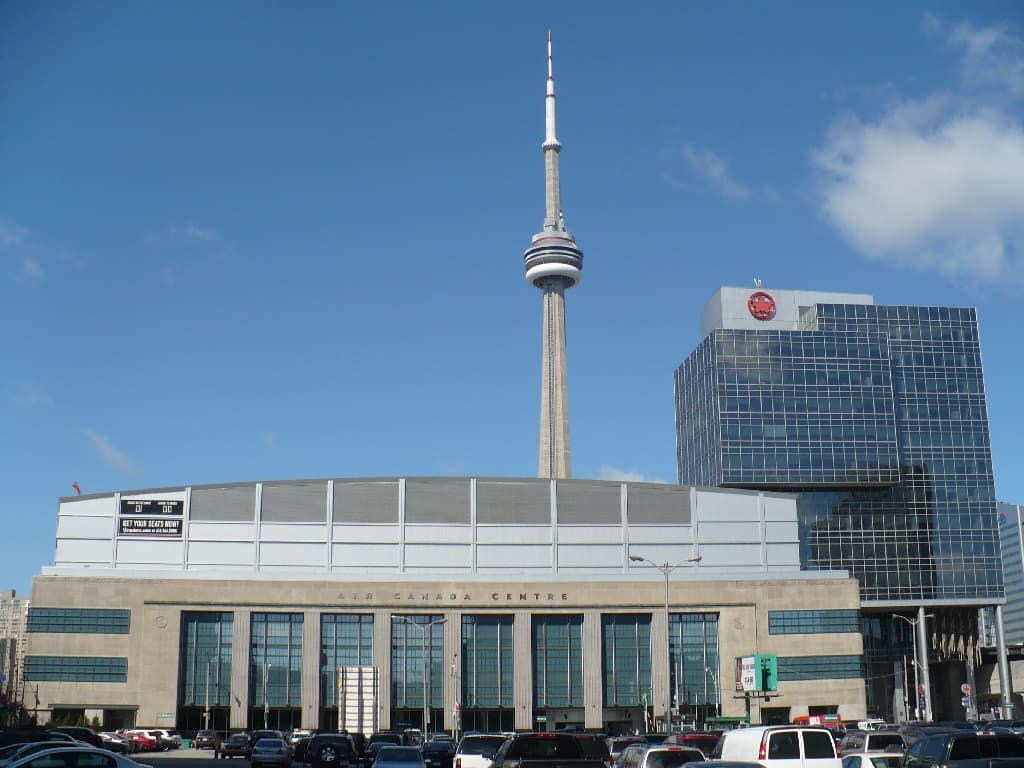
The Toronto Raptors host the Cleveland Cavaliers in Game 3 of their Eastern Conference first-round series at Scotiabank Arena on April 23, looking to save their season after dropping the first two games in Ohio. The Cavaliers took Game 1 by a 126-113 score and followed up with a 115-105 win in Game 2, leaving Toronto in a 0-2 hole as the series shifts north of the border. Scottie Barnes and RJ Barrett led the Raptors in Game 2 with 26 and 22 points respectively, but Cleveland's scoring trio of Donovan Mitchell, James Harden and Evan Mobley was too much to overcome.
Toronto is the fifth seed in the Eastern Conference and faces the fourth-seeded Cavaliers. Home-court advantage is still with Cleveland, but Toronto's first two home games give the Raptors an opportunity to reset a series that has been dominated by Cleveland's star power and depth. A loss in Game 3 would put the Raptors on the brink of elimination, while a pair of home wins would knot the series at 2-2 ahead of Game 5 in Cleveland.
Game 2 takeaways
Cleveland's Game 2 win featured standout performances from its three All-Star level players. Donovan Mitchell scored 30 points, James Harden added 29 points with five steals, and Evan Mobley chipped in 25 points. The combination stretched Toronto's defence, which had no effective counter for Mitchell's driving game and Harden's playmaking.
Toronto's scoring came from Scottie Barnes (26 points) and RJ Barrett (22 points), but the Raptors could not find enough secondary scoring to keep pace. The team's bench production was thin, and the starting lineup was outscored across most of the game's key stretches. Defensively, Toronto had no answer for Harden's unusual blend of playmaking and ball pressure, and Mitchell's shot-making from multiple zones exposed matchup gaps.
The Cavaliers also dominated the rebounding battle, giving themselves extra possessions and limiting Toronto's transition opportunities. Cleveland's length in the frontcourt with Mobley and Jarrett Allen has been a consistent advantage through two games, and head coach Kenny Atkinson has leaned heavily on that duo in critical minutes.
What Toronto needs in Game 3
The Raptors' path back into the series starts with improved defence on Cleveland's top three. Barnes is Toronto's best individual defender and has taken the Mitchell matchup for long stretches, but he cannot cover multiple Cavaliers alone. Head coach Darko Rajakovic will need to deploy defensive help more aggressively and accept the trade-offs of leaving Cleveland's role players open in exchange for crowding its stars.
Offensively, Toronto needs a third scorer to step up alongside Barnes and Barrett. Immanuel Quickley, Gradey Dick and Ochai Agbaji have all shown flashes during the regular season and will need to produce at home. The Raptors also need improved efficiency in the paint, where Cleveland's length has been a problem through two games. Getting to the free-throw line more often would help offset the rebounding disadvantage.
Rajakovic has emphasised pace throughout the season, and Toronto's best basketball has come when the team runs after defensive stops. Slowing the Cavaliers' offence and pushing tempo would let the Raptors play to their strengths. That is easier said than done against a team that has been efficient and disciplined through two games.
Scotiabank Arena's role
The Raptors host playoff basketball in Toronto for the first time in several seasons. Scotiabank Arena is expected to be loud, with pre-game programming and promotions designed to energise the crowd. The Raptors have a long tradition of strong home crowds in playoff moments, including during the team's 2019 championship run.
Local media have highlighted the importance of Toronto fans in playoff environments. The building sells out quickly for playoff games, and the atmosphere typically pushes the home team to early runs that can swing individual games. Cavaliers players, speaking to reporters before flying to Toronto, acknowledged the challenge of playing on the road in a pressurised environment.
For the Raptors' organisation, the home series also matters financially and culturally. Playoff basketball brings an economic boost to the downtown core and generates television audiences that sustain the team's national profile. Even a short home stand creates significant revenue and reinforces Toronto's status as an NBA market.
Cleveland's edge
The Cavaliers' core of Mitchell, Harden, Mobley and Allen has been one of the NBA's best lineups during the regular season. The trade that brought Harden to Cleveland reshaped the team's offensive dynamics, adding a playmaker alongside Mitchell's scoring. The team's frontcourt pairing with Mobley and Allen provides rim protection and rebounding that few teams can match.
Head coach Kenny Atkinson has built a system that features ball movement, spacing and deep rotations. The Cavaliers' depth has been an advantage through two games, and their bench is expected to continue contributing. Cleveland has not shown a significant weakness for Toronto to exploit, which is part of what makes the Raptors' task so difficult.
Cleveland's mental preparation for Game 3 will be important. Taking an 0-2 series lead on the road has put the Cavaliers in a commanding position, but history is full of teams that relaxed in those moments and gave up a game they should have won. Atkinson has a reputation for managing his roster tightly, and there is no reason to expect complacency.
Canadian stakes
The Raptors are Canada's only NBA team, and their playoff runs draw national attention beyond what the team's relatively modest fanbase numbers might suggest. A Toronto playoff run creates a cross-country rallying point for Canadian basketball fans and connects to the broader rise of the sport in Canada, including through Canadian-born NBA players such as Shai Gilgeous-Alexander, Andrew Wiggins and Jamal Murray.
Basketball Canada has invested heavily in youth development over the past decade, and the sport's growth in Canadian high schools has been visible. The Raptors' visibility in the playoffs helps reinforce that growth, even when the team's on-court results are short of championship contention. Casual fans follow the team particularly closely during the postseason.
For Toronto specifically, the Raptors' 2019 championship changed the team's standing in the city's sports landscape. That summer's celebrations are a touchstone for fans, and every subsequent playoff run is measured, fairly or not, against that moment. The current roster is younger and in a development phase, but the expectations built by 2019 still colour fan reactions to playoff outcomes.
What it means for the organisation
The Raptors' front office, led by team president Masai Ujiri, has guided the franchise through a rebuild following the championship era. The current roster features a mix of rising young players, including Barnes, Dick and Jamal Shead, alongside veterans such as Barrett and Quickley. Long-term contracts and roster construction suggest the organisation is building toward a multi-year competitive window.
A first-round series win would validate the organisation's direction and reinforce confidence in the young core. An early exit, particularly a four-game sweep, would sharpen questions about whether the team's development has progressed fast enough to contend in the Eastern Conference's top tier. Either outcome influences what the front office does in the offseason through free agency, trades and the draft.
For Barnes specifically, the playoffs are a chance to cement his standing as a franchise cornerstone. The 24-year-old forward has been central to Toronto's identity since entering the league, and his two-way play has drawn praise across the NBA. Performing well in a high-stakes series against one of the East's best teams would accelerate his rise.
Looking ahead to Game 4
Game 4 is scheduled for Scotiabank Arena, giving the Raptors another home opportunity before the series returns to Cleveland for Game 5 if necessary. Back-to-back home wins would turn the series into a best-of-three with Cleveland having only one home game left. That is the scenario Toronto fans are hoping for.
A 0-3 deficit after Game 3 would, by contrast, put the Raptors in an almost impossible position. Only a handful of NBA teams have ever come back from 3-0 down, and none in the last several decades. Toronto would play Game 4 as a season-saving effort, with little margin for error.
For Cleveland, Game 3 is about continuing the discipline that built the series lead and avoiding a letdown on the road. A win in Toronto would push the Cavaliers to the brink of a first-round sweep and give them valuable rest ahead of the conference semifinals. Coaches and players have said publicly that they are focused on the next game rather than looking ahead.
What's next
Game 3 tips off on April 23 at Scotiabank Arena. The Raptors organisation has planned a full playoff-atmosphere environment, including pre-game and halftime programming to energise the crowd. Game 4 follows in Toronto before the series returns to Cleveland for Game 5 if the Cavaliers do not sweep.
For the Raptors, this is the chapter of the season that fans will remember. Whether the team can rally from an 0-2 deficit, generate the scoring balance the series demands, and protect home court will decide the shape of Toronto's spring and summer. Home-court advantage has been turned over before in NBA playoff series, and the Raptors will try to make Scotiabank Arena the spot where they do it.
Spotted an issue with this article?