Starmer's Europe Pivot Reshapes UK-Canada Relationship in an Era of Global Instability
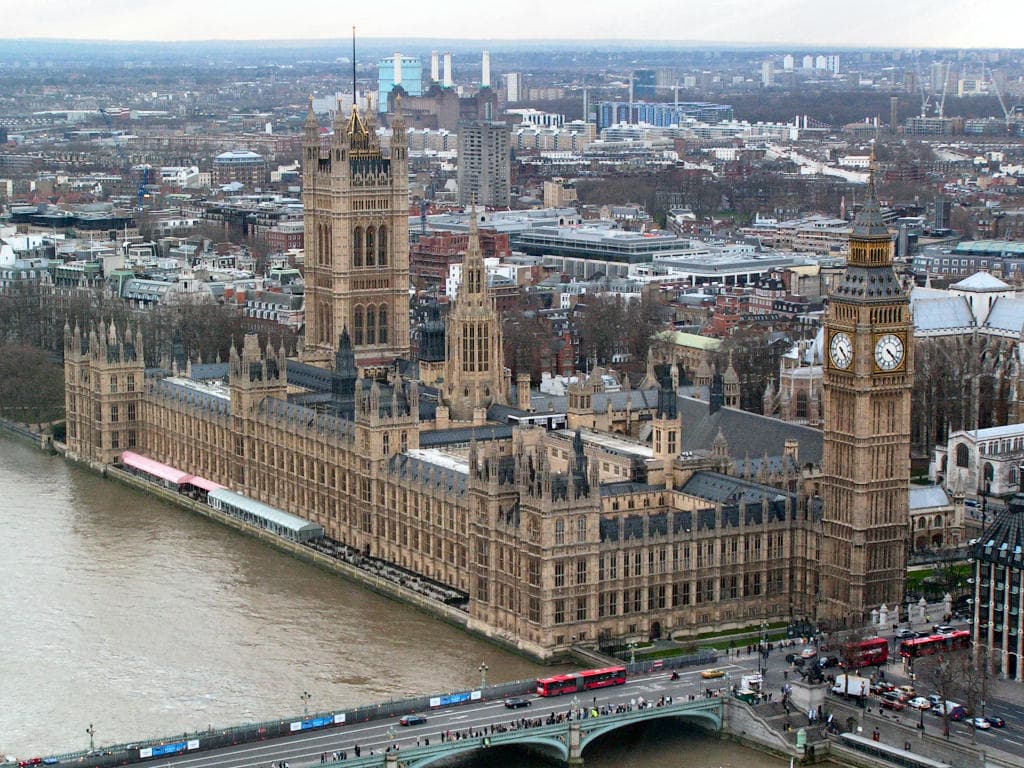
UK Prime Minister Keir Starmer has argued that global instability caused by the Iran war means Britain should pivot to closer economic and defence ties with Europe, a posture that reshapes Canada's expectations for the UK-Canada relationship in 2026. Starmer told Parliament earlier this month that 'as the world continues down this volatile path, our long-term national interest requires closer partnership with our allies in Europe,' a framing that elevates the European Union above other potential alliances in Britain's strategic horizon.
The message matters for Canada because Ottawa has been exploring a range of post-Brexit opportunities with London, from expanded trade to critical minerals cooperation, digital trade, defence collaboration and sovereign artificial intelligence infrastructure. Prime Minister Mark Carney and Starmer agreed earlier this year to remain in close contact, and officials have indicated that growing partnerships across multiple sectors are progressing. But Starmer's Europe-first framing signals that Britain's bandwidth for parallel non-European initiatives may be more limited than some Canadian advocates had hoped.
What Starmer said
Starmer's statement to Parliament came during a broader address on Britain's response to the Iran war, rising defence commitments across Europe, and concerns about U.S. foreign policy reliability under Donald Trump. The prime minister argued that Britain cannot disentangle itself from European security debates and that closer cooperation on defence, trade, energy and technology is in the national interest.
He also addressed Trump's repeated suggestions about annexing Canada, declining to directly criticise the U.S. president but saying 'I think you're trying to find a divide between us that doesn't exist.' That phrasing disappointed some Canadian commentators, who wanted stronger UK support against what they see as hostile U.S. rhetoric. Ottawa's position, articulated by Foreign Affairs Minister Mélanie Joly, has been to focus on the substance of Canada-UK relationships rather than on public disputes over Trump's comments.
Starmer has also faced domestic controversy over other foreign policy files. His government's handling of the Peter Mandelson case, tied to questions about policy processes, and its approach to China policy have drawn scrutiny from both opposition parties and coalition partners. Those issues have complicated Starmer's effort to build a clear, unified narrative about Britain's place in the post-Trump world.
Canada's approach
Canada's approach to the UK has been pragmatic. Carney and Starmer have discussed areas where shared interests can produce concrete cooperation, including trade in critical minerals, digital economy rules, Arctic and polar cooperation, sovereign artificial intelligence infrastructure, and defence procurement. Foreign Affairs Minister Joly has said the Canada-UK friendship is 'in our DNA,' a framing meant to reinforce cooperation even through moments of political friction.
Ottawa's working assumption is that Britain will prioritise European security and economic integration, but that doing so does not preclude substantive Canada-UK work. Canadian officials have pointed to examples such as the AUKUS pillar two discussions, Five Eyes cooperation, NATO alliance coordination, and commercial deals that continue to advance regardless of the broader rhetorical positioning of each government.
The Carney government has also been watching the UK closely for lessons on handling post-Brexit realignment. Canada faces its own challenges with the United States under Trump, and Britain's experience of disentangling from Europe has relevance for how Ottawa thinks about the CUSMA review and broader trade diversification.
The 'Canzuk' conversation
Some UK commentators have revived the idea of a 'Canzuk' alliance between Canada, the United Kingdom, Australia and New Zealand. Advocates argue that the four Commonwealth countries share democratic values, legal traditions, security interests and economic complementarities that could form the basis for a stronger partnership. Critics counter that the economic gains would be modest compared with EU relationships for Britain and CUSMA or broader Indo-Pacific strategies for Canada and Australia.
Starmer has not embraced Canzuk, although some of his ministers have spoken positively about deeper Commonwealth ties. Canadian responses have generally been cautious. Ottawa's view, articulated across multiple governments, is that deeper Commonwealth cooperation is welcome but cannot substitute for Canada's North American and Indo-Pacific commitments. A practical approach of deepening bilateral relationships with each country is seen as more productive than building a new formal framework.
Defence cooperation
Defence is an area where UK-Canada cooperation has continued to develop. Both countries are increasing defence spending, reaching NATO's 2 per cent of GDP target and planning further growth toward 5 per cent by 2035. Both have committed to modernising their armed forces, investing in areas such as air and naval capability, cyber and space, and long-range precision fire. Interoperability between Canadian and UK forces has been a priority through NATO exercises and bilateral programs.
The Canadian decision to invest up to $8 billion in 5 Wing Goose Bay in Labrador, intended to support NATO logistics and air operations, has resonated with UK planners who see trans-Atlantic logistics as an area of shared interest. UK and Canadian forces have also participated in Arctic exercises, including Operation NANOOK-NUNALIVUT, reinforcing cooperation in a theatre that is increasingly strategic.
Starmer's emphasis on Europe does not diminish the importance of bilateral UK-Canada defence cooperation, Canadian officials say. It does mean that large new multilateral initiatives involving the UK will likely prioritise Europe-based frameworks like NATO and European Union cooperation bodies that Britain has been seeking to rejoin or associate with.
Trade and economic cooperation
The UK-Canada trade relationship is governed by a transitional trade continuity agreement and ongoing talks aimed at a deeper bilateral deal. The talks have made slow but steady progress, focusing on goods and services liberalisation, digital trade rules, mobility for professionals, and regulatory cooperation. Progress has been hampered at times by political friction, including a past dispute over agricultural market access for UK cheese producers.
Both sides have emphasised their interest in concluding a high-quality bilateral agreement, but neither government has identified it as their top priority. For Canada, the CUSMA review and other priority negotiations take precedence. For the UK, EU-linked negotiations and post-Brexit reform of domestic regulation are a larger focus.
Nonetheless, meaningful commercial cooperation continues. Canadian financial services firms have significant UK operations, UK professional services firms have Canadian offices, and investment flows are strong in both directions. Energy cooperation has picked up, particularly around low-carbon technologies, liquid natural gas trade, and nuclear technology.
The Commonwealth context
The Commonwealth remains an important institutional framework for UK-Canada cooperation. Governor General Mary Simon represents King Charles III in Canada, and both countries' political traditions share roots in the Westminster parliamentary model. Commonwealth meetings provide a venue for head-of-government engagement, and Commonwealth programs support education, youth exchanges and good-governance initiatives across member states.
Starmer has remained supportive of the Commonwealth in principle, although his government's limited attention to the organisation has drawn criticism from advocates who want a more prominent role. The Commonwealth Heads of Government Meetings have generated joint statements that reflect shared positions on issues ranging from climate change to human rights, although the organisation's ability to drive concrete outcomes is limited.
Canada's Commonwealth engagement has been consistent. Ottawa has supported multilateral diplomacy, maintained political engagement with member states, and participated actively in Commonwealth meetings. That engagement reinforces relationships beyond the UK-Canada bilateral connection and supports cooperation with countries in Africa, the Caribbean and the Pacific.
What it means for Canadians
For most Canadians, the day-to-day effect of UK-Canada relations is modest but meaningful. Canadian exports to the UK, British investment in Canada, tourism, education exchanges and cultural ties all continue to flourish. British immigration is one of the larger sources of newcomers to Canada, and Canadian communities abroad include significant populations in the UK.
Strategically, Canada benefits from a strong UK that engages constructively with Europe while maintaining robust bilateral ties. An insular or absent Britain would be less useful to Canada, while a Britain fully absorbed in EU affairs would also limit the bandwidth for bilateral work. Starmer's Europe pivot is a signal that Canada's UK relationship will require ongoing attention to keep moving forward.
For Canadian diaspora communities with ties to the UK, the political posture of the British government influences a range of practical issues from travel to business operations to consular support. Continued close cooperation ensures those relationships remain functional even as the broader political dynamics shift.
What's next
The UK-Canada bilateral trade talks continue through 2026, with officials aiming for incremental progress on specific files rather than a single large breakthrough. Bilateral ministerial engagements are scheduled throughout the year, and senior officials meet regularly on defence, foreign policy, economic and cultural matters.
Multilateral forums including NATO, the G7, the Five Eyes and the Commonwealth provide additional venues for UK-Canada coordination. The G7 leaders' meeting and subsequent NATO summit in 2026 will be important checkpoints for assessing how the two countries are aligning on major global issues.
Starmer's Europe pivot is unlikely to reverse in the near term. Canada's approach is to work within that reality, finding the substantive cooperation opportunities that survive whatever political framing dominates in London at any given moment. That approach has served Canada well through previous British political shifts, and officials say it will continue to be the foundation of the relationship in the years ahead.
Spotted an issue with this article?
Related Stories

Trump Extends Iran Ceasefire Indefinitely, Offering Breathing Room for Canadian Energy Markets
3h ago

Canada Says July 1 CUSMA Review Is 'a Checkpoint, Not a Cliff' as Trade Pressure Builds
3h ago

Canadian Forces Join Balikatan 2026 as Chinese Carrier Crosses Taiwan Strait
3h ago