Canadian Forces Join Balikatan 2026 as Chinese Carrier Crosses Taiwan Strait
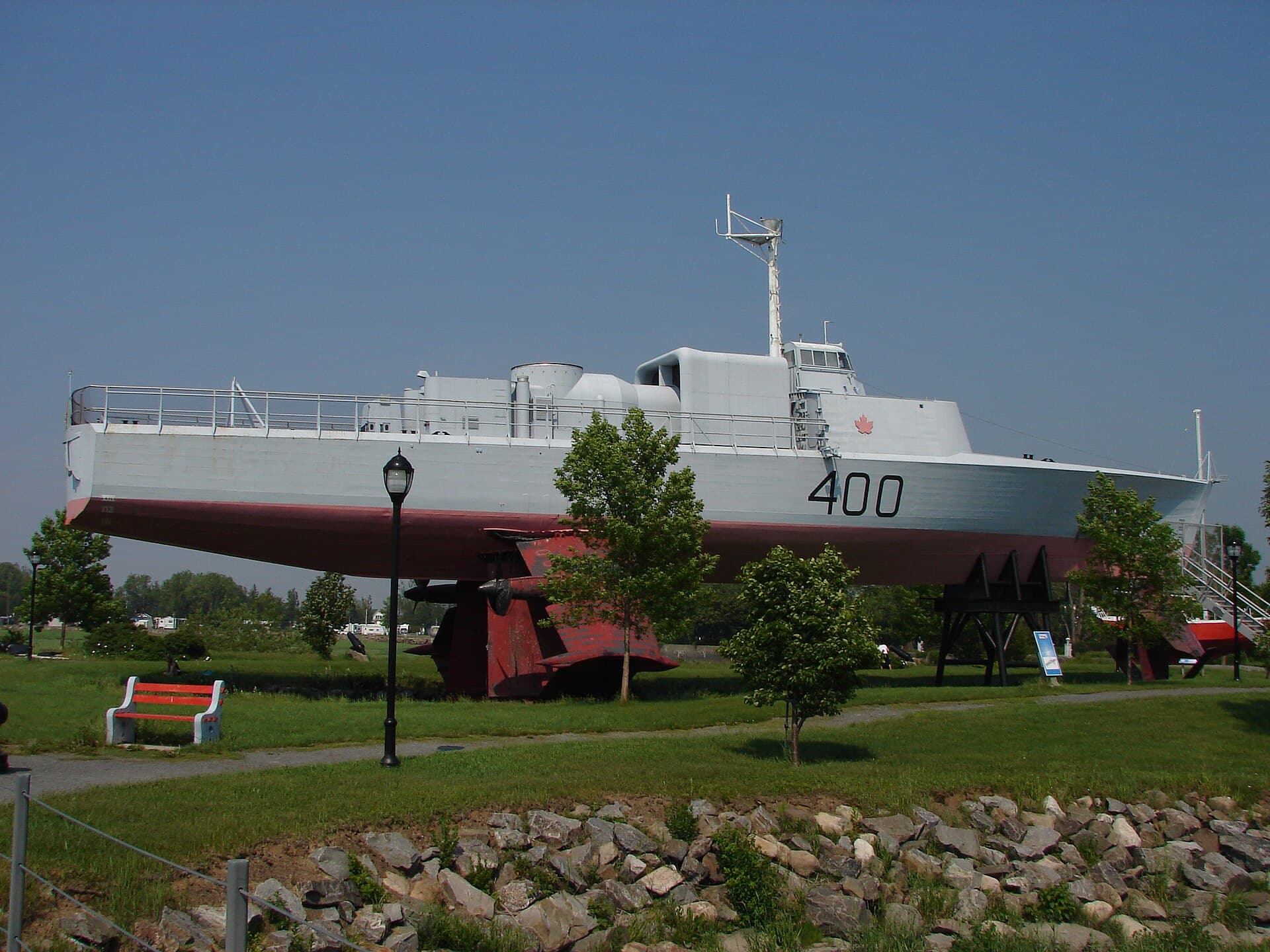
Canadian military personnel joined officials and diplomats from the Philippines, United States, Australia, Japan, France and New Zealand for the opening of Balikatan 2026 on April 20 in the Philippines. The exercise, described as the 41st and 'most expansive' iteration of the annual Philippines-U.S. drills, comes at a moment of renewed tension in the Taiwan Strait after the Chinese aircraft carrier Liaoning transited the waterway on April 20, marking its first such passage since December. Canada's participation reflects a growing Canadian profile in Indo-Pacific security cooperation, a priority the Carney government has continued to build out since taking office.
Balikatan, which translates as 'shoulder-to-shoulder,' has historically featured primarily U.S. and Philippines forces, but the exercise has steadily expanded in recent years to include broader allied participation. The 2026 edition, which runs through early May, includes maritime security drills, amphibious operations, cyber defence scenarios and humanitarian response exercises. Canadian contributions, consistent with Ottawa's Indo-Pacific Strategy launched in 2022, include Royal Canadian Navy assets and specialist personnel.
Canada's deepening Indo-Pacific posture
Canada's participation in Balikatan 2026 is part of a broader shift in Canadian defence engagement in the Indo-Pacific. The 2022 Indo-Pacific Strategy committed Canada to sustained military presence in the region, and subsequent budgets have funded Royal Canadian Navy deployments, Air Force training exchanges, and participation in multilateral exercises. The strategy specifically identified Canada's economic and security interests in the region as reasons for increased engagement.
Canadian, Australian and American forces also conducted multilateral operations in the South China Sea from April 12 to 18, including tactical manoeuvres and personnel exchanges. Those operations are the kind of routine cooperation that Canadian defence officials say is central to preserving a rules-based order in a region where Chinese claims, Philippine sovereignty, and freedom of navigation are frequently in tension.
Canada's defence commitments announced earlier this year, including meeting NATO's 2 per cent of GDP spending target and committing to $500 billion in defence spending over the coming decade, also have an Indo-Pacific dimension. Part of that spending is earmarked for naval modernisation, aircraft procurement and long-range intelligence capabilities that would improve Canada's ability to operate in the Pacific.
The Taiwan Strait transit
The Chinese aircraft carrier Liaoning's transit of the Taiwan Strait on April 20 added a new dimension to regional tensions. The carrier, one of three in service with the People's Liberation Army Navy, had not made a strait transit since December. Chinese state media framed the passage as routine, but regional and allied observers viewed it as a signal during a period of active coalition exercises.
Taiwan's defence ministry tracked 26 Chinese military aircraft operating in the Taiwan Strait on March 15 following a temporary lull in activity, and the carrier transit now adds to the pattern of elevated Chinese military signalling. Cross-strait tensions have escalated over the past decade as China has increased pressure on Taiwan through military drills, diplomatic isolation efforts and domestic messaging about reunification.
The political context includes a recent meeting on April 10 between Taiwan's opposition Kuomintang chairwoman Cheng Li-wun and Chinese Communist Party General Secretary Xi Jinping. China unveiled a ten-point plan aimed at increasing cross-strait integration, including infrastructure ties between Taiwan's offshore islands Kinmen and Matsu and China's Fujian province and the establishment of direct flights. The plan reflects China's push for integration on its own terms, which Taiwan's governing party has resisted.
Canadian diplomatic position
Canada's position on the Taiwan Strait emphasises peaceful resolution of differences and opposes unilateral attempts to change the status quo by force. That formulation, consistent with positions held by most of Canada's democratic allies, has been articulated repeatedly by Foreign Affairs Minister Mélanie Joly. Canada does not recognise Taiwan as a sovereign state but maintains robust trade and cultural relationships with the island.
Canadian participation in freedom of navigation operations and multilateral exercises in the region, while not specifically about Taiwan, contributes to a broader allied posture that defence officials say supports the goal of maintaining peace. Some observers have called for Canada to be more explicit about its Taiwan commitments, while others have argued that ambiguity is appropriate given the delicate diplomatic balance.
Canada's relationship with China has been strained for much of the past decade, from the Meng Wanzhou case and the detention of Michael Kovrig and Michael Spavor to more recent disputes over trade, foreign interference and human rights. Ottawa's Indo-Pacific Strategy explicitly characterises China as a 'disruptive global power' while also acknowledging the need for dialogue on areas of shared concern.
What it means for Canadians
The Indo-Pacific region matters directly to Canadians in multiple ways. Economically, Asia is a major market for Canadian energy, minerals, agricultural products, technology and services, and Asian economies are major sources of investment and tourism. Canadian diaspora communities from across Asia number in the millions, with deep family, cultural and business connections that tie Canadian neighbourhoods to events across the Pacific.
Security developments in the Indo-Pacific affect Canadian supply chains, shipping costs and global commodity markets. Any major disruption to traffic through the Taiwan Strait, the South China Sea or nearby waterways would raise the cost of moving goods and would have knock-on effects for Canadian businesses. Canada's participation in stabilising military exercises is framed in part as protection against those kinds of disruptions.
Canadian Armed Forces members who participate in Indo-Pacific deployments return home with operational experience that shapes the Canadian military's broader capacity. Interoperability with U.S., Australian, Japanese and other allied forces reinforces Canada's role as a credible coalition partner.
Balikatan's expanded scope
Balikatan 2026 is the largest iteration of the exercise to date. The expansion reflects growing Philippine concern about Chinese claims in the South China Sea, particularly around disputed features within the Philippines' exclusive economic zone. Manila has strengthened defence ties with Washington through the Enhanced Defence Cooperation Agreement, which has been expanded to include more Philippine military bases available for U.S. rotational deployments.
The exercise includes amphibious operations in the Luzon Strait, maritime security scenarios off the Philippines' western coast, and island defence drills that mirror real-world contingencies. Cyber defence and special operations components have also grown. For Canadian participants, the exercise offers exposure to scenarios that are relevant to the country's own northern and Arctic defence commitments, where similar combinations of geography and contested interests shape planning.
Defence analysts in Canada and allied countries have argued that exercises like Balikatan are central to deterrence. By visibly exercising coalition capabilities, allies signal to potential adversaries that aggression would face a coordinated response. Critics say exercises can also raise tensions, but supporters argue the alternative of reduced visibility would create more risk over time.
Regional dynamics
Philippines President Ferdinand Marcos Jr. has continued to deepen ties with traditional allies, hosting a procession of U.S. cabinet officials, Australian ministers and Japanese counterparts during the past year. The Philippine government has pushed back against Chinese coast guard and maritime militia actions at Second Thomas Shoal, Scarborough Shoal and other features in contested waters.
Japan's defence posture has continued to harden, with Tokyo committing to major increases in defence spending and deepening cooperation with the United States, Australia and the Philippines. South Korea has been less forward-leaning on Taiwan-specific issues but is an important broader Indo-Pacific partner. Australia, through AUKUS and other frameworks, remains one of Canada's closest partners in the region.
The European role has also been growing. France participated in Balikatan 2026, and the United Kingdom has increased its Indo-Pacific presence through Carrier Strike Group deployments. NATO's growing interest in Indo-Pacific partnerships reflects a recognition among European allies that European and Asian security are increasingly linked, a view Canada shares.
Canadian domestic politics
Indo-Pacific engagement is not as politically contentious in Canada as some other foreign policy files. Liberals, Conservatives and New Democrats have generally supported increased defence cooperation in the region, although they differ on specific elements such as the size of naval investments or the pace of new procurement. The Bloc Québécois and Greens have raised questions about deployment risks and environmental impacts.
Prime Minister Mark Carney's government has continued the Indo-Pacific Strategy inherited from the Trudeau era and has reinforced its commitment through the 2 per cent NATO target and the broader defence buildup. Foreign Affairs Minister Mélanie Joly and Defence Minister Bill Blair have been active in regional diplomacy, with meetings with Australian, Japanese, Korean and Philippine counterparts in recent months.
What's next
Balikatan 2026 continues through early May, with culminating exercises planned in the Luzon Strait and nearby waters. Canadian participants will rotate through specific phases of the exercise and will participate in planning conferences and bilateral engagements with partners. A final review conference will compile lessons learned for application in future deployments.
Canadian naval vessels are expected to continue rotational deployments in the Indo-Pacific through the year, supporting UN sanctions enforcement against North Korea, contributing to freedom of navigation operations, and participating in additional multilateral exercises. The Royal Canadian Air Force is also expected to continue participation in exchanges with partner nations.
For now, Canadian participation in Balikatan 2026 signals that Ottawa remains engaged in Indo-Pacific security at a time when regional tensions are rising. Whether the Chinese carrier transit and other signalling lead to broader crises or settle into another pattern of managed tension will be one of the defining questions for the region and for Canada's role in it.
Spotted an issue with this article?
Related Stories
Starmer's Europe Pivot Reshapes UK-Canada Relationship in an Era of Global Instability
3h ago
Trump Extends Iran Ceasefire Indefinitely, Offering Breathing Room for Canadian Energy Markets
3h ago
Canada Says July 1 CUSMA Review Is 'a Checkpoint, Not a Cliff' as Trade Pressure Builds
3h ago