CanWNT Beat Korea Republic 3-1 a Player Down: What the FIFA Series Trip Revealed About Casey Stoney's Rebuild
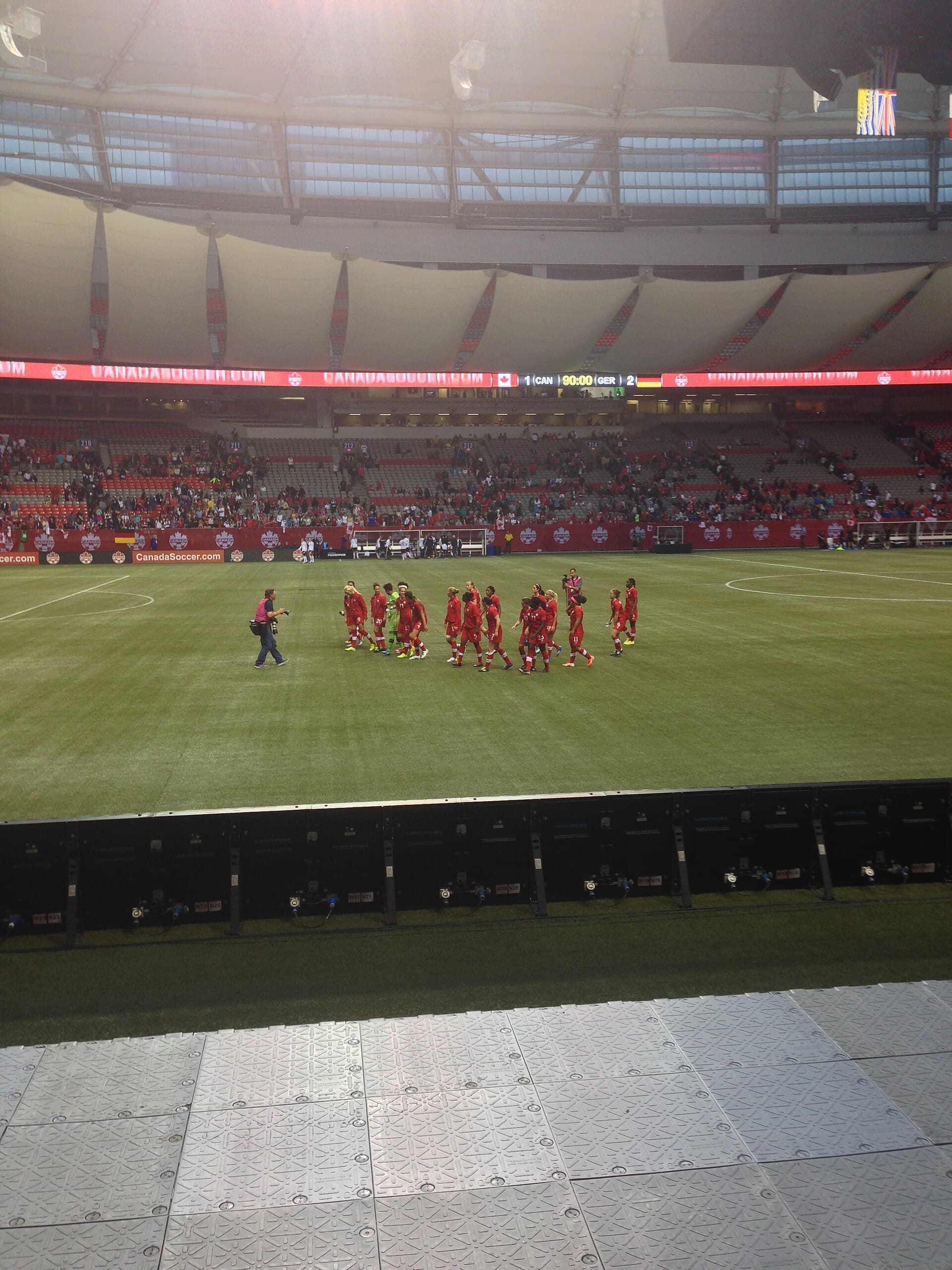
A three-goal win over the ninth-ranked nation in women's soccer, played over an hour with only 10 players, would ordinarily qualify as a defining moment for any national team. For Canada's Women's National Team, the 3-1 victory over Korea Republic in Cuiabá on Wednesday was something stranger and more significant: the clearest look yet at what head coach Casey Stoney intends her team to be, and a first real piece of evidence that the rebuild is producing results on the pitch rather than just on paper.
The tournament and the context
The FIFA Series is FIFA's experiment in structured international windows for women's teams outside the traditional European-dominated friendlies calendar. The 2026 edition, hosted in Cuiabá between April 9 and April 18, brought together four teams: Canada, Korea Republic, Zambia and Brazil. The format is as much about development time for coaches and federations as it is about results.
For Canada, which sits ninth in the FIFA rankings and entered the tournament on the back of a disappointing Olympic group-stage exit in Paris in 2024 and a prolonged coaching transition after Beverly Priestman's departure, the trip to Brazil represented one of the last extended team windows before CONCACAF World Cup qualification begins in earnest next year. Stoney, hired in late 2025 after a successful club spell with San Diego Wave in the NWSL, was looking for tangible progress more than any single result.
What the Korea win actually showed
The scoreline flatters the overall performance, as scorelines often do in tournaments played in tropical heat on a short turnaround. But the circumstances around Canada's three goals revealed a tactical identity that has been absent from the program for nearly three years.
The first goal came from a pressing trigger in the opposition third. Jessie Fleming won the ball high, found Adriana Leon, and Leon finished into the bottom corner. The second, Olivia Smith's calm finish after a through-ball from Julia Grosso, exploited a turned Korean centre-back exactly as Stoney's video sessions have been asking her players to attack. The third, a Leon penalty, came after another high press forced Korea into a clearance that hit a defender's outstretched arm.
All three goals, in other words, were products of pressure, and all three came after Canada had been reduced to 10 players following a first-half red card to Vanessa Gilles for a professional foul near midfield. A team down a player that continues to press is a team that has internalised a coach's plan. Stoney's post-match comments were deliberately understated, but she acknowledged the result was the kind of moment a group needs early in a cycle.

Olivia Smith and the new generation
The tournament's most important Canadian storyline may not have been the result against Korea but the continued emergence of Olivia Smith as the face of the next generation of the program. Smith, 21, signed with Arsenal last summer in a deal that made her the most expensive player in women's football history at the time. Her production for her club this past season, 13 goals in the Women's Super League, has earned her a starting spot in Stoney's first-choice lineup.
Against Korea, Smith played 90 minutes through the disruption of the red card, shifted from a supporting forward role to a more central striker position when Leon was later withdrawn, and produced Canada's most dangerous moments. Her goal was a cold finish, but her overall work rate off the ball was what Stoney highlighted in her post-match interview.
Smith's partnership with Grosso, Janine Beckie and Fleming in the middle third gives Canada the most technically gifted midfield-forward link it has fielded in years. Whether Stoney can sustain that combination through a full qualification cycle will depend on workload management, club cooperation, and the long-standing injury concerns that have followed Beckie since her ACL tear in 2023.
Where the concerns remain
Three goals against the ninth-ranked nation is a strong result. Three goals against Zambia in the tournament opener was less impressive, given the ranking gap, and the 1-1 draw against Brazil in the final game was the kind of performance that exposed Canada's structural limitations against top-five opposition.
Brazil, playing in front of a home crowd, dominated possession for stretches that Stoney admitted were longer than her staff had planned for. Canadian goalkeeper Kailen Sheridan, outstanding throughout the tournament, had to bail out a defensive line that lost its shape on counter-attacks. The centre-back pairing of Gilles, when available, and Shelina Zadorsky is a serviceable starting duo, but the depth behind them is untested.
Full-back remains a position Stoney has publicly identified as a development priority. Ashley Lawrence's return from her club season in Europe will address the right side. The left remains an open competition between Jayde Riviere and a handful of players who have not yet established themselves at the senior level.
Jessie Fleming and the midfield architecture
Jessie Fleming's role in Stoney's system has been the subject of quiet internal debate at Canada Soccer since the new coach took over. Fleming, long deployed as an advanced midfielder capable of dropping deeper, has been used by Stoney in a more classical number-eight role against Korea and Zambia. The shift allowed Fleming to drive the team's pressing structure from a position closer to the ball, and her recovery work was a significant factor in Canada's ability to play through the second half of the Korea match with ten players.
The question for the next cycle is whether Fleming's eventual reunion with Ashley Lawrence and a fully healthy Beckie will push her back into a more attacking position, or whether Stoney will maintain the deeper deployment as the default. The answer will shape how Canada's attack is organised through qualification and, ultimately, the 2027 World Cup in Brazil.
The Kailen Sheridan factor
Canadian goalkeeper Kailen Sheridan, 30, has entered the form of her career at exactly the moment the national team needs a reliable last line of defence. Sheridan's performance across all three tournament matches, including a stretch against Brazil in which she made seven saves in the second half, was a reminder of why she is considered among the top five goalkeepers in the world in her position. Her NWSL club, the San Diego Wave, has benefited from the same form, currently sitting atop the league's early-season table.
Sheridan's emergence as Canada's clear first-choice, combined with the presence of Anna Karpenko as a credible backup, represents perhaps the most stable position group on the roster. That stability, which Stoney has pointed to in media interviews as a foundation for the rest of her tactical choices, is not a guarantee of results but is a meaningful building block.
The qualification calendar
Canada's path to the 2027 FIFA Women's World Cup, which Brazil will host, runs through CONCACAF's revamped qualification system. The W Championship in 2026 will function as both a regional tournament and the primary qualifying pathway. Canada is expected to be one of eight teams competing, with three automatic World Cup berths available.
The tournament is scheduled for October and November 2026. Before then, Stoney's staff have one more international window in June, a likely friendly tour in August, and the regular NWSL-WSL-Liga MX Femenil schedules to monitor. The coaching priority, Stoney told reporters in Cuiabá, is to have a first-choice starting 11 and at least two reliable options at each position by the time the group-stage draw is made in late summer.
What the Canadian Soccer Association needs to deliver
Off the pitch, the CSA is under continued pressure to resolve the pay equity and funding dispute that has dominated headlines for the women's program for nearly three years. Players declined to speak publicly about the status of those negotiations during the Cuiabá trip, per an agreement with the federation. Sources familiar with the discussions, speaking on background, described the current talks as constructive but not yet close to a settlement.
The broader question of whether the CSA can sustain the support infrastructure Stoney's staff has requested, including expanded scouting resources, a dedicated performance analysis team, and the kind of year-round camp access the men's program already has, will determine whether the progress shown in Brazil translates into the result Canadians actually care about: qualification for a Women's World Cup, followed by a run that goes further than the round of 16 the program has never cleared.
The media and commercial story
Television coverage of the FIFA Series through TSN and OneSoccer drew audiences that surprised both broadcasters and Canada Soccer's commercial team. The Brazil match in particular, televised in prime time on the East Coast, generated one of the larger Canadian women's national team television audiences outside of major tournament matches. Streaming numbers on OneSoccer, meanwhile, indicated continued growth in the Canadian soccer audience that has been building since the Paris Olympics.
For the women's game in Canada, the commercial momentum matters because it affects the federation's ability to invest in program infrastructure. Sponsorship revenue linked to the women's team has grown meaningfully since 2022 and continues to support the player development system. A successful World Cup qualification cycle, culminating in a Brazilian tournament likely to feature strong Canadian interest given the summer 2027 tournament calendar, would further accelerate this trajectory.
What's next
Stoney's team returns to club duty this week, with most players back in NWSL or European leagues by the weekend. The next national team window opens in June. Canada's ranking, currently ninth, will be updated on May 8 following FIFA's monthly recalculation. A jump back into the top eight, where Canada sat as recently as 2023, is not out of reach if the results from Brazil hold in the rankings model.
The rebuild, in short, is real. Whether it is on track depends on the next 18 months. But Stoney's team walked out of Cuiabá with a better idea of who they are than they had walking in, and that is the outcome that matters most at this point in the cycle.