Operation LUMEN Keeps Moving: 8,500 Canadians Already Home as Lebanon Ceasefire Wobbles
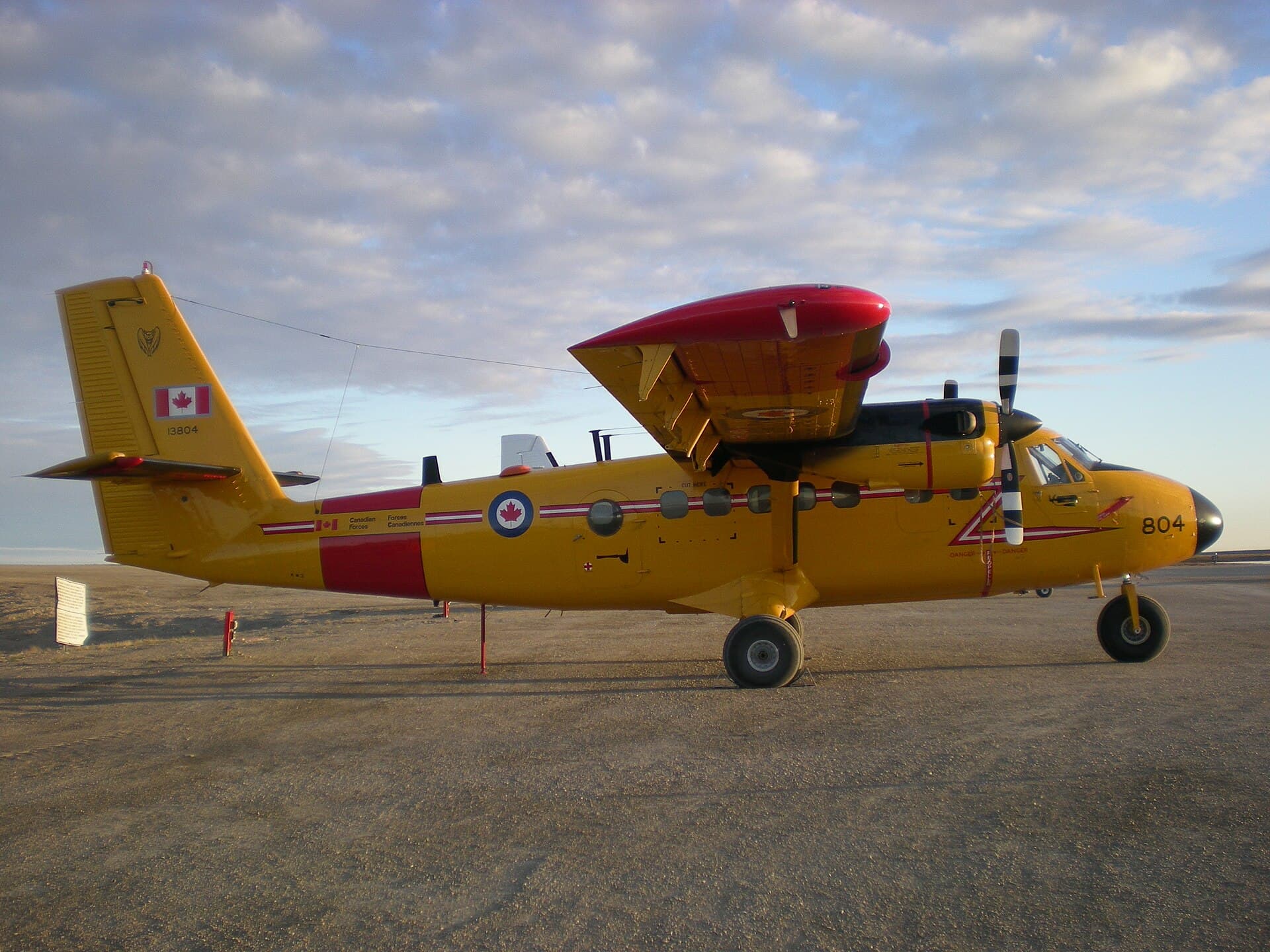
Canada's Operation LUMEN, the Canadian Armed Forces mission supporting Global Affairs Canada with the evacuation of Canadian citizens and permanent residents from Lebanon and the broader Middle East, has now helped return more than 8,500 people to Canada since the onset of the 2026 Iran war. Foreign Minister Anita Anand said this week that the mission's primary objective continues to be helping Canadians who want to leave the region do so safely, even as ceasefire conditions remain unstable and some evacuation routes require continuous reassessment.
The operation, first stood up in the weeks following the February 28 United States-Israeli strikes on Iran, has involved a combination of chartered commercial flights, partnerships with allied militaries, overland evacuation routes through safe third countries, and coordination with consular teams across the region. More than 1,000 additional Canadians have also left the Middle East for safe third countries under the broader umbrella of Canadian-supported evacuation efforts, with some continuing onward to Canada and others remaining temporarily abroad.
Prime Minister Mark Carney and Minister Anand have repeatedly emphasised the scale of the Canadian presence in the Middle East. Global Affairs Canada records more than 97,000 Canadian citizens and permanent residents registered across the region, with approximately 23,000 in Lebanon alone. That registry is incomplete, as registration is voluntary, and officials estimate the true number of Canadians in the region could be higher when temporary visitors, dual citizens, and family members are included.
The operational picture
Operation LUMEN has relied on a mix of Canadian Armed Forces logistical support, Global Affairs Canada consular capacity, and commercial partnerships. Canadian military personnel have been positioned at forward operating bases in Europe and at select allied locations in the region, enabling the rapid activation of air movements when conditions allow. Chartered aircraft have been the backbone of the operation, supplemented by seats on military flights when commercial options are not feasible.
Overland routes from Lebanon to third countries, particularly via Turkey, Cyprus, and Jordan, have played an important role when Beirut's airport has been subject to disruption or heightened risk. Global Affairs Canada has stood up processing capacity at consular offices in those third countries to help Canadians complete onward travel to Canada, replace documents that may have been lost, and access medical and mental health supports.
Five Eyes coordination has been a significant feature of the operation. Canadian diplomats and defence planners have joined daily calls with their counterparts from the United States, the United Kingdom, Australia, and New Zealand to coordinate evacuations, share intelligence on ground conditions, and ensure that allied military movements deconflict effectively. Canada also has longstanding evacuation cooperation agreements with France, the European Union, and Japan.
Canadians still in Lebanon
Despite the substantial numbers already evacuated, thousands of Canadians and permanent residents remain in Lebanon. Some choose to stay because they have family responsibilities, employment, or property that cannot easily be abandoned. Others are dual citizens whose primary lives are anchored in Lebanon, with Canadian passports serving as a secondary identity that only becomes operationally significant during acute crises like the current one.
The Lebanese Canadian diaspora is among the largest in the world, with hundreds of thousands of people in Canada tracing family roots to Lebanon and many travelling regularly between the two countries. That deep demographic link means that the Canadian government's obligations in Lebanon are not limited to short-term tourists but extend to families, businesses, and communities that span both sides of the Atlantic.
Global Affairs Canada has continued to encourage Canadians who wish to leave Lebanon to register for consular services and to take advantage of ongoing evacuation capacity. Those messages have grown more urgent in recent days as the ceasefire between Israel and Hezbollah has come under new strain, with Israeli shelling reportedly violating the truce in southern Lebanon and displaced Lebanese civilians returning to damaged neighbourhoods.
The Lebanon ceasefire and its fragility
The 10-day ceasefire between Israel and Lebanon, which began earlier this week, has provided a partial respite from active combat but has not resolved the underlying tensions. Israeli troops remain in southern Lebanon, and Hezbollah has signalled both willingness to consider a longer pause and reserved the right to respond to Israeli actions that it views as breaches of the truce.
Lebanese officials have reported that over 1.2 million citizens have been displaced since the resumption of major hostilities in early March 2026, and that over 40,000 homes in southern Lebanon have been destroyed. Israel's evacuation orders have covered an area of over 1,470 square kilometres, amounting to approximately 14 per cent of Lebanon's territory. Those scales of disruption complicate any near-term plan for civilians to return home safely.
Canada, along with France, Germany, Italy, and the United Kingdom, has expressed grave concern about the violence in Lebanon and has called for immediate de-escalation. Prime Minister Carney has also urged that Lebanon be explicitly included in any broader Israel-related ceasefire framework, reflecting the Canadian government's belief that durable stability requires addressing the Hezbollah-Israel dynamic alongside the Iran-US-Israel triangle.
The ground-level experience
For Canadian families affected by the operation, the experience has been stressful and uncertain. Many have received brief notifications about available evacuation slots with limited lead time, requiring rapid decisions about what to bring, what to leave behind, and how to manage onward arrangements in Canada. Community groups in Toronto, Montreal, Ottawa, and Halifax have mobilised to provide temporary housing, mental health support, and employment assistance for returning Canadians.
Lebanese Canadians in particular have faced especially difficult choices. Many returned Canadians have left behind extended family members, homes, and businesses, and are navigating the uncertainty of whether they will be able to return safely in the foreseeable future. The emotional toll of those decisions is significant, and community leaders have called for expanded federal support for mental health services tailored specifically to the needs of Middle Eastern diaspora communities.
Children, in particular, have been affected by disrupted schooling, separated families, and the broader trauma of evacuation. Canadian provincial education systems have worked to absorb returning students quickly, with school boards in Toronto, Montreal, and other major centres setting up welcoming protocols for children arriving mid-year from Lebanon and other affected areas.
The political context in Ottawa
Operation LUMEN has enjoyed broad cross-party support in Canadian politics. The Conservative official opposition has pressed the government on operational details and communication with families, but the core mission, returning Canadians safely home, has not been subject to significant partisan dispute. The NDP has emphasised the humanitarian dimension and pushed for expanded refugee pathways for non-Canadians affected by the conflicts, while the Bloc Québécois has focused on consular services for Quebec-based diaspora communities.
The Carney government has framed the operation as an example of why consistent investment in defence, consular capacity, and alliance partnerships matters. Canadian Armed Forces personnel involved in the mission have been drawn from various commands, and the readiness to mount a sustained evacuation effort at short notice has been pointed to by defence officials as a vindication of recent procurement and training decisions.
Internationally, Canada's willingness to mount operations at this scale has reinforced its diplomatic positioning on Middle East issues. Canadian officials have been careful to balance that posture with continued advocacy for civilian protection, international humanitarian law, and diplomatic resolution of the underlying conflicts. Those messages have been consistent in bilateral meetings with Israeli, Lebanese, and Gulf counterparts.
Operational risks and future contingencies
The continued operation of Operation LUMEN depends on a range of factors, including airspace access, port availability, security conditions on key land routes, and the willingness of allied governments to support Canadian movements. A sudden escalation in the Iran war or the Lebanon conflict could require rapid reconfiguration of the operation and could shift evacuation capacity toward different departure points and onward routes.
Canadian defence officials have emphasised that contingency planning includes scenarios in which the Strait of Hormuz closes for extended periods, in which commercial aviation in the Middle East becomes temporarily unavailable, or in which ground conditions in specific countries change abruptly. The capacity to surge additional military and civilian assets to support evacuations has been maintained throughout the operation, though senior officials have cautioned that no evacuation at this scale is ever risk-free.
Canadian Armed Forces members involved in the mission have been rotating through Europe-based staging areas, and the operation has drawn on expertise developed during previous evacuations, including the large-scale 2006 operation from Lebanon during that year's conflict. Lessons from those earlier missions have shaped communication protocols, family support arrangements, and onward processing capacity.
What's next
In the near term, Operation LUMEN will continue to support voluntary departures from Lebanon and the broader Middle East, with the operational tempo calibrated to security conditions and demand. Global Affairs Canada has signalled that consular services will remain active throughout the coming weeks, and Canadian Armed Forces elements are expected to maintain pre-positioned capability in case conditions change quickly.
Longer term, the government will need to evaluate what the operation has revealed about Canada's readiness, diaspora protection, and alliance coordination. Expect parliamentary committees to review the mission, defence officials to conduct after-action assessments, and civil society groups to press for lessons learned to be incorporated into future crisis response planning.
For the Canadians already home, and for those still in Lebanon weighing their options, the operation has been an indispensable lifeline during one of the most acute international crises of recent years. The work is not finished, the risks are not removed, and the Canadian presence in the region remains a central concern for a government that has made the protection of its citizens abroad one of its defining commitments.
Spotted an issue with this article?