US Naval Blockade of the Strait of Hormuz Reshapes a Volatile Spring in the Gulf, With Canadian Consequences
The United States has declared a naval blockade on the Strait of Hormuz, the narrow waterway through which roughly 20 per cent of the world's oil passes every day, in what the Trump administration has called a response to Iran's refusal to abandon its nuclear programme. The declaration, which followed the collapse of two rounds of peace talks in Islamabad and the expiration of a 14-day ceasefire window, represents the most aggressive American naval posture in the Persian Gulf since the Iran-Iraq War of the 1980s. For Canadian energy producers, ports and federal policymakers, the implications are both commercial and strategic.
What the blockade means, in practice
A naval blockade is a legally contested instrument in peacetime. The US Navy announced on April 13 that it would stop, inspect and, where necessary, turn back vessels it identifies as Iranian-flagged, Iranian-owned or carrying Iranian oil through the strait. The declaration followed what White House officials described as Iran's failure, during talks in Pakistan, to commit to the dismantling of its uranium enrichment programme.
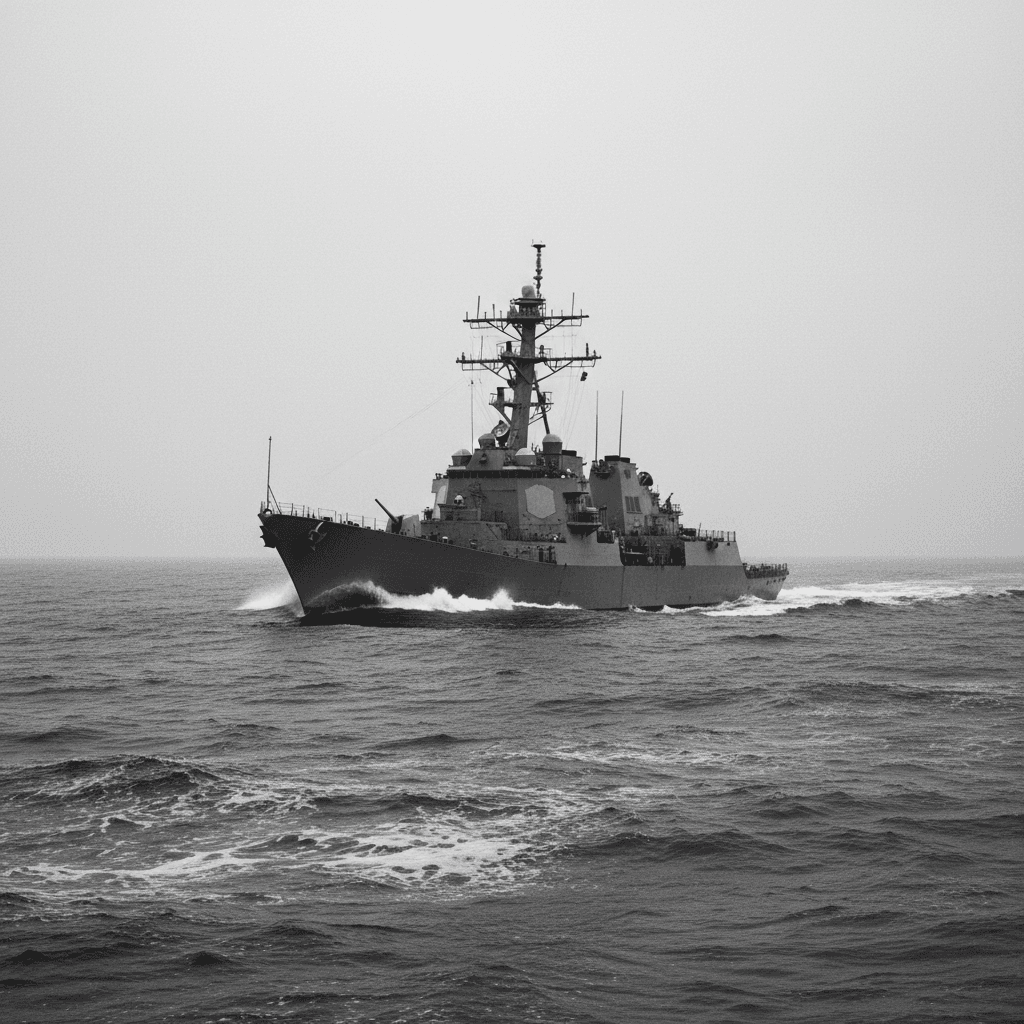
In operational terms, the blockade has so far manifested as the deployment of additional carrier strike group assets to the Gulf, including USS Gerald R. Ford and its accompanying destroyers, and increased boarding operations along shipping lanes. Iran's Islamic Revolutionary Guard Corps has described any US military vessel in the strait as a ceasefire violation. On April 16, an IRGC naval unit shadowed an American destroyer for several hours before disengaging without incident.
How peace talks collapsed
The diplomatic round that opened in Islamabad on April 11 and ended on April 12 produced nothing resembling a durable framework. US Vice President JD Vance led the American delegation. Iran was represented by Foreign Minister Abbas Araqchi and Parliamentary Speaker Mohammad Baqer Qalibaf. Pakistani officials, under Prime Minister Shehbaz Sharif's mediation, hosted the talks over 21 hours.
The primary sticking point, according to American officials' public readouts, was Iran's refusal to commit to what Washington described as an affirmative statement that it would not seek a nuclear weapon. Iran's position, voiced publicly by Araqchi, was that such a commitment already existed under the Nuclear Non-Proliferation Treaty, and that any further pledge under US pressure was a matter of political symbolism rather than substance.
A second round of talks is reportedly being considered, possibly in Oman, within the next two weeks. Neither side has committed to a date.
The ceasefire that preceded this
The current naval standoff follows 40 days of military conflict between Iran, Israel and the United States, a campaign that ran from late February through early April and produced extensive damage to Iranian military infrastructure, hundreds of civilian casualties on both sides, and a two-week ceasefire that took effect on April 8. That ceasefire, which was set to expire on April 21, is now effectively defunct.
The joint Israeli-American air campaign targeted Iranian air defence installations, uranium enrichment facilities at Natanz and Fordow, and IRGC command nodes. Iran's retaliatory ballistic missile and drone strikes reached as far as central Israel and targeted US bases in Iraq and Bahrain. The human and economic toll of those 40 days shapes the current diplomatic posture.
The Canadian energy calculation
Roughly 20 per cent of the world's oil moves through the Strait of Hormuz. Any sustained disruption to that flow rearranges global energy markets. For Canada, the implications are largely positive on the production side and mixed on the consumption side.
Canadian oil producers in Alberta and Saskatchewan have benefited from the price shock. West Texas Intermediate, the reference benchmark, jumped from the low-70s to over $90 per barrel in the week following the blockade declaration. Western Canadian Select, the discounted Canadian grade, tracked the move upward. Quarterly earnings for major producers including Canadian Natural Resources, Suncor and Cenovus are now projected to be meaningfully above pre-blockade estimates.
The TMX pipeline expansion, completed in 2024, has positioned Canadian producers to deliver additional barrels to Pacific Rim buyers looking for alternatives to Gulf supply. Loadings at Westridge Marine Terminal in Burnaby are running at capacity.
On the consumer side, the story is different. Canadian retail fuel prices have risen sharply, with gasoline approaching $2 per litre in major urban markets. The federal carbon pricing framework, which Carney's government has committed to maintaining in a modified form, continues to shape the political debate over whether to provide targeted consumer relief.
The freight and shipping impact
Global shipping rates for tankers have spiked in response to the blockade and the elevated insurance costs now associated with Persian Gulf transits. The Baltic Dirty Tanker Index, a benchmark for global oil shipping costs, rose 34 per cent in the week following the blockade declaration.
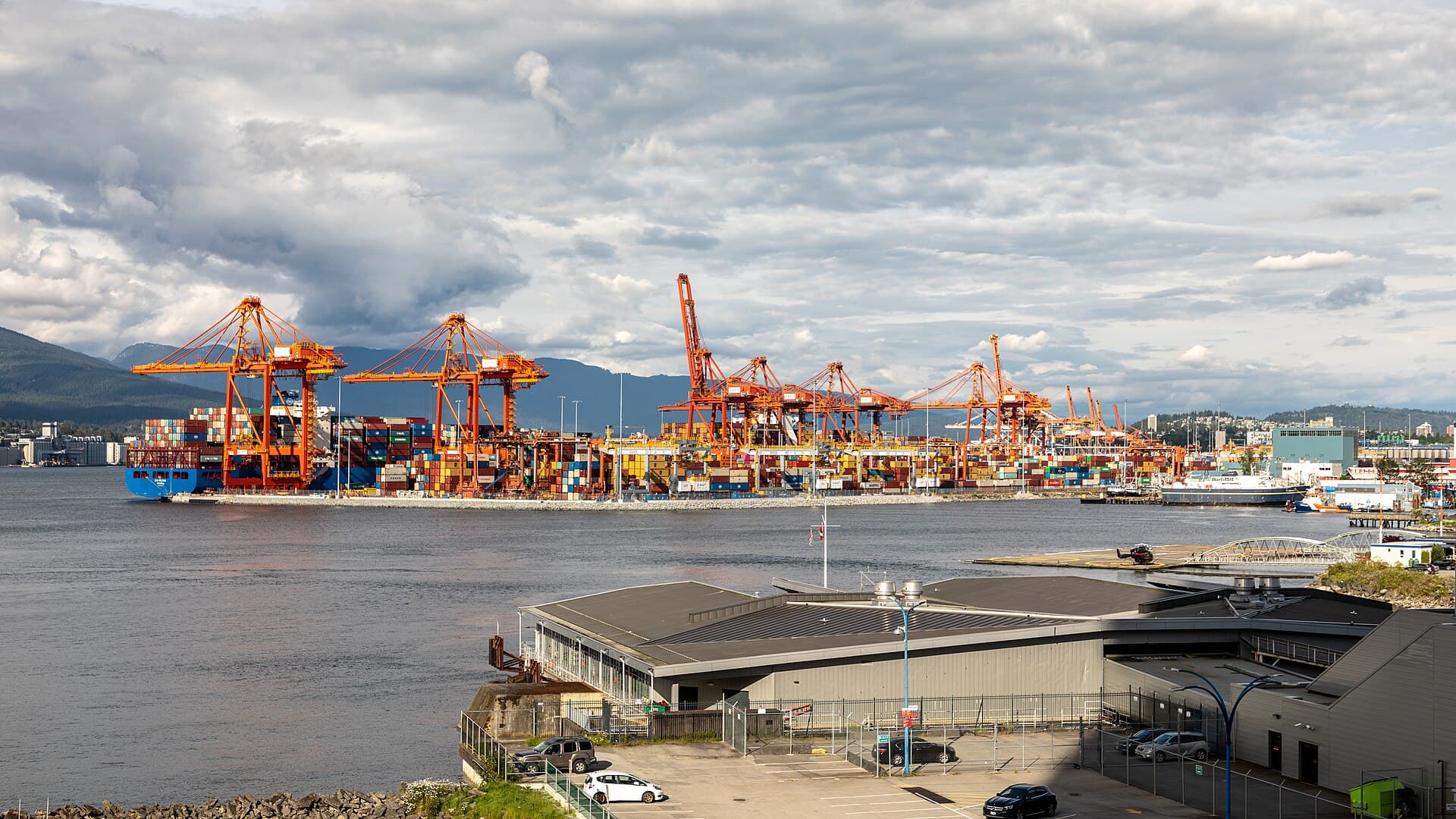
For Canadian ports, the Port of Vancouver in particular, the broader volatility creates both opportunity and cost. Increased oil exports support terminal revenues. But diversion of Asian-bound container traffic, a consequence of broader trade disruption, creates scheduling pressure at already-stressed port facilities.
Regional implications beyond Iran
The blockade's effects extend well beyond Iran. Saudi Arabia, the United Arab Emirates and Kuwait, which collectively produce and ship enormous volumes through the same waterway, have been privately supportive of the American posture but publicly cautious. None of those governments wants to be seen as participating in a blockade that could draw Iranian military retaliation against their own infrastructure.
Qatar, which maintains diplomatic relations with both Washington and Tehran, has offered to host alternative talks. Oman, historically a quiet mediator between the US and Iran, has signalled its willingness to host the next round. Pakistan's role, significant during the April 11-12 talks, has been credited in various diplomatic circles as a genuine elevation of Islamabad's regional standing.
The India factor
Pakistan's mediating role has simultaneously been read as a diplomatic setback for India. Indian media outlets have acknowledged, in unusually candid terms, that Pakistan's emergence as a US-trusted interlocutor on Iran has shifted the regional perception of which South Asian power occupies the more influential position with Washington. Congress leader Shashi Tharoor has publicly criticised the Modi government's foreign policy on exactly this point.
For Canada, which maintains significant economic and diaspora ties to both India and Pakistan, the diplomatic rearrangement is being watched with interest. Ottawa has not commented publicly on the shift in regional positioning.
The diaspora dimension
Canada is home to more than 210,000 people of Iranian descent, concentrated primarily in the Greater Toronto Area and metropolitan Vancouver. The community has been organising steadily through the past three years of Iranian domestic protests and international crises. Public rallies in Toronto, Vancouver and Ottawa have continued through the current diplomatic rupture. The Canadian government's listing of the Islamic Revolutionary Guard Corps as a terrorist entity in 2024 was widely supported within the Iranian-Canadian community.
The community's relationship with the Canadian political process has become more activated through the current crisis. MPs representing ridings with significant Iranian-Canadian populations have been vocal on questions of regime accountability, sanctions policy and humanitarian concerns. The question of dual-national Canadians currently residing in Iran, a population that has been intermittently targeted by Iranian authorities for coercive purposes, has been raised in Question Period multiple times in recent weeks.
What happens next
Three variables will shape the next two weeks. First, whether Iran's oil exports through the strait continue to be partially blocked, or whether Tehran finds workarounds through Dubai-based traders and Chinese-flagged tankers. Second, whether a second round of negotiations, in Oman or elsewhere, produces a framework that allows the blockade to be lifted. Third, whether any incident between US and Iranian naval forces escalates into kinetic conflict.
The third possibility is what keeps Middle East analysts and Canadian foreign policy officials awake. A single misunderstood manoeuvre in the confined waters of the Strait of Hormuz could, historically speaking, trigger a broader exchange. The rules of engagement currently in place, on both sides, are designed to minimise that risk. Risk-minimisation has limits.
The Israeli factor
The Iran-Israel dimension of the current crisis remains the most volatile variable in the calculation. The 40-day war between the two countries, which produced the April 8 ceasefire, was triggered by Israel's assessment that Iran's nuclear programme had progressed beyond an acceptable threshold. The war's kinetic conclusion left the underlying nuclear question essentially unresolved. Iran's surviving enrichment capacity, while substantially degraded, was not eliminated.
Israeli Prime Minister Benjamin Netanyahu has publicly committed to preventing any Iranian restoration of a nuclear weapons programme, a commitment that was reiterated in a cabinet statement earlier this week. Any Iranian effort to rebuild damaged infrastructure would likely trigger renewed Israeli military action. The US blockade functions, in part, as a deterrent against such reconstruction by restricting the imports Iran would need.
The Canadian Jewish community and dual-national considerations
Canada's Jewish community, with roughly 400,000 members concentrated in Toronto, Montreal and a handful of smaller urban centres, has been directly affected by the regional instability. Communities have maintained close family and organisational ties to Israel throughout the spring's military operations. The anti-Israel protest movement that has been active in Canadian cities since October 2023 has also intensified during the recent conflict.
The federal government's challenge, balancing support for Israel's security, concern for Palestinian and Iranian civilian populations, and the requirement to maintain public order and community safety in Canadian cities, has been politically delicate. The Carney government's public statements have emphasised de-escalation and civilian protection while maintaining Canada's formal diplomatic alignment with the broader Western position on Iran's nuclear programme.
What Canada is doing
The Canadian Armed Forces have not deployed assets to the Gulf as part of the American operation. Ottawa's publicly stated position has been one of support for diplomatic resolution and non-proliferation objectives, combined with calls for restraint from all parties. The Minister of Foreign Affairs has been in contact with counterparts in Washington, London, Paris, Berlin and Riyadh.
On the economic side, the federal Department of Finance is monitoring the price shock and its implications for inflation. The Bank of Canada's next rate decision, scheduled for June 4, will now be taken with this round of geopolitical volatility firmly in the background. The political debate over Canadian energy policy, always sensitive, has become noticeably more urgent in the capital's corridors.