Supreme Court Declines Charter Challenge to First-Past-the-Post
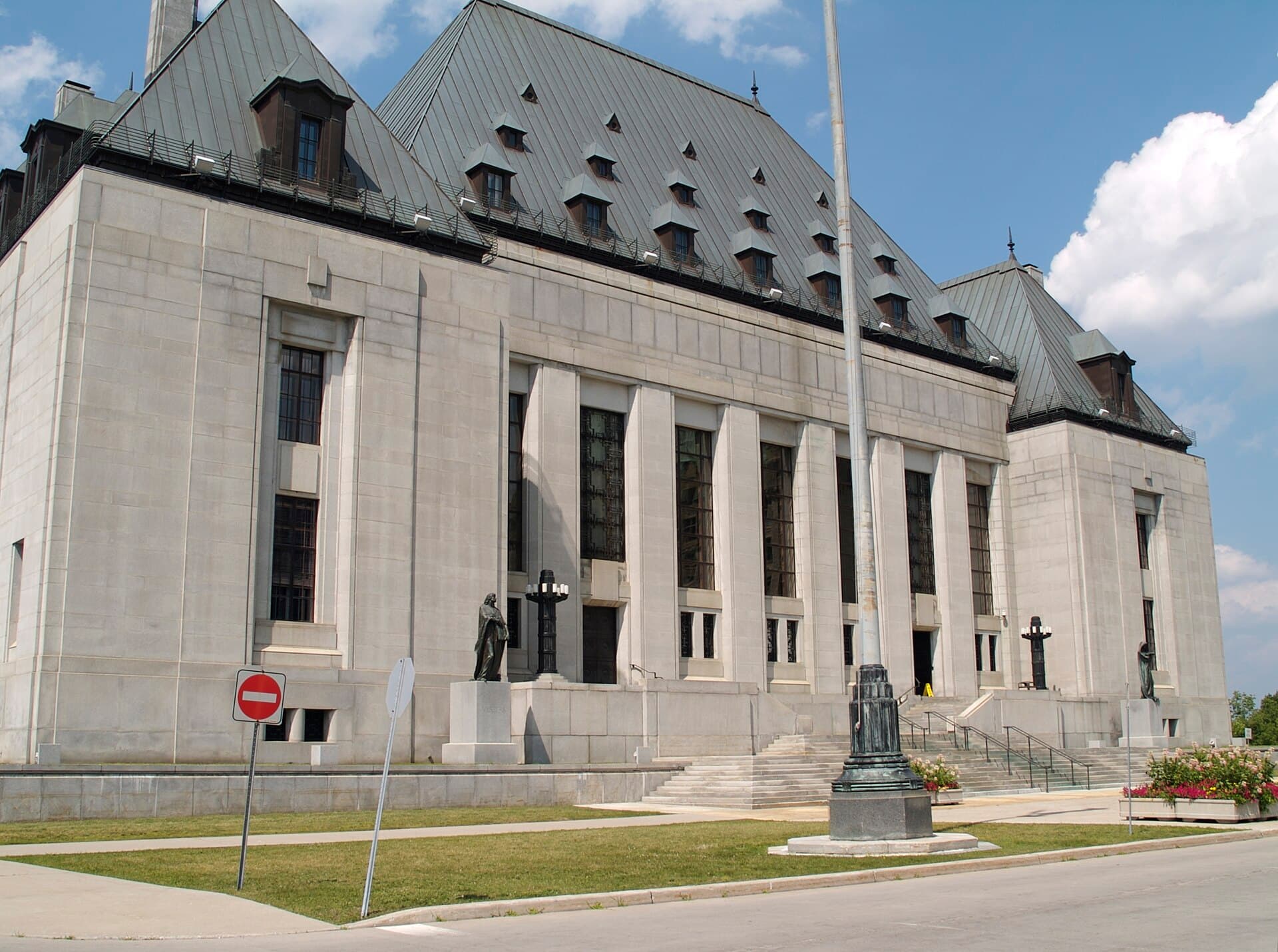
The Supreme Court of Canada has declined to hear a Charter challenge to Canada's first-past-the-post electoral system, leaving lower court rulings intact and effectively closing a legal avenue that reform advocates had pursued for years. The decision, released April 2, did not come with reasons, consistent with the top court's standard practice on leave applications, but it puts a definitive end to one of the most ambitious recent attempts to constitutionalise electoral reform.
The case was brought by Fair Voting B.C. and the Springtide Collective for Democratic Society. The two groups had argued that first-past-the-post violates section 3 of the Charter of Rights and Freedoms, which guarantees effective representation, because it regularly translates minority vote shares into majority governments and leaves many voters with no one in Parliament who reflects their preferences. The Ontario Superior Court dismissed the challenge in 2023, and the Ontario Court of Appeal upheld that dismissal.
With the Supreme Court's refusal to hear a further appeal, Canadian electoral reform is, for the foreseeable future, a question for legislatures rather than courts. That outcome aligns with the approach of nearly every major Canadian election judgment in recent decades, which has generally recognised broad legislative discretion over voting systems so long as basic Charter principles are not violated.
The arguments the advocates made
Fair Voting B.C. and Springtide built their case on the premise that section 3 does more than guarantee the right to vote. They argued it also protects a right to effective representation, and that a voting system which regularly allows a party to form majority government with less than 40 per cent of the national vote systematically denies that right to the roughly 60 per cent of Canadians who supported other parties.
The groups cited comparative data showing that Canada's first-past-the-post system typically produces Parliaments that are poorly correlated with the national popular vote distribution. They pointed to decades of federal elections in which certain regions, including rural Atlantic Canada, parts of Quebec, and sections of the Prairies, produced disproportionately strong or weak seat shares relative to vote shares. Similar distortions affect provincial legislatures.
Their legal theory relied on Supreme Court precedents recognising effective representation as part of section 3 in contexts like riding redistribution, where the court has held that population deviations between ridings are constitutionally permissible within certain limits. The applicants argued that extending that logic to the voting system itself was the next doctrinal step, though that argument had not persuaded either lower court.
Why lower courts disagreed
Both the Ontario Superior Court and the Ontario Court of Appeal rejected the effective representation argument. The courts ruled that section 3 is fundamentally concerned with the right to vote and to run for office, and that it does not prescribe any particular electoral system. Parliament, the courts held, retains broad constitutional authority to choose among different voting methods, including first-past-the-post, ranked ballots, proportional representation, or hybrid systems.
The courts also pointed to decades of Canadian practice in which Parliament and provincial legislatures have experimented with different voting systems without constitutional challenge. British Columbia held multiple referendums on electoral reform. Ontario ran a citizens' assembly that produced a referendum on mixed-member proportional representation. Prince Edward Island has debated the question repeatedly. In each case, the conversation occurred in democratic venues rather than in court.
Perhaps most importantly, the lower courts emphasised that there is no obvious constitutional line between a voting system that is constitutionally permissible and one that is not. Choosing such a line, they held, is precisely the kind of policy question that Parliament and legislatures are designed to resolve through ordinary democratic processes rather than through judicial decree.
The political backdrop
The Supreme Court's decision arrives at a moment when electoral reform is not a live political priority at the federal level. Prime Minister Justin Trudeau famously promised during the 2015 campaign that it would be the last federal election conducted under first-past-the-post. His government subsequently abandoned the commitment after a parliamentary committee and public consultations failed to produce a consensus on an alternative system, a decision that disappointed many reform advocates and contributed to lingering skepticism about federal promises on the issue.
Under Prime Minister Mark Carney's new majority government, electoral reform has not featured prominently in federal platforms or throne speeches. The government has instead focused on trade, defence spending, affordability, housing, and immigration reform, leaving the voting-system question to academic debate and advocacy groups. With Supreme Court leave now denied, that pattern is unlikely to change.
At the provincial level, British Columbia's 2018 referendum on proportional representation failed to produce a majority in favour of change, and there has been limited appetite in other provinces to reopen the debate. Quebec's Coalition Avenir Québec had previously floated mixed-member proportional representation before shelving the idea. Ontario's Doug Ford government has shown no interest in electoral reform.
What effective representation still means
Although the case failed, its underlying concerns about representation remain part of Canadian political conversation. Critics of first-past-the-post argue that the system continues to produce outcomes at odds with voter preferences in many ridings, that it suppresses smaller parties' seat shares, and that it rewards geographic concentration of support over broad-based appeal.
Supporters, in contrast, argue that first-past-the-post produces stable, single-party governments, reinforces strong local member-of-Parliament connections to ridings, and keeps the ballot simple for voters. They point to the stability of Canadian governance compared with coalition-dependent systems in parts of Europe, and to the flexibility that first-past-the-post provides in delivering clear mandates, as recently seen with the Carney Liberals' majority win.
Academic literature on the subject remains voluminous and unresolved, with partisans on all sides marshalling evidence for their preferred system. What has become clearer over decades of debate is that no voting system is neutral in how it translates voter preferences into legislative outcomes, and that each system embeds distinct trade-offs among stability, proportionality, local representation, and strategic incentives.
Reaction from the reform camp
Fair Voting B.C. and Springtide responded to the Supreme Court's decision with disappointment, arguing that the courts had missed an opportunity to update Charter doctrine to reflect modern democratic expectations. In statements released after the decision, the groups said they would continue to press for reform through political channels and through public education.
Other electoral reform organisations, including Fair Vote Canada, indicated that they would redouble efforts at the provincial level, where citizen assemblies and referendums have historically been the most promising path forward. They also pointed to municipal voting systems, including Toronto's ongoing debate over ranked ballots, as arenas where progress may be more achievable than at the federal level.
Academics who had filed interventions in support of the applicants expressed concern that the decision removes one of the few remaining legal tools for challenging voting system design. Several indicated that future litigation is likely to focus on narrower issues, such as ballot access, campaign finance, and interference with the right to vote, rather than on the architecture of the electoral system itself.
Lessons from international comparisons
Canadian reform advocates often point to international examples, particularly from Germany, New Zealand, Ireland, and Australia, where alternative voting systems have been adopted and are considered broadly successful. Each of those cases offers specific lessons, but the translations to Canadian conditions are not automatic. Federal systems, regional cleavages, and party configurations all shape how a given voting method functions in practice.
New Zealand's shift from first-past-the-post to mixed-member proportional representation in the 1990s is sometimes cited as a template, but the transition followed extensive public education and a binding referendum. In Germany, mixed-member proportional representation operates within a very different political culture and party system, producing reliable coalition governments. Australian preferential voting, adopted in the early twentieth century, has shaped a distinctive two-and-a-half party equilibrium.
Canadian scholars have generally cautioned against mechanical borrowing from those examples. The more useful comparative exercise, they argue, is to understand how each system interacts with the underlying political geography, and to consider what outcomes Canadians actually want from their democracy before settling on tools. Those deeper conversations, rather than court cases, are where meaningful reform would have to begin.
What's next
With the Supreme Court's leave denial, the debate over first-past-the-post returns fully to the political domain. Federal and provincial legislatures remain free to consider alternative systems, and reform advocates will continue to push for citizen assemblies, referendums, and legislative action. None of those processes is imminent, but the underlying questions about fairness, stability, and representation are unlikely to disappear.
For ordinary Canadians, the decision is unlikely to produce any immediate change in how they vote or how Parliament operates. The Carney majority government will continue to govern under the same electoral rules that produced it, and the next federal election, expected in 2029, will be contested under first-past-the-post absent a legislative overhaul.
The bigger message from the court's refusal to hear the case is a familiar one in Canadian constitutional practice. On contested questions of democratic design, the Supreme Court continues to defer to Parliament and provincial legislatures. Whether Canadians want to change that design remains, as it always has, a question to be answered through politics rather than through litigation.
Reform-minded organisations have already begun planning advocacy efforts aimed at provincial capitals, where citizens' assemblies and referendum mechanisms remain live options. Those efforts may take years to produce results, if they produce results at all, but they represent the most realistic path forward for Canadians who believe the country's voting system ought to change. Legal tools have been tested and found wanting; political tools, however imperfect, are now the only ones left.
In the meantime, the Supreme Court's decision provides a measure of clarity for federal and provincial governments, which no longer need to consider the possibility that constitutional litigation will force their hand on electoral reform. Whether any of them chooses to take the question seriously in the coming years will depend on public appetite, party platforms, and the broader political currents that have historically kept first-past-the-post in place. For now, the system endures, with the court's blessing.
Spotted an issue with this article?