Carney Unveils First Canada Investment Summit in Toronto Targeting $1 Trillion
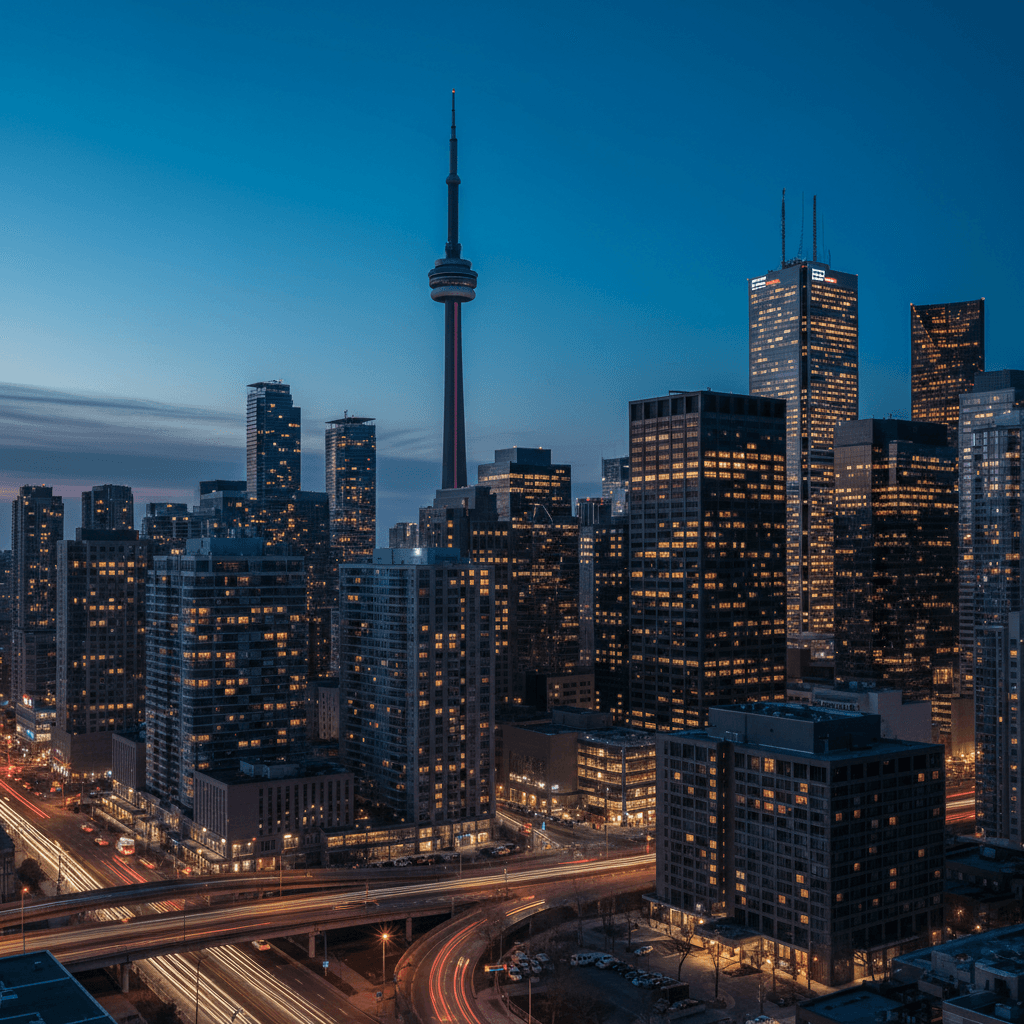
Prime Minister Mark Carney announced on April 17 that Canada will host its first-ever Canada Investment Summit in Toronto on September 14 and 15, a two-day gathering designed to pull hundreds of billions of dollars in foreign capital into the country over the next five years. Standing alongside senior officials from the Canada Pension Plan Investment Board and the Public Sector Pension Investment Board, Carney framed the summit as the centrepiece of a broader strategy to lift Canada out of a long investment slump and to anchor nation-building projects in clean energy, housing, defence and critical minerals.
The government says it will invite roughly 100 of the world's largest institutional investors, sovereign wealth funds and corporate CEOs. According to public reporting on the guest list, invitees include global private investment firms such as BlackRock and sovereign funds such as Singapore's GIC, along with major pension investors from Europe and the Middle East. Carney, a former central banker who ran both the Bank of Canada and the Bank of England, will personally lead the Canadian pitch.
The announcement lands at a fraught moment for the Canadian economy. Manufacturing investment has been hit hard by a year of United States tariffs on steel, aluminum and autos. Business investment per worker remains well below American levels, a gap the federal finance department has flagged as a persistent drag on productivity and wages. The summit is the clearest signal yet that Carney sees foreign capital as part of the answer.
What Carney announced
The summit will run for two days in Toronto and will combine plenary sessions with private meetings between investors and federal and provincial officials. The government describes the event as a venue to showcase Canada's project pipeline, the regulatory reforms contained in the Major Projects Office legislation, and the tax and incentive framework that Ottawa has rolled out over the past year.
Carney set an ambitious headline number. Over five years, the government's capital investments and incentives in support of third parties, totalling about $280 billion, are expected to enable more than $1 trillion in total investment from public, private, and institutional partners. The figure is meant to include everything from pension fund commitments to private equity deals, green infrastructure financing and corporate capital expenditure on Canadian soil.
The summit is being co-hosted by CPP Investments and PSP Investments, two of Canada's largest and most sophisticated institutional investors. Their participation signals that domestic pension capital will be expected to co-invest alongside foreign partners, echoing a recent federal push to encourage Canadian pension funds to allocate more of their roughly $2 trillion in assets into Canadian infrastructure and innovation.
The $1 trillion pitch
The $1 trillion target is aspirational rather than binding. It sums up expected public and private capital over a five-year horizon and assumes that matching private dollars can be unlocked by federal commitments in areas such as housing, clean electricity, artificial intelligence infrastructure and defence production. Ottawa has already unveiled roughly $280 billion in planned federal spending, loans, guarantees and equity stakes that it argues will crowd in several times that amount in private capital.
Carney has repeatedly argued that Canada has a deep pool of investable projects but a shallow pool of patient capital willing to finance them. He has pointed to port expansions on the West Coast, small modular reactor deployments in Ontario and Saskatchewan, liquefied natural gas export capacity in British Columbia, and a new generation of critical minerals mines in the Territories as examples of projects that need long-duration equity and debt financing.
Institutional investors will be listening closely to what the government offers in return. Pension funds and sovereign investors typically look for regulatory predictability, timely permitting, stable tax treatment and credible co-investment partners. Canadian provinces, which control natural resource permitting and much of electricity policy, will also be under pressure to coordinate with Ottawa if the summit is to deliver concrete commitments.
The context: tariffs and trade
The summit takes place in the shadow of a punishing trade environment with the United States. The Trump administration's 25 per cent tariffs on autos, steel and aluminum remain in force, and bilateral negotiations over the review of the Canada, United States and Mexico Agreement have begun without clear guardrails. Manufacturing has shed about 51,800 jobs over the past year, and business leaders have openly questioned whether Canada can retain its auto assembly base.
Carney has pitched the investment summit as part of a pivot away from overreliance on the American market. His government has publicly described the era of deep economic integration with the United States as effectively over, and has emphasised diversifying exports, attracting investment from Asia and Europe, and building up a domestic industrial base capable of supplying Canadian infrastructure and defence procurement.
The Iran war and the ongoing disruption in the Strait of Hormuz have added an energy security dimension to the summit. Canadian crude, LNG and uranium have become more attractive to international buyers looking for alternatives to Middle East supply, and Canadian producers stand to see elevated prices for much of 2026. That is expected to be a significant theme at the September gathering.
Who is invited
The government has not released a full guest list, but reporting from The Logic, the Globe and Mail and CBC News describes an invitation list focused on the largest global allocators of capital. BlackRock, the world's largest asset manager, is reported to be on the list, along with Brookfield, Apollo, KKR and several Gulf and Asian sovereign funds. Canadian co-hosts will include CPP Investments and PSP Investments, and senior executives from Canadian banks are expected to attend.
Provincial premiers are expected to participate directly, pitching projects in their own jurisdictions. Ontario is likely to showcase the Ring of Fire, nuclear refurbishment and battery manufacturing, while Alberta will promote carbon capture, pipelines and petrochemical projects. British Columbia will highlight LNG Canada Phase 2, port expansion and clean electricity, and Quebec is expected to pitch its aluminum, hydro and aerospace industries.
Indigenous-led investment partnerships will also feature in the programme. Ottawa has made loan guarantees to First Nations equity stakes in major projects a core plank of its resource strategy, and officials have signalled that several Indigenous-led co-investment models will be showcased to the global audience.
Reaction from business and opposition
The business community has largely welcomed the announcement. The Business Council of Canada and the Canadian Chamber of Commerce both issued supportive statements, describing the summit as overdue recognition that Canada must actively court international capital rather than rely on historic ties. The Investment Industry Association of Canada said the event could help reposition the country as an investment destination in a time of geopolitical flux.
Conservative leader Pierre Poilievre's office has struck a more sceptical tone, arguing that the summit amounts to an admission that Carney's own policies have failed to unlock domestic investment. Conservatives have pointed to a slumping productivity record and to per-capita gross domestic product figures that have barely moved since 2019 as evidence that new summits are no substitute for broad-based tax and regulatory reform.
Labour groups and climate organisations are watching closely. Unifor, the country's largest private-sector union, has said the summit must not become a showcase for deregulation, while climate groups are pressing Ottawa to ensure that any new fossil fuel investment is accompanied by stronger emissions rules. Those concerns have been sharpened by the simultaneous retreat of several Canadian banks from 2030 climate targets, a development that has put federal climate credibility back in the spotlight.
What it means for Canadians
For households, the summit's impact will depend on whether announced investments translate into construction, jobs and exports. Government officials argue that the projects under discussion, from housing and transit to clean electricity and defence manufacturing, are the kinds of long-duration builds that tend to employ Canadians for years or decades. CPP Investments and PSP Investments have also made clear that their participation is aimed at generating risk-adjusted returns for plan members, not subsidising federal policy.
Workers in manufacturing communities hit hardest by tariffs are likely to be watching for concrete commitments. Windsor, Hamilton, Oshawa, Saguenay and Sault Ste. Marie have all been buffeted by the trade war, and local leaders have pressed the federal government to match foreign investment announcements with procurement and supply-chain decisions that keep Canadian factories running.
For investors, the summit is an opportunity to test whether Carney's government can deliver on the regulatory and permitting reforms it has promised. The Major Projects Office is meant to cut approval timelines by as much as half, and a federal project list of strategic priorities is meant to concentrate capital and expertise. Sceptics note that Canada has announced similar streamlining before without consistently delivering on the ground.
What's next
Between now and September, the government is expected to release a shortlist of so-called nation-building projects that will be front and centre at the summit. Officials have signalled that the list will include a mix of energy, minerals, transport and housing projects, each anchored by a mix of federal support, provincial approvals and potential Indigenous equity participation.
The Spring Economic Update, which Finance Minister Francois-Philippe Champagne will table on April 28, is expected to lay additional groundwork for the summit. The update is expected to include new capital allocations for loan guarantees and equity co-investment, as well as updates on the tax credits for clean technology, hydrogen, clean electricity and critical minerals announced in the last federal budget.
The September summit itself will be judged on whether it produces binding commitments rather than headline numbers. Observers will be watching for signed memoranda of understanding, equity commitments from sovereign funds, and concrete deals linking global investors to specific Canadian projects. If Carney can deliver those, the event could mark a genuine turning point. If it becomes a showcase without follow-through, it risks reinforcing the very narrative of Canadian investment stagnation that the government is trying to dispel.