China Aircraft Carrier Transit Raises Taiwan Strait Tensions With Canadian Trade Stakes
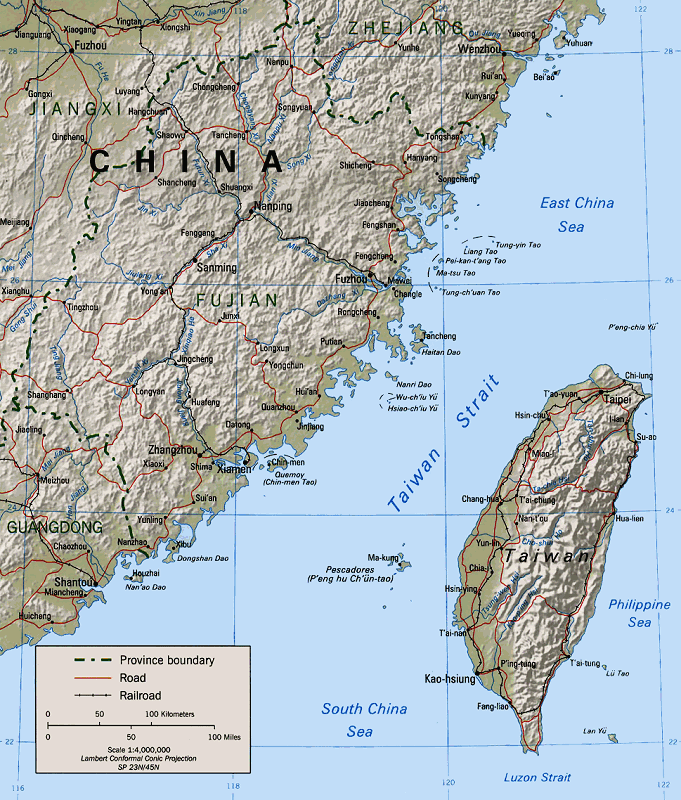
The Chinese aircraft carrier Liaoning sailed through the Taiwan Strait on April 20, marking the first transit of the sensitive waterway by a Chinese aircraft carrier since late last year and the latest in a steady stream of pressure tactics directed at Taiwan. The transit prompted Taipei to publicly track the vessel's movements and has triggered fresh international concern about the trajectory of cross-strait tensions.
For Canada, the developments matter well beyond the immediate diplomatic significance. A Taiwan crisis would be the largest single shock to global supply chains in modern history, and Canadian businesses, consumers and policymakers are increasingly aware of how exposed the country's economy is to events in the Taiwan Strait. A Chatham House analysis published this month argued that a Taiwan crisis would cause far more global economic damage than even the closure of the Strait of Hormuz, which has been the centre of attention for the past two months.
The carrier transit
The Liaoning's transit was the latest in a series of high-profile Chinese military movements in and around Taiwan. Taiwan's defence ministry reports almost daily Chinese military activity around the island, including air force flights into Taiwan's air defence identification zone, navy patrols in nearby waters and combined exercises that test response procedures.
Unnamed Taiwanese security officials have reported that Beijing recently deployed approximately 100 coast guard and naval vessels across the East and South China Seas, up from typical levels of 50 to 60 vessels. The increase coincided with a high-profile diplomatic visit by the Kuomintang party chairwoman to Beijing earlier this month, with security analysts viewing it as a deliberate signal to the wider region.
Japan has been a particular focus of Chinese pressure recently. A Japanese Maritime Self-Defense Force destroyer transited the Taiwan Strait this month, and Beijing's response was sharply critical. People's Liberation Army officials warned that Japan would "bear the consequences," continuing a pattern of escalating verbal exchanges that have characterised China-Japan relations through the spring.
The diplomatic moves
Chinese President Xi Jinping met with Kuomintang party chairwoman Cheng Li-wun in Beijing on April 10, in the first encounter between Xi and a sitting Taiwanese opposition leader in nearly a decade. Xi reiterated that "Taiwan independence" remains the primary threat undermining stability across the Taiwan Strait, framing his government's actions as defensive responses to that perceived threat.
Taiwanese President William Lai Ching-te, of the governing Democratic Progressive Party, has continued to maintain a careful posture, asserting Taiwan's right to self-determination while avoiding actions that could be characterised as provocative. He cancelled a planned visit to Eswatini, one of Taiwan's diplomatic allies, on April 21 after nearby Mauritius, Madagascar and Seychelles revoked overflight permissions for his aircraft, in what was widely seen as a Chinese-influenced diplomatic move.
The cumulative effect has been to ratchet up regional tensions in ways that have alarmed Asia's other major powers. Japan, South Korea and the Philippines have all responded with strengthened military exercises and security cooperation. The Quadrilateral Security Dialogue, which includes the United States, Japan, Australia and India, has resumed an active diplomatic schedule.
The Canadian economic exposure
Canada's economy is deeply integrated with the Asia-Pacific. Trade flows through Canadian Pacific ports, including Vancouver and Prince Rupert, are dominated by Asian shipping. Canadian exports to China, Japan, South Korea and Southeast Asia represent significant shares of the country's overall trade. Canadian semiconductor and electronics supply chains, like those of every other developed economy, depend heavily on Taiwanese fabrication.
Taiwanese chipmakers, led by Taiwan Semiconductor Manufacturing Company, produce the bulk of the world's most advanced semiconductors. A Taiwan crisis would disrupt those supplies in ways that would affect Canadian manufacturers, telecommunications networks, automotive production and increasingly, the artificial intelligence sector that depends on advanced chips.
The financial implications are equally significant. Canadian banks, pension funds and insurance companies have substantial exposure to Asian markets, and a Taiwan crisis would trigger market moves on a scale that the Canadian financial system would feel quickly. The Bank of Canada has been monitoring the geopolitical risk environment closely, and Governor Tiff Macklem has cited cross-strait tensions in past commentary as a structural risk.
Canadian policy responses
The Canadian government has signalled growing attention to the Taiwan Strait. Recent Indo-Pacific strategy documents have emphasised the importance of stability in the region and have called for closer coordination with allies. The Royal Canadian Navy has continued to conduct freedom-of-navigation operations in the broader region as part of multilateral patrols.
Carney's federal government has approached the Taiwan question with careful diplomatic language. Canada formally adheres to a One China policy, but maintains substantial unofficial economic, cultural and educational ties with Taiwan. The Canadian Trade Office in Taipei serves as the de facto Canadian diplomatic presence on the island, and Taiwan's representative office in Ottawa fulfils the equivalent role.
The Defence Industrial Strategy, launched in February, includes provisions designed to expand Canadian capacity in areas relevant to Indo-Pacific security, including shipbuilding, surveillance systems and critical minerals supply. Those provisions reflect a recognition that Canadian defence policy will need to take Asian theatres more seriously than has historically been the case.
The Canadian Taiwanese community
Canada is home to a substantial Taiwanese community, with concentrations in Toronto and Vancouver. Taiwanese Canadians have been deeply attentive to events in the Strait, with several community organisations active in advocacy, cultural preservation and humanitarian fundraising. The community's voice has grown more visible in Canadian foreign policy debates over the past several years.
Federal officials have continued to engage with Taiwanese Canadian community leaders, both through formal channels and through community events. The community has called for clearer Canadian policy commitments on Taiwan, including possible expansion of trade arrangements and more visible parliamentary engagement.
Canadian university students from Taiwan, of whom there are several thousand at any given time, are part of a broader educational link that has long been one of the most important dimensions of the bilateral relationship. Canadian universities have welcomed Taiwanese students and faculty for decades, and those connections have built a layer of resilience in the relationship beyond formal diplomacy.
The Chinese Canadian context
Canada is also home to one of the largest Chinese Canadian communities outside of Asia, with deep historical roots dating back to the construction of the Canadian Pacific Railway. The community is diverse, with members tracing their origins to Hong Kong, mainland China, Taiwan and Chinese diaspora communities across Southeast Asia.
The cross-strait tensions affect Chinese Canadian communities in complex ways. Some community members maintain close family and economic ties to mainland China, while others are deeply opposed to the policies of the People's Republic. The diversity of views within the community reflects the wider complexity of Canadian engagement with the region.
Federal officials have emphasised that Canadian China policy should not be conflated with attitudes toward Chinese Canadian communities. The principle has been particularly important given concerns about foreign interference, which have generated significant political attention over the past several years.
What it means for Canadians
The Taiwan Strait situation is perhaps the most consequential strategic question of the next decade for global trade. A crisis would have impacts on Canadian inflation, supply chains, financial markets and security commitments that would dwarf the current Iran war. The Canadian economy's exposure to the region is substantial enough that complacency about the Strait would be unwise.
For Canadian businesses, the immediate question is how to build resilience into supply chains that depend on Asian production. Federal programmes supporting reshoring, friend-shoring and supply chain diversification have been receiving more attention, but the fundamental dependencies remain.
For Canadian consumers, the connection is less visible but no less real. Smartphones, vehicles, appliances, medications and many other products that Canadians purchase depend on supply chains that pass through the Taiwan Strait or that include components made in Taiwan. Disruption would translate into both shortages and higher prices over time.
What's next
The Taiwan Strait situation is unlikely to resolve in the near term. China's pressure tactics will probably continue, and Taiwan will continue to maintain its current posture. The United States, Japan and other regional partners will continue to invest in deterrence, and the trajectory of any crisis will depend on how that deterrence interacts with Chinese strategic calculations.
For Canada, the next several months will likely include further engagement on Indo-Pacific strategy, continued investment in supply chain resilience and continued multilateral defence cooperation. The federal government has signalled that the region will be a priority of its broader foreign and economic policy work, and the cross-strait situation will continue to shape that agenda.
The Liaoning's transit was a single event, but it fits into a pattern that demands sustained Canadian attention. The Strait of Hormuz crisis has shown how rapidly a regional shock can become a Canadian household concern. The Taiwan Strait, with stakes that are even higher, is the strategic question that will define much of the next decade.
Spotted an issue with this article?
Have something to say about this story?
Write a letter to the editor