Pope Francis Funeral Draws Canadian Mourners as Conclave Set for May 7
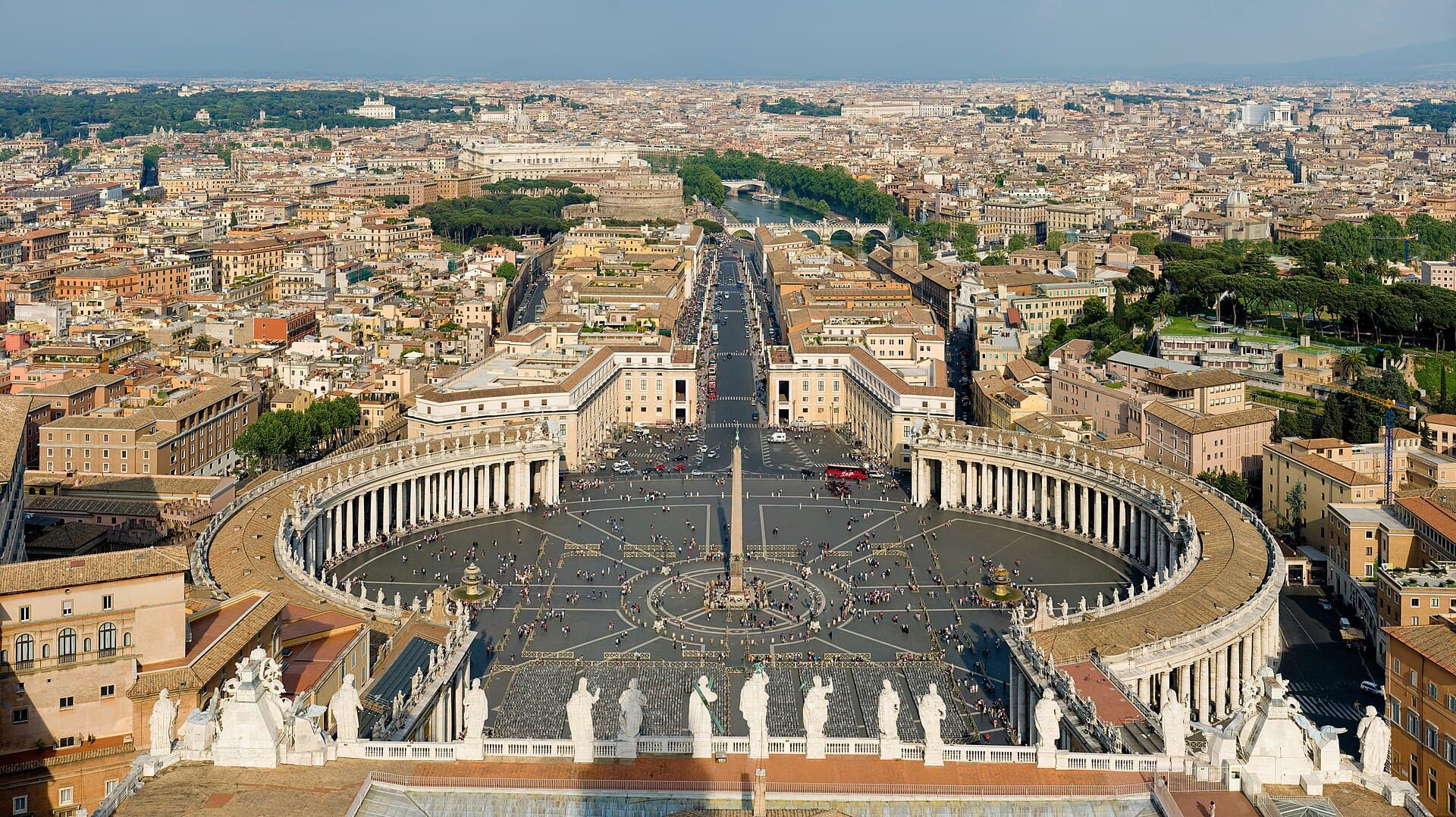
The Vatican has confirmed that the conclave to elect the next pope will begin on May 7, following the funeral of Pope Francis on April 26 that drew more than 250,000 mourners to St. Peter's Square. The funeral, attended by religious and political leaders from around the world, marked the start of a transition that will reshape the Roman Catholic Church for years to come and that has particular resonance for Canada's significant Catholic population.
Pope Francis died on April 21 at the age of 88. His passing came after a long period of declining health, but the actual moment was nonetheless one of profound significance for the global Catholic community. The funeral, held under bright Mediterranean skies on Saturday, was attended by King Charles, multiple US presidents past and present, and prime ministers and presidents from across the world.
The funeral itself
The funeral mass was led by senior cardinals at the steps of St. Peter's Basilica, with the late Pope's coffin displayed before being moved to the Basilica of St. Mary Major for burial. The departure from St. Peter's was itself a notable choice, with Francis having explicitly requested burial at St. Mary Major, breaking with the tradition of papal interment in the Vatican.
The crowds were among the largest the Vatican has hosted in years. Estimates placed the attendance at approximately 250,000 inside St. Peter's Square and the surrounding area, with millions more watching the broadcast live around the world. Canadian broadcasters carried the funeral on multiple networks, with the CBC and Radio-Canada providing French-language coverage that reached deep into Quebec's predominantly Catholic communities.
The list of attending dignitaries reflected the global significance of the late pontiff. World leaders from Argentina, where Francis was born, to the Philippines, with its large Catholic population, sat alongside European royalty and heads of government. The mix of religious and secular figures underscored the unique role of the papacy in modern global affairs.
The Canadian connection
Canada's Catholic population, estimated at roughly 11 million according to recent census data, makes the country one of the largest Catholic communities outside Europe. The Catholic Church holds particular significance in Quebec, where it has shaped centuries of social, educational and cultural history, even as the province has secularised over the past several decades.
Governor General Mary Simon led the Canadian delegation to the funeral, accompanied by Prime Minister Mark Carney and several senior ministers. Carney issued a statement honouring the late Pope's commitment to climate action, social justice and reconciliation with Indigenous peoples, themes that have resonated particularly in Canada given the Pope's 2022 "penitential pilgrimage" to Canadian residential school sites.
The 2022 visit, during which Francis offered an apology for the role of Catholic institutions in Canada's residential school system, remains one of the defining moments of his papacy in Canadian eyes. Indigenous leaders and survivors of the residential school system noted his death with statements that acknowledged both the apology and the unfinished work of reconciliation.
The conclave process
The College of Cardinals announced on April 28 that the conclave will begin on May 7. The cardinals are now in the nine-day mourning period known as the Novendiales, during which the Church traditionally pauses to grieve before turning to the practical task of choosing a successor.
Of the 135 members of the College of Cardinals under the age of 80 who are eligible to vote, Pope Francis personally appointed 108. That means roughly 80 per cent of the votes will be cast by cardinals elevated by the late Pope, a fact that observers have noted will likely shape the outcome.
The conclave will take place in the Sistine Chapel, with the cardinals sworn to secrecy and cut off from outside communication for the duration of the voting. The selection process requires a two-thirds majority, and votes are expected to take place twice a day, morning and afternoon, until a successor is chosen.
Canadian cardinals
Canada has several cardinals in the College, with Cardinal Gérald Cyprien Lacroix of Quebec City and Cardinal Michael Czerny among the most prominent. Both are eligible to vote in the conclave. Their participation marks a significant moment for Canadian Catholicism, with the country's voice represented at the highest levels of the Church's deliberations.
Canadian Catholics will be following the deliberations closely, both for the choice itself and for what it signals about the Church's future direction. Pope Francis's pontificate was characterised by an emphasis on social justice, climate action and outreach to marginalised communities, themes that will be tested in the selection of his successor.
Canadian Catholic media, including outlets serving English- and French-speaking communities, are expected to provide extensive coverage of the conclave proceedings. Canadian theologians, parish priests and lay leaders will be watching for signals about the next phase of Church governance.
Reconciliation and the Canadian church
Pope Francis's role in advancing reconciliation between the Catholic Church and Indigenous Peoples in Canada was a defining feature of his engagement with the country. The 2022 visit included emotional encounters with residential school survivors, and the apology delivered at Maskwacis, Alberta, was widely seen as a meaningful step in a long process.
Indigenous leaders have noted that the apology was an important moment but that significant work remains. The implementation of recommendations from the Truth and Reconciliation Commission, the return of artifacts held in Vatican collections and the ongoing search for unmarked graves at residential school sites are all part of an unfinished agenda.
The next pope's posture toward reconciliation work will be one of the questions Canadian Catholics, Indigenous leaders and government officials will be watching. The continuity of Francis's commitments is not guaranteed, and the new pontiff's approach will set the tone for the next phase of the Church's engagement with Canada.
Quebec and the Catholic conversation
The funeral has reignited conversations about Catholicism's place in Quebec society. The province secularised dramatically during the Quiet Revolution of the 1960s, and weekly mass attendance has fallen sharply over the past several decades. The Catholic Church's institutional footprint, however, remains substantial, including in the heritage of the province's schools, hospitals and cultural institutions.
Quebec Premier Christine Fréchette, who was sworn in earlier this month, attended a memorial mass at Notre-Dame Basilica in Old Montreal alongside Archbishop Christian Lépine and other senior Quebec Catholic leaders. The premier's presence reflected the careful relationship between the province's secular state and its enduring Catholic identity.
Across the rest of the country, parishes have held memorial masses, with Catholic schools, universities and hospitals participating in the marking of the funeral. The combination of formal mourning and broader public engagement has been one of the more notable features of the past several days.
The papal legacy
Pope Francis's pontificate, which began in 2013, was marked by a series of consequential reforms and statements. He emphasised climate change, economic inequality, migrant rights and the inclusion of marginalised groups within the Church. His 2015 encyclical Laudato Si on care for the environment had a particular resonance with Canadian audiences and remains influential in Canadian Catholic environmental advocacy.
Critics within the Church have argued that Francis moved either too quickly or too slowly on various reform questions. Internal Church politics have remained intense, and the conclave on May 7 will be the moment when the various factions of Catholic leadership formally express their preferences for the future direction of the institution.
For Canadians, the broader question is what the next pontificate will mean for the Canadian Church. The continuation of reconciliation work, the integration of younger generations and the engagement with social and environmental questions will be among the most important areas to watch.
What it means for Canadians
For Canadian Catholics, the next several weeks will be a time of mourning, reflection and anticipation. The conclave's outcome will affect parish life, Catholic education, Catholic charitable institutions and the Church's broader role in Canadian society for years to come.
The non-Catholic Canadian public will also be watching, given the Catholic Church's prominent role in Canadian history, especially in Quebec, and its continuing significance for many Canadian communities. The conclave is a moment when the Vatican's deliberations briefly enter the global news cycle in a way that few other religious events do.
What's next
The conclave begins on May 7. The duration is unpredictable, with some past conclaves concluding in a single day and others extending across many days. The Vatican will signal the outcome through smoke from the Sistine Chapel, with white smoke indicating that a new pope has been elected.
Once elected, the new pope will appear on the central balcony of St. Peter's Basilica and deliver his first blessing as pontiff. The choice of papal name will be one of the first signals of the new direction, followed by the inaugural mass and the formal start of the new pontificate.
For Canadian Catholics, the next several days will be a period of quiet anticipation. The institution that has shaped so much of the country's history is preparing to choose its next leader, and the result will reverberate across the Canadian Catholic community in ways large and small.
Spotted an issue with this article?
Have something to say about this story?
Write a letter to the editor