Israel-Lebanon Ceasefire Extended Three Weeks as Violations Continue
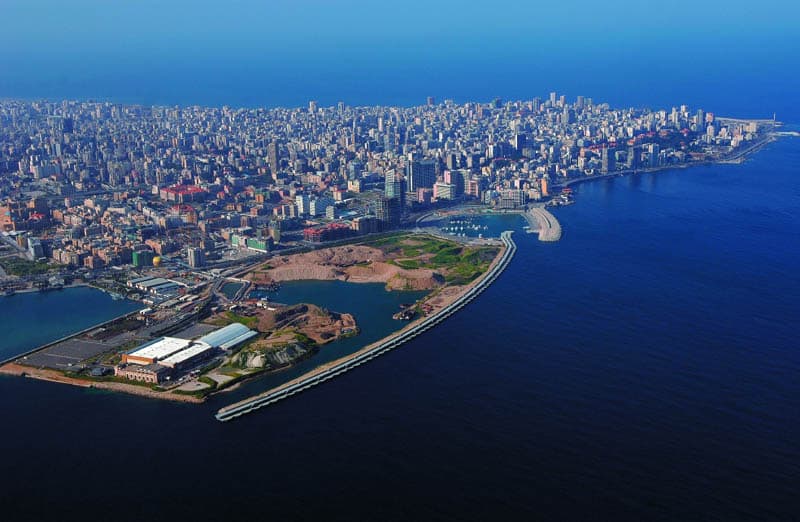
The fragile ceasefire between Israel and Lebanon has been extended for three weeks under a US-brokered arrangement, US President Donald Trump announced this week, after the original 10-day truce was set to expire. The extension has been welcomed cautiously by international observers, but reports of breaches on both sides have continued, leaving Canadian Lebanese families and the broader Canadian diaspora deeply concerned about the trajectory of the latest Middle East conflict.
The original ceasefire, agreed on April 16, was the product of weeks of escalating violence between Israel and Hezbollah forces tied to the broader 2026 Iran war. The truce was intended to halt active fighting and create conditions for a longer-term settlement. By the time the original deadline approached, more than 2,000 people had been killed in Lebanon and over one million had been displaced.
What the extension covers
The three-week extension applies to the same terms as the original ceasefire, with both Israel and Lebanon agreeing to halt offensive operations across the line of contact. Trump announced the extension on April 23, framing it as a necessary step to allow direct talks toward a longer-term agreement. US officials have indicated that talks are scheduled to take place in Washington in the coming weeks.
The extension has been complicated by reports of repeated violations. Israeli forces have been accused of carrying out demolitions, artillery shelling and land-clearing operations in border areas inside Lebanon. The Lebanese government has formally protested these actions, arguing that they violate the very premise of the ceasefire.
A key area of dispute is a military zone roughly 10 kilometres north of the border inside southern Lebanon that Israel has called a "Yellow Line." Israel has indicated it intends to maintain a security presence in this zone, but Lebanon and Hezbollah have rejected what they describe as an occupation of sovereign territory. The Yellow Line is one of the major issues that the upcoming talks will need to resolve.
The Canadian Lebanese community
Canada is home to one of the largest Lebanese diaspora communities in the world. Estimates put the size of the community at more than 200,000 people, with major concentrations in Montreal, Ottawa, Toronto, Halifax and Edmonton. The community has deep, multi-generational roots in Canada, dating back to the late 19th century, and remains closely connected to events in Lebanon.
Canadian Lebanese organisations have been active throughout the conflict, raising humanitarian funds, advocating for Canadian government support and providing information to community members about consular services. Several organisations, including the Canadian Lebanese Society, have called on the federal government to do more to support Canadians stranded in Lebanon and to advance ceasefire diplomacy.
Federal officials have expanded consular support for Canadian citizens in Lebanon, including by chartering evacuation flights during the worst phases of the conflict. The number of Canadian passport holders in the country fluctuates, but estimates have placed it at several tens of thousands at various points.
The Canadian government's position
Prime Minister Mark Carney's government has maintained a posture that balances support for Israel's right to self-defence with concern about civilian casualties and the humanitarian situation in Lebanon. Foreign Affairs Minister officials have engaged with regional partners, the European Union and the United States to push for de-escalation.
Canada has also been part of multilateral humanitarian efforts. Federal officials have committed funding through United Nations agencies and Canadian non-governmental organisations to support displaced civilians and rebuild damaged infrastructure. The scale of the Lebanese humanitarian need is substantial, and federal contributions are expected to grow if the ceasefire holds.
Opposition parties have varied in their responses. The Conservative Party has emphasised support for Israel's security operations against Hezbollah while urging continued diplomatic engagement. The New Democratic Party has pushed for stronger statements about civilian protections and for an arms-export review. The Bloc Québécois has called for expanded humanitarian aid to Lebanese refugees, including those with family in Quebec.
The wider conflict
The Israel-Lebanon ceasefire is part of a larger regional picture that includes the ongoing US-Iran war and the disruption of shipping in the Strait of Hormuz. The interconnected nature of the conflicts means that any breakdown in one area can quickly affect the others.
Hezbollah's relationship with Iran is central to that interconnection. The militant group has historically been one of Iran's most important regional partners, and its capacity to fight Israel was significantly degraded by Israeli operations in the months leading up to the ceasefire. The current Hezbollah position has been described by analysts as defiant but constrained by the broader Iranian losses.
The broader Lebanese state has also been affected. The Lebanese government has been working to assert sovereign authority across the territory, including in southern Lebanon where Hezbollah has historically operated with significant autonomy. The longer-term political settlement that the talks are intended to produce will likely require complex negotiations involving the Lebanese government, Israel, the United States and various regional actors.
Humanitarian conditions
The humanitarian situation in Lebanon remains acute. The displacement of more than one million people has overwhelmed Lebanese institutions, and international aid agencies have been working to provide shelter, food, water and medical care. The infrastructure damage in southern Lebanon and parts of the Bekaa Valley is extensive.
Aid organisations have called for expanded humanitarian access. The United Nations has continued to coordinate aid through its various agencies, with Canadian funding flowing through several established channels. The Canadian Red Cross and other Canadian organisations have launched fundraising appeals that have generated meaningful donations.
For displaced Lebanese families, the ceasefire offers the possibility of return, but the destruction of housing and infrastructure means that return for many will be slow and complicated. Reconstruction will likely take years and will require sustained international financing.
What it means for Canadians
The Israel-Lebanon ceasefire matters for Canadians on multiple levels. The diaspora community has direct family connections to the conflict, and many Canadian families have spent the past several months alternating between hope and despair as the situation has shifted. The extended ceasefire has provided some respite, even as the violations have kept anxieties high.
The conflict has also affected Canadian energy prices through its connection to the broader Iran war and the Strait of Hormuz crisis. Higher gasoline prices in Canada are directly tied to the regional instability, even though most Canadian motorists do not draw an immediate connection between events in southern Lebanon and prices at their local stations.
The Canadian government's diplomatic posture is also being tested. Carney has emphasised that Canada will play an active role in seeking de-escalation, but the country's direct leverage is limited. Working through multilateral institutions and alongside US, European and Arab partners is the principal mechanism available for Canadian influence.
What's next
The three-week extension provides a window for direct talks aimed at a longer-term agreement. Those talks are expected to address the Yellow Line, the disarmament of Hezbollah, Israeli border-security arrangements, the implementation of UN Security Council resolutions and the broader Lebanese political situation. A successful outcome would substantially reduce regional tensions, while a breakdown could trigger a return to active conflict.
For the Canadian Lebanese community, the next several weeks will be a particularly tense period. Family members in Lebanon, in Canada and across the broader diaspora will be watching every development. Canadian humanitarian and consular operations will continue to play a role, and the federal government's posture will be a focus of community advocacy.
The extended ceasefire is, at this point, a fragile pause rather than a settlement. Whether it becomes the foundation for a more durable arrangement will depend on both the outcome of the parallel talks and the broader trajectory of the US-Iran conflict. For Canadians watching from afar, every day of relative calm is a small reprieve, and every reported violation a reminder of how delicate the current moment remains.
Spotted an issue with this article?
Have something to say about this story?
Write a letter to the editor