Fréchette Unveils Quebec Cabinet With Drainville on Economy as Election Looms
Premier Christine Fréchette unveiled her first cabinet on Tuesday afternoon, putting in place a 29-member team that mixes returning Coalition Avenir Québec veterans with five new faces, just months before a provincial election scheduled for October. The most striking appointment was Bernard Drainville, whom Fréchette defeated in the CAQ leadership race on April 12, taking over the economy, innovation and energy portfolio that Fréchette herself held in the previous government.
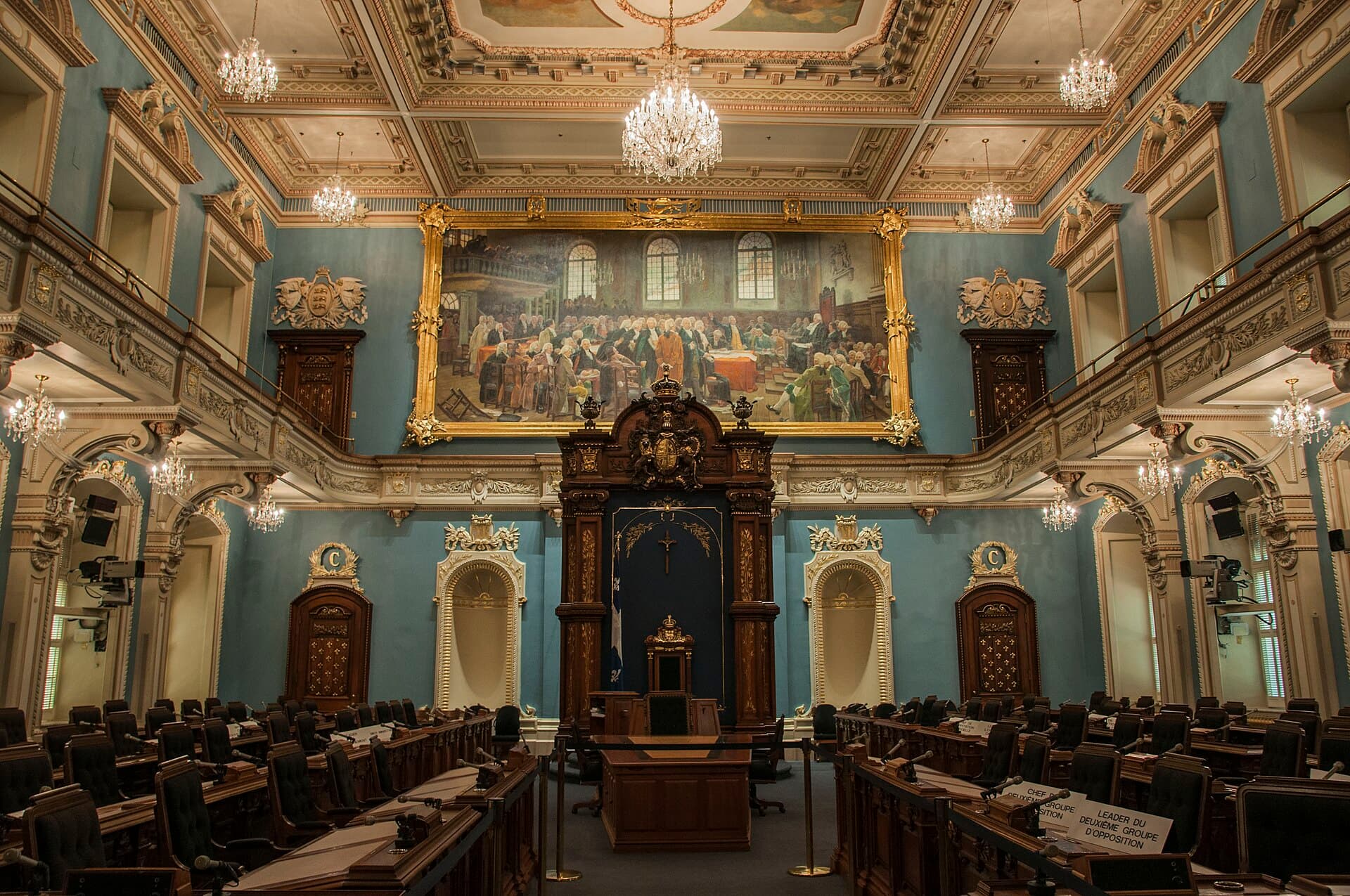
Fréchette, who was sworn in on April 15 as the 33rd premier of Quebec, framed the cabinet as a vehicle for what she called a new momentum, while signalling continuity on the core CAQ commitments to economic development, identity and provincial autonomy. Her message to Quebecers, delivered shortly after the swearing-in ceremony at the National Assembly, was that the government is preparing for both a tough re-election fight and a renewed confrontation with Ottawa.
Who got what
Drainville's move to economy, innovation and energy is the headline appointment, signalling that Fréchette wants to project unity in a party that emerged bruised from a leadership campaign. The portfolio is consequential: it covers Quebec's industrial strategy, its energy transition under Hydro-Québec and a sprawling file of subsidies and incentives that have shaped CAQ economic policy since 2018.
Other senior portfolios were largely retained by veterans. Finance, health and education kept their previous incumbents, with Fréchette emphasising that her government would not pause work on the budgetary trajectory or the major reforms launched late in the Legault era. Five new ministers were elevated, with the Premier highlighting the inclusion of younger members and several from regions outside the Montreal-Quebec City corridor.
Fréchette herself remains in charge of intergovernmental affairs, a portfolio she signalled will be central as Quebec presses Ottawa on language, immigration and the implementation of federal policies through the Carney era. Her team has also retained responsibility for the Charter of the French Language and the related litigation over Bill 21 and Bill 96.
The political backdrop
Fréchette became leader on April 12 with 57.9 per cent of the membership vote, defeating Drainville in a contest that exposed real ideological differences within the party. She is the first Generation X premier of Quebec, replacing François Legault, who announced his intention to step down in January as the party slumped in the polls.
The CAQ enters the cabinet shuffle in third place in most public surveys, behind a resurgent Parti Québécois and a Quebec Liberal Party under leader Marc Tanguay. The Parti Québécois has pledged to hold a third independence referendum by 2030 if it forms a majority government in October, and the looming sovereignty fight has reshaped the political calendar in ways that will define Fréchette's brief premiership.
The Premier signalled in her swearing-in speech that she would push back hard against what she described as federal overreach on immigration thresholds, language policy and infrastructure approvals. She has also pledged to fight Ottawa over any attempt to limit Quebec's use of the notwithstanding clause, an issue that has flared since federal Justice Minister proposals earlier this year.
Reaction from the opposition
Parti Québécois leader Paul St-Pierre Plamondon dismissed the cabinet as a recycling of the Legault team in new clothing, arguing that voters who want generational change in October should look elsewhere. "The CAQ has had eight years to deliver on its promises and is now asking for more time," he said in a statement on Tuesday evening.
Quebec Liberal Party leader Marc Tanguay focused his criticism on the economic file, questioning whether Drainville's experience in education and digital government prepared him for a sweeping mandate that includes Hydro-Québec, manufacturing strategy and trade-related responses to the US tariffs. The Quebec Liberals have positioned themselves as the most moderate federalist option in the October race, and Tanguay said the cabinet shuffle did not change that calculation.
Québec solidaire's spokespeople welcomed the elevation of younger members but said the cabinet still lacked diversity at senior portfolios. The party also flagged the absence of a stand-alone climate ministry, an issue that has become more politically charged after Fréchette signalled openness to an east-west pipeline carrying Alberta crude across Quebec, a position the previous Legault government had ruled out.
What it means for Canadians
Quebec's political pivot matters well beyond the province. The province's relationship with Ottawa is central to several of Prime Minister Mark Carney's priorities, including the Defence Industrial Strategy, the housing accelerator and the country's response to US tariffs on aluminum, steel and forestry. Aluminum smelters in the Saguenay-Lac-Saint-Jean region are among the Canadian operations most exposed to Washington's 50 per cent duty.
The cabinet shuffle also affects ongoing federal-provincial negotiations over health transfers, immigration thresholds and the funding of major transit projects in Montreal. Fréchette's approach to these files will set the tone for what could be one of the most consequential federal-provincial relationships of the Carney era.
For Quebec voters, the most immediate test will come in the legislature when the National Assembly returns from its short post-leadership break. Fréchette has pledged to table revised priorities and to deliver a budget update before the October election, including measures targeted at affordability and language protection.
The Drainville signal
The decision to name Drainville to the economic portfolio is a strategic choice with several layers. Drainville's leadership campaign emphasised tougher language and identity policies, and Fréchette's team has calculated that giving him a major economic file will both unify the party and reassure the CAQ base that identity issues remain on the agenda even as the new Premier focuses on growth and affordability.
For Drainville himself, the appointment is a chance to reposition for any future leadership opening, particularly if the CAQ struggles in October. His mandate will include managing Quebec's response to US tariffs, the future of Hydro-Québec's massive capital programme and decisions about whether to deepen the province's role in the federal Defence Industrial Strategy.
Bernard Drainville and Christine Fréchette had clashed publicly during the leadership race over questions of pace and tone in identity policy, and the cabinet announcement was designed in part to demonstrate that the two can work together in government.
What's next
Fréchette has said her government will table a revised set of priorities in the National Assembly within the next two weeks, with affordability measures expected to be a centrepiece. The Premier is also scheduled to meet with Carney in Ottawa in early May to discuss tariffs, infrastructure and immigration thresholds.
The October election will define how much of Fréchette's agenda survives. Polling shows the Parti Québécois ahead in seat projections, the Liberals consolidating in Montreal and the CAQ defending a narrowing slice of the regions. Fréchette has presented herself as the candidate best able to defend Quebec's interests in a turbulent international environment, while opponents argue that the province needs a clean break from the Legault era.
For now, the cabinet is in place, the legislative session is underway, and the campaign for October has effectively begun.
Spotted an issue with this article?
Have something to say about this story?
Write a letter to the editor