Frechette Unveils Pre-Election Quebec Cabinet Built on Experience
Quebec Premier Christine Frechette unveiled her first cabinet on Tuesday, leaning on experienced ministers for stability as her Coalition Avenir Quebec government heads into what promises to be a difficult provincial election campaign this autumn. More than a third of the cabinet holds the same portfolios they did under former premier Francois Legault, a clear signal that the new leader wants continuity in administration even as she repositions the party politically.
The most eye-catching move saw Frechette's former leadership rival Bernard Drainville appointed economy, innovation and energy minister, replacing Christine Frechette herself who held that file before winning the party leadership on April 12. Drainville, a veteran sovereigntist who joined the CAQ after a long Parti Quebecois career, lost to Frechette by more than fifteen percentage points on the final ballot but secured a high-profile consolation portfolio.
The new premier was sworn in at the Quebec National Assembly on April 15 and has been under immediate pressure to demonstrate that her arrival changes the CAQ's declining political fortunes. Recent polls suggest the party has gained ground since her victory, primarily at the expense of the Quebec Liberals, but the CAQ still trails the Parti Quebecois in province-wide voting intention ahead of a scheduled October vote.
Who is in the cabinet
Frechette's cabinet includes twenty-nine ministers, roughly the same size as the Legault ministry she replaced. The health portfolio stays with the minister who held it in the previous cabinet, as does education, with both files considered too politically sensitive to reassign in the lead-up to an election. The finance minister retains his post, providing continuity on the provincial fiscal framework ahead of the expected spring fiscal update.
Beyond Drainville's new role, several rising CAQ figures received promotions. A junior minister for housing was elevated to a full portfolio, reflecting both the political salience of the affordability file and Frechette's pledge to treat housing as a test of her government's ability to execute. A new associate minister for anglophone relations was created, a move welcomed by the Quebec Community Groups Network and by federal Liberal MPs from Montreal.
Women hold roughly forty-five per cent of the seats at the table, slightly up from the outgoing cabinet. Frechette retained the government house leader and chief whip from the Legault team, a decision political observers read as reassurance to the caucus that internal procedures will not shift dramatically during the pre-election period.
Relief measures promised
In the days after winning the leadership, Frechette pledged a package of cost-of-living relief measures that she said would be announced in the coming weeks. Details have not been released, but her team has signalled that the package will include targeted support for families, seniors and renters, rather than broad-based tax cuts. The package is expected to be funded from existing fiscal room identified in the March budget.
The premier has framed the relief as a response to inflation and tariff-driven price pressures that have squeezed household budgets across the province. Quebec headline inflation tracked close to the national figure of 2.4 per cent in March, with shelter and food costs accounting for much of the recent acceleration. Provincial officials have also been modelling the impact of U.S. steel, aluminum and auto tariffs, which fall disproportionately on Quebec industries.
Frechette has also said she will accelerate work on the province's housing file, including incentives for missing middle construction and regulatory changes to speed approvals in Montreal and Quebec City. A senior staff member in the premier's office confirmed that the housing plan will be announced before the legislature resumes on May 5.
Reaction from opposition parties
Parti Quebecois leader Paul St-Pierre Plamondon dismissed the cabinet announcement as a reshuffle of the same team that has governed Quebec for eight years, and said voters are looking for a change of direction rather than new faces on familiar files. St-Pierre Plamondon repeated his commitment to hold a referendum on sovereignty in a first PQ mandate, a promise that has driven much of his party's recent polling gains.
Quebec Liberal leader Marc Tanguay said Frechette's pre-election cabinet demonstrates that the CAQ has run out of ideas. Tanguay used the occasion to preview Liberal policy on affordability, promising to outline a detailed tax relief package in the coming weeks. The Liberals have been badly bruised by the CAQ's recent polling bounce and by Frechette's arrival, which analysts say has recovered some federalist voters Tanguay had been courting.
Quebec Solidaire co-spokesperson Ruba Ghazal focused on the cabinet's composition, arguing that the promotion of Drainville signals continuity with a CAQ identity politics agenda that her party opposes. Quebec Solidaire has emerged as a third-place force in recent Montreal-area polls, and Ghazal said her caucus will push Frechette to explain how she will distinguish her leadership from Legault's on secularism, language and immigration files.
The electoral map ruling
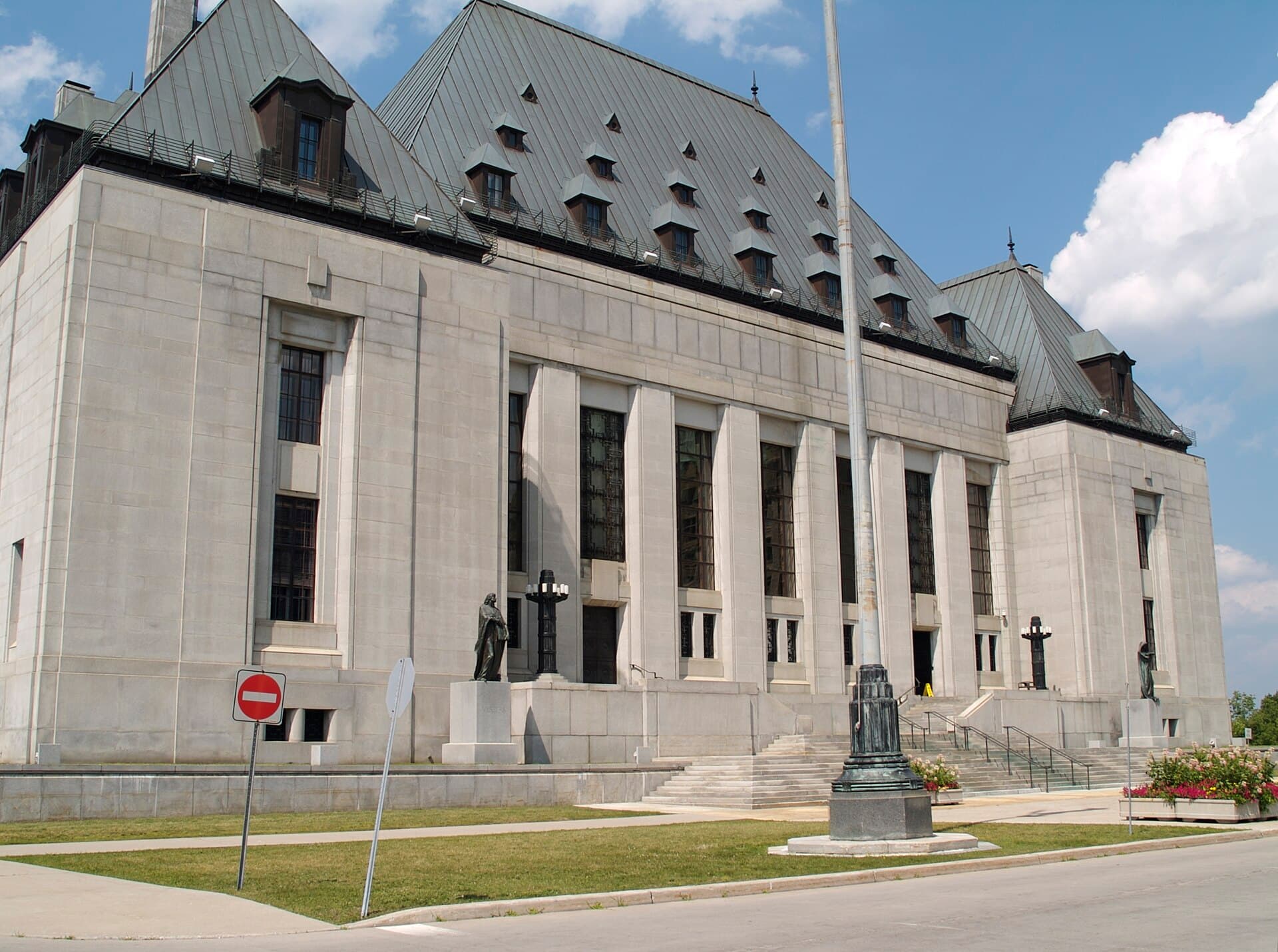
Frechette's cabinet arrived days after the Supreme Court of Canada upheld the province's revised electoral map, in a 7-2 decision that allows changes to 51 of Quebec's 125 ridings to go ahead. A riding on the Gaspe Peninsula and another in Montreal's east end will be eliminated, while two new districts will be created in the growing Laurentides and Centre-du-Quebec regions.
The premier said her government would table a bill in partnership with the opposition parties to protect the Anjou-Louis-Riel and Bonaventure ridings currently being abolished. The proposal would modify the map to preserve those seats while keeping the two new additions. Getting the bill through the National Assembly before dissolution will require cooperation from opposition leaders, who have been publicly sceptical of ad hoc adjustments to the independent commission's recommendations.
The ruling has immediate political implications. Both seats slated for abolition currently return caucus members whose futures are now uncertain, and party strategists in all four caucuses are already reviewing redistricting impacts on the electoral math. With polls tight, marginal gains and losses in individual ridings could determine the outcome of the October vote.
What it means for Quebec
The overall shape of the Frechette cabinet tells Quebecers to expect continuity in policy but a change in tone. The new premier has signalled that she intends to strike a more conciliatory posture in federal-provincial relations, particularly on the Canada-U.S. trade file, where she has publicly backed Prime Minister Mark Carney's refusal to make further concessions to the Trump administration.
Frechette has also promised a less confrontational approach on language policy, without reopening the contentious Bill 96. Her cabinet will continue to enforce the legislation but has dropped some of the rhetorical edge that characterised the Legault government's communications on the file, a choice welcomed by Montreal-area business groups and criticised by some PQ and PKP sovereigntist voices.
The premier's most difficult balancing act lies ahead on economic policy. She inherits a provincial economy that is exposed to U.S. tariffs through aluminum and forestry, and that faces a housing affordability crisis in Montreal. Whether the new cabinet can deliver material improvements on either file before October will shape the CAQ's prospects for re-election more than any single announcement.
What's next
The Quebec legislature resumes on May 5, with Frechette expected to deliver a short opening statement laying out her government's priorities for the spring. The cost-of-living relief package and the housing plan are likely to be tabled in that early sitting, along with the bill to adjust the electoral map.
A by-election in one of the ridings vacated to make room for the cabinet is expected before the summer recess. CAQ strategists are watching the result as an early test of whether Frechette's arrival translates into votes on the ground, rather than simply a bump in telephone polling.
Behind the scenes, preparations for the October election are already underway. Local candidate nominations are accelerating across all four major parties, and Quebec political observers expect Frechette to make a decision on the election date in early summer, with most analysts forecasting a fixed-date vote in the first week of October. For now, the new premier has given herself a short runway to show Quebec voters that her CAQ is meaningfully different from the one that preceded it.
Spotted an issue with this article?
Have something to say about this story?
Write a letter to the editor