Starmer Faces Resignation Calls as Commonwealth Allies Watch
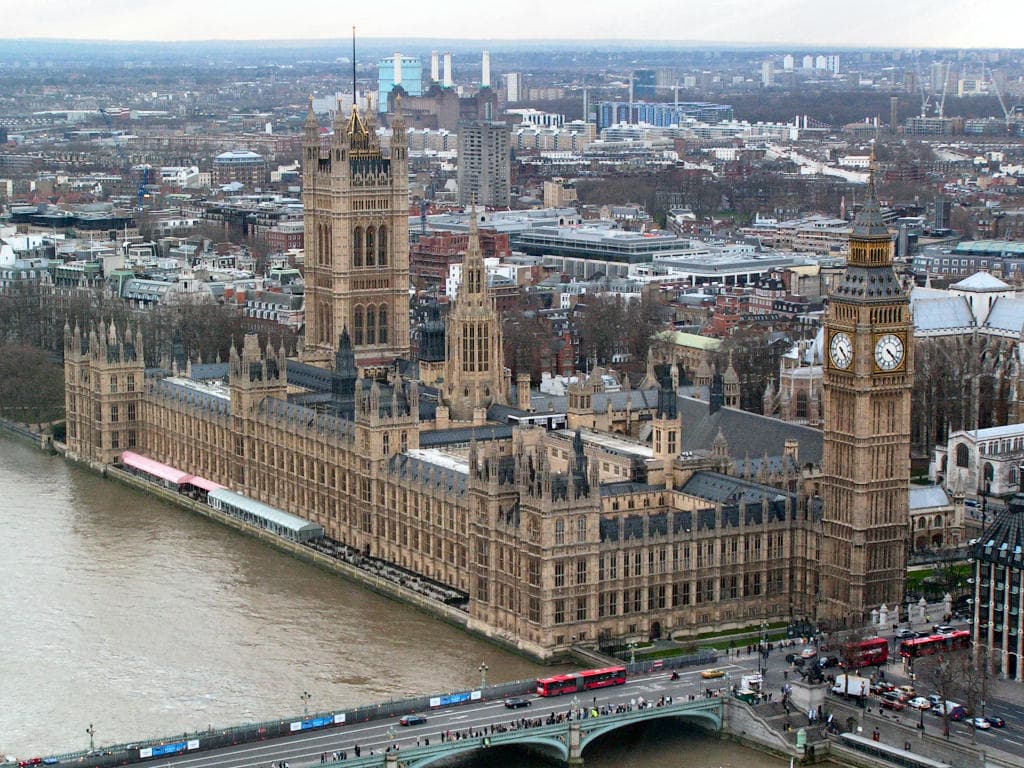
United Kingdom Prime Minister Keir Starmer is fighting for his political life after a succession of scandals has left the Labour government trailing badly in the polls and prompted open discussion within the cabinet of an orderly transition after the May 7 local and devolved elections. The immediate crisis stems from the collapse of Lord Peter Mandelson's tenure as British ambassador to the United States, sacked this year after newly released files revealed a closer relationship with the late convicted sex offender Jeffrey Epstein than had been previously disclosed.
Starmer has denied allegations that he deliberately misled lawmakers about Mandelson's appointment, telling the Commons on Tuesday that he only learned last week that Foreign Office officials had granted Mandelson developed vetting clearance against the specific recommendation of the United Kingdom Security Vetting agency. The prime minister's defence has not silenced his critics, and Conservative leader Kemi Badenoch told the Commons on Wednesday that his reputation is at stake and demanded a full public inquiry into the handling of the appointment.
The political upheaval in London matters for Canada. The United Kingdom is Canada's fourth-largest trading partner, a fellow member of NATO, the G7, the Commonwealth and Five Eyes, and one of the country's closest diplomatic and military allies. Any significant shift in British political leadership would have implications for Canadian trade strategy, defence cooperation and the ongoing work of alliance coordination on Ukraine, the Middle East and Indo-Pacific security.
The Mandelson crisis
Peter Mandelson, a veteran Labour political figure with a long and contested record in British politics, was appointed ambassador to the United States shortly after Labour's 2024 election victory. The appointment was initially viewed as a politically astute choice, given Mandelson's extensive U.S. contacts and his experience as an EU trade commissioner. The relationship with Epstein had been discussed in earlier reporting but was understood to have been limited and formal.
New files released earlier this year showed substantially more extensive contacts between Mandelson and Epstein than had been previously disclosed, including repeated social meetings and correspondence. Mandelson resigned from the ambassadorship after the release, and the political question shifted to what the UK government had known about his relationship with Epstein at the time of his appointment.
The key development has been the emergence of internal UK Security Vetting documents showing that the agency had recommended against granting Mandelson developed vetting clearance, a formal security assessment required for ambassadorial appointments. Foreign Office officials overrode the recommendation, and Starmer's government has been accused of either directing that override or failing to adequately supervise the process. The prime minister denies the first charge and has said he only recently learned of the second issue.
Calls for resignation
Pressure on Starmer has come from multiple directions. The Conservative Party, under Kemi Badenoch, has called for his resignation and for a full public inquiry. The Liberal Democrats have called for the publication of all relevant correspondence. The Scottish National Party has argued that the situation further undermines the legitimacy of Westminster politics and has used the episode to bolster its independence case.
More damagingly, reporting this week indicated that a critical mass of Labour ministers have privately concluded that Starmer should set out a timetable for an orderly transition after the May 7 local and devolved elections, with a new leader in place for the autumn Labour conference. People close to Starmer have said he intends to fight any leadership contest that emerges, but the cabinet's lack of public defence of the prime minister has been conspicuous over the past two weeks.
Labour party polling has continued to deteriorate. The party now trails the Conservatives in most recent polls and is fighting Reform UK for second place in some constituencies. Analysts have described the polling collapse as the sharpest fall for a first-term Labour government in decades, with the party having secured a large parliamentary majority only twenty-two months ago.
Canadian bilateral relationship
The Canada-United Kingdom relationship has been on a generally positive trajectory through the past year, driven in part by the shared challenge of managing relations with the Trump administration and the coordination of Ukraine policy. Prime Minister Mark Carney and Keir Starmer have met multiple times since Carney took office, including at G7 and NATO gatherings, and have publicly described their working relationship as constructive.
The Canada-UK Trade Continuity Agreement, negotiated after Brexit, is subject to ongoing review. The two countries have been working on enhancements to the existing framework, including digital trade and agricultural market access, though substantive negotiations have been delayed by the UK's political turbulence. A shift in Labour leadership could either accelerate or further delay this work, depending on the priorities of any successor government.
Cooperation on defence and intelligence has been a particular area of strength. The United Kingdom is the most significant non-American partner in Canadian defence procurement discussions and has been a consistent advocate for Canadian participation in AUKUS-related Indo-Pacific projects. Senior Canadian and British officials have coordinated closely on the Ukraine response and on the Israel-Iran conflict, with shared assessment of key threats and coordinated sanctions.
The Canada-UK Trade Continuity Agreement
The Canada-UK Trade Continuity Agreement replicates much of the Comprehensive Economic and Trade Agreement between Canada and the European Union, providing tariff-free access for most goods between the two countries. The agreement was negotiated as a transitional measure after the United Kingdom's departure from the European Union and has been in force since 2021, pending the negotiation of a full bilateral trade agreement.
Negotiations on a permanent successor agreement have been delayed by multiple factors, including disagreements over agricultural market access, particularly for beef and hormone-treated meat, and by differences over digital trade, government procurement and financial services. The current UK political crisis has added further uncertainty to the timeline for any substantive agreement.
Canadian exporters have largely been satisfied with the continuity arrangement, and Ottawa has said that there is no urgency to negotiate a permanent agreement that would require difficult domestic concessions. However, UK businesses and some Canadian service sector firms have pushed for a more ambitious framework that would include updated digital trade rules and enhanced regulatory cooperation.
Commonwealth and Five Eyes implications
The United Kingdom's political turbulence has also been discussed within the broader Commonwealth and Five Eyes contexts. Commonwealth cooperation on climate, trade and development has been a consistent theme of British foreign policy across governments, and any change in UK leadership is unlikely to produce dramatic shifts in those areas. Prime Minister Carney has been clear that he values the Commonwealth as one of Canada's most enduring multilateral commitments.
Within Five Eyes, the political question is slightly more sensitive. The signals intelligence sharing framework depends on high levels of political trust, and significant leadership changes in any partner country are typically watched carefully. UK insiders have emphasised that operational Five Eyes cooperation has not been affected by domestic political events, and that the agencies continue to work on the same basis regardless of political change at the top.
NATO coordination has been similarly insulated from British domestic political developments. Canadian defence officials have publicly expressed confidence in the continuity of UK contributions to NATO operations, and the British commitment to collective defence has been explicitly reaffirmed by both government and opposition leaders. The upcoming June NATO leaders' summit in Brussels will be an early test of that continuity.
Implications for the G7
The G7 has been a central forum for coordinating allied responses to the Russia-Ukraine war, Middle East crises and the Trump administration's trade policies. The political instability of several G7 members, including the UK, France and Germany, has complicated the group's effectiveness on some issues, though core coordination on Ukraine and sanctions has remained strong.
Canada will host the 2026 G7 leaders' summit later this year, with Prime Minister Carney as chair. Canadian officials have been preparing the agenda for some months, with priorities including economic security, artificial intelligence governance, climate finance and support for Ukraine. A change in UK leadership during the preparation period would complicate some of that work, though the official UK position would be set by whoever is in Downing Street at the time of the summit.
Canadian officials have privately emphasised that they are preparing the summit on the basis that the UK will be represented by whoever is serving as prime minister in June, without taking a position on who that should be. The overall Canadian interest is in the effectiveness of G7 coordination, which depends on political stability in every member capital.
What's next
The immediate test for Starmer will be the May 7 local and devolved elections. Labour is expected to suffer substantial losses, particularly in England, and the scale of the defeat will shape internal party discussions about leadership. A poor result could trigger a leadership challenge or a negotiated transition, while a less catastrophic outcome might give Starmer additional time to stabilise his government.
For Canada, the key questions are about continuity in trade negotiations, Ukraine coordination and the G7 summit preparation. Canadian officials are scheduled to meet with UK counterparts later this spring on a range of bilateral and multilateral files, and those meetings will provide early indications of how any transition would affect the substantive work.
Prime Minister Carney has declined to comment publicly on UK domestic political matters, consistent with the Canadian diplomatic practice of not commenting on the internal politics of allied countries. Behind the scenes, however, Canadian officials are watching developments in London carefully. The Starmer government has been a valued partner on a series of priorities, and Canadian leaders will be focused on ensuring that whatever follows in London can continue to be an effective partner for Canada on the world stage.
Spotted an issue with this article?
Have something to say about this story?
Write a letter to the editor