Ottawa Launches National AI Sovereign Compute Initiative
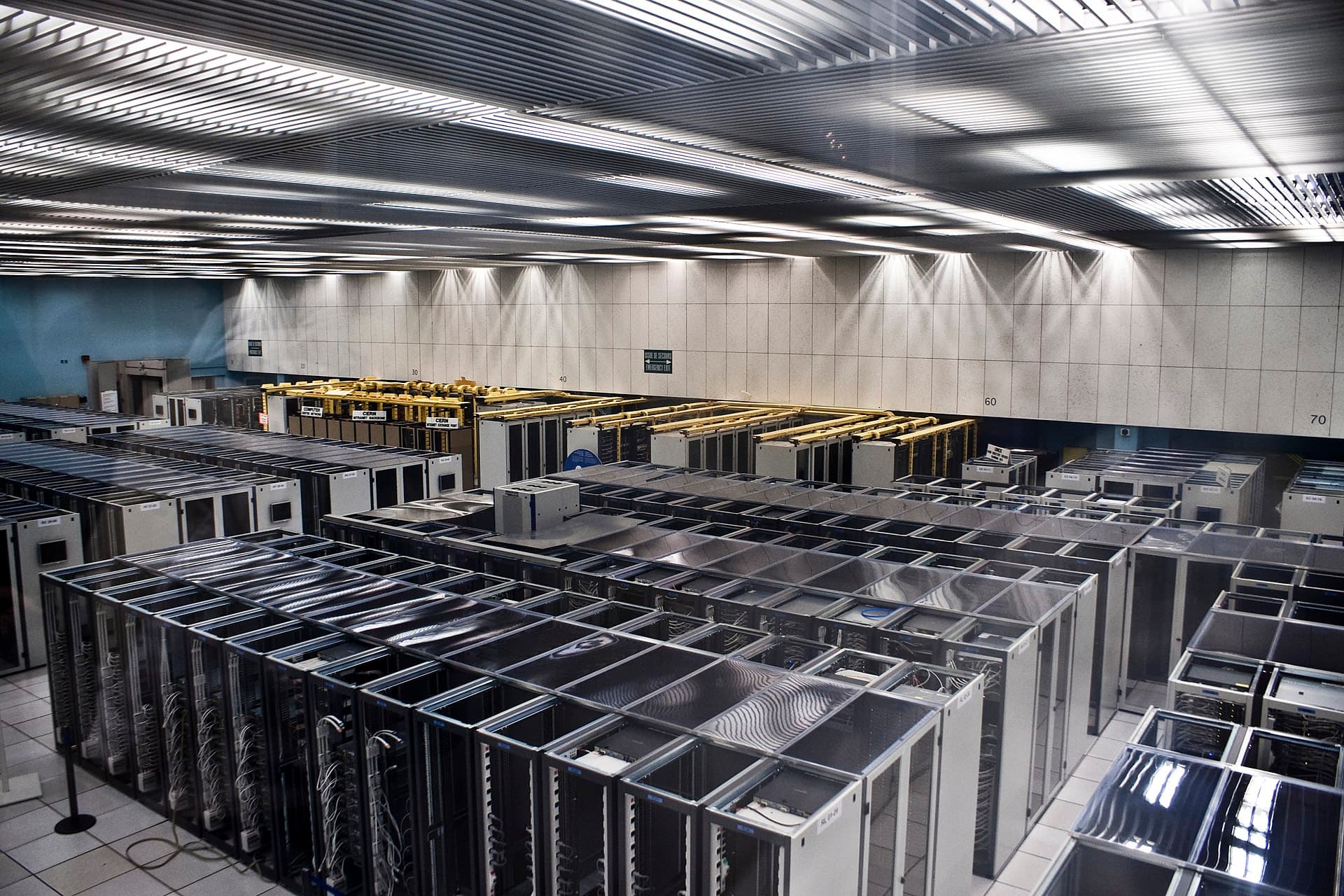
The federal government has launched the AI Sovereign Compute Infrastructure Program, opening a call for applications from universities, research institutions and private-sector consortia to build domestic artificial intelligence supercomputing capacity. Innovation, Science and Industry Minister Anita Anand unveiled the program in Ottawa this week, describing it as one of the most significant single investments in Canadian research computing infrastructure in the past two decades.
The program was initially flagged in Budget 2024 and scaled up in the first Carney government's November 2025 budget, which allocated funding across multiple fiscal years to build out Canadian AI compute capacity. Ottawa has framed the initiative as a matter of economic and national security, arguing that Canadian researchers and companies must have access to sovereign compute resources rather than relying exclusively on American and European hyperscalers to run frontier AI workloads.
The launch came alongside a joint Canada-Finland statement on sovereign technology and artificial intelligence cooperation, in which the two countries committed to exploring Finland's participation in a broader Sovereign Technology Alliance. Ottawa described the Alliance as a forum for democracies to coordinate on critical technology supply chains and reduce dependencies on hostile or unreliable suppliers.
What the program funds
Applications to the AI Sovereign Compute Infrastructure Program open this week for three funding streams. The first supports large-scale national compute clusters, typically anchored at research universities and open to academic users across the country. The second funds sector-specific compute hubs, focused on priority areas such as health research, climate modelling and materials science. The third provides co-investment for private-sector data centres that agree to reserve capacity for Canadian researchers and small- and medium-sized enterprises.
Eligible applicants include post-secondary institutions, non-profit research organisations, and public-private consortia including industrial partners. The program requires applicants to demonstrate data sovereignty, including physical location of servers within Canada, Canadian control over security and governance, and compliance with federal privacy and procurement rules. Grid connections must prioritise clean electricity.
Funding is awarded on a competitive basis through a two-stage process, with expressions of interest due by late June and full applications by September. Grants will be made in consultation with the Natural Sciences and Engineering Research Council, the Canadian Institute for Advanced Research and the Canada Foundation for Innovation. Successful projects are expected to begin operations between 2027 and 2029.
Why it matters
Access to high-performance compute has become the rate-limiting factor in advanced AI research. Large language models, protein folding simulations and climate-scale modelling all require thousands of specialised processors working in parallel, and Canadian researchers have increasingly reported being unable to pursue projects at the frontier of their fields without purchasing expensive time on American or European clusters.
The sovereign compute program is explicitly designed to address this gap. In announcing the launch, Minister Anand highlighted the risk that Canadian AI work could become dependent on foreign compute providers, with the resulting exposure to supply disruptions, price volatility and data governance conflicts. She noted that Canada hosts world-leading AI research groups at the Vector Institute in Toronto, Mila in Montreal and the Alberta Machine Intelligence Institute in Edmonton, but that those groups have struggled to retain talent without domestic compute access.
The broader policy context includes growing concern about the concentration of AI capabilities in a small number of American hyperscalers. Canadian policymakers have watched with interest as European Union counterparts have invested billions of euros in sovereign compute initiatives, and the Carney government has indicated that Ottawa will coordinate with allies on technology supply chains where possible.
The Siemens investment
The sovereign compute announcement coincided with a separate investment by Siemens in Canadian manufacturing technology. Minister Melanie Joly, speaking at Hannover Messe in Germany, announced a federal contribution of $23 million to a $70 million Siemens project to establish a Global AI Manufacturing Technologies Research and Development Centre in Canada focused on battery production.
The Siemens project will concentrate on automotive research, specifically targeting advances in battery efficiency and production methods. The federal government has positioned the investment as complementary to Canada's broader electric vehicle and battery manufacturing strategy, which has already seen major commitments from Volkswagen, Stellantis and Honda in Ontario and Quebec.
Siemens will maintain 3,310 jobs in Canada, create 90 new full-time positions and secure 625 co-op placements as part of the agreement. Federal officials described the project as an example of the type of industrial strategy cooperation with advanced-economy allies that Canada will need to pursue to remain competitive.
Reaction from the AI research community
Canadian AI researchers and industry groups have broadly welcomed the sovereign compute program while cautioning that the scale of the federal commitment may still be insufficient to keep pace with peer economies. The Canadian Council on Artificial Intelligence called the announcement an essential first step and urged the government to establish a multi-year funding envelope rather than relying on budget-by-budget allocations.
Leaders of the three major AI institutes, Vector, Mila and Amii, issued a joint statement welcoming the program and committing to partner with the federal government on governance and research access. The institutes have been under pressure to retain graduates who have been recruited by well-funded American labs offering compute access that Canadian facilities currently cannot match.
Private-sector voices were more cautious. The Council of Canadian Innovators praised the sovereignty framing but urged the government to ensure that small and medium-sized Canadian technology firms have preferred access to the new compute capacity, rather than having resources monopolised by large foreign firms with Canadian operations. Ottawa has indicated that procurement rules will include Canadian content requirements.
Concerns about economic headwinds
The announcement lands at a moment when Canada's technology sector is under significant pressure. Software stock valuations have fallen sharply over the past two years, with the average Canadian software stock down 9 per cent in 2026 following a similar decline the previous year. Venture capital funding for Canadian startups has also slowed, mirroring a global pullback but hitting domestic firms harder because of the country's thinner capital pool.
Analysts at the CD Howe Institute and elsewhere have warned that artificial intelligence is already reshaping Canada's economy and that policy has struggled to keep pace. A recent CD Howe commentary argued that AI adoption could drive either a productivity renaissance or a widening productivity gap, depending on whether small and medium-sized firms outside the major technology hubs gain access to the tools. The compute program is one of the levers the government hopes will tilt the balance toward broader adoption.
Ottawa has also been criticised for the pace at which it has moved on AI regulation. The Artificial Intelligence and Data Act, part of Bill C-27, has been repeatedly delayed, and the current parliamentary calendar makes passage before autumn difficult. Business groups have called on the government to prioritise the bill in the post-majority legislative session.
International cooperation
The Canada-Finland joint statement is one of a series of bilateral technology agreements that Ottawa has pursued over the past year. Similar agreements have been signed with the United Kingdom, Japan, the Netherlands and Denmark, all of which share Canada's concern about concentration of AI supply chains in the United States and China.
The Sovereign Technology Alliance, which the joint statement positions Finland to join, is intended as a forum for democracies to coordinate on compute infrastructure, semiconductor supply chains and AI governance. Ottawa has not yet detailed the formal governance of the Alliance or its relationship to existing bodies such as the Group of Seven and the Organisation for Economic Cooperation and Development.
Officials have also held informal discussions with counterparts in Australia, New Zealand and South Korea about possible participation, and Minister Anand has said that the Alliance is intended to remain open to any like-minded democracy. The first ministerial-level meeting of the Alliance is expected to take place in Ottawa in the autumn.
What's next
Expressions of interest for the AI Sovereign Compute Infrastructure Program are due by late June. Full applications for the first wave of projects are expected by September, with initial funding decisions in early 2027 and construction on selected sites beginning during that calendar year. Ottawa has said that it will release regular progress reports as the program rolls out.
The federal government has also indicated that it will introduce additional supporting measures in the 2026 fall economic statement, including tax credits for Canadian-controlled firms that invest in AI compute or adopt AI tools to improve productivity. Further details are expected in the coming weeks from the Department of Finance.
For researchers and industry, the critical question is whether the sovereign compute program can deliver at scale. Peer countries have committed significantly larger sums over longer horizons, and Canadian institutions will be watching to see whether Ottawa follows through with multi-year funding rather than pulling back if fiscal conditions tighten. A credible signal that Canada intends to remain competitive in AI research will be essential to retaining the talent currently based here, and to attracting the foreign investment that the Siemens announcement represents.
Spotted an issue with this article?
Have something to say about this story?
Write a letter to the editorRelated Stories

Toronto's Xanadu Becomes First Photonic Quantum Company to Go Public on Nasdaq and TSX
4d ago

Mila and Inovia Launch $100 Million Fund to Turn Canadian AI Research Into Companies
4d ago

Ottawa Directs $11 Million to Quebec Battery Innovation to Anchor Canada's Critical Minerals Value Chain
4d ago