Carney Digs In on Trade Talks, Refuses Further Concessions to Trump
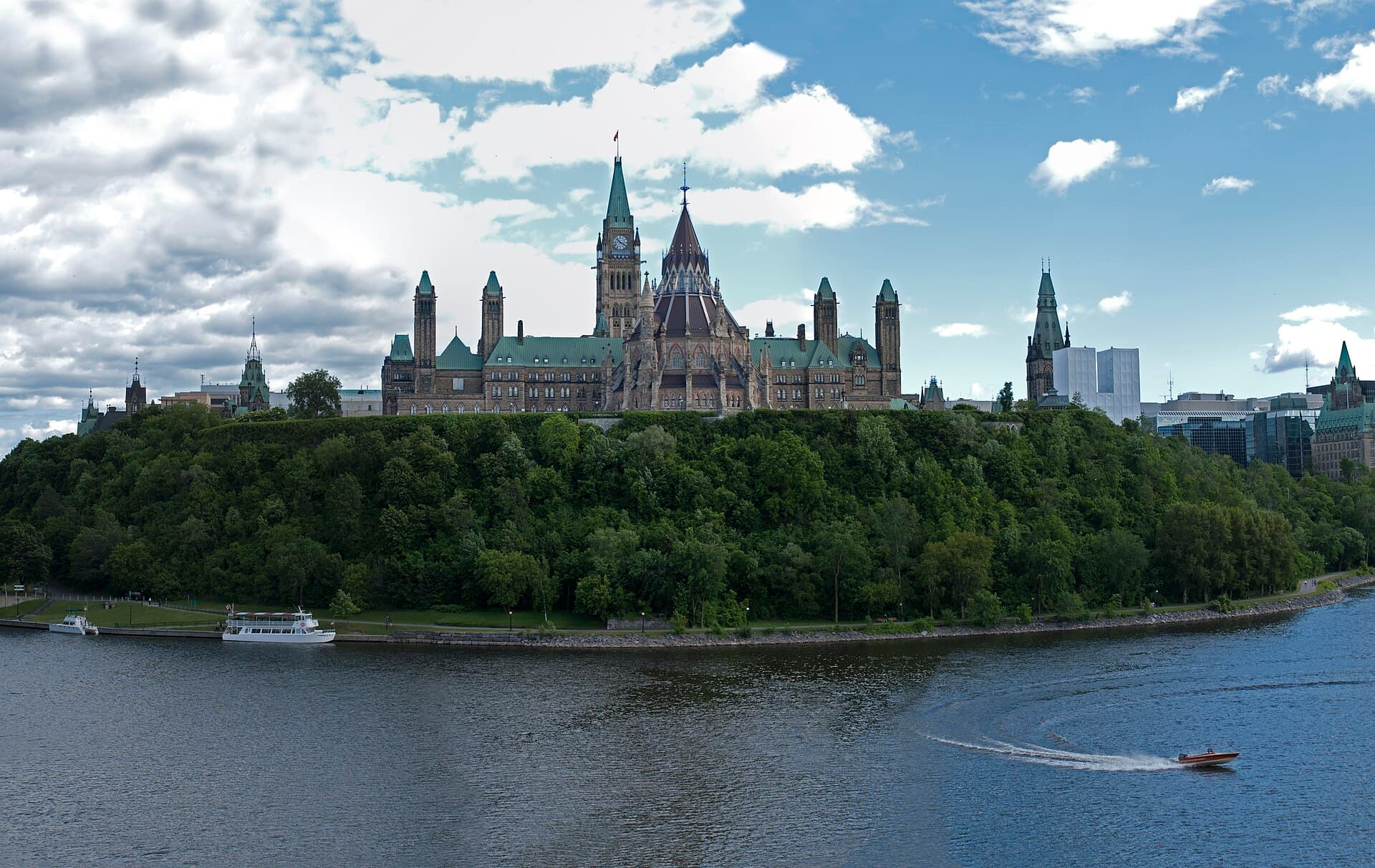
Prime Minister Mark Carney made clear on Thursday that his government will not offer further concessions to the Trump administration as the two countries inch toward a potentially rocky review of the Canada-United States-Mexico Agreement. Speaking in Ottawa, Carney described the current tariff regime as a persistent set of irritants that continue to damage Canadian industry, and said the price of talks cannot be a one-way surrender of Canadian economic sovereignty.
The comments came at the end of a week in which Washington signalled that trade officials would begin formal consultations on the successor deal to CUSMA later this spring. They also followed Carney's April 21 announcement of a new Advisory Committee on Canada-U.S. Economic Relations, a panel of senior business, labour and policy voices tasked with preparing Ottawa's negotiating position.
Carney, who took his Liberal government to a majority on April 13 after floor crossings and two byelection wins, is governing from a stronger political base than at any point in his short tenure. His refusal to budge on core demands reflects both that domestic leverage and the judgment that the White House is unwilling to offer predictable terms in exchange for any concession Ottawa has tabled so far.
What Carney said
Speaking to reporters on Parliament Hill, Carney listed the measures he considers unacceptable: a 50 per cent tariff on Canadian steel, a 50 per cent tariff on aluminum, a 25 per cent tariff on automobiles, and layered duties on forest products. He described the tariffs as irritants rather than legitimate trade measures, and said they continue to generate misinformation and insults aimed at Canada from senior U.S. officials.
The prime minister rejected the premise that Canada should offer up dairy supply management, digital services taxation, online streaming rules or other long-standing federal policies in exchange for tariff relief. He said Ottawa is ready to negotiate on specific irritants in good faith, but not to dismantle domestic programs at Washington's command.
Carney also signalled that the government will continue to retaliate on selected sectors if the U.S. administration escalates. Ottawa already has counter-tariffs in place on a range of American consumer and industrial goods, and officials have said those measures can be widened if needed.
The advisory committee and its mandate
The new Advisory Committee on Canada-U.S. Economic Relations will hold its first meeting on April 27 in Ottawa. According to the Prime Minister's Office, it brings together executives from steel, aluminum, auto manufacturing, forestry, agriculture and financial services, along with representatives from major trade unions and provincial governments.
The panel is chaired by a former senior federal trade negotiator and reports directly to the prime minister. Its mandate is to produce confidential options papers for cabinet on negotiating trade-offs, retaliation tools and domestic support programs for affected industries. It is not a formal decision-making body and its advice is not binding.
Ottawa officials describe the committee as a way to keep domestic stakeholders inside the tent during what is expected to be a fractious negotiation. The previous Liberal government leaned on a similar advisory structure during the 2017 to 2018 renegotiation of NAFTA, and senior officials say the experience persuaded them to formalise the mechanism earlier this time around.
Reaction from business and labour
Business groups offered guarded support for Carney's firm posture. The Canadian Chamber of Commerce said members are looking for stability above all, but recognised that unilateral concessions are unlikely to produce lasting relief from tariffs that have become a political instrument as much as an economic one.
The Business Council of Canada urged the federal government to pair its hard line with stepped-up investment in supply chain diversification and infrastructure that can help Canadian exporters reach markets beyond the United States. The council highlighted ports, rail corridors and critical minerals processing as particular priorities.
Unifor, the Canadian Steel Producers Association and the United Steelworkers offered strong endorsement of the prime minister's refusal to trade away supply management or digital policy. Labour leaders warned that layoffs have already begun in the steel and aluminum sectors, where roughly 23,000 and 10,000 workers respectively are employed, and called for a targeted aid package in the coming federal fiscal update.
Opposition response
Opposition parties split along predictable lines. Conservative leader Pierre Poilievre said the government should have done more to shield Canadian industry from tariffs in the first place, and criticised the advisory committee as a cosmetic exercise that will not substitute for a coherent strategy. Poilievre stopped short of endorsing concessions on any specific file.
The New Democratic Party welcomed Carney's refusal to open supply management but said the government is not doing enough to support workers facing layoffs in tariff-hit sectors. NDP trade critic Heather McPherson called for an emergency wage subsidy programme and expanded employment insurance benefits for affected communities.
The Bloc Quebecois focused on aluminum, which is produced predominantly in Quebec, and demanded that Ottawa guarantee any retaliation or aid package prioritises affected communities in the Saguenay and North Shore regions. Bloc leader Yves-Francois Blanchet said the province's industrial base cannot absorb an extended tariff regime without federal support.
What it means for Canadians
For consumers, the immediate impact is limited but real. Tariffs have already pushed up prices on certain American imports subject to Canadian counter-measures, and the Bank of Canada has flagged trade policy as a source of inflation uncertainty heading into its April 29 rate decision. Statistics Canada reported that headline inflation rose to 2.4 per cent in March, in part due to energy price pressures that are compounding trade-related costs.
For workers, the stakes are sharper. The 33,000 Canadians employed directly in steel and aluminum production face immediate layoff risk, and hundreds of thousands more work in auto assembly, auto parts, forestry and pulp and paper, all of which are now subject to U.S. duties. Provincial governments in Ontario, Quebec and British Columbia have begun extending retraining and income support programmes in anticipation of further disruption.
For exporters, the message from Ottawa is that diversification is no longer optional. The Trade Diversification Corridor Fund announced in Carney's first budget is being accelerated, with infrastructure money flowing to port expansions in Halifax, Montreal, Prince Rupert and Vancouver. Ottawa is also pushing for deeper trade ties with the European Union, the United Kingdom, Japan and the CPTPP bloc in Southeast Asia.
Provincial responses
Ontario Premier Doug Ford said Carney's majority gives the prime minister a stronger hand to push back against Trump, and endorsed the decision not to offer further concessions. Ford also acknowledged that the Canadian consumer boycott of American goods is costing the U.S. economy tens of billions of dollars, and said his government would continue to encourage buy-Canadian purchasing.
Alberta Premier Danielle Smith, who has taken a more conciliatory line toward the Trump administration than other provincial leaders, urged caution. Smith said retaliation should be carefully targeted and warned that Alberta's oil and gas sector, which exports the vast majority of its output to U.S. refineries, should not be used as a bargaining chip. She repeated her call for a Canadian energy corridor to diversify export routes.
Quebec Premier Christine Frechette, sworn in on April 15 after winning the Coalition Avenir Quebec leadership race, offered her first major federal-provincial comment on the file. Frechette said Quebec stands behind the federal negotiating position and will work with Ottawa to protect aluminum communities. She urged rapid delivery of federal aid.
What's next
The advisory committee meets on April 27. Formal CUSMA review talks are expected to open in July 2026, and Carney has said Canada will enter those talks with a clear mandate to defend supply management, digital policy and labour standards. Officials have indicated the negotiating team will be led by a senior minister with direct access to cabinet rather than delegated to officials alone.
The Bank of Canada's rate decision on April 29 will be the next major indicator of how policymakers assess the economic weight of the trade dispute. Markets currently expect the central bank to hold at 2.25 per cent, but the monetary policy report is expected to revise down growth projections for the year, reflecting the drag from tariffs.
Carney faces no immediate domestic political pressure to compromise, with his majority secured and opposition parties divided on how to respond. The prime minister has signalled that he is prepared to take the dispute into a prolonged negotiation if necessary, and has told Canadians that short-term economic pain is preferable to the permanent loss of policy tools that took decades to build. For now, Ottawa's posture is one of patient refusal.
Spotted an issue with this article?
Have something to say about this story?
Write a letter to the editor