Alberta Referendum Campaign Launches Amid Court Challenges
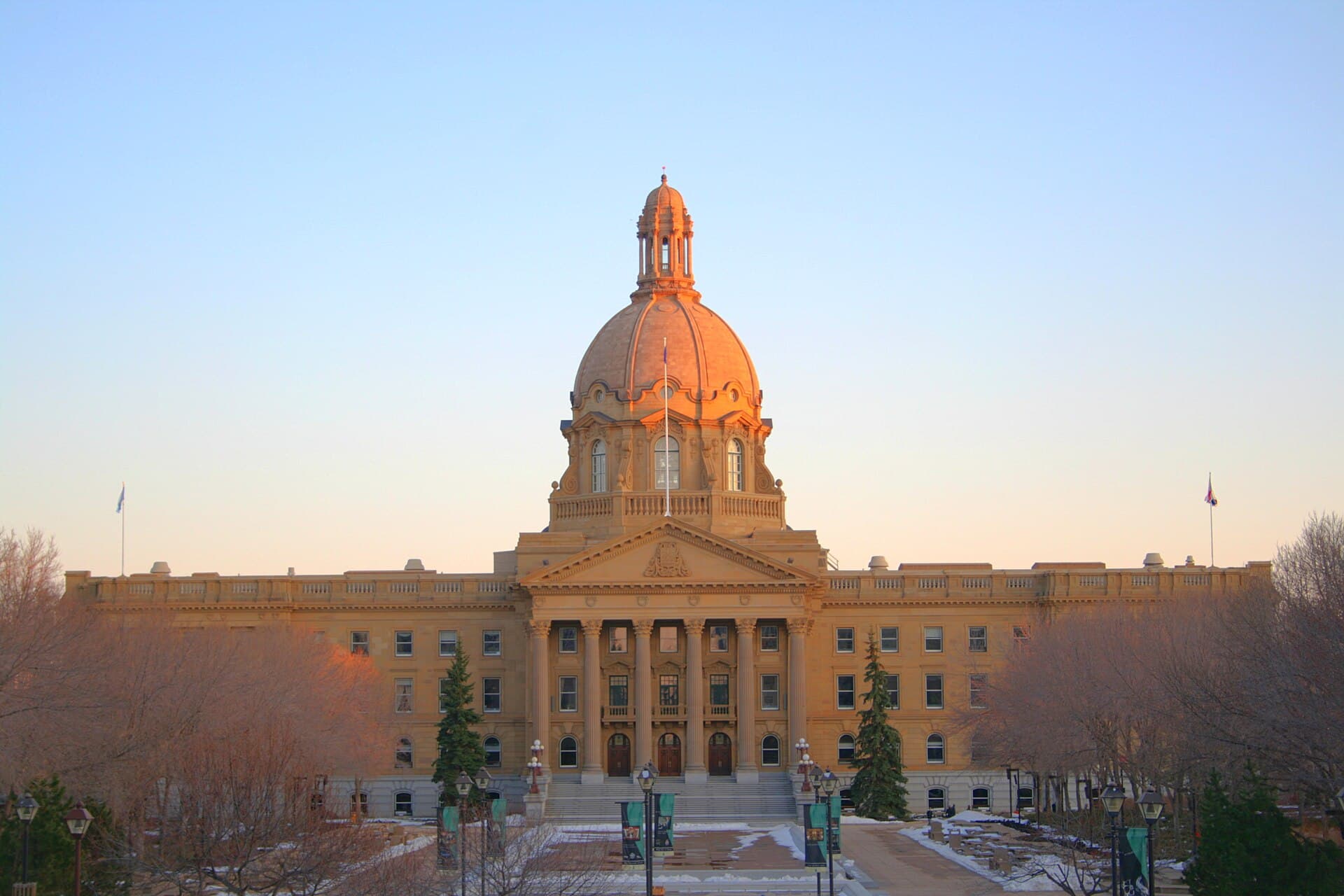
The Government of Alberta has launched a public information campaign in support of nine referendum questions scheduled for the October 19 provincial referendum, spending public money to advocate in favour of proposed constitutional and immigration changes while a separate court battle casts doubt on whether a question on Alberta independence will appear on the same ballot. The dual tracks of official referendum questions and citizen-initiated separation petitioning have made Alberta the site of one of the most consequential democratic disputes in Canada in a generation.
Premier Danielle Smith's United Conservative Party government unveiled the campaign this week, including a new provincial website at AlbertaReferendum2026.ca that allows voters to review each ballot question and government background material. The premier said Alberta voters deserve to have clear information before they cast ballots and described the campaign as an educational tool, though opposition parties have called it a government-funded propaganda exercise that violates conventions around public money in referendum contests.
Separately, the citizen-initiated separation petition organised by Stay Free Alberta has claimed it has cleared the signature threshold required to trigger a referendum on provincial independence. A Court of King's Bench ruling on an injunction brought by several Alberta First Nations has allowed signature collection to continue for now but bars the province from proceeding to a verification count until constitutional concerns raised by the First Nations are addressed.
What is on the October ballot
The nine official referendum questions cover immigration, constitutional reform and the province's relationship with Ottawa. They include proposals to expand provincial immigration selection authority, to seek constitutional amendments on property rights and to withdraw Alberta from federal transfer formulas that the Smith government considers disadvantageous. Each question is advisory only, meaning a yes vote would not by itself change the law, but would give the premier a political mandate to negotiate or to introduce legislation.
The premier has said she expects turnout to be high given the stakes of the questions, and has signalled that even a defeat on a separation question could leave room to pursue some of the initiatives on the ballot through legislation. In recent interviews Smith has said that a no vote on separation would not preclude her government from acting on constitutional reform, expanded provincial jurisdiction or immigration selection, each of which will appear as distinct questions.
The government has estimated the direct administrative cost of the referendum at approximately $52 million, a figure that does not include the information campaign itself. Elections Alberta is administering the vote under the Referendum Act, and final question wording was submitted by cabinet in late March.
The First Nations court challenge
A coalition of First Nations, including Treaty 6, Treaty 7 and Treaty 8 nations, has filed a constitutional challenge arguing that any referendum on Alberta independence cannot proceed without the consent of treaty peoples whose rights predate the province's creation. The nations argue that a separation vote held without Indigenous participation would breach both the Constitution Act and the treaties themselves, which guarantee relationships with the Crown that cannot be unilaterally altered by provincial action.
Justice Shaina Leonard issued a partial injunction earlier this month, allowing separatist organisers to continue collecting signatures but barring the province from proceeding further until the courts have addressed the constitutional issues. The judge expressed concern about the speed with which the province was prepared to move, and said a full ruling would come after a scheduled hearing in May.
Smith told reporters this week that she expects a decision from the courts sometime in May. Her government has signalled that it will comply with the ruling but has also left open the option of appealing to the Alberta Court of Appeal if the initial decision limits the province's ability to hold a vote. A further appeal to the Supreme Court of Canada is possible but would depend on timing and the specific legal grounds.
The Forever Canadian petition
Running in parallel to the separatist campaign is a pro-Confederation citizens' petition called Forever Canadian, which organisers say has collected more than 400,000 signatures in support of keeping Alberta in Canada. The petition is currently before a committee of the Alberta legislature. Organisers are asking the government to put a corresponding question on the October ballot, arguing that fairness requires voters to choose directly between staying in Canada and leaving.
Polling released this month suggests a large majority of Albertans oppose separation from Canada. A survey by the Angus Reid Institute found roughly two-thirds of respondents would vote no in a straightforward separation referendum, with higher rates of opposition in Calgary and Edmonton and softer resistance in rural areas. Pollsters caution that intensity of feeling among the smaller pro-separation minority is considerably higher than among the majority that prefers to remain in Canada.
Forever Canadian organisers have also raised concerns about the ethics of the province's information campaign, arguing that public funds should not be used to advance a government-preferred side on any referendum question. The Office of the Chief Electoral Officer is reviewing the advertising guidelines that apply during a referendum period to determine whether the campaign complies with current law.
Federal response
Prime Minister Mark Carney has been measured in his public comments on the Alberta situation, declining to be drawn into commentary on specific questions while reiterating that the federal government will defend the Constitution and treaty rights. In a statement to reporters in Ottawa this week, Carney said that Canada is stronger when all provinces are fully engaged in Confederation and that his government is prepared to discuss substantive grievances through existing intergovernmental mechanisms.
Federal Crown-Indigenous Relations Minister Rebecca Alty, who represented Canada at the United Nations Permanent Forum on Indigenous Issues this week, has backed the First Nations court challenge publicly, saying that no province can unilaterally alter constitutional relationships with treaty peoples. Her office confirmed that the Department of Justice is monitoring the litigation closely and has offered technical legal support to Treaty organisations if requested.
Opposition parties in Ottawa have taken varying positions. The Conservatives have avoided direct commentary on the separation file while criticising Ottawa's handling of tariffs and energy policy that they say have strengthened Alberta grievances. The NDP and Bloc have called for national unity measures and expanded investment in Alberta's energy transition, framing the referendum as a symptom of failed federalism rather than a serious proposal for independence.
What it means for Alberta
Whatever the outcome in October, the referendum is already reshaping Alberta politics. The Smith government has used the campaign to mobilise its base, and polling shows the UCP maintains a comfortable lead over the Alberta NDP led by Naheed Nenshi. Political observers say the referendum is likely to be as much a test of the Smith government's credibility as an expression of voter views on specific questions.
The business community has been cautious. The Calgary Chamber of Commerce and the Business Council of Alberta have called for clarity on the constitutional implications of each question and have warned that prolonged uncertainty could damage investment, particularly in the energy sector where capital projects have long planning horizons. Several oil and gas companies have told analysts that they are factoring referendum uncertainty into their capital allocation decisions.
For Indigenous communities, the stakes are existential. Treaty organisations have been explicit that separation would be legally and morally incoherent without treaty partner consent, and have signalled that they will use every legal avenue available to block a vote on independence. Whatever happens on October 19, the Indigenous constitutional challenge is likely to become a defining legal contest of the next five years.
What's next
A Court of King's Bench decision on the First Nations constitutional challenge is expected in May. The ruling will determine whether the citizen-initiated separation petition can move to verification and, if so, whether the province can place a related question on the October ballot. Appeals are likely from whichever side loses at the initial stage, and a clear final answer from the Alberta courts may not come before the scheduled vote.
Elections Alberta is finalising the administrative arrangements for the referendum, including polling station locations, mail-in ballot procedures and multilingual voting materials. Advance polls are expected to open in the first week of October, with the main vote on October 19.
The premier has said she will announce additional information sessions across the province in the weeks ahead, and opposition parties have called for independent, government-funded forums that allow both sides of each question to make their case. Whether that happens will be one early test of the fairness of the referendum campaign, and of Alberta's capacity to hold a democratic debate on the most consequential questions facing the province in decades.
Spotted an issue with this article?
Have something to say about this story?
Write a letter to the editor