China's Taiwan Strait Drills Rehearse a Nuclear Scenario: Why Canadian Pacific Strategy Is Watching Closely

China's Eastern Theater Command has conducted military exercises simulating an American nuclear attack in a potential Taiwan conflict scenario, part of what has become a routine rhythm of Chinese military activity around the island that has nonetheless grown in scope and signalling value. The drills, reported in detail this week, included chemical, biological, radiological and nuclear defence teams deploying uncrewed helicopters and handheld radiation detectors to simulate post-strike response protocols. For Canadian policymakers and the defence planning community in Ottawa, the shift from conventional rehearsal toward explicitly nuclear scenarios is a signal of exactly how much the Indo-Pacific security environment has escalated in the past twelve months.
What the drills actually involved
The reported exercises were conducted by elements of the People's Liberation Army Eastern Theater Command, the military region responsible for operations in the Taiwan Strait. The published imagery and official commentary emphasised troop readiness for complex battlefield environments. The technical focus was on CBRN defence capabilities: detection of radiation spread, decontamination protocols, and operational continuity under post-strike conditions.
Chinese defence commentators framed the drills as defensive preparation against a hypothetical American first-strike scenario. Western military analysts reading the same material have drawn a sharper conclusion: that Beijing is increasingly willing to publicly signal that its Taiwan contingency planning assumes a direct nuclear dimension. Whether that signal reflects operational posture or strategic communication is a question that will be debated in defence ministries from Tokyo to Ottawa for months.
The broader pattern of 2026
Chinese military activity around Taiwan in 2026 has followed a pattern of intensification. In January, a large-scale exercise deployed nearly 100 naval and coast guard vessels around the island, representing what the Pentagon described as a significant increase over normal operational levels. The State Department issued a rare direct condemnation of the drills. Beijing responded by calling its activities entirely justified and reasonable.
Since January, the tempo of Chinese naval and air force activity in the Taiwan Strait has remained elevated. ADIZ incursions, in which Chinese military aircraft enter the zone of Taiwan's air defence identification, have exceeded 150 per month through the first quarter of 2026, a level that would have been unprecedented as recently as 2022.
The recent nuclear-scenario drills are not the first of their kind in Chinese doctrine. They are, however, the first publicly documented exercises of this type linked to a Taiwan contingency.
Taiwan's response
Taiwan's President Lai Ching-te has in recent weeks committed to an expanded defence spending plan, pushing military expenditure toward 3 per cent of GDP by 2027. The Taiwanese Defence Ministry's response to the reported nuclear drills has been deliberately measured, emphasising the continuation of existing readiness protocols rather than a rhetorical escalation.
Taiwanese public opinion, as measured in recent polling, reflects a characteristic steadiness. A majority of Taiwanese continue to report that they are not meaningfully more anxious about Chinese military activity than they were a year ago. That stability, in a society that has lived under the credible threat of Chinese invasion for more than seven decades, is itself a strategic asset.
Washington's fractured response
The American response to the latest Chinese drills has been complicated by the broader policy tensions inside the Trump administration. The State Department has publicly condemned the exercises. The White House has been more muted, with the President declining to comment directly on the CBRN aspect of the drills during a press availability on Wednesday.
This pattern, a more assertive State Department message alongside a less engaged West Wing, has characterised the American posture toward China through 2026. Senior Pentagon officials have signalled continued support for Taiwan, including the approval last month of a new tranche of defence articles for sale under the Taiwan Relations Act. The full picture, however, has been harder to read from outside the administration.
Japanese and South Korean responses
Japan's response to the escalating Chinese military activity in the Taiwan Strait has been shaped by Tokyo's own security calculations. Japan has in recent years publicly linked its national security to Taiwan's status, a shift from decades of deliberate strategic ambiguity. The current Kishida government has continued the defence spending expansion initiated under former Prime Minister Fumio Kishida, with defence budgets now approaching 2 per cent of GDP. Joint exercises with the United States have intensified through the spring, and the deployment of Japanese forces to the southern Ryukyu island chain has accelerated.
South Korea's posture has been more cautious. President Lee Jae-myung's government, which took office in mid-2025, has pursued a more balanced approach between Washington and Beijing than his predecessor. South Korean commercial exposure to Chinese markets is deep enough that a decisive security alignment with the United States on Taiwan would carry immediate economic costs. That calculation, familiar in Seoul for decades, has not changed.
Canada's Pacific strategy
Canada's Indo-Pacific Strategy, launched in late 2022, committed the federal government to sustained engagement with allies and partners in the region. The commitments have included increased Royal Canadian Navy presence in the Indo-Pacific, deeper defence cooperation with Japan and South Korea, and expanded development and diplomatic resources.
The practical implementation has produced results. Canadian warships, including HMCS Montreal and HMCS Ottawa in 2024 and HMCS Vancouver in 2025, have conducted transits through the Taiwan Strait in coordination with American and other allied operations. Canada's signing of a Reciprocal Access Agreement with Japan in late 2025 deepened the operational interoperability of the two navies in the region.
The Carney government has signalled continuity with the Indo-Pacific Strategy framework. Foreign Minister, whose portfolio has been confirmed following the Liberal majority win on April 13, has spoken publicly about maintaining Canadian presence in the region as a deterrent and reassurance asset. The precise operational cadence of Canadian naval deployments to the Strait in the coming months has not been publicly announced.
The economic dimension
Any serious escalation between China and Taiwan would disrupt the global economy at a scale that dwarfs any other scenario currently discussed in contingency planning. Taiwan produces roughly 92 per cent of the world's most advanced semiconductors, including the chips that power nearly every modern consumer electronics device and most advanced defence systems. A Chinese blockade of Taiwan, even one that did not escalate to kinetic conflict, would trigger global supply chain effects of unprecedented magnitude.
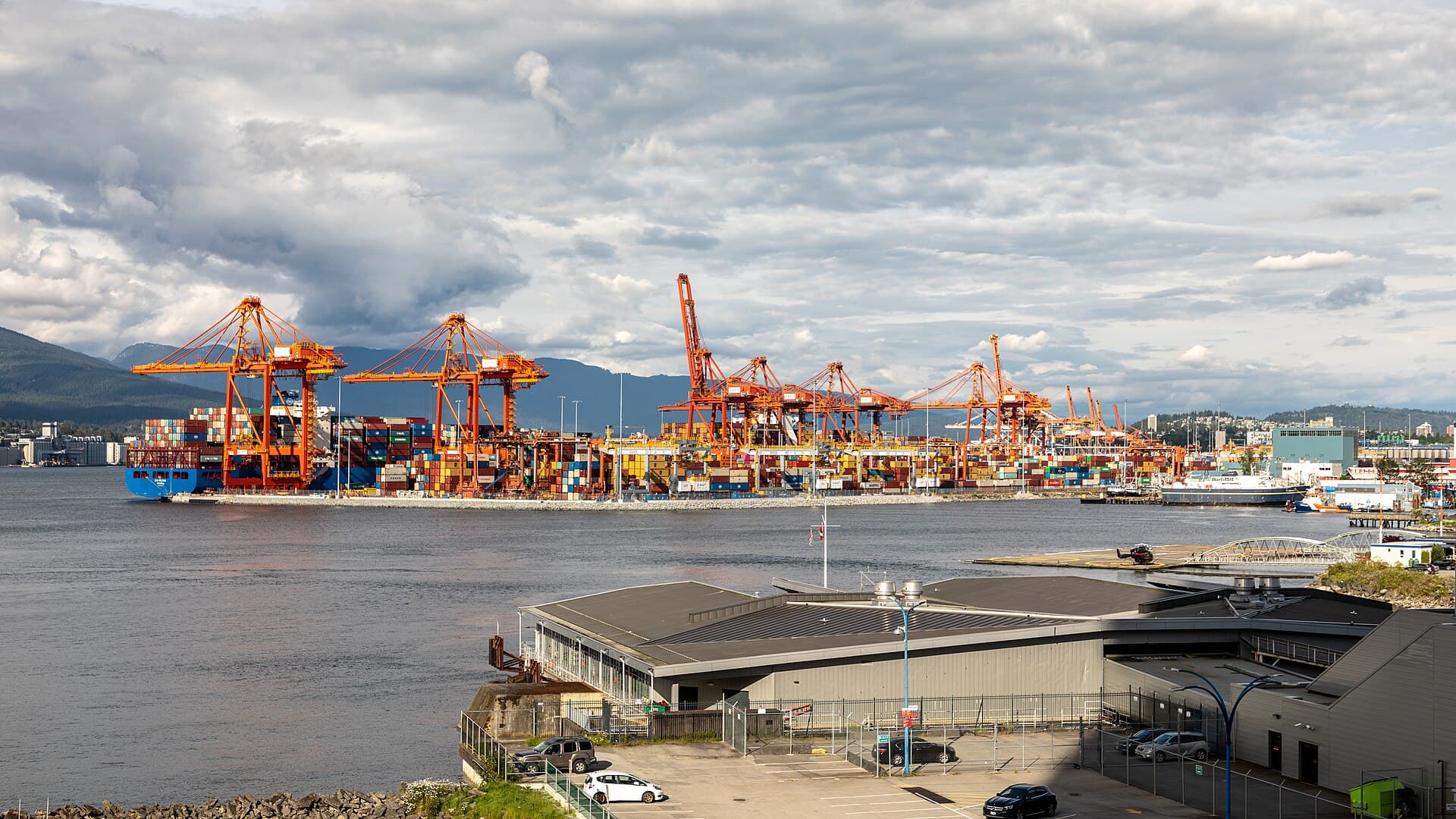
For Canada, the impact would be concentrated in the technology sector, particularly in Ontario and Quebec, where chip-dependent manufacturing and design functions form a substantial part of the advanced economy. Pacific port infrastructure, concentrated in Vancouver and Prince Rupert, would absorb the effects of any Pacific trade disruption.
The federal government's Critical Minerals Strategy, launched in late 2022, has been framed in part as a hedge against exactly this kind of supply chain shock. But the chip question is not one Canadian critical minerals can solve. That dependency sits upstream of anything Ottawa can directly address.
The alliance architecture
The security architecture in the Indo-Pacific has continued to evolve. AUKUS, the trilateral arrangement between Australia, the United Kingdom and the United States, has entered its implementation phase with the transfer of the first Virginia-class submarine technology milestones scheduled for next year. The Quad, involving Australia, India, Japan and the United States, has become more active since January.
Canada's non-membership in either AUKUS or the Quad has been a subject of continued debate in Ottawa. The Carney government has not publicly committed to seeking membership in either grouping. Senior defence officials, speaking on background, have suggested that a formal AUKUS Pillar 2 affiliation, focused on non-nuclear advanced capabilities, remains under active consideration.
Public opinion and the Canadian conversation
Canadian public opinion on China has hardened substantially since 2020. Polling conducted by the Angus Reid Institute in recent months has found that roughly 65 per cent of Canadians view China as an unfriendly or enemy country, up from 35 per cent in 2019. That shift has provided political space for more assertive diplomatic and defence postures than were viable a decade ago.
The consumer-facing dimension, from worries about the influence of Chinese apps and platforms to concerns about research security at Canadian universities, has become a regular feature of the public conversation. Federal action on foreign interference, including the new Foreign Influence Transparency Registry and expanded CSIS authorities, reflects this trajectory.
Supply chain diversification efforts
Canadian federal policy has encouraged domestic firms to diversify supply chains away from concentrated dependence on Chinese manufacturing. The Strategic Innovation Fund, the Critical Minerals Strategy, and targeted tax credits in the 2025 budget have all included explicit language encouraging reshoring or friend-shoring of production. The practical impact, two to three years into the policy effort, has been mixed. Certain sectors, including rare earth processing and battery component manufacturing, have seen tangible investments. Others, particularly consumer electronics and lower-value manufacturing, have been harder to shift.
The deeper challenge is that Canadian supply chain diversification requires coordination with the United States, Mexico and European partners to produce meaningful scale. The Trump administration's tariff-first approach to trade policy, which has disrupted North American supply chains more broadly, has complicated that coordination. Ottawa's economic officials, speaking on background to Canadian media, have described the current environment as more difficult for supply chain diversification than it was two years ago.
What's next
The Indo-Pacific security environment will remain a central preoccupation for Canadian defence and foreign policy planning through 2026. The specific variables to watch: the frequency and scope of Chinese military drills in the Taiwan Strait, the trajectory of US-Taiwan defence cooperation under the Trump administration, the pace of AUKUS technology transfers, and the Carney government's choices on Canadian naval presence in the region.
Taiwan, meanwhile, will mark its next presidential election in 2028. Between now and then, the tempo of Chinese pressure and the coherence of the allied response will continue to shape the most consequential strategic competition of this generation.