Orthodox Easter Ceasefire in Ukraine: What the 30-Hour Truce Tells Us About a Longer Peace

Russia and Ukraine have agreed to a 30-hour ceasefire to mark Orthodox Easter, a gesture announced by Russian President Vladimir Putin on Saturday and accepted within hours by Ukrainian President Volodymyr Zelenskyy. The pause in hostilities began at 4 p.m. Moscow time on Saturday and is scheduled to run until 11:59 p.m. Moscow time on Sunday, covering the holiest weekend on the Orthodox calendar. The truce is, by any measure, limited. But for Canadians watching a war that has shaped the Canadian defence conversation, refugee intake and energy policy since February 2022, what happens in the 30 hours, and what happens in the 48 hours after, matters more than the headline.
The ceasefire and its limits
Putin's announcement was delivered through a televised meeting with Russian Chief of General Staff Valery Gerasimov on Saturday afternoon. The Russian president described the pause as a humanitarian measure tied to the religious calendar. Zelenskyy accepted the offer in a subsequent video statement, adding that Ukraine would honour the truce but would treat any Russian violation as cause to resume operations immediately.
The 30-hour window is short. Both sides' field commanders have historically used such pauses to reposition forces, rotate units, and restock forward supply depots. Neither outcome will be visible to the other side until the ceasefire ends. The risk of breakdown is therefore highest in the final hours, when both militaries will be conducting the kind of quiet tactical movements that look, to the other side's intelligence apparatus, like preparation for resumption.
What the truce says about broader talks
The negotiations environment around the Ukraine war entered a new phase earlier this year, when the Trump administration's peace initiative, led by the President's senior adviser on Eastern Europe, began producing public framework documents. Those documents have included provisions that would ban Ukraine from NATO membership, recognise Russian control over currently occupied territory, and establish a demilitarised zone along the existing front lines.
Ukraine has rejected the framework in its current form. European partners, including Germany, France and the United Kingdom, have aligned with Kyiv's objections. Russia has rejected calls for a broader ceasefire on multiple occasions since January, most recently in response to a 50-day pause proposed by Trump that Moscow described as unacceptable.
The Easter truce, in that context, is not a sign that peace is closer. It is a sign that both sides are comfortable enough with the current tactical balance to pause for symbolic reasons without fear of losing ground. That is, in its own way, a data point.
The Canadian angle
Canada's involvement in the Ukraine war has been substantial, if less visible than that of the United States or major European partners. Ottawa has committed more than $19 billion in military, economic and humanitarian aid since February 2022. The Canadian Armed Forces' Operation Unifier continues to train Ukrainian soldiers, with the most recent rotation operating out of the United Kingdom.
Canada has also accepted roughly 300,000 Ukrainian nationals through the Canada-Ukraine Authorisation for Emergency Travel programme, a visa-free pathway that expired for new applicants in March 2024 but whose beneficiaries largely remain in Canada. The economic and social integration of that cohort has become a significant story in cities including Toronto, Calgary, Edmonton and Winnipeg, where Ukrainian community organisations have expanded in scope and visibility.
Prime Minister Mark Carney, whose Liberal government secured a majority on April 13, has committed to maintaining aid levels and has, in public remarks, endorsed the broader Ukrainian position in peace negotiations. His government's first foreign policy challenge was effectively this war and the diplomatic complications surrounding it.
Trump's pressure and Europe's response
The Trump administration's approach to Ukraine has been more confrontational toward Kyiv than toward Moscow. American negotiators have publicly pressed Ukraine to accept terms that European allies have described as overly favourable to Russia. That pattern has forced European leaders into a posture of aligning with Ukraine while still trying to preserve NATO's coherence.
The so-called coalition of the willing, a grouping that includes the United Kingdom, France, Germany, Poland and the Nordic states, has pledged to deploy peacekeeping troops along any eventual ceasefire line if negotiations produce a durable agreement. Canada has not formally joined that commitment but has indicated it would consider troop deployment in a peacekeeping role under the right conditions.
The diplomatic architecture, in other words, is more complicated than the Easter truce suggests. Paris, Berlin, London and Warsaw have been working to keep the full Western position intact while accommodating the Trump administration's different emphasis. Moscow has watched that effort carefully.
The front lines, as they stand
The territorial situation on the ground has shifted only marginally since January. Russia controls roughly 20 per cent of Ukrainian territory, including all of Crimea and parts of Donetsk, Luhansk, Kherson and Zaporizhzhia oblasts. Ukrainian forces have conducted limited counter-offensives in the Kharkiv region but have not reversed any significant Russian gains made in 2024.
The military analysis community in Washington and Brussels has converged on a broad consensus: neither side can currently force a decisive territorial change through conventional operations. That conclusion drives the negotiation posture of both capitals and explains why a 30-hour Easter pause is, for the moment, the maximum either side will concede.
Economic warfare continues
Even as the truce is honoured, the economic dimension of the war continues without pause. US and European sanctions against Russian energy exports, financial institutions and individual oligarchs remain in force. Russia's sovereign wealth reserves have declined substantially since 2022, and its shadow fleet of tankers used to circumvent oil sanctions has been under increasing Western pressure.
Ukraine, meanwhile, is running a wartime economy that relies heavily on Western financial support. The European Union's 50-billion-euro multi-year package remains the single most important financial lifeline. The International Monetary Fund's programme, renewed earlier this year, is the second.
For Canadian energy producers, the sustained isolation of Russian supply from European markets has remained a commercial opportunity. The expanded TMX pipeline and the LNG export facility on British Columbia's coast have been positioned by the federal government as strategic assets in precisely this kind of long-term geopolitical rearrangement.
The energy market backdrop
The war continues to shape global energy markets in ways that matter directly to Canadian producers. European natural gas prices, though lower than the 2022 peaks, remain structurally elevated compared to pre-war levels. Russian pipeline gas to western Europe has been almost entirely replaced by liquified natural gas imports, primarily from the United States, Qatar and, to a growing extent, Canada's nascent LNG export sector.
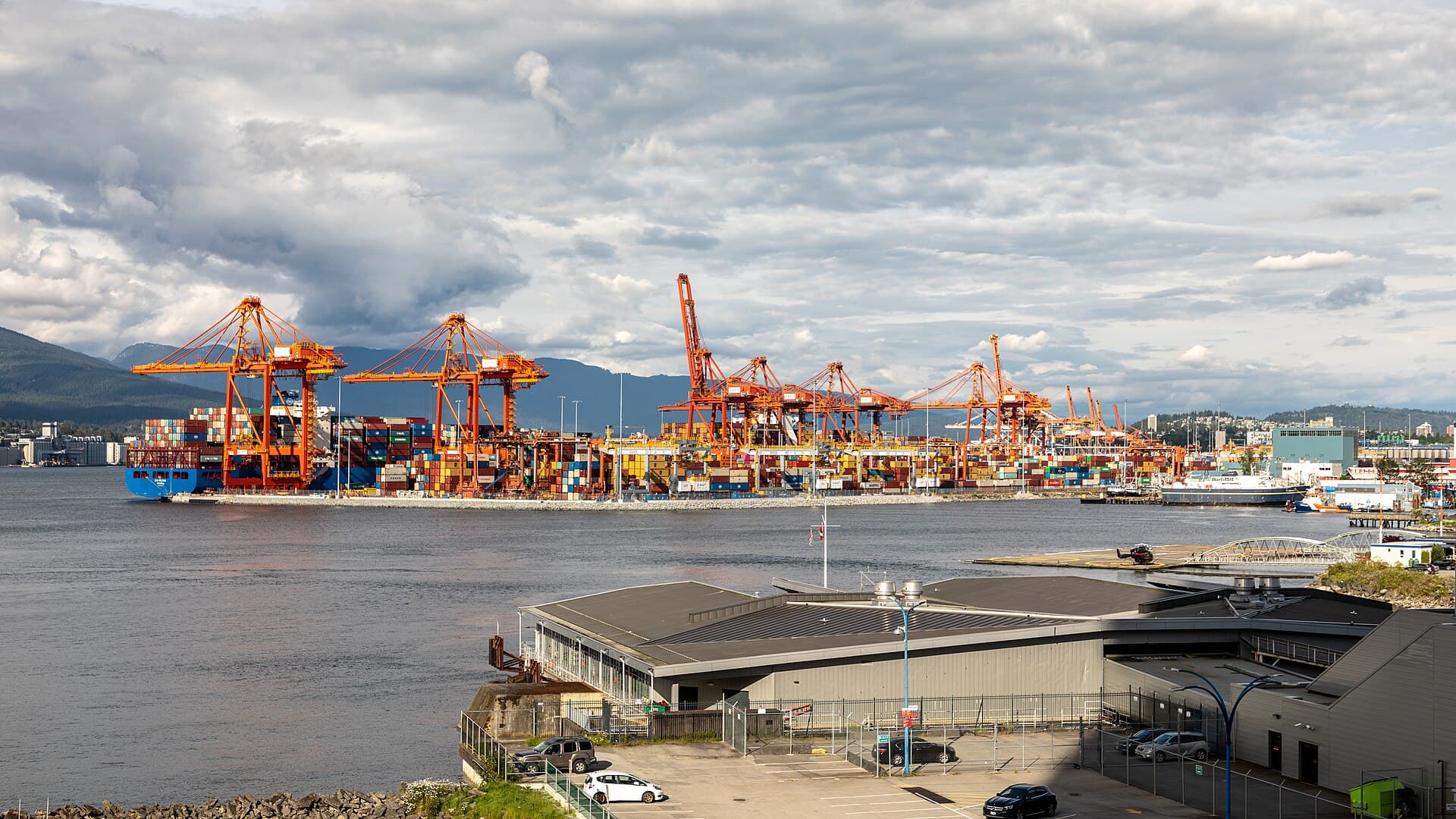
The LNG Canada export terminal on British Columbia's coast, which opened for commercial shipments in mid-2025, has positioned Canadian producers to serve Asian markets rather than European ones. European gas security remains a structural advantage for American exporters rather than for Canadian ones. The federal government's longer-term strategy for serving European buyers has been constrained by the Atlantic coast's limited export infrastructure and by environmental review timelines that have pushed potential new facilities past the window when they might have captured the biggest European price premium.
The refugee situation
More than 6 million Ukrainians remain displaced outside the country, with the largest populations in Germany, Poland and the Czech Republic. Canada's acceptance of roughly 300,000 Ukrainian nationals has been the largest contribution outside Europe, and the integration of that population into Canadian cities has produced distinctive community infrastructure. Ukrainian-language schooling, Ukrainian Orthodox church expansion, and Ukrainian-language media have all grown measurably since 2022.
The longer-term status of the Ukrainian population in Canada depends in part on what the war's eventual outcome produces. Many Ukrainians have expressed intentions to return home if the war ends with Ukraine's sovereignty preserved. Many others, particularly families with children who have now been in Canadian schools for three years, have indicated that they will seek permanent residency. The federal government's handling of those pathways, including the potential extension of the emergency travel authorisation for existing beneficiaries, remains an active policy question.
What happens Sunday night
The most watched 90 minutes of this weekend may not be the Easter services or the ceremonial statements from Kyiv and Moscow. They will be the period between 10:30 p.m. and midnight on Sunday, when both sides begin the return to active combat operations. Historically, the hours surrounding the resumption of hostilities after a pause produce some of the war's most violent exchanges.
Ukrainian officials have indicated they will be watching Russian military movements closely through the final phase of the truce. Russian officials have said the same about Ukrainian positions. The symbolism of the Easter pause will be preserved regardless of what happens after. What the pause achieves, in narrower diplomatic or military terms, will be clear within days.
The disinformation environment
Western information operations against Russian disinformation, and Russian operations aimed at Western audiences, have continued in parallel with the military and diplomatic tracks of the war. The 2024 US election, the 2025 German federal election and the 2025 UK general election all saw substantial evidence of foreign information operations by Russian state and state-linked actors. Canadian intelligence services have documented similar activity affecting Canadian political discourse, particularly around issues connected to the war.
The practical effect of this environment, for Canadian readers trying to make sense of the war, is that primary-source verification has become more important than ever. Statements from governments, even Western governments, increasingly carry political framing that would benefit from additional context before being accepted at face value. Independent journalism from Kyiv, Moscow and the battlefield continues to provide the most reliable foundation for informed public understanding.
What's next
The broader negotiating calendar runs through the next several months. A possible meeting between Trump and Putin has been discussed but not confirmed. A Zelenskyy-Putin meeting, which Kyiv has demanded as a precondition for any serious dialogue, has been repeatedly rejected by the Kremlin. Canadian diplomats in Ottawa and Kyiv will continue coordinating with European counterparts on the conditions under which a peacekeeping deployment could become realistic.
The war will not end this weekend. It may not end this year. But the ritual of a holiday ceasefire, offered and accepted, is itself a signal that both sides still see value in the symbolism of pause. Whether that symbolism translates into a genuine peace will be decided in negotiations far longer than 30 hours.