Pakistan's Moment: How Islamabad Became the Unlikely Broker Between Washington and Tehran
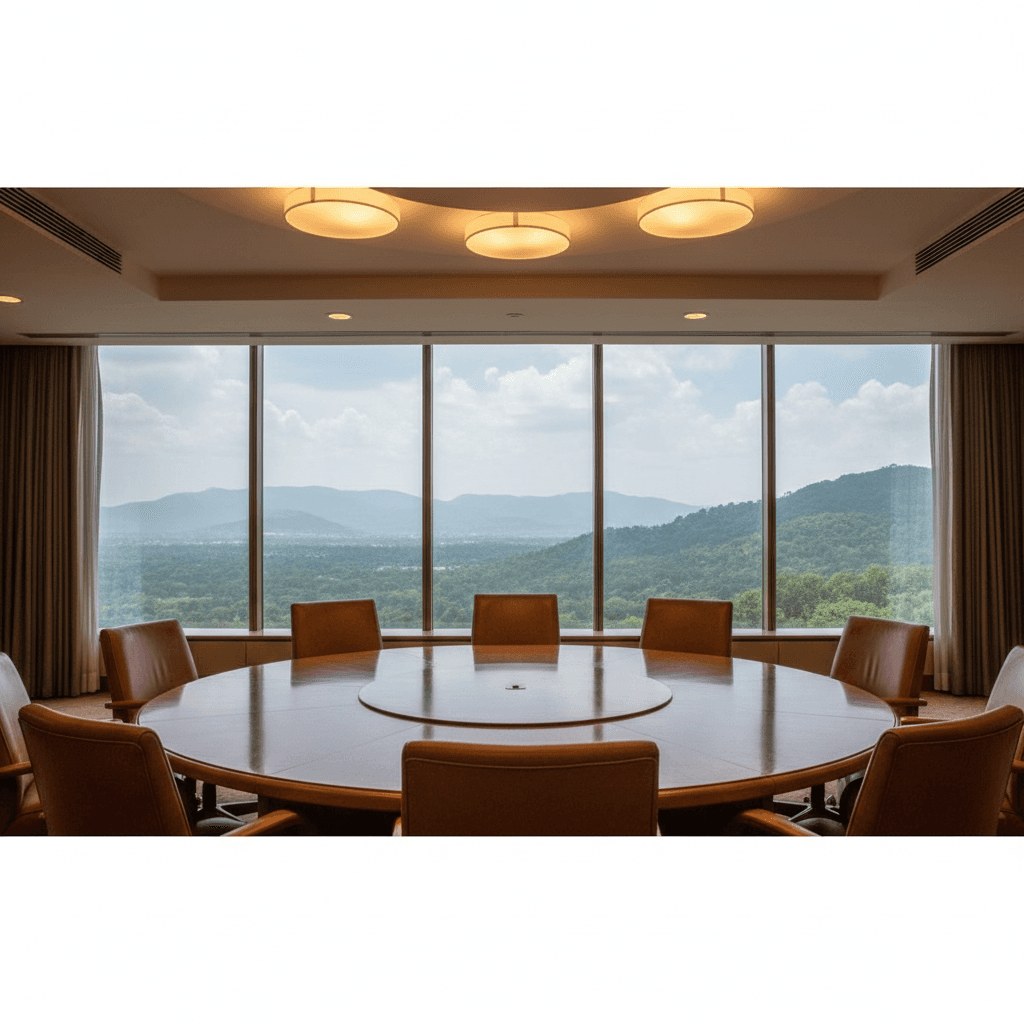
Pakistan has become, in the span of less than two weeks, the most consequential South Asian diplomatic actor of 2026. The country's hosting of extended US-Iran negotiations in Islamabad between April 11 and 12, followed by its continued role as a potential second-round venue, has elevated Pakistan's standing in ways that most international observers would have considered implausible as recently as a year ago. For Canada, which maintains one of the world's largest Pakistani-Canadian diasporas, a comparably substantial Indo-Canadian community, and a series of difficult diplomatic relationships with both capitals, the shift matters in concrete policy terms.
How Pakistan got here
The path to Islamabad's hosting of the US-Iran talks was not a planned outcome. The American side, led by Vice President JD Vance, initially explored venues in Oman and Switzerland, both traditional sites for US-Iran dialogue. Iran's delegation, including Foreign Minister Abbas Araqchi and Parliamentary Speaker Mohammad Baqer Qalibaf, pushed back against those options for reasons that have not been publicly explained but are understood to include concerns about surveillance and logistical convenience.
Pakistani Prime Minister Shehbaz Sharif's office offered Islamabad as an alternative in late March. The choice was acceptable to both sides. Pakistan maintains diplomatic relations with Iran through a long shared border and significant religious and cultural linkages. Pakistan also maintains strategic cooperation with the United States, including intelligence sharing and counterterrorism programmes that have continued through multiple administrations in Washington.
The talks themselves lasted more than 21 hours across two days. Pakistani officials have been careful not to exaggerate their role in the substantive negotiations, but the logistical and mediating effort has been widely credited as professional and effective.
India's diplomatic setback
The most immediate consequence of Pakistan's moment has been, uncomfortably for New Delhi, a perceptible decline in India's regional diplomatic standing. An Indian policy magazine acknowledged in unusually direct terms that Pakistan's role had delivered a significant setback to India's regional positioning. Congress leader Shashi Tharoor publicly stated that Pakistan was performing better than India on the diplomatic stage, a comment that generated substantial coverage in both countries.
The Modi government, which has spent the past decade positioning India as the natural American partner of choice in the Indian Ocean region, now finds that positioning challenged not by any failure of its own but by Pakistan's opportunistic seizing of a specific diplomatic opening. The relationship between New Delhi and the Trump administration has not, on the public evidence, been damaged. But the specific value of India as a regional counterweight to both Pakistan and China is less clear than it was three months ago.
The India-Pakistan freeze
Direct India-Pakistan relations have been effectively frozen since the May 2025 military conflict between the two countries, which followed the Pahalgam terror attack in Indian-administered Kashmir. Operation Sindoor, India's military response, and the subsequent exchange of fire produced a formal diplomatic rupture that has not been repaired.
Back-channel communications have reportedly continued despite the public freeze. Officials on both sides, speaking on background to South Asian journalists, have described those communications as limited but active. The question of whether Pakistan's elevated international standing will translate into renewed direct engagement with India is one that officials in both capitals are currently considering.
Canada's diaspora dynamics
Canada is home to more than 1.8 million people of Indian descent and roughly 300,000 people of Pakistani descent, according to the most recent census data. Both communities are disproportionately concentrated in the Greater Toronto Area, metropolitan Vancouver, and Calgary, with substantial additional populations in Montreal, Edmonton and Winnipeg.
The political salience of both communities in Canadian federal politics has grown substantially over the past two decades. Indo-Canadian voters, particularly in suburban Toronto and Vancouver ridings, have been actively courted by all major federal parties. Pakistani-Canadian political engagement has been less electorally decisive but has grown noticeably in the past decade.
Events in Islamabad and New Delhi generate real political reverberations in Canadian federal politics. The recent diplomatic rupture between Canada and India over the Nijjar assassination case, which reached its most intense phase in 2023 and 2024 and has remained a live issue through 2026, has been complicated by broader shifts in South Asian diplomacy.
The Nijjar case in context
The case of Hardeep Singh Nijjar, the Sikh activist assassinated in Surrey, British Columbia in June 2023, remains one of the defining diplomatic crises in modern Canada-India relations. The public accusation by Prime Minister Justin Trudeau that Indian government agents were involved in the killing, made in September 2023, triggered a sustained diplomatic rupture that saw both countries expel senior diplomats and scale back consular operations.
The criminal prosecution of the accused killers has continued through the British Columbia courts. The diplomatic relationship has begun, slowly, to rebuild since the Carney government took office, though trust between Ottawa and New Delhi remains strained. The recent shift in regional diplomatic positioning, with Pakistan elevated and India's role diminished, adds a new dimension to a relationship still in recovery.
The Khalistan question
For Sikh-Canadian communities, particularly those concentrated in Surrey, Brampton and Calgary, the rearrangement of South Asian diplomatic relations raises questions about the environment in which the Khalistan independence movement operates. India has long objected to Canadian political accommodation of Khalistan advocacy. Pakistan, for its own strategic reasons, has at times been more accommodating of Khalistan-related organising.
The elevated Pakistani role in international diplomacy does not, in any direct way, change the Canadian government's posture toward Khalistan-related political activity. But it alters the broader regional context in which that activity is interpreted by New Delhi and, by extension, shapes the diplomatic space in which Ottawa's choices are received.
Trade implications
Canada-India trade, which was disrupted by the 2023 diplomatic rupture, has slowly rebuilt through 2025 and 2026 but remains well below the levels both capitals had targeted through the earlier comprehensive economic partnership negotiations. Canadian pulse exports, agricultural commodities, and natural resource exports to India have been most affected. Indian exports to Canada, including pharmaceuticals, textiles and IT services, have continued but also at below-trend levels.
Canada-Pakistan trade is substantially smaller in absolute terms, measured in the low hundreds of millions of dollars annually rather than the multiple billions of the India relationship. The trade relationship is primarily agricultural, with Canadian wheat, lentils and pulses flowing to Pakistan. The diplomatic warming between Ottawa and Islamabad over the past year has created opportunities for modest expansion, though the scale remains modest compared to the India relationship.
The next round of US-Iran talks
A second round of US-Iran negotiations has been publicly discussed but not confirmed. Potential venues include a return to Islamabad, a move to Oman, or a shift to Geneva. Pakistani officials have not publicly committed to hosting a second round but have made clear that they remain available.
The substantive issues dividing Washington and Tehran remain essentially unchanged: uranium enrichment limits, sanctions relief, regional security arrangements, and the specific language of any non-proliferation commitment. The American naval blockade of the Strait of Hormuz, imposed after the first round of talks collapsed, hangs over any renewed dialogue as both a pressure tactic and a potential escalation vector.
The Afghanistan shadow
Pakistan's regional position is also shaped by Afghanistan, where the Taliban government has remained in power since August 2021 and where Islamabad's relationship with Kabul has grown steadily more complicated. Cross-border terrorism, particularly from Tehrik-i-Taliban Pakistan elements operating from Afghan territory, has been a persistent security problem for Pakistan. That security burden has absorbed significant Pakistani military and intelligence capacity that might otherwise be directed toward India or toward broader regional diplomacy.
The Afghanistan file remains one of the most difficult areas of Pakistani foreign policy. The elevated standing Pakistan has achieved through the Iran mediation does not, in any obvious way, translate into easier solutions in Afghanistan. It may, however, give Islamabad more international support for the security approaches it pursues on that front.
The China dimension
Pakistan's relationship with China, anchored by the China-Pakistan Economic Corridor and decades of close military cooperation, complicates the country's elevated positioning with the United States. Beijing has publicly welcomed Pakistan's mediating role, which serves Chinese interests in reducing Western pressure on Iran. The balance Islamabad must strike, between serving as a useful interlocutor for Washington while preserving its strategic partnership with Beijing, is a familiar one but not an easy one.
For the United States, the Pakistani role has been accepted as operationally useful without triggering the broader policy reassessment of Washington's relationship with Islamabad that many American China-hawks have long advocated. That acceptance reflects both the specific utility of the Iran mediation and the Trump administration's pragmatic approach to bilateral relationships in the region.
The parliamentary response in Ottawa
The federal parliament returned from its constituency break earlier this month, and Question Period has featured several exchanges on Canada's posture toward the shifting South Asian diplomatic environment. Opposition parties have pressed the Carney government on whether Canada has adequate diplomatic representation in both Islamabad and New Delhi given the current circumstances. The government's responses have emphasised continuity of existing representation and the gradual rebuilding of damaged relationships.
The broader parliamentary conversation about Canada's place in South Asian affairs has continued to evolve. Ottawa's traditional role, as a secondary Western voice with meaningful diaspora connections but limited strategic influence, is being tested by the pace of regional change. Whether Canada's foreign policy apparatus has the staffing, resources and political direction to keep up with these shifts is a question that officials inside Global Affairs Canada have been quietly raising with their minister for some time.
What's next
The most consequential development to watch, in the coming weeks, is whether a second round of US-Iran talks materialises in Islamabad. If it does, Pakistan's positioning as a regional diplomatic hub will strengthen further. If negotiations move elsewhere, the specific Pakistani moment may fade even as the broader shift in regional diplomatic architecture remains.
For Canadian policymakers, the practical task is to maintain functional relationships with both India and Pakistan through a period of volatile regional dynamics, while also attending to diaspora communities whose interests are intensely engaged with events in both capitals. That task is rarely straightforward. The current environment makes it harder.