Alberta Court Stays Separation Petition Results After First Nations Challenge
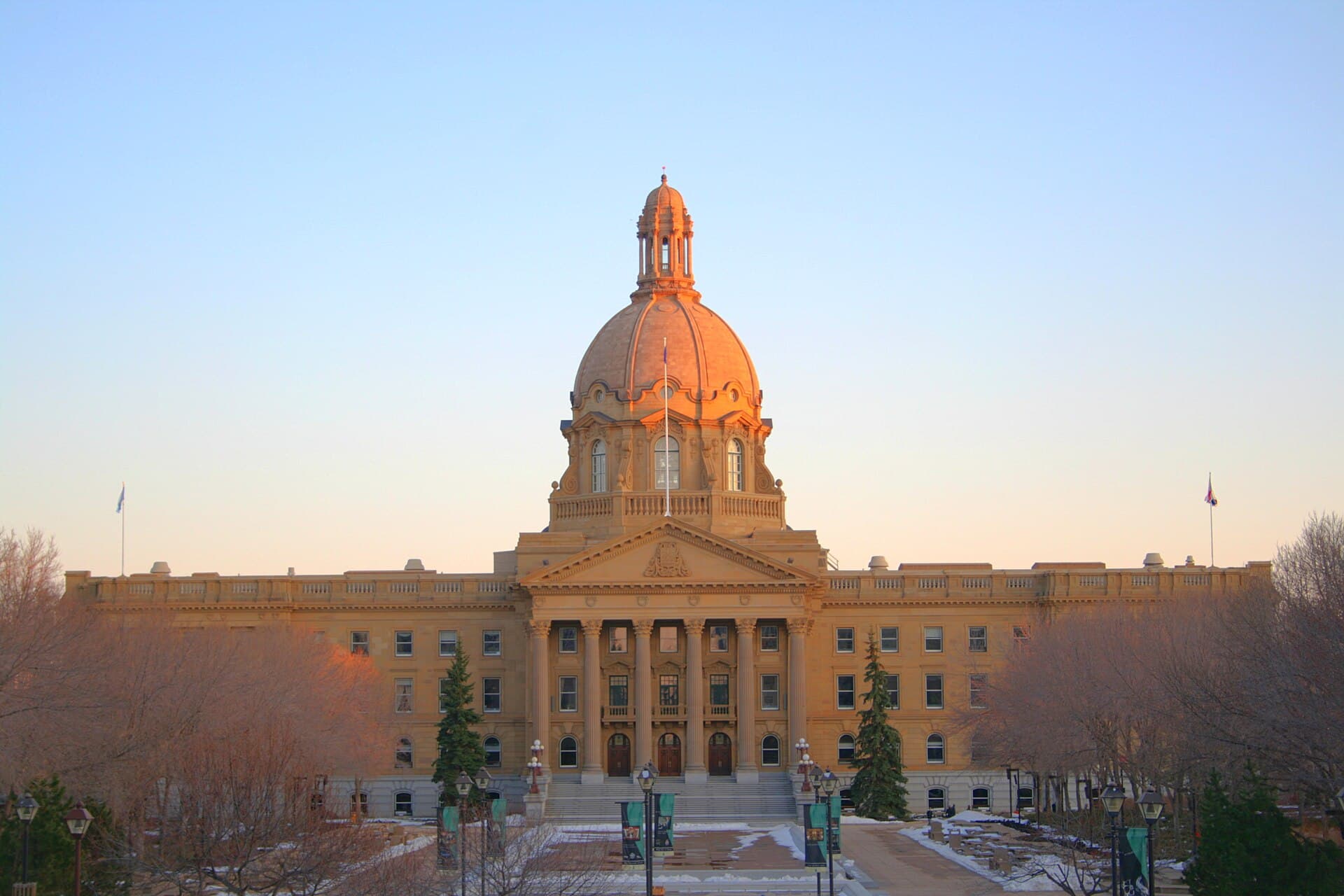
The legal process surrounding Alberta's independence petition has taken its most consequential turn to date. Court of King's Bench Justice Shaina Leonard issued a temporary stay on April 10 that halts any provincial action on the results of the petition while a constitutional challenge brought by several First Nations works its way through the courts. The decision does not stop signature collection, which continues until the May 2 deadline, and it does not strike down the petition itself, but it freezes the next steps that would normally follow if signature thresholds are reached.
The challenge was filed by the Sturgeon Lake Cree Nation, the Athabasca Chipewyan First Nation, and the Blackfoot Confederacy. Their core argument is that the petition process, which would put a question about Alberta leaving Canada to a provincewide vote, was launched without the constitutional consultation required when treaty-protected interests are at stake.
The state of the petition
Stay Free Alberta, the registered proponent group, has been collecting signatures since January 3. The petition's draft question, approved by Alberta's Chief Electoral Officer on January 2, asks: "Do you agree that the Province of Alberta should cease to be a part of Canada to become an independent state?" The proponents need to collect at least 177,732 valid signatures, equal to roughly 10 per cent of the votes cast in the most recent provincial general election, within the 120-day window that closes on May 2.
Stay Free Alberta organisers have publicly claimed they have already passed the signature threshold. Elections Alberta has not formally certified that count, and any signatures collected still need to be verified individually before being declared valid. Even if the threshold is confirmed, the court's stay means the province cannot proceed with the next legislated steps until the constitutional challenge is resolved.
Premier Danielle Smith's United Conservative government has, separately, launched a public information website intended to educate voters about the various ballot questions Alberta is preparing to put forward this autumn. That website, published on April 23, treats the independence question as one of several potential referendum items, alongside other matters such as a provincial police service and the Canada Pension Plan exit question.
What the court said
Justice Leonard's ruling notes that signature collection itself does not infringe on treaty rights and can therefore continue. What is paused is anything that would advance the petition into the validation, certification, and referendum-call phases. The ruling makes clear that those steps require a fuller constitutional analysis given the implications for treaty obligations between the Crown and the First Nations involved.
The decision sits inside a broader legal landscape in which the relationship between provincial sovereignty referenda and Indigenous treaty rights has never been definitively resolved by a Canadian court. The federal Clarity Act, passed after the 1995 Quebec referendum, sets out conditions for federal recognition of a province's secession, but those conditions do not directly address Indigenous consent.
The First Nations' broader case, which is set to proceed in the coming weeks, argues that the Crown's constitutional duty to consult and accommodate is engaged by the petition process itself, not just by any eventual vote outcome. The province's position is that the petition is a legitimate exercise of provincial democratic process and that no consultation is required at this stage.
The Alberta Prosperity Project complication
The legal landscape is further complicated by an investigation into the Alberta Prosperity Project, an organisation linked to several pro-independence figures. Elections Alberta said on April 20 that it believes the group violated third-party advertising laws by paying for public messaging beyond the $1,000 limit allowed for unregistered groups. The agency had previously filed an injunction against the project in March.
The investigation does not directly affect Stay Free Alberta or the petition itself, since the two organisations are distinct. It does add to the pile of unresolved questions about how the broader independence movement is operating and whether its messaging has complied with provincial election law.
How Alberta got here
The independence question has cycled through Alberta politics for more than four decades, but the current iteration is rooted in the period since the April 2025 federal election. The election, which returned the Liberals to power under Mark Carney, was followed by months of provincial frustration with federal energy and climate policy, and with what UCP cabinet ministers have described as inadequate federal compensation for tariff-affected sectors.
Smith herself has not formally endorsed independence. Her government's stated position is that the petition process is a legitimate exercise of citizen participation and that the province will administer it in accordance with the relevant statutes. Privately, UCP strategists have framed the petition as leverage in negotiations with Ottawa over equalisation, energy policy, and the major-projects framework Carney's government is pushing through Parliament.
Federal response
Carney's government has been deliberately quiet on the petition itself, declining to be drawn into the legal proceedings. Federal cabinet ministers have, however, been more willing to discuss the underlying frustrations. Natural Resources Minister Tim Hodgson has emphasised that recent federal investments in critical-minerals development and indigenous-led energy projects directly benefit Alberta. Finance Minister François-Philippe Champagne has, separately, restated that equalisation reform is on the federal agenda but framed in national rather than province-by-province terms.
The most consequential federal response, in policy terms, is the major-projects framework that the Carney government plans to advance now that it has a majority in the Commons. That framework is intended to streamline approvals for nationally significant infrastructure, including some energy projects, and may go some way toward addressing the regulatory frustrations that fuel parts of the independence movement.
First Nations leadership and the broader stakes
Indigenous leaders who launched the constitutional challenge have made clear that their concerns are not limited to procedural objections. They argue that any vote on Alberta leaving Canada implicates treaties signed with the Crown, including Treaty 6, Treaty 7, and Treaty 8, that govern the relationship between First Nations and the federation. Those treaties were signed before Alberta existed as a province, and First Nations leadership has consistently rejected the idea that a provincial vote could unilaterally alter their constitutional protections.
The Assembly of First Nations has supported the legal challenge in principle and has called for full Crown consultation regardless of the eventual vote outcome. Several Métis Nation councils have also expressed concerns and reserved the right to participate in the legal proceedings.
What polling shows
Public polling on independence has been volatile but consistently below the threshold that would predict a successful referendum. Leger and Janet Brown polls released over the past three months have placed support for outright independence in the high teens to low twenties, with majority opposition. Support for renewed federal-provincial negotiations on energy and equalisation is much higher, suggesting that frustration with the status quo is broader than support for separation.
What's next
The signature collection deadline is May 2. After that, Elections Alberta will undertake validation. If the threshold is met, the next steps would normally trigger formal referendum planning, but the court stay blocks those steps pending the constitutional case.
Hearings on the First Nations' broader challenge are expected through the late spring and into summer. The provincial government has indicated that it will defend the petition process in court but has stopped short of saying it will appeal an adverse ruling. Smith's office has said the provincial information website will be updated as the legal status of each potential referendum question evolves.
For Alberta voters, the practical reality is that no referendum will be held until the courts resolve the underlying constitutional questions. That timeline could extend well beyond this calendar year. For Ottawa, the longer the legal process drags out, the less politically pressing the petition becomes, even as the underlying provincial frustrations remain unresolved.
Spotted an issue with this article?
Have something to say about this story?
Write a letter to the editor