Quebec Premier Fréchette Unveils Cabinet With Rival Drainville on Economy
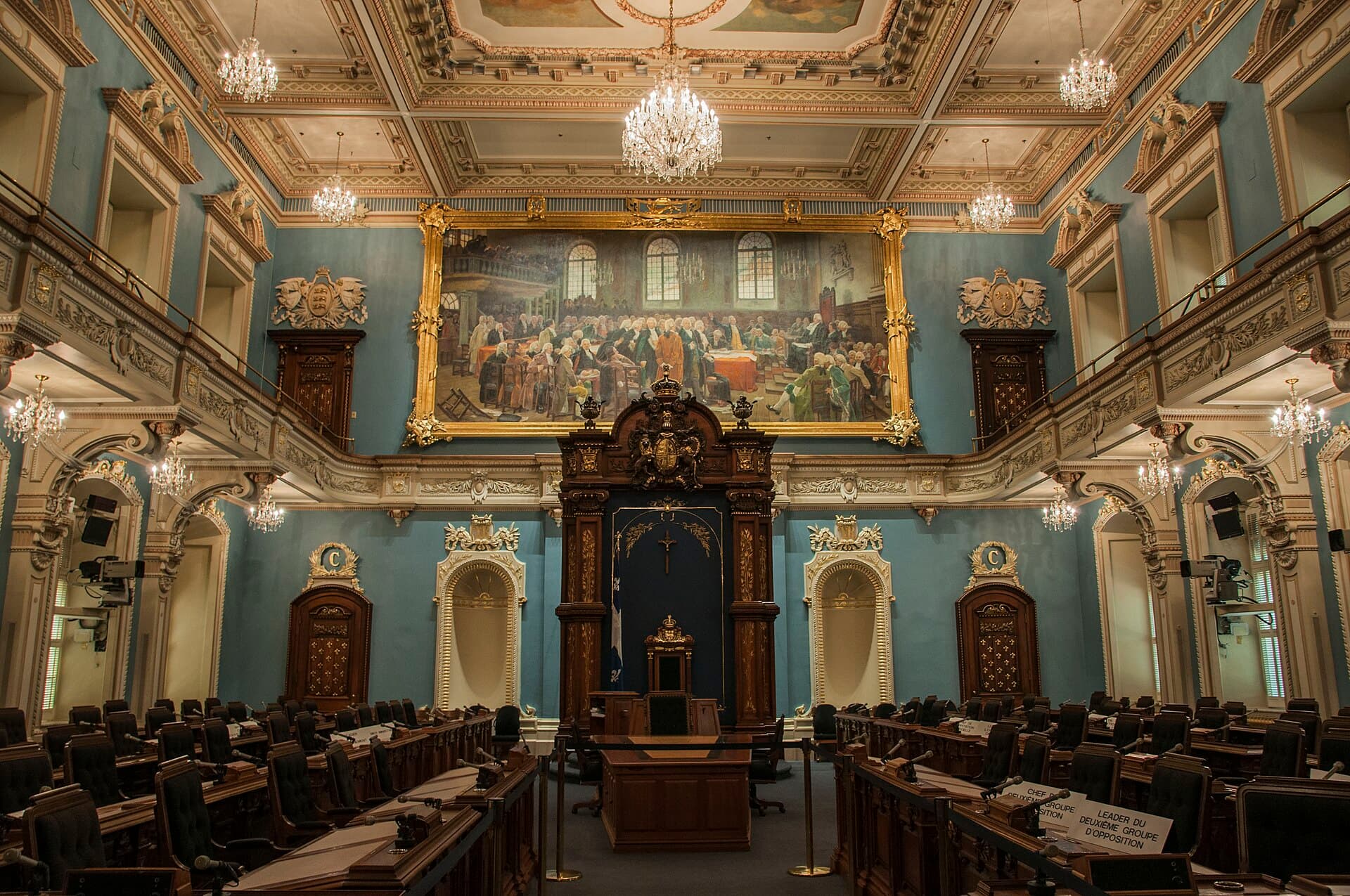
Premier Christine Fréchette unveiled her first cabinet on April 21 in Quebec City, presenting a slate of 29 ministers that pairs continuity with a calculated effort to unite a Coalition Avenir Québec caucus shaken by François Legault's resignation and the leadership race that followed. The most striking appointment was Bernard Drainville, the former leadership rival Fréchette defeated on April 12, who takes over the economy, innovation, and energy portfolio that she herself held before becoming premier.
Fréchette, sworn in as Quebec's premier earlier this month, becomes only the second woman to hold the office. She inherits a government slumping in polling, an opposition Parti Québécois that has been ahead in most surveys for more than a year, and a fall general election on the horizon.
The cabinet at a glance
The new cabinet includes 29 ministers, of whom five are entirely new to executive office. Fréchette retained roughly two-thirds of Legault's ministers in either their existing portfolios or related ones, signalling that she does not intend to launch a wholesale reset before the upcoming campaign. The focus, her office said in a statement, is on delivery and message discipline rather than a rebrand.
Drainville's move into economy, innovation, and energy is the headline appointment. His leadership campaign emphasised aggressive industrial policy, faster project approvals, and a more confrontational posture with Ottawa on jurisdictional disputes. Putting him in the economy file allows Fréchette to channel his profile into a portfolio where the government wants to demonstrate momentum, particularly as Canada-U.S. trade negotiations heat up and Quebec's manufacturing sector grapples with continuing tariff uncertainty.
The finance and treasury board portfolios were reassigned to senior ministers from Legault's bench, signalling continuity for bond markets and ratings agencies that have watched the leadership transition closely. Fréchette herself will keep close oversight of the intergovernmental affairs file, which is unusual for a premier but consistent with her stated intent to take personal ownership of the relationship with the Carney government in Ottawa.
Why the Drainville appointment matters
Drainville came within roughly 16 percentage points of winning the CAQ leadership race, finishing as the clear runner-up. His base inside the party tilts toward more populist, more nationalist, and more openly skeptical of climate-driven economic policy. Fréchette's base, by contrast, is closer to the party's economic-development wing and includes more centrist former public servants and business figures.
By placing Drainville in the economy and energy portfolio, Fréchette is doing two things at once. She is binding her former rival to the success of the government's economic file, and she is giving him a public mandate that lets him pursue his preferred industrial policy positions while keeping responsibility for outcomes inside the cabinet. That arrangement is politically convenient before an election; whether it produces stable cabinet dynamics over a campaign and a possible second mandate is another question.
Drainville himself struck a unifying tone at his swearing-in. He said his focus would be on attracting investment, supporting Quebec's auto-sector supply chain, and defending the province's interests during the CUSMA review. He also emphasised the need to accelerate certain energy infrastructure projects, particularly transmission lines connecting Hydro-Québec generation to industrial customers.
The election context
Quebec's next general election is constitutionally required by October 5, but Fréchette could call a vote earlier. Recent polling from Leger has the Parti Québécois leading and the CAQ second, with the Liberals and Québec solidaire trailing. Under Fréchette's leadership, the CAQ ticked up modestly in initial polling, with one survey finding 18 per cent support compared to 13 per cent under Legault. That movement is not enough to put the party in striking distance of the PQ.
PQ leader Paul St-Pierre Plamondon dismissed the cabinet as "more of the same" and said the appointments do not address what he calls a credibility deficit on health care, housing, and economic growth. Liberal interim leader Marc Tanguay focused on the absence of any meaningful policy reset, and Québec solidaire spokespersons called the cabinet "a deck chair shuffle."
Files demanding immediate attention
The new cabinet inherits a number of pressing files. Quebec's health system continues to struggle with emergency-room wait times and a shortage of family doctors, and Fréchette has promised reforms but has not yet specified a legislative timetable. Education unions are mid-negotiation with Treasury Board on a new contract framework. Housing supply remains tight in Greater Montreal, where rent increases have been a recurring story for two years.
The trade file is, however, where the cabinet's most concrete short-term work will be done. Quebec's aluminum, aerospace, and forestry sectors are exposed to U.S. tariffs in different ways, and Drainville will have to coordinate with federal negotiators while maintaining a distinct provincial posture. Fréchette's intergovernmental file means she will be in regular contact with Carney and federal trade minister Dominic LeBlanc.
Indigenous and language files
Two files will test Fréchette early. The first is Indigenous relations, where her predecessor's government had a strained record. Several First Nations communities have ongoing land and consultation disputes with the province, and reactions to the new cabinet's appointee for that portfolio have been cautious.
The second is language. Bill 96 implementation continues to attract legal challenges from the English-language community and from companies trying to comply with workplace-language rules. Fréchette has said she will retain the policy framework but indicated openness to administrative adjustments, particularly in regulated professions where exam languages have been a flashpoint.
Reaction from Ottawa
Carney congratulated Fréchette in a brief statement on April 21 and confirmed that the two had spoken by phone. He cited shared interests on the trade file and on housing supply, and said his office would work with the new Quebec government on a renewed federal-provincial agreement on infrastructure. Federal ministers responsible for files that require provincial sign-off, including health, climate, and labour-market training, are expected to begin reaching out to their Quebec counterparts immediately.
Fréchette has been careful not to commit publicly to any specific federal-provincial framework before her own legislative session resumes. Her advisors have signalled that any major intergovernmental announcement is more likely after the spring session of Parliament concludes.
Inside the CAQ
The leadership race exposed real ideological differences inside the party, and the cabinet appointments are an attempt to bind those factions together for an election cycle. Several senior MNAs who supported Drainville received either retained portfolios or modestly upgraded ones, while Fréchette loyalists were placed in roles that favour delivery and visibility, including a refreshed health portfolio assignment and a strengthened tourism and culture mandate.
Caucus management will likely become more, not less, complex over the coming months. Drainville's economy file is high-stakes and high-visibility, and any disagreement between his portfolio's posture and Fréchette's intergovernmental file could quickly become public.
What's next
The National Assembly resumes its sitting next week, and the new government's first significant test will be the budget speech and supply estimates. Drainville is expected to deliver a major economic-update speech in early June, before the summer recess, that will lay out his ministerial priorities. Fréchette's office has hinted at a major announcement on health-system reform later in the year.
The bigger question is timing. If the CAQ continues to recover ground in polling, Fréchette could face pressure from inside her own caucus to call an election earlier, before any potential summer or autumn shocks. If the PQ remains in front, the campaign will likely be deferred to the constitutionally fixed date.
Either way, the next eighteen months will be among the most consequential in the CAQ's history. The party that swept into power in 2018 on a promise of pragmatic modernisation is now defending that record under a new leader, against a sovereigntist opposition that has not held this kind of polling lead in nearly two decades.
Spotted an issue with this article?
Have something to say about this story?
Write a letter to the editor