Indigenous Leaders Take Canadian Incarceration Crisis to the United Nations
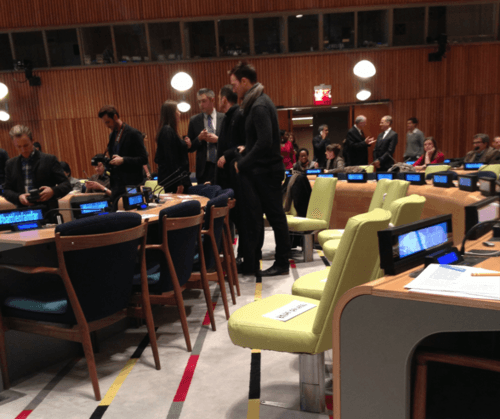
Indigenous governments, organisations, and a Canadian legal aid clinic used the 25th United Nations Permanent Forum on Indigenous Issues, which opened in New York earlier this month, to draw international attention to one of the most stubborn and damaging statistics in Canadian public policy. Indigenous people make up roughly 5 per cent of Canada's population, but they account for about 33 per cent of those held in federal prisons. Among women, the disparity is even more severe: roughly half of all women in federal custody are Indigenous.
The interventions at the UN forum framed the crisis not as a series of isolated criminal-justice failures but as a structural problem rooted in the legacy of residential schools, the Sixties Scoop, ongoing child-welfare overrepresentation, and chronic underfunding of Indigenous communities. Speakers called on Canada to provide stable funding and decision-making authority directly to Indigenous governments and organisations, arguing that meaningful reductions in incarceration depend on Indigenous-led solutions.
Governor General's address
Governor General Mary Simon, the first Inuk to hold the office, addressed the opening of the forum and acknowledged the pace of progress in Canada has been slow even as some advances have been made. Her speech highlighted the development of Inuit Nunangat University, which will be Canada's first university rooted in Inuit culture and language, and the continued growth of the First Nations University of Canada in Regina.
Simon's remarks struck a careful balance. She did not minimise the structural challenges Indigenous peoples in Canada continue to face, but she also pointed to institution-building and to relationships that have been deepening between Indigenous governments and federal departments. Her address has been broadly welcomed by Indigenous leaders, although several have noted that high-level acknowledgements at international forums must be matched by domestic policy and budget action.
The numbers in context
The 5-to-33 disparity is not new. The Office of the Correctional Investigator has been raising concerns about Indigenous overrepresentation in federal prisons for more than two decades, and the proportion has been climbing rather than falling. Provincial data add to the picture: in some provinces, the share of Indigenous people in remand and sentenced custody is even higher.
Several drivers contribute to the trend. Indigenous communities continue to experience disproportionate poverty, mental-health pressures, and substance-use challenges that intersect with criminal-justice involvement. Discriminatory policing practices, sentencing patterns, and limited access to culturally appropriate diversion programs compound those drivers. The child-welfare system continues to remove Indigenous children at rates far above their share of the population, and over time many of those children encounter the criminal-justice system as adults.
The Truth and Reconciliation Commission's 2015 final report and the Calls to Action it issued included specific recommendations on criminal-justice reform. Implementation of those calls has been uneven, and Indigenous organisations have repeatedly noted that the underlying overrepresentation has not improved.
Federal response
Crown-Indigenous Relations Minister Rebecca Alty also addressed the UN forum, highlighting Canada's work on Indigenous rights, health, and climate leadership. Her speech pointed to recent legislative work and to ongoing implementation of the United Nations Declaration on the Rights of Indigenous Peoples Act, which received royal assent in 2021 and which committed the federal government to align federal laws with the declaration over time.
The federal Indigenous Services Canada portfolio remains one of the largest in government in budget terms, and recent budgets have included significant new funding for housing, water infrastructure, and health services in Indigenous communities. Indigenous leaders have welcomed those investments while continuing to argue that the funding still falls short of what is needed and that federal-administered programs are not always the most effective vehicle for delivering services.
The mass-incarceration crisis sits awkwardly within the federal portfolio structure. Justice and Public Safety lead on criminal-justice policy, while Indigenous Services and Crown-Indigenous Relations lead on programs and agreements with Indigenous governments. The interaction between those files has been a continuing administrative challenge.
Provincial dimensions
Most of the criminal-justice levers that affect incarceration sit at the provincial level. Provincial courts handle the majority of criminal cases. Provincial corrections authorities operate the institutions where most short-term and remand custody is served. Provincial police services, with the exception of areas where the RCMP serves under contract, handle frontline enforcement.Provincial responses to Indigenous overrepresentation have varied widely. British Columbia has been more active in funding Indigenous-led justice initiatives. Manitoba and Saskatchewan, where Indigenous overrepresentation in custody is particularly high, have launched a number of programs but continue to face deep structural challenges. Ontario has invested in Gladue reports and in some Indigenous justice circles. Quebec has its own provincial framework that incorporates some First Nations and Inuit-led programming, but with continuing concerns about access and consistency.
British Columbia's DRIPA controversy
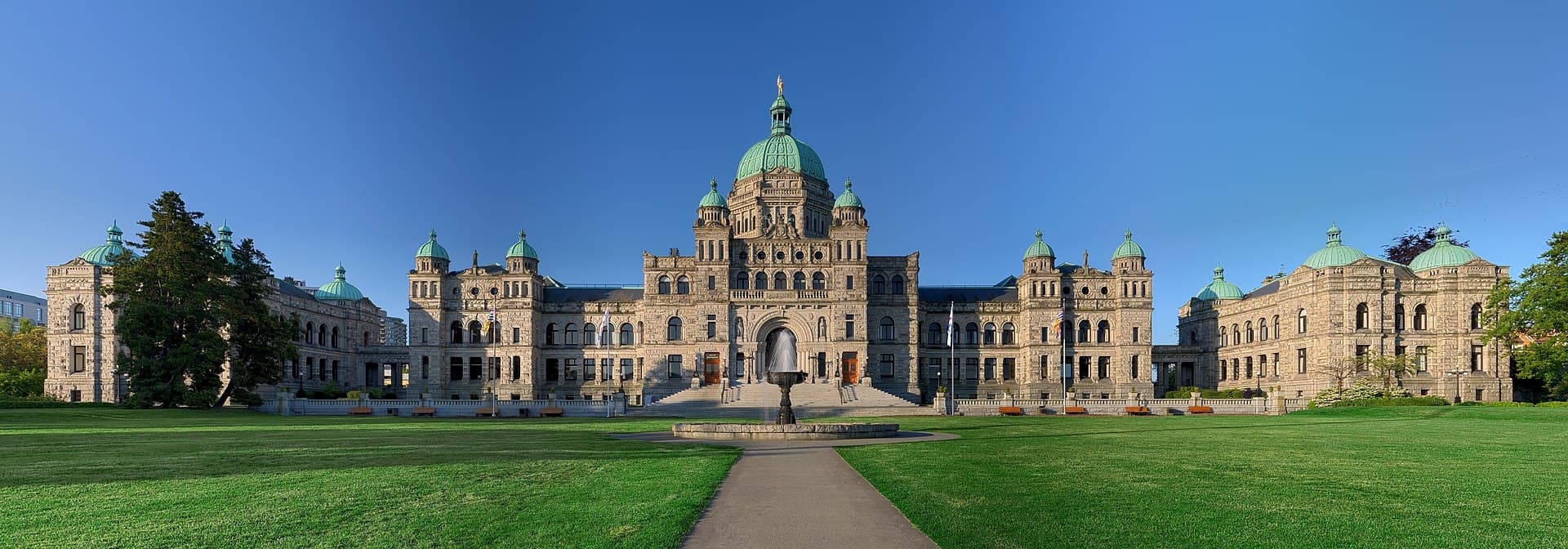
The UN forum unfolded against the backdrop of a separate controversy in British Columbia, where Indigenous leaders have urged provincial legislators to vote down a bill that would suspend parts of the province's Declaration on the Rights of Indigenous Peoples Act. The bill, introduced as part of the province's response to ongoing economic pressures, has drawn sharp criticism from First Nations leadership across the province.
That dispute, combined with overlapping treaty negotiations involving the Kitselas First Nation and the K'omoks First Nations, has created a complex political environment. A coalition of First Nations has indicated readiness to block major projects and to pursue legal action if the province does not pause the contested treaties to address objections from neighbouring nations whose territorial interests overlap.
The legal-aid dimension
The Canadian legal aid clinic that joined Indigenous governments at the UN forum highlighted concerns about access to legal representation, particularly for Indigenous defendants in remote communities. Bail reform, sentencing reform, and the practical operation of Gladue principles, which require courts to consider an Indigenous offender's circumstances, were all discussed.
Legal aid funding has been a long-running concern across the country. Federal and provincial governments cost-share legal aid in different ratios depending on the program, and Indigenous-specific legal services have historically been underfunded relative to need.
What Indigenous leaders are asking for
The asks coming out of the UN forum are not new. They include stable, predictable, multi-year funding directly to Indigenous governments and organisations rather than through annual program-by-program negotiations. They include decision-making authority over the design and delivery of justice and corrections programs in their communities. And they include a sustained federal-provincial commitment to implementing the Truth and Reconciliation Commission Calls to Action that touch on criminal justice.
None of those asks is small. Implementing them in any meaningful way requires sustained political commitment across federal and provincial governments, and across changes in government. The track record of recent decades has been mixed at best.
The diplomatic stakes
Bringing the issue to the UN forum is, in part, a diplomatic strategy. Indigenous leaders have argued for years that Canada's international reputation on human rights does not match its domestic record on Indigenous policy, and they have made clear that they will continue to use international venues to apply pressure. Canadian officials have been broadly receptive to those arguments at the diplomatic level, but the gap between rhetoric and outcomes has not closed.
What's next
The Carney government has signalled that Indigenous reconciliation will remain a priority file under the new majority. Concrete legislative steps will be watched carefully. The Department of Justice is reportedly reviewing several files related to Indigenous criminal-justice reform, and Indigenous leaders have called for legislative changes that would provide more authority to Indigenous Justice Strategies.
The UN forum continues for the next several days, with side events and bilateral meetings focused on specific Canadian concerns. Indigenous leaders are expected to issue follow-up statements and a coalition of organisations is preparing a more detailed submission to the UN Special Rapporteur on the Rights of Indigenous Peoples.
For Canadians, the international attention is a reminder that the incarceration disparity is not a statistical curiosity but a measure of a structural failure in public policy that has been documented for decades and that has not been meaningfully addressed. The path to reducing those numbers will be long, and it will depend on choices made not only by federal and provincial governments but also by communities, courts, and institutions across the country.
Spotted an issue with this article?
Have something to say about this story?
Write a letter to the editor