Blue Jays Stumble to Last-Place Start as Pressure Mounts
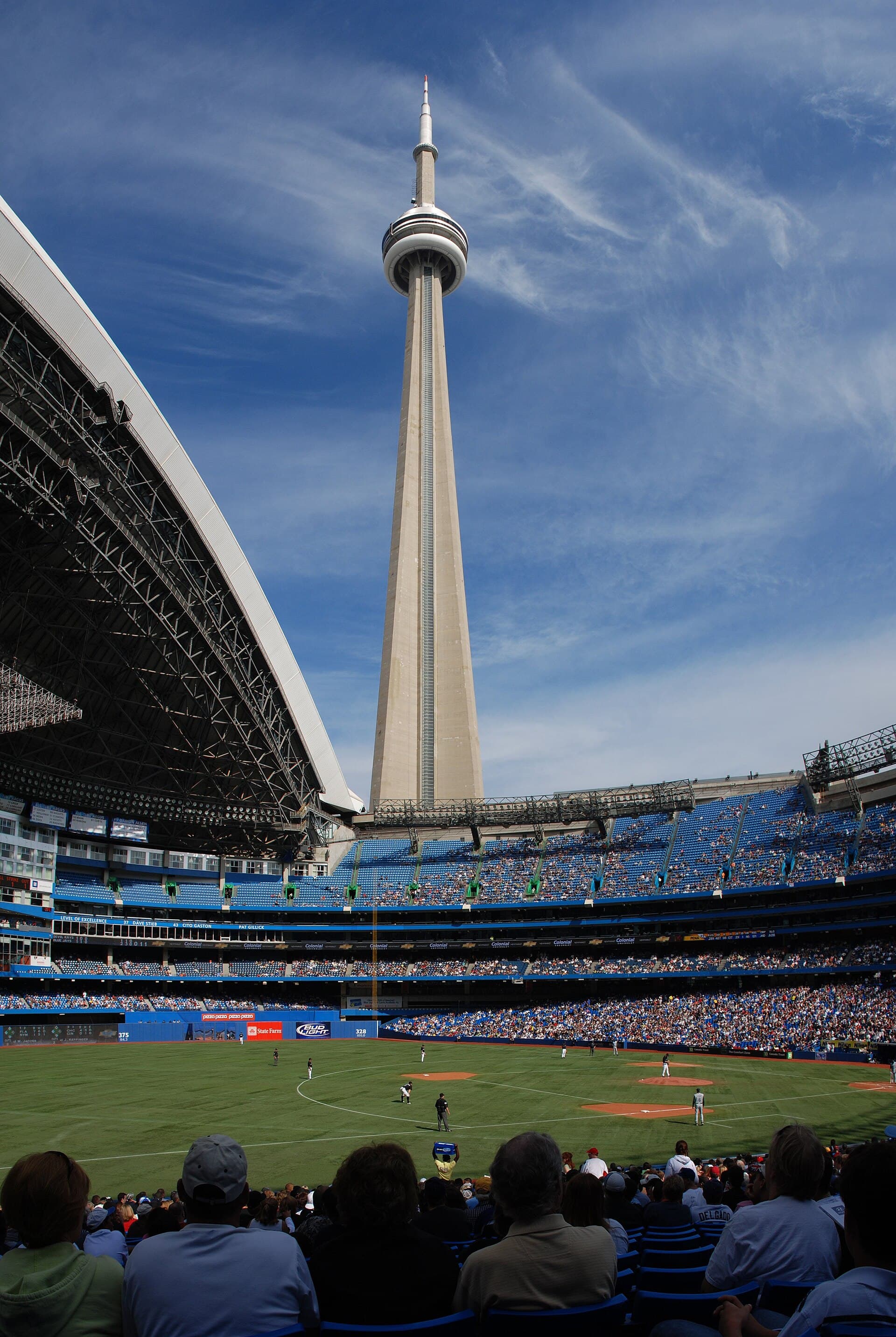
The Toronto Blue Jays have stumbled to an 8-13 record through the opening weeks of the 2026 Major League Baseball season, sitting last in the American League East just months after winning the division. The slow start has already triggered pointed public comments from the club's veteran leadership, injuries to key position players and a growing conversation about whether the bullpen structure, which carried the team through portions of last year's playoff push, is holding up under the early-season schedule.
Monday's 5-2 win over the Los Angeles Angels on April 21 provided a brief moment of relief, with Dylan Cease striking out 12 in five innings and Vladimir Guerrero Jr. producing three hits including a two-run home run. The day before, Toronto used an eight-run first inning to cruise past the Arizona Diamondbacks for a 10-4 victory that prevented a three-game sweep. But those performances have been the exception rather than the rule, and the cumulative record places the club in a position that no one in the Rogers Centre front office anticipated heading into the season.
For a franchise that has been building toward a sustained competitive window, the start raises significant questions. The core that took the Blue Jays to the division title in 2025 remains largely intact, but injuries and performance variability are exposing some of the same vulnerabilities that surfaced in last year's playoff run. The months ahead will be a test of both the roster's resilience and the front office's willingness to make in-season adjustments.
A challenging opening stretch
The early schedule has not been kind to Toronto. Key opponents have included several of the stronger teams in the American League, and the Blue Jays have had to navigate those matchups while managing a number of injuries to veteran players. The cumulative record reflects the difficulty of the slate, but the underlying performance indicators have also raised concern, with the club underperforming in expected-runs metrics and showing inconsistency in both starting pitching and relief work.
The bullpen has emerged as a particular area of focus. Jeff Hoffman has blown three of five save opportunities, and his grip on the closer's role appears to be loosening. Manager John Schneider has publicly discussed the possibility of mixing other arms into high-leverage late-inning situations, with Louis Varland, Tyler Rogers and Yimi García among the names that have been floated as candidates.
The rotation has been mixed. When the starters have been on, the games have been competitive. When they have struggled, the Blue Jays have had difficulty mounting comebacks. Cease's 12-strikeout outing on Monday was a reminder of the upside available to the rotation, but the team will need more consistent performances across the full five-man group to climb out of its current position.
Veteran pressure
Max Scherzer has publicly suggested that his teammates need to look in the mirror to find the path back to winning. The veteran's comments carry particular weight given his long playoff resume and his history of performing through adversity at the highest levels. The message has been understood inside the clubhouse as an accountability moment rather than a critique, but it is also a signal that the leadership of the team expects a response.
Scherzer's presence is itself a marker of the team's competitive intent. The Blue Jays signed him last off-season with the explicit goal of adding playoff-caliber pitching depth and veteran leadership to a roster that was ready to win. His willingness to speak publicly about the clubhouse is consistent with the role the club expected him to play, and his ability to continue producing on the mound will be central to any sustained recovery.
Guerrero Jr., the cornerstone of the offence, has been continuing to produce when the opportunities are there. Monday's three-hit game against the Angels was a positive sign, but the club needs to build an offensive approach around him that produces runs more consistently across the lineup. The lineup's ability to generate sustained offence, rather than relying on big innings in scattered games, is one of the keys to any turnaround.
The injury situation
The injury list has been a significant factor in the opening weeks. George Springer has been placed on the 10-day injured list. Shane Bieber was transferred from the 15-day injured list to the 60-day injured list, with his 2026 debut timeline remaining unclear. Several other position players have missed games due to injury, forcing the manager to reconfigure the lineup on a nearly daily basis.
The impact of injuries on the early season is a challenge for any team. For Toronto, the situation is particularly problematic because the injured players occupy roles that are difficult to replace from within the system. Springer's presence at the top of the lineup has historically set the tone for the offence, and the loss of Bieber from the rotation removes an arm that the front office had counted on to absorb significant innings.
The medical staff and the manager have been working to manage the roster carefully, with the goal of having the club closer to full strength by the summer months. Baseball seasons are long, and a slow start in April can be overcome if a team reaches full health by midseason. But the arithmetic of the standings suggests that Toronto will need to play significantly better baseball through the coming months to remain in contention for a playoff berth.
The AL East context
The American League East has historically been one of the most competitive divisions in baseball, and 2026 is shaping up to be no exception. Several of Toronto's divisional rivals have started the season strongly, and the Blue Jays now find themselves looking up at all of them. The divisional races often come down to the final weeks of the season, but the early deficit places pressure on the club to win key series against divisional opponents through the spring and summer.
The wild card race provides an alternative path, with three wild card berths available in each league. For a club with Toronto's roster and financial commitments, the goal will remain a return to the post-season, whether that comes through a divisional title or a wild card berth. The margin for error in the AL East, however, is slim, and every series will matter as the team works to rebuild its position.
The schedule ahead includes important divisional games that could reshape the standings quickly if Toronto can string together wins. A hot stretch of 15 games could move the club back into contention. A continued slide could accelerate the conversation about trade-deadline decisions and longer-term roster planning.
Front office considerations
The Blue Jays' front office has been under scrutiny since the playoff exit of last fall, and the slow start has intensified that scrutiny. The club's financial commitments through the next several seasons are significant, and the organisation has been balancing its win-now ambitions with the development of its farm system. How the front office responds to the current situation, in terms of trades, roster moves and internal adjustments, will shape the rest of the season.
The trade deadline in July remains months away, but the current trajectory makes it relevant to any forward-looking discussion. If the team continues to struggle, the front office will face difficult decisions about whether to add, hold or subtract at the deadline. Those decisions will be informed by the standings, by the health of the roster and by the broader competitive environment in the American League.
Rogers Communications, the ownership group, has invested heavily in the club in recent years. The expectation on the baseball operations team has been to deliver competitive baseball consistently, and the slow start is a test of whether that investment is translating into sustained results. Rogers has historically been supportive of significant in-season moves when the team is in contention, and that posture will be important if the Blue Jays find themselves in a position to reinforce the roster later in the year.
What fans are seeing
At Rogers Centre, the atmosphere has been somewhat subdued through the early home games. Fans have been patient, but a season that arrived with high expectations has run into a series of setbacks, and the energy of the building has reflected the standings. A return to winning baseball would quickly reshape that atmosphere, as recent years have demonstrated how quickly the home crowd responds to a winning streak.
Attendance through the early season has held up reasonably well, with the club's fan base continuing to support the team through the opening weeks. The long-term commitment of Blue Jays fans across Canada is one of the assets that distinguishes the franchise, and it gives the front office and players a runway to work through the current challenges. A strong home stand or a divisional sweep would generate significant interest and provide a boost to the team's overall mood.
Broadcast audiences have also remained engaged, reflecting the breadth of interest in the club across the country. Baseball's place in the Canadian sports landscape has strengthened over recent years, and the Blue Jays' performance has a direct impact on the overall profile of the sport in Canada. Getting the team back into the divisional race would help sustain that momentum through the summer months.
What to watch
The immediate questions facing the club are clear. Can the rotation settle into a consistent pattern? Can the bullpen find stability in the late innings, whether through Hoffman's return to form or through a redefined committee approach? Can the injured position players return in a timely way, and can the lineup as a whole produce runs more consistently?
The answers to those questions will play out over the coming weeks. Baseball seasons reward consistency over extended periods, and a run of sustained good play can move a team's position dramatically. Conversely, extended underperformance in any of those areas will make the path back into contention more difficult.
For the front office, the coming weeks will also shape the strategic posture for the remainder of the season. A rebound would likely lead to buyer-mode behaviour as the summer progresses. Continued struggles could trigger a more cautious approach, or even difficult conversations about the direction of the roster. Either way, the opening weeks of 2026 have sharpened the focus on the decisions ahead.
What's next
The schedule continues through the American League with a series of games that will test the club's ability to string together wins. The immediate goal is a return to .500 baseball, followed by a push to get back into the divisional race. Achieving that goal will require contributions from the full roster, from the veteran leaders through to the younger players in supporting roles.
For Canadian baseball fans, the current period is a reminder that even strong teams face adversity, and that the MLB season is long enough to reward teams that work through early-season challenges. The Blue Jays have the roster, the experience and the organisational resources to recover. Whether they do so will be one of the defining storylines of the 2026 baseball season in Canada.
The next home stand at Rogers Centre will be a test of the club's ability to regain momentum in front of its own crowd. A winning home stand would reset the narrative and would provide the fan base with the kind of sustained on-field product that matches the expectations for the season. Anything less, and the conversation will continue to intensify as the summer approaches.
Spotted an issue with this article?