Canada Faces Hard Choices as NATO 5 Per Cent Defence Target Looms
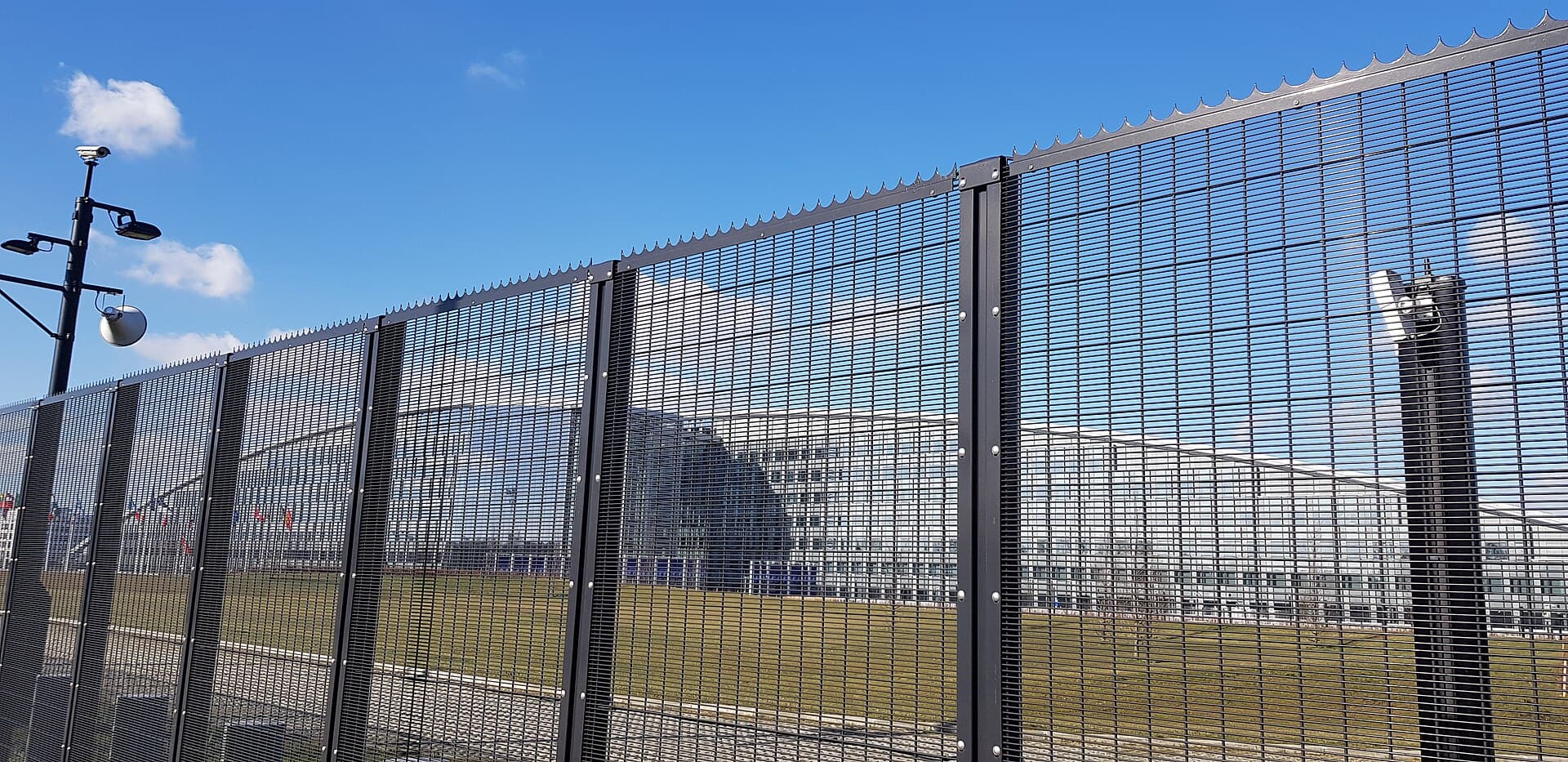
Canada's long-running debate about defence spending has a new anchor: a NATO commitment, agreed at the 2025 summit in The Hague, to invest 5 per cent of gross domestic product annually on core defence and defence-related spending by 2035. Allies agreed to allocate at least 3.5 per cent of GDP to the traditional NATO defence expenditure category, with the remaining 1.5 per cent directed to security-related infrastructure and resilience measures.
For Canada, that target represents a dramatic change from historical practice. Ottawa's defence spending has hovered well below the previous 2 per cent NATO floor for much of the last three decades. The federal government only recently committed to reach 2 per cent. Climbing toward 3.5 per cent, let alone 5 per cent, will require sustained fiscal effort, procurement reform and political consensus across multiple election cycles.
In 2025, every NATO ally met or exceeded the 2 per cent target, the first time that benchmark had been achieved across the alliance. European NATO members and Canada collectively increased defence spending by 20 per cent on the prior year. For Canada, that growth has been driven by a mix of new procurement commitments, operational support for Ukraine and infrastructure investment in the Arctic.
What the target means
The 5 per cent commitment is not a single fiscal target imposed uniformly. Allies have latitude in how they structure their budgets to meet the benchmark, with 3.5 per cent expected to flow to core defence categories, including military personnel, equipment, operations and research and development. The remaining 1.5 per cent covers security-related categories such as cybersecurity, critical infrastructure protection and dual-use logistics.
Canada's GDP in 2025 was roughly $2.9 trillion. A 5 per cent defence and security spending level, therefore, would translate into approximately $145 billion annually in current dollars, compared to actual defence spending levels closer to $40 billion. The gap is substantial and cannot be closed overnight.
The 2035 deadline offers a runway of roughly a decade. That runway makes the target politically survivable across multiple federal elections, but it also imposes a sustained fiscal discipline that has historically been difficult to maintain when spending pressures in health care, social support and infrastructure compete for federal dollars.
Canada's current defence posture
Canada operates one of the smallest militaries among major NATO members relative to national wealth and population. The Canadian Armed Forces have roughly 68,000 Regular Force members and about 30,000 Reserve Force personnel, though recruiting and retention have been persistent problems for the past several years.
Major procurement programs in recent years have included the F-35 fighter aircraft program, the Canadian Surface Combatant naval program, new submarines, and the NORAD modernisation package announced in 2022. Each program has faced schedule and cost pressures, and Canadian Armed Forces leadership has publicly stressed the need for faster delivery to units in the field.
Operational commitments have expanded significantly. Canada has led NATO's enhanced forward presence battlegroup in Latvia since 2017, is scaling that commitment to brigade size, and maintains continuous contributions to missions in the Middle East, Europe and the Indo-Pacific. The Arctic, with Russia and China both increasing their presence, has become an increasing focus.
The Carney government's position
Prime Minister Mark Carney's government has publicly committed to meeting the 2 per cent NATO target and has signalled that Canada intends to move toward the 5 per cent benchmark on NATO's agreed timeline. The Spring Economic Update on April 28 is expected to include further details on the medium-term fiscal path for defence.
Finance Minister François-Philippe Champagne has described the defence commitment as one of the most significant fiscal undertakings in Canadian peacetime history. Ottawa has also emphasised that a significant portion of incremental defence spending will flow to Canadian industry, including aerospace, shipbuilding, armoured vehicles, ammunition and cybersecurity companies.
Carney himself has framed defence investment as an economic and industrial strategy as well as a security one. The Prime Minister's Office has highlighted opportunities in Canadian steel, aluminum, semiconductors and critical minerals that can be connected to defence manufacturing, particularly as the country seeks to diversify trade away from an overreliance on the United States.
Personnel and recruitment challenges
The Canadian Armed Forces have faced sustained recruitment and retention challenges over the past several years, with public reporting showing chronic shortfalls in several occupational categories. Increasing defence spending without parallel investment in personnel would limit the operational benefit of new equipment, since ships need sailors and aircraft need pilots to deliver capability.
Defence Minister Bill Blair has identified recruitment as one of his top priorities, and Ottawa has piloted faster application processing, updated fitness testing and modernised workplace policies. Whether these initiatives translate into sustainable force growth will be a key measure of the defence commitment's success over the decade ahead.
Reserve forces, which provide community-level connections to the Canadian Armed Forces, also benefit from sustained investment. Reserve units in communities across the country are important recruiting pipelines and, for major emergencies, an operational surge capacity that the Regular Force cannot easily replace.
The political debate
The Conservative opposition has criticised the Liberal government's defence record and argued that Ottawa should move faster toward the 5 per cent target. Conservative defence critics have also called for accelerated procurement reform, arguing that current processes are too slow to deliver equipment to front-line units.
The New Democrats have raised concerns about the opportunity costs of sustained defence increases, particularly during a period of housing affordability and health care pressure. NDP critics have also pushed for stronger parliamentary oversight of defence contracts and for greater transparency on procurement outcomes.
The Bloc Québécois has emphasised the importance of Quebec-based aerospace and shipbuilding industries in any defence expansion, with particular attention to Bombardier, CAE, Davie and a network of Quebec-based small and mid-sized suppliers. Quebec has a significant share of Canada's defence industrial capacity, and Bloc representatives have made the case that Quebec workers should benefit from the commitment.
Industry and procurement implications
The defence procurement pipeline will be a central battleground for how the 5 per cent target is met. Canadian industry groups, including the Canadian Association of Defence and Security Industries, have argued that a larger and more predictable defence budget can sustain a stronger industrial base, including research and development, production and export capabilities.
Historical experience with Canadian procurement has been mixed. Major programs have often suffered delays, cost overruns and political disputes, and federal officials have repeatedly promised reforms to reduce those frictions. The scale of spending under the NATO commitment will stress existing procurement capacity, requiring new structures and faster decision-making.
Foreign suppliers will also benefit from Canadian spending, particularly in categories where domestic industrial capacity is insufficient. Ottawa has emphasised that it wants to increase the share of Canadian spending directed to Canadian firms, partly as a matter of economic policy and partly to reduce exposure to U.S. supply chain decisions.
The Arctic and continental defence
Arctic defence has become a strategic priority, with Canada's northern territory increasingly contested by Russian military activity and Chinese investment interest. NORAD modernisation, which Canada and the United States agreed to in 2022, commits tens of billions of dollars to new radar, communications and response capabilities.
The 5 per cent target offers a framework for even larger investments in northern infrastructure, including airports, ports, roads and communications. Those investments have dual-use applications, supporting both military operations and the economic development of northern and Indigenous communities.
Indigenous leadership in the North has emphasised that any expansion of defence infrastructure must be developed in partnership with local communities and governments. The Nunavut, Northwest Territories and Yukon governments have all engaged with Ottawa on the subject, and Indigenous organisations including the Inuit Tapiriit Kanatami have called for consultative processes that reflect Inuit and First Nations priorities.
Fiscal context
Ottawa's ability to sustain the defence commitment will depend on the broader fiscal trajectory. Canada's debt-to-GDP ratio is lower than several major G7 peers, but demographic pressures on health care and pensions, along with commitments to housing, climate and Indigenous programs, will all compete for fiscal space.
Federal revenue growth depends on economic growth, which in turn is sensitive to trade conditions. American tariffs, Middle East volatility and shifting trade patterns all complicate revenue projections. The Spring Economic Update and the fall budget will provide more detail on how the government intends to square these commitments with other priorities.
Critics have argued that the defence target could crowd out other spending priorities. Supporters have argued that a stronger defence posture is itself a condition for economic stability and for maintaining the international relationships that support Canadian prosperity. Both arguments will recur throughout the decade-long push toward the 5 per cent goal.
What it means for Canadians
For Canadians, the defence target's most visible effects will be new procurement announcements, military infrastructure construction and an expanding Canadian defence industrial base. Some of those effects will be regional, concentrated in provinces with shipyards, aerospace plants or military bases.
For taxpayers, the cumulative cost of the commitment is substantial, though spread over a decade. Federal officials have emphasised that the spending will be paired with economic and industrial returns, and that the alternative of underinvestment carries its own risks in a less stable international environment.
For Canadian Armed Forces members and their families, the commitment offers the prospect of better equipment, more sustainable operational tempo and investments in personnel support. Recruiting and retention will test whether the spending translates into capability on the ground.
What's next
The Spring Economic Update on April 28 is the next major fiscal milestone. The federal budget later in 2026 will likely set out specific defence spending commitments and associated industrial strategies. Defence Minister Bill Blair is expected to lead procurement-specific announcements through the summer.
NATO defence ministers are scheduled to meet again in the coming months, with discussions expected to focus on burden sharing, arms manufacturing capacity and coordinated procurement across the alliance. Canada's voice in those discussions is larger when its own spending posture is credible.
For Canadians watching the broader geopolitical picture, the defence commitment is one of the clearest expressions of how a decade of growing international risk is reshaping the country's public finances and political priorities. It is not a quick or uncontroversial undertaking, but the direction has been set, and the work of delivering on it has already begun.
Spotted an issue with this article?