Six Months After Gaza Ceasefire, Reconstruction Stalled and Canadian Aid Strained
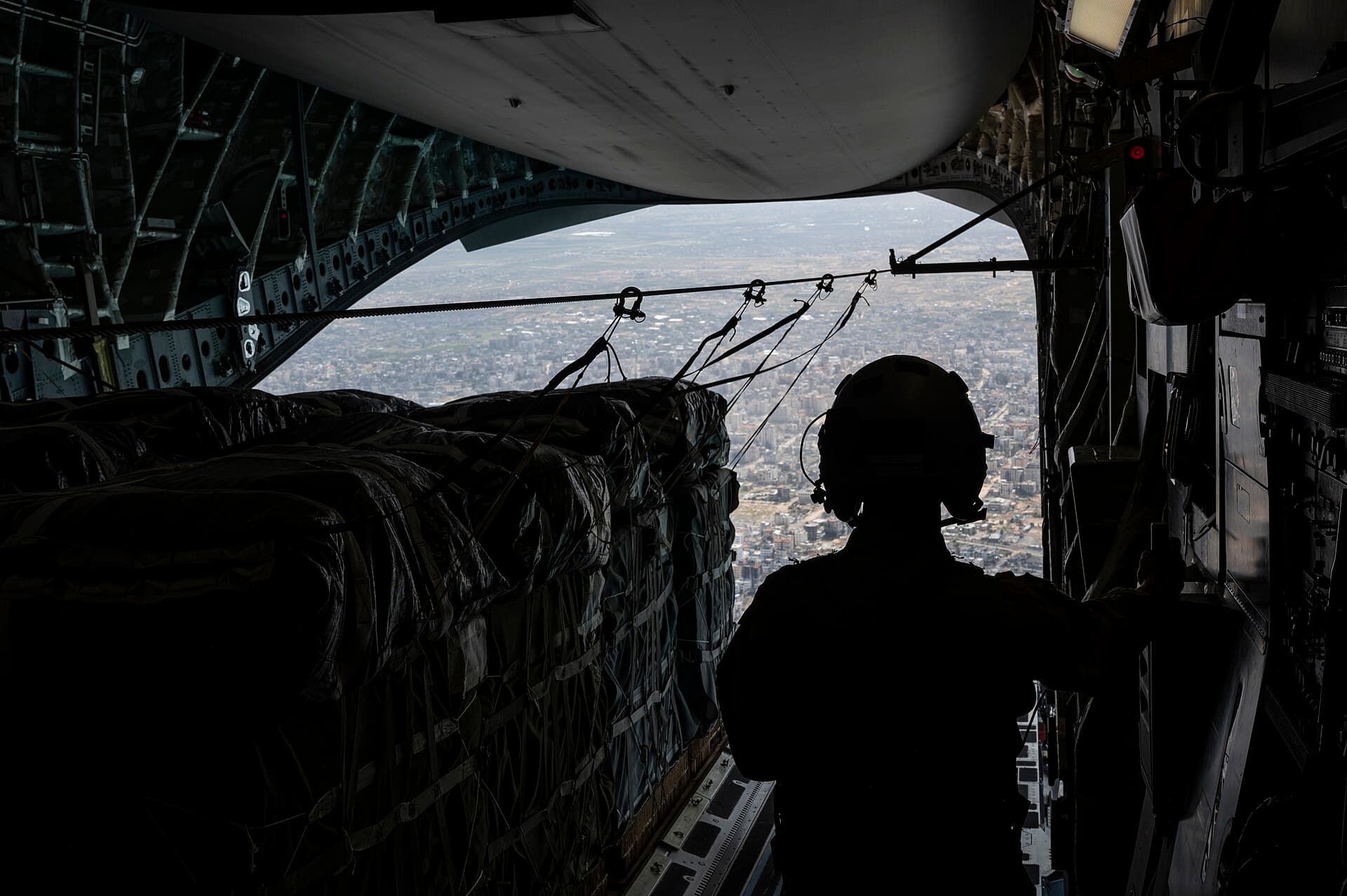
Six months after a ceasefire paused the fighting between Israel and Hamas in Gaza, the reconstruction phase has yet to begin in any meaningful way and humanitarian conditions in the territory are deteriorating. International reporting and aid agency assessments describe a landscape where nearly every resident lives in makeshift tents or bombed-out buildings, aid has thinned and a much-promised multinational peacekeeping force has never materialised.
Canadian officials, facing competing humanitarian demands in Ukraine, Sudan, the Democratic Republic of Congo and now the broader Middle East, have continued to fund Gaza aid through multilateral channels while pressing for the humanitarian access that is still not fully secured on the ground. Ottawa has also tried to keep a diplomatic line open to both Israeli and regional interlocutors, recognising that the ceasefire's survival depends on sustained external pressure.
Israel has been documented as violating the ceasefire roughly 2,400 times between October 10, 2025 and April 14, 2026, according to aid groups and independent monitors, with attacks continuing through air, artillery and direct fire. Palestinian deaths since the ceasefire began now exceed 700, according to the monitors. Hamas has also rejected a central clause of the peace plan calling for disarmament, complicating any path to a durable settlement.
Humanitarian conditions
Non-governmental organisations operating in Gaza describe a humanitarian crisis that has receded from international attention without receding in severity. Nearly half of the territory remains under Israeli occupation, while the rest is overcrowded with displaced families in tents and damaged structures along the Mediterranean coast.
Aid flows, which briefly picked up after the October ceasefire, have slowed sharply since a new war erupted between Iran, Israel and the United States in March. Aid convoys have faced cancellations and route changes, and warehouses in Jordan and Egypt that supply Gaza have seen turnover slow down. The net effect is fewer calories, less medicine and less building material reaching Palestinians who desperately need all three.
The United Nations Office for the Coordination of Humanitarian Affairs has reported persistent shortages of potable water, functioning sewage systems, electricity and healthcare facilities. The complete reconstruction of Gaza's hospital system, in particular, has not begun, and specialised medical care is still largely unavailable for Palestinians who require evacuation.
The peace plan at stake
The ceasefire is anchored in the 20-point peace plan championed by U.S. President Donald Trump in late 2025. The plan includes provisions for the return of remaining hostages held by Hamas, a partial Israeli withdrawal from the strip, Hamas disarmament, the deployment of a multinational Board of Peace to oversee reconstruction and governance, and the creation of an international peacekeeping force.
Several of those commitments have not been fulfilled. Hamas formally rejected the disarmament clause earlier this month, the multinational peacekeeping force is not in place, and the Board of Peace structure has struggled to establish authority inside Gaza. Without functioning governance and security arrangements, reconstruction funds pledged by Arab states and international agencies cannot be disbursed at scale.
Israeli Prime Minister Benjamin Netanyahu's government has simultaneously faced internal political pressure from coalition members who oppose key elements of the plan, including the prospect of any political horizon for Palestinians. Israeli domestic politics, the Iran war and the uncertain American posture have combined to slow the plan's implementation.
Canada's position
Canada has maintained a posture of supporting the ceasefire, calling for full humanitarian access and urging both sides to observe the plan's terms. Ottawa has contributed to multilateral humanitarian appeals for Gaza and has supported the United Nations Relief and Works Agency for Palestine Refugees, among other channels.
Foreign Affairs Minister Anita Anand has said Canada backs a political horizon that includes a durable Palestinian state, and has pressed for the deployment of the multinational peacekeeping force envisioned in the plan. The Canadian government has so far not committed troops to any peacekeeping contingent in Gaza, though officials have said Ottawa is prepared to consider contributions if a formal mandate is established.
Domestically, the Gaza war and its aftermath have been politically polarising, with Canadian Jewish and Arab communities holding sharply different views on the conduct of the conflict, Israeli policy, Hamas's role and the adequacy of Canada's response. Carney's government has tried to navigate the divide by emphasising humanitarian access and international law, though that approach has not satisfied advocates on either side.
Canadian community impact
Canadian Palestinian and Canadian Jewish communities remain deeply affected by the war and its aftermath. Vigils, advocacy events and protests have continued across major Canadian cities, and community organisations have worked to support families with relatives in Gaza or affected by the broader conflict.
Antisemitic and anti-Muslim incidents have both risen in Canada since October 2023, according to police-reported data and community monitoring organisations. Law enforcement agencies have described the period as one of sustained pressure, with synagogues, mosques, schools and community centres all requiring increased security presence.
Federal officials have continued to condemn violence and discrimination, and have funded security infrastructure for religious and cultural institutions through the Security Infrastructure Program. Provincial hate-crime units in Ontario, Quebec and British Columbia have also scaled up specialised enforcement during the period.
The Iran war's spillover effect
The outbreak of open conflict between Iran, Israel and the United States in March has effectively diverted attention and resources away from Gaza. Aid shipments have slowed, diplomatic bandwidth in multiple capitals has shifted to the Gulf crisis, and the uncertainty about regional stability has made long-term reconstruction planning almost impossible.
Iran's support for Hamas, Hezbollah and other regional proxies remains a core driver of both the Gaza and Lebanon situations. With Iran itself under heavy military and economic pressure, the proxies' capacity has been affected, but so has the broader regional appetite for humanitarian and diplomatic initiatives. The result is a Gaza ceasefire that nominally holds but has no forward momentum.
Canadian foreign policy officials have described the period as exceptionally difficult, with humanitarian priorities competing for attention among Ukraine, Sudan, Gaza, Iran-related refugee flows and domestic affordability. Global Affairs Canada has emphasised that humanitarian support remains a central commitment, but the practical ability to scale aid in parallel on multiple fronts is limited.
What reconstruction would require
Any serious Gaza reconstruction program would require the functioning of the Board of Peace, the disarmament or reformation of Hamas, credible Palestinian governance capable of receiving and accounting for aid, and predictable Israeli cooperation on crossings and building materials. All four are currently missing.
International agencies have drafted reconstruction frameworks that estimate costs running into the tens of billions of dollars, with timelines stretching over a decade or more. Arab Gulf states have indicated willingness to fund significant portions of reconstruction if governance and security conditions are met, but have declined to commit resources in the current vacuum.
Canadian engineering and construction firms have participated in conferences on post-war reconstruction and humanitarian response, though specific Canadian contracts for Gaza work have not been announced. Canadian diaspora communities have expressed interest in business, educational and medical partnerships with Palestinian counterparts, though many of those initiatives are on hold.
Hostages and accountability
The return of remaining hostages held by Hamas was a centrepiece of the ceasefire. Most living hostages have been released, but the remains of several others have not been repatriated to Israel. The question of accountability for violations on both sides, including the October 7, 2023 attacks and the subsequent military operations, remains unresolved.
International accountability mechanisms, including the International Criminal Court and the International Court of Justice, have continued to work on cases related to the conflict. Canada has historically supported both institutions while calibrating its engagement with specific proceedings, a posture that has drawn criticism from both sides of the Canadian political spectrum.
The families of hostages, on the Israeli side, and the families of Palestinian civilian victims, on the Gazan side, have maintained active advocacy networks with international partners, including in Canada. Their voices have been central to keeping the ceasefire's humanitarian and human rights dimensions in public debate.
Canadian educational and cultural institutions
Canadian universities have continued to feel the strain of the Gaza war through ongoing campus activism, student protests and institutional policy debates. Several universities have reviewed their investment policies, research partnerships and academic collaborations in response to student and faculty demands. Those reviews have proceeded with varying conclusions, and campus communities remain divided.
Cultural organisations have programmed events reflecting the war's toll, including film screenings, literary readings and music performances that address Palestinian and Israeli experiences. Canadian artists and intellectuals have contributed to international initiatives supporting Gaza reconstruction, arts education for displaced children and the preservation of Palestinian cultural heritage.
Medical and humanitarian professionals from Canada have volunteered with international organisations working in Gaza, often at significant personal risk. Canadian physicians, nurses and aid workers returning from the region have provided firsthand accounts that inform public discussion and influence policy debate within Canada.
Regional diplomatic context
Regional neighbours including Jordan, Egypt, Saudi Arabia and the United Arab Emirates have significant interests in how the Gaza situation resolves. Each has contributed in different ways to humanitarian efforts and to diplomatic mediation, and each faces its own domestic pressures shaped by public sympathy for Palestinians and concern about regional instability.
Turkey, Qatar and Iran have also played roles in aspects of the conflict, from mediation on hostage arrangements to support for Hamas and allied groups. The intersection of these regional interests with Israeli policy decisions makes any durable settlement significantly more complex than a bilateral negotiation.
Canada's diplomatic presence in the region is modest compared to major European powers or the United States, but Canadian diplomats have been active on humanitarian access, consular support and multilateral initiatives. Ottawa's voice at the United Nations Security Council and in multilateral humanitarian forums has been a consistent part of Canadian engagement.
What's next
The Gaza ceasefire's fate is closely tied to the evolution of the Iran war. A durable U.S.-Iran settlement could unlock renewed attention to Gaza, including deployment of the peacekeeping force envisioned in the peace plan. A breakdown in the Iran ceasefire could push Gaza even further from international priority lists.
Canada's Spring Economic Update on April 28 may clarify federal humanitarian commitments for 2026-27, including for Gaza. Ottawa has also been engaging quietly with European and Arab partners on the conditions under which international peacekeepers could deploy to the strip.
For Canadians watching from afar, the six-month marker is a reminder that ceasefires are not the same as peace. Without governance, security and sustained international engagement, the post-war phase can become its own prolonged humanitarian crisis. That is the situation Gaza finds itself in today, and Canadian support remains one of the more consistent threads in a broader picture of diminishing resources and attention.
Spotted an issue with this article?