Carney Names Jonathan Wilkinson Ambassador to the EU as Canada Joins European Political Community Summit for the First Time
Prime Minister Mark Carney announced on Thursday that he intends to appoint former natural resources minister Jonathan Wilkinson as Ambassador of Canada to the European Union, a senior diplomatic posting in Brussels that the prime minister framed as central to a wider pivot of Canadian foreign and economic policy toward Europe. The announcement was paired with confirmation that Carney will lead a Canadian delegation to the eighth European Political Community Summit in Yerevan, Armenia, marking the first time Canada has been invited to participate in the leaders' forum that brings together the European Union, the United Kingdom, and a wide ring of partner states.
Who Wilkinson is and what the role involves
Wilkinson, the longtime Liberal MP for North Vancouver, served as natural resources minister, environment minister, and minister of fisheries and oceans across the Trudeau government before being shifted to the back benches under Carney. The Brussels posting returns him to direct engagement with the climate, energy, and critical-minerals files that defined his cabinet career, but on the diplomatic side of the table.
The Ambassador of Canada to the EU is the country's senior diplomat to the bloc's institutions, including the European Commission, the European Parliament, and the European External Action Service. The job is distinct from Canada's bilateral ambassadors to individual European capitals, and it carries growing weight as Ottawa and Brussels deepen co-operation on defence, trade, and clean-energy supply chains.
The appointment is subject to standard diplomatic procedures including the customary agrement from the receiving authority, which is generally a formality. The Department of Foreign Affairs said Wilkinson is expected to take up the posting later in the spring after the Privy Council Office completes the appointment process.
The Yerevan summit and Canada's first invitation
The European Political Community is a forum founded in 2022 at the initiative of French President Emmanuel Macron to bring together leaders of European Union member states with leaders of European countries outside the bloc, including the United Kingdom, Norway, Switzerland, Ukraine, Moldova, and the western Balkan states. The eighth summit, hosted by Armenia, is the first to extend an invitation to Canada, a status the Carney government has welcomed as recognition of Canada's role as a transatlantic partner.
Officials in the Prime Minister's Office said the Yerevan agenda will focus on security in eastern Europe and the south Caucasus, energy and supply chain resilience, hybrid threats and disinformation, and the regulation of artificial intelligence. Carney is expected to use bilateral meetings on the margins of the summit to advance Canadian priorities on critical minerals, defence procurement, and trade diversification.
The Prime Minister's Office did not confirm the full bilateral schedule, but officials indicated meetings are being arranged with European Council President, the Armenian prime minister, and several heads of government from EU member states. The Canadian delegation is expected to include Foreign Affairs Minister, the Minister of International Trade, and senior officials from Innovation, Science and Industry Canada.
Why Europe and why now
The Brussels appointment and the Yerevan trip arrive at a moment when Canada's relationship with the United States, its largest trading partner, is under acute strain. The mandatory joint review of the Canada United States Mexico Agreement, due before July 1, has stalled, with officials in both Ottawa and Washington trading increasingly sharp public statements about each side's commitment to the deal. Tariffs on Canadian steel, aluminum, autos, and softwood lumber remain in place, and Washington has signalled willingness to negotiate sector-by-sector relief on terms that critics in Ottawa have called extractive.
Against that backdrop, the Carney government has emphasised what officials describe as economic and diplomatic diversification. The prime minister has said in recent weeks that Canada's reliance on the United States, once an economic strength, has become a strategic vulnerability that must be corrected. The Brussels posting is part of that correction. So is the recently announced Canada Strong Fund, the country's first sovereign wealth vehicle, which is expected to invest in projects with European supply chain partners in critical minerals, hydrogen, and defence industrial production.
Trade officials in Brussels have said Canada is increasingly viewed in Europe as a stable, predictable partner at a moment when the United States is seen as transactional. The Comprehensive Economic and Trade Agreement, in force on a provisional basis since 2017, provides the legal scaffolding for an expanded relationship, although several EU member states have yet to ratify the deal. Wilkinson's mandate, officials said, will include pressing the remaining holdout capitals to complete ratification.
Reaction from opposition parties
Conservative leader Pierre Poilievre acknowledged that diversifying trade relationships is sensible but accused the government of using foreign travel as a substitute for domestic action on tariffs and pipelines. Conservative foreign affairs critic Michael Chong welcomed the Wilkinson appointment as a serious choice, while questioning whether the government has the bureaucratic capacity to deliver on the European agenda it is now setting.
The New Democrats said the Yerevan visit is appropriate but argued that Canada's diplomatic capacity is being stretched thin after years of underinvestment in the foreign service. NDP foreign affairs critic Heather McPherson called for an expansion of Canada's diplomatic footprint in southern and eastern Europe, particularly in Romania, Poland, and the Baltic states, as a complement to the Brussels relationship.
The Bloc Quebecois indicated it supports the European pivot in principle, with leader Yves-Francois Blanchet saying that Quebec has a longer cultural and economic affinity with Europe than English-speaking Canada has historically acknowledged, and that the province expects to be a primary beneficiary of any expanded transatlantic relationship.
What it means for Canadians
For Canadian businesses, the most concrete near-term effect is regulatory. The European Union has been moving rapidly on a series of rules that affect Canadian exporters, including the Carbon Border Adjustment Mechanism, the deforestation regulation, and a tightening framework for digital services. A more senior diplomatic presence in Brussels, paired with first-time Canadian participation in the European Political Community, increases the chance that Canadian concerns are heard before rules are finalised.
For workers in critical-minerals processing, electric-vehicle assembly, and battery component manufacturing, the European pivot is potentially significant. The European Union is pursuing a strategy of reducing dependence on Chinese-controlled supply chains and is actively seeking partnerships with friendly mining and processing jurisdictions. Canada, with its critical-minerals reserves and Indigenous-led project pipeline, is a natural counterparty if the political and regulatory frameworks align.
For students and researchers, the Brussels posting is expected to support an expansion of joint research programmes, particularly under the Horizon Europe framework, which Canada formally associated with last year. Officials said they expect new agreements on artificial intelligence safety, quantum research, and clean energy demonstration projects to be advanced over the coming year.
The Brussels portfolio and the file ahead
Wilkinson will inherit a portfolio that has grown markedly in scope over the past three years. Beyond CETA, his desk will cover defence procurement co-operation, sanctions co-ordination, energy security, climate diplomacy, and the regulation of AI and digital platforms. Officials said his prior cabinet experience on natural resources is expected to be particularly relevant given the European Union's interest in Canadian critical minerals, liquefied natural gas, and hydrogen.
The new ambassador will also be expected to manage Canada's relationship with the European Parliament, which has emerged as a powerful actor on trade and human rights questions. CETA's full ratification across member states remains unfinished, and any future expansion of the agreement will require Parliament approval. Wilkinson is expected to spend significant time in committee meetings in the months ahead.
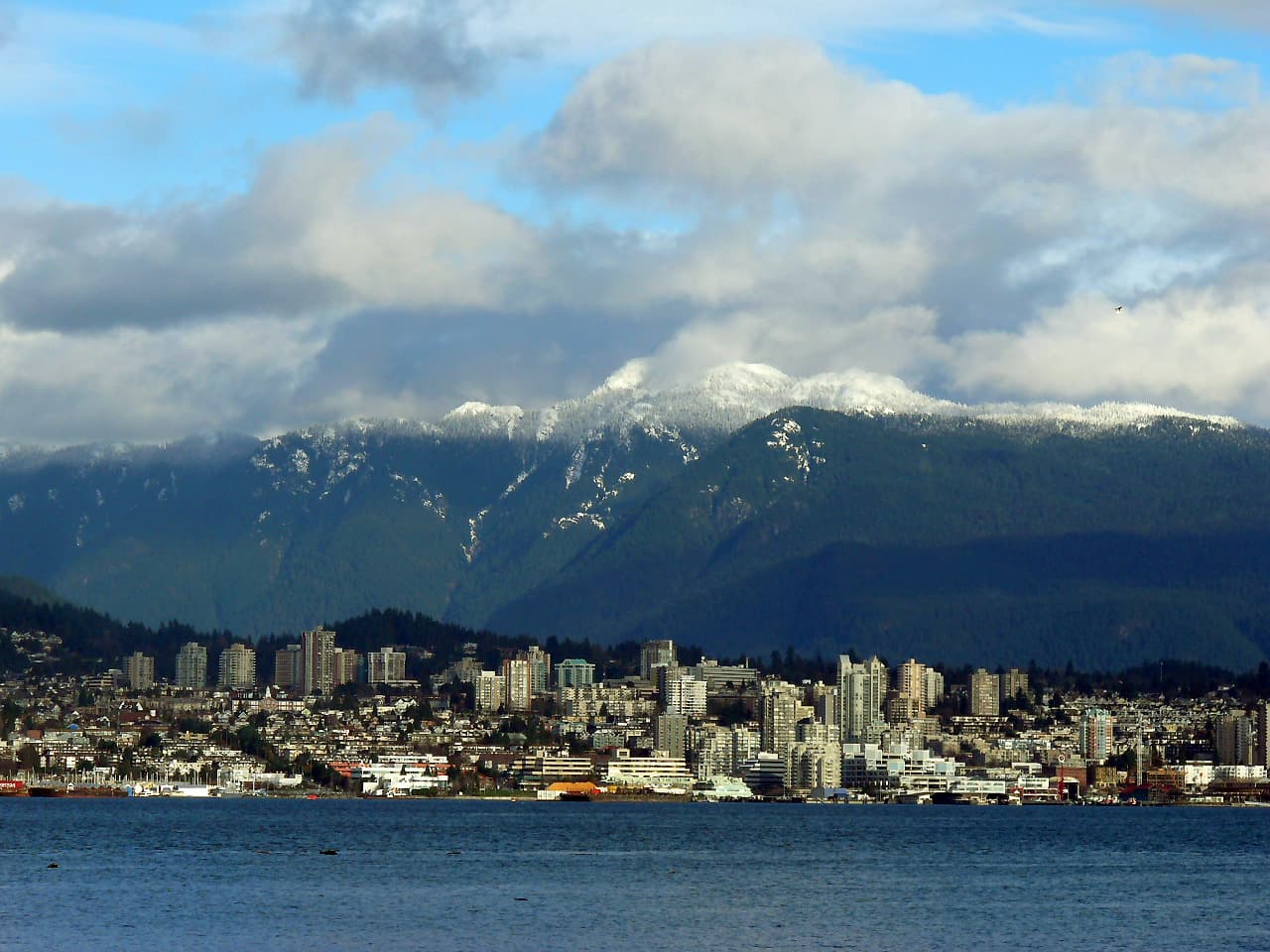
His appointment leaves a vacancy in North Vancouver. Wilkinson, who was first elected in 2015 and re-elected in 2019, 2021, 2025, and the special election earlier this month, will resign his seat ahead of taking up the Brussels posting. A by-election will be required within six months, although the timing is at the prime minister's discretion.
What's next
The Yerevan summit runs Friday and Saturday. Carney is scheduled to deliver remarks on transatlantic security and economic resilience, and to participate in a leaders' panel on artificial intelligence and democratic institutions. The prime minister will return to Ottawa on Sunday with a stop in Berlin or Paris being arranged for bilateral discussions, although the schedule was not finalised at the time of the announcement.
Wilkinson's formal appointment is expected to be completed in the coming weeks, with his arrival in Brussels likely before the European Council's June meeting. The European Union and Canada are scheduled to hold their next bilateral leaders' summit later this year, with Brussels as the most likely venue. Officials in Ottawa said the new ambassador will play a central role in setting the agenda for that meeting.
For Canadians watching the wider geopolitical realignment, the message is straightforward. Ottawa is investing in its European relationships at a pace not seen in a generation, and the appointments and summits being announced this week are early markers of a foreign policy that is likely to look meaningfully different from the one Canada has run for the past three decades.
Spotted an issue with this article?
Have something to say about this story?
Write a letter to the editorRelated Stories
North Vancouver By-Election Looms as Wilkinson Heads to Brussels and Carney Plans Quick Vote
4h ago
Carney Unveils $6 Billion Skilled Trades Plan to Recruit 100,000 New Workers Under Team Canada Strong Banner
4h ago
Carney Launches Canada Strong Fund, the Country's First Sovereign Wealth Vehicle, With $25 Billion in Federal Seed Capital
7h ago