Christine Fréchette sworn in as Quebec's second female premier
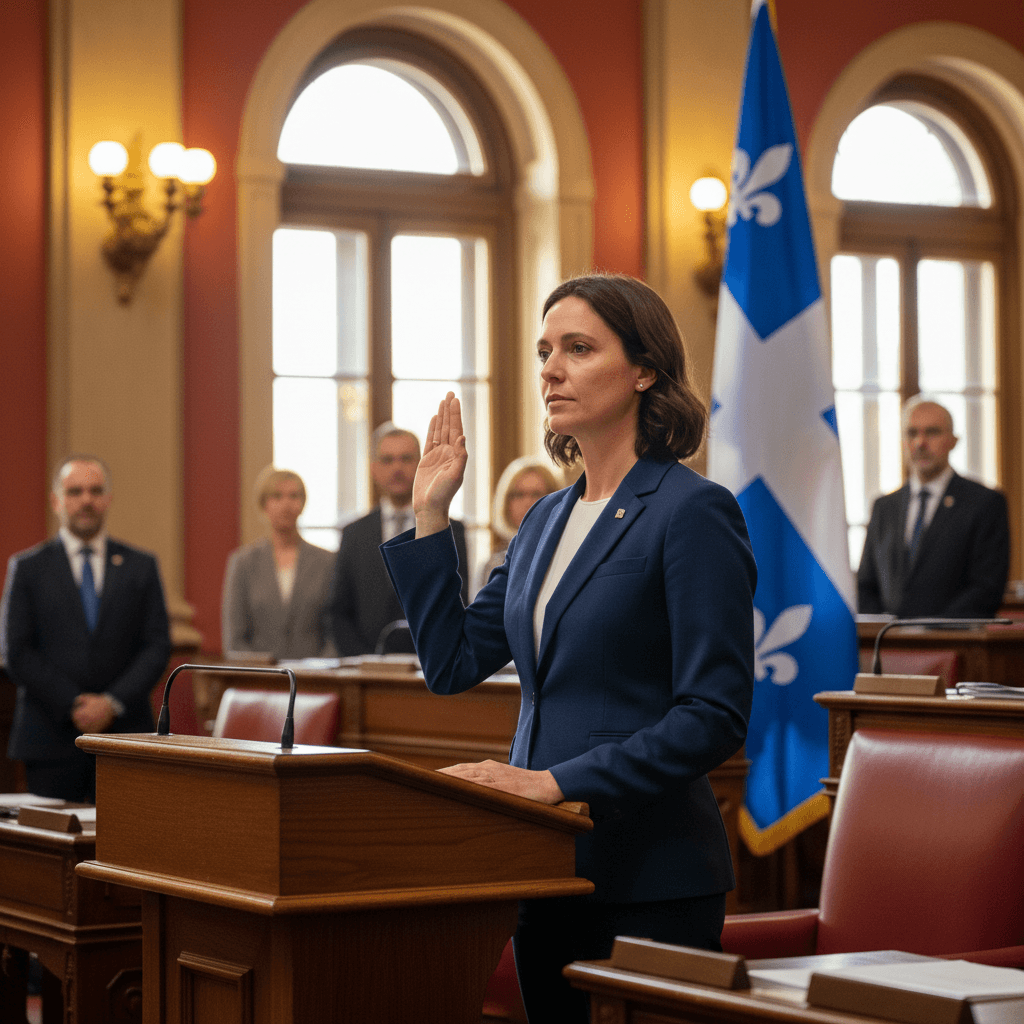
Christine Fréchette, a 55-year-old former business executive, was sworn in as Quebec's 33rd premier on April 15, 2026, becoming only the second woman to lead the province. The Coalition Avenir Québec leader takes office less than six months before a provincial election that polls suggest could end her party's seven-year grip on power.
Fréchette inherits a governing caucus trailing in the polls, a restive electorate focused on affordability, and an election calendar that gives her barely a full quarter to reset the CAQ's image before voters render a verdict in October.
A narrow mandate from the CAQ base
Fréchette won the CAQ leadership vote on Sunday, April 12, taking 58 per cent of ballots cast by party members. She defeated former education minister Bernard Drainville in a two-way race triggered by François Legault's decision to step aside as the party's polling collapsed.
Legault, who led the CAQ to two majority governments, will remain the member for L'Assomption until the next general election. He attended the swearing-in ceremony at the National Assembly but has signalled he intends to stay out of the new premier's way.
Fréchette is the first woman to lead the CAQ and the second woman ever to serve as Quebec premier, after Liberal Pauline Marois's Parti Québécois predecessor — Marois herself held the office from 2012 to 2014.
Three stated priorities
In her first remarks as premier, Fréchette named three priorities: easing financial pressure on families, protecting the Quebec economy and restoring public confidence in the province's future. She framed the agenda as a response to what she called a "crisis of trust" between voters and political institutions.
A cabinet is expected to be unveiled next week. Fréchette told reporters her first substantive announcements will focus on cost-of-living measures, with details to follow once ministers are named and briefed.
"Quebecers expect results, not slogans," Fréchette said after taking the oath, according to CTV News Montreal.
An election clock already ticking
The political backdrop is unforgiving. The latest Léger survey places the Quebec Liberal Party at 33 per cent, with the CAQ and the Parti Québécois tied at 32 per cent. That three-way split leaves Fréchette with little margin to consolidate soft CAQ support while fending off a resurgent PQ on the nationalist flank.
Analysts note the new premier's private-sector background — she previously served as immigration minister and held senior roles at Montréal International before entering politics — could help her pitch a business-friendly message. Whether that lands with voters angry about grocery bills, housing costs and health-care wait times is the open question.
For coverage of Quebec's shifting political map, see our Quebec region page.
What's next
Fréchette has roughly 26 weeks to define her government before the writ drops. Her cabinet pick, expected within days, will signal how far she intends to break from Legault-era personnel and policy. A throne speech and an economic update are likely before the summer recess, giving the premier two set-piece moments to frame her affordability agenda.
The opposition has already signalled it will treat the transition as a continuation rather than a fresh start. Liberal leader Marc Tanguay said Wednesday that swapping leaders would not erase what he called seven years of CAQ missteps on health, housing and language policy.