Cedar LNG Construction Advances on the British Columbia Coast as Haisla-Led Project Becomes a Reconciliation Test Case
Construction on the Cedar LNG project on the central coast of British Columbia is continuing to advance toward a planned 2028 startup, with the Haisla Nation as the majority partner in what has become the first Indigenous majority-owned liquefied natural gas export project in Canada and one of the most-watched test cases for whether large-scale resource projects can be developed with genuine Indigenous economic leadership at the centre. The project, which received final investment decision in 2023 and which has been progressing through engineering and construction phases since, represents a significant continuing financial and operational commitment from its partners and a continuing political and policy reference point for the broader conversation about Indigenous-led economic development in Canada.
What Cedar LNG provides
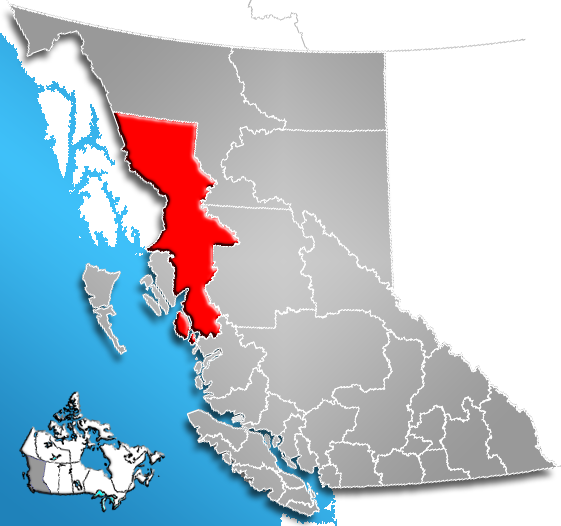
The Cedar LNG project is a floating liquefied natural gas production facility located near Kitimat, British Columbia, in the territory of the Haisla Nation. The project will produce approximately three million tonnes per year of liquefied natural gas, drawing on natural gas piped from the British Columbia interior through existing pipeline infrastructure. The liquefied gas will be exported primarily to Asian markets where natural gas demand has been growing and where pricing has supported the economics of new long-term supply contracts.
The project is structured as a partnership between the Haisla Nation and Pembina Pipeline Corporation, with the Haisla Nation holding a fifty per cent ownership stake. The structure is significant because it represents Indigenous economic participation at a level fundamentally different from typical impact and benefit agreements, in which Indigenous communities receive defined payments and employment commitments without retaining direct equity ownership of the underlying asset.
The combined capital investment in the project is several billion Canadian dollars across the construction period. The project is being financed through a combination of equity contributions from the partners, project-level debt financing, and supporting commercial arrangements. The Haisla Nation's equity participation has been supported by federal and provincial financing arrangements that recognised the strategic significance of supporting Indigenous economic participation at this scale.
The Haisla Nation's leadership
The Haisla Nation has been the central political and operational driver of the Cedar LNG project. Haisla Chief Councillor Crystal Smith and the Nation's elected leadership have championed the project as part of a broader strategy of economic self-determination, in which Indigenous communities lead the development of economic projects on their territories rather than being passive beneficiaries of decisions made by others.
The Nation's approach has emphasised that economic self-determination requires both political authority and financial capacity. Political authority has been built up through the Nation's negotiated arrangements with federal, provincial, and corporate partners. Financial capacity has been built up through the Nation's economic development corporation, through equity arrangements in projects on the territory, and through the broader work of building Indigenous-led financial institutions that can support large-scale capital deployment.
Smith has been a prominent national voice on questions of Indigenous-led resource development. Her advocacy has emphasised that the conversation about reconciliation cannot be separated from the conversation about economic empowerment, and that Indigenous communities must have access to the kinds of financial structures that support full economic participation rather than being limited to consultative roles.
The federal and provincial context
The federal government has supported the Cedar LNG project through multiple channels. Federal regulatory approvals were secured under the Impact Assessment Act and related federal regulatory frameworks. Federal financing supports through Export Development Canada and other federal vehicles have been part of the project's broader financing arrangement. The federal commitment to advancing Indigenous economic participation, including through the Indigenous Loan Guarantee Program and other tools, has provided structural support for projects of this kind.
The British Columbia government has been a significant supporter of the project under the leadership of Premier David Eby and predecessor John Horgan. Provincial regulatory approvals, supports for related infrastructure, and political endorsement have all been part of the provincial contribution to the project's advance. The province's broader policy framework, which has emphasised both LNG development and reconciliation as priorities, has been broadly aligned with the project's approach.
The Carney government has continued the broader federal posture of supporting Indigenous-led resource projects. The Canada Strong Fund's investment mandate, which includes equity participation in major projects, has been described by federal officials as one of the financing tools that may support similar Indigenous-led projects in the future. The continuing federal interest in critical-minerals processing, electricity transmission, and energy infrastructure projects with Indigenous leadership has been a feature of the spring economic update messaging.
The wider Indigenous-led resource picture
Cedar LNG sits within a broader pattern of Indigenous-led resource projects that has been developing across the past decade. Indigenous communities across Canada have been increasingly assertive about their role in major resource developments, with multiple projects across different sectors structured to include significant Indigenous ownership.
The Coastal GasLink pipeline, which provides natural gas supply to LNG Canada in Kitimat, was the subject of significant Indigenous opposition during construction, particularly from Wet'suwet'en hereditary chiefs. The project ultimately proceeded with support from elected band councils along the route. The mixed pattern reflects the diversity of Indigenous community perspectives on resource projects and the importance of distinguishing between elected and traditional governance structures.
The First Nations LNG Alliance and other Indigenous economic organisations have been engaged in the broader work of supporting Indigenous economic participation in resource projects. The work has emphasised both project-specific advocacy and the development of broader Indigenous economic institutions that can support sustained engagement across multiple projects and sectors.
The market and operational context
The Cedar LNG project arrives at a moment of significant evolution in the global LNG market. Global LNG demand has continued to grow, particularly in Asia, where China, India, Japan, South Korea, and several smaller markets have been expanding their natural gas use. Russian natural gas exports to Europe have been substantially redirected to non-European markets, particularly in Asia, putting Russian and Canadian supply in increasing competition for the same Asian customer base.
Canadian LNG supply has the structural advantage of geographic proximity to Asian markets relative to United States Gulf Coast LNG, with the West Coast Canadian export point providing significant shipping cost and time advantages. The advantage supports both commercial pricing for Canadian supply and the longer-term competitiveness of the Canadian LNG sector.
The operational context of the Cedar LNG project includes continuing engineering and construction work across multiple specialist contractor organisations. Project management has been working through the typical challenges of major construction projects in remote British Columbia coastal locations, including weather, supply chain logistics, and workforce scheduling. The project's planned 2028 startup remains on track based on the most recent project communications.
Environmental and climate considerations
The environmental and climate considerations associated with new LNG projects have been the subject of significant public and policy discussion. LNG production produces emissions both at the production stage and across the broader value chain, although the emissions intensity of Canadian LNG is generally favourable relative to coal that may be displaced in destination markets.
The British Columbia government's CleanBC programme has set provincial emissions reduction targets that constrain the emissions intensity of new LNG facilities. Cedar LNG has been designed to operate within those provincial constraints, with electrification of significant portions of the production process supported by British Columbia's predominantly hydroelectric grid.
The federal oil and gas emissions cap that has formally taken effect this spring will apply to LNG facilities including Cedar LNG. The cap's implementation will be a continuing operational consideration for the project across its operational life. The combination of provincial and federal emissions regulation has produced a regulatory environment in which Canadian LNG operates under significantly tighter constraints than competing supply from many other jurisdictions.
What it means for Indigenous economic development
For Indigenous communities watching the Cedar LNG model, the project represents a significant precedent for how large-scale resource projects can be structured with genuine Indigenous economic leadership. The fifty per cent ownership stake, the political and operational leadership of the Haisla Nation, and the broader pattern of Indigenous-Crown-private partnership have produced a structure that other Indigenous communities have been studying as a potential template.
The success or otherwise of the Cedar LNG project across its commercial life will be an important indicator for whether the structure can be replicated. If the project delivers on its commercial expectations, generates the projected economic benefits for the Haisla Nation, and operates within the regulatory and environmental commitments that have been made, the structure is likely to be increasingly common in future major Canadian resource projects. If the project encounters significant difficulties, the structure may face revised analysis.
What's next
The construction phase of the project will continue across the coming years toward the planned 2028 startup. Operational personnel are being recruited and trained for the project's operational phase. Commercial agreements with customers are being maintained and adjusted as global market conditions evolve. The Haisla Nation's broader economic development work will continue across multiple files alongside the Cedar LNG project.
For the broader Canadian conversation about Indigenous economic participation, Cedar LNG will continue to be a significant reference point. Federal and provincial policy decisions about Indigenous loan guarantees, about equity financing tools, and about the broader framework for Indigenous economic participation will continue to be made with the Cedar LNG model in mind. The continuing engagement of Indigenous economic organisations in those policy conversations will be a feature of the broader political environment.
For Canadians, Cedar LNG represents one of the more visible and most ambitious examples of Indigenous economic leadership in major resource development. Whether the project ultimately delivers on its commercial, social, and environmental commitments will say significant things about the trajectory of Indigenous economic empowerment in Canada and about the broader conversation about reconciliation in the resource sector.
Spotted an issue with this article?
Have something to say about this story?
Write a letter to the editor