Editorial: Alberta's Fall Referendum Is a Pressure Valve, Not a Mandate, and Ottawa Should Treat It That Way
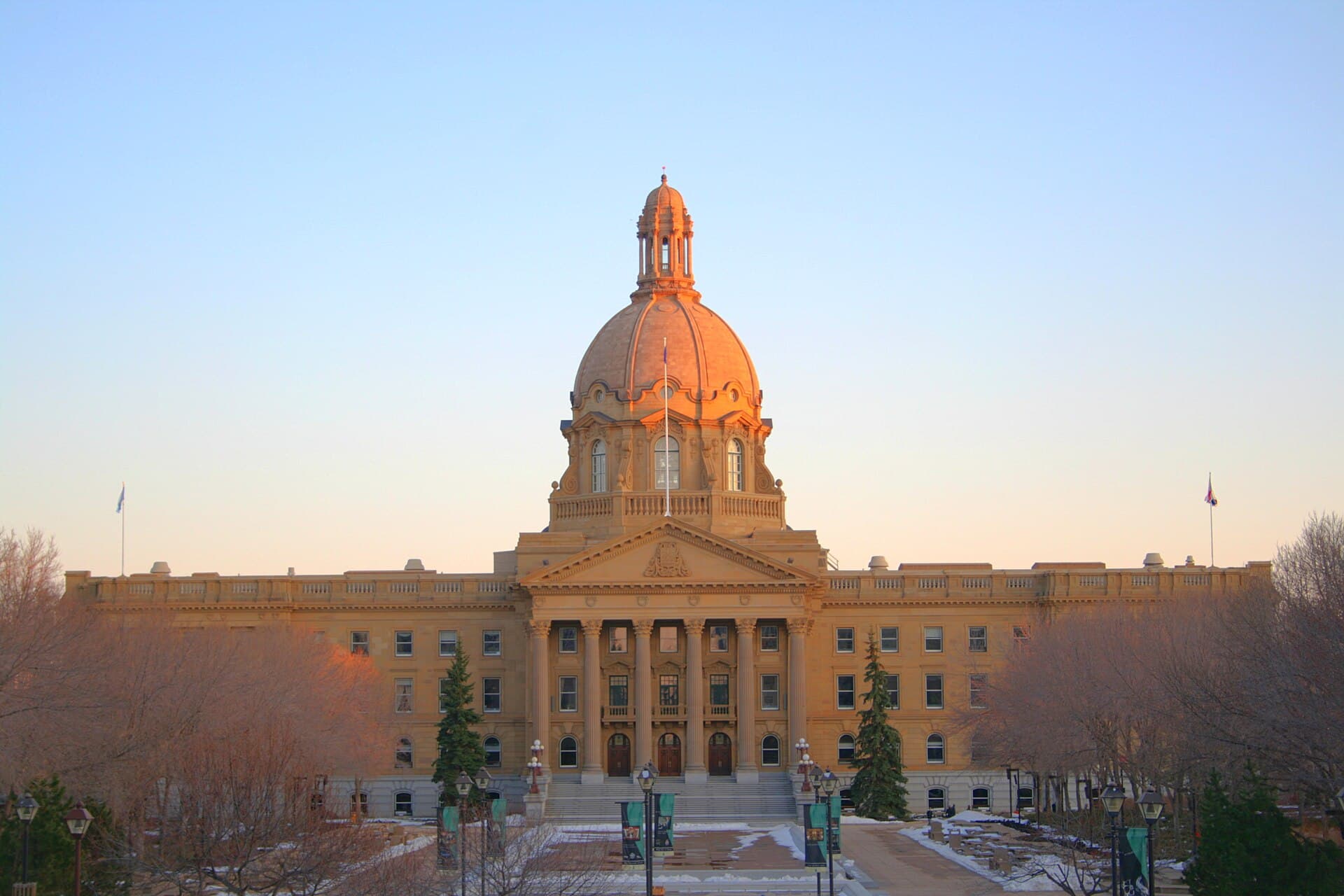
Alberta is heading toward a nine question referendum on October 19, with Premier Danielle Smith's government openly campaigning in favour of all nine. The questions span immigration policy options and constitutional reform proposals, with separatism itself sitting alongside them as a separate citizen initiated petition that has so far cleared its signature threshold but not yet survived court challenge. Polling places the share of Albertans who would actually vote to leave Canada at roughly twenty nine per cent, with sixty five per cent committed to staying. The referendum will not break the country. It is also not nothing, and the federal response so far has oscillated between dismissal and condescension. Both reflexes feed the separation narrative more than they neutralise it. Ottawa needs a third posture, and it needs to find it before the campaign begins in earnest.
What the polling actually says
The Angus Reid Institute, which has tracked Alberta sovereignty sentiment continuously for two years, has consistently found support for actual separation hovering between twenty five and thirty per cent. That number is not nothing in a province of just under five million people. It is also nowhere near the threshold required to credibly negotiate a separation, and it sits well below the level Quebec sovereigntists were operating at in either of their two referendum campaigns.
The more politically significant number, in the same polling, is the share of Albertans who say they are dissatisfied with the federal government on resource policy, equalisation, immigration, or some combination of the three. That number is closer to half. The gap between general dissatisfaction and active support for separation is the space in which the October referendum will actually be fought. Smith's nine questions are designed to mobilise the dissatisfied, not the separatists. Ottawa's response should be calibrated to that gap.
The federal government's instinctive line that Alberta is bluffing, or that the referendum is a tantrum, gets the politics exactly wrong. It treats the dissatisfied as if they were already separatists. That is a useful gift to anyone whose politics depend on growing the latter category at the expense of the former.
The questions deserve to be answered, not dismissed
Several of the nine questions on the Alberta ballot are actually serious policy questions that the federal government has been ducking for years. One asks whether the province should have more control over the points based federal immigration system. One asks whether there should be a constitutional limit on equalisation payments. One asks whether Alberta should have an explicit veto over federal policies that primarily affect provincial natural resource sectors.
None of those questions are crazy. Quebec has been operating its own immigration selection regime for decades. Equalisation has been the subject of mainstream constitutional debate since the 1980s. Provincial veto over federal resource policy was, in fact, a key live issue during the patriation debates of 1981. The honest federal answer is to engage with each question on its policy merits, even where the eventual answer is no, rather than to suggest that asking the questions is itself a mark of bad faith.
The most damaging federal communications strategy on Alberta has been a tendency to treat any provincial assertion of jurisdiction as proto separatism. That framing has the practical effect of validating the separatist argument that Ottawa will never take provincial concerns seriously short of an existential threat.
The First Nations challenge is real and underreported
One element of the referendum debate that has received too little national attention is the legal challenge launched by several Alberta First Nations against the citizen initiated separation petition. Those nations argue that the petition process itself violates treaty obligations, on the grounds that no province can unilaterally separate from a Crown that signed treaties with First Nations long before Alberta existed as a political unit.
The legal substance of that argument is serious. Alberta's territory is covered, in significant part, by Treaty 6, Treaty 7, and Treaty 8, all signed between First Nations and the federal Crown in the late nineteenth century. Any separation would have to address the legal status of those treaties, and any province cannot purport to extinguish them by majority vote. That is not a fringe legal opinion. It is the consistent thrust of Supreme Court of Canada jurisprudence on the duty to consult and on Aboriginal title.
If the courts ultimately stay or strike down the citizen initiated petition on those grounds, the political reaction in Alberta will matter more than the legal ruling itself. Smith has already left the door open to pursuing referendum initiatives even after a no vote. Federal and provincial leaders need to be ready for a scenario in which a court ruling, however legally sound, becomes a political accelerant. The right preparation is to make the treaty argument loudly and repeatedly now, when it can shape the campaign, rather than after a ruling lands.
The economic argument cuts both ways
The economic case against Alberta separation is overwhelming and largely unrebutted. An independent Alberta would have to negotiate, from scratch, a currency arrangement, a customs union, banking access, pension portability, and pipeline egress through territory it does not control. Even on the most optimistic forecast for sovereigntist drafters, the transition cost would dwarf any plausible federal fiscal grievance. That argument has been made repeatedly by economists, and it has not moved the dial as much as its advocates expected.
The reason is that the economic argument is heard, in Alberta, as another version of an Ottawa lecture. It is also vulnerable to being flipped. If Alberta's economy is the engine of the federation, sovereigntists ask, why should the engine be told it cannot leave? The right federal response is not to dismiss that question but to answer it directly, with concrete examples of how federal investment, federal transfers, and federal trade policy have, in fact, supported Alberta's energy sector through cycles that the province alone could not have weathered.
Carney himself, given his Bank of Canada and Bank of England background, has the credibility to make that case in a way few federal politicians can. The fact that he has not yet made it, in a sustained Alberta facing campaign, is one of the more puzzling tactical choices of his early mandate.
What Ottawa should put on the table
There is a narrow window between now and October in which the federal government can offer a credible package of provincial concessions that, without rewriting the constitution, addresses the most defensible parts of the Alberta grievance. A redesigned Stabilisation programme that responds more aggressively to provincial revenue shocks. A formal mechanism for provincial input into federal immigration targets, modelled on the existing Quebec Canada Accord. An explicit fiscal stabilisation backstop for provinces that bear the brunt of climate policy transitions.
None of those concessions require constitutional amendment. All of them sit within the existing federal toolkit. Each of them would address a specific question on the October ballot in a way that does not require Albertans to vote yes for the policy change to happen. That is precisely the right design. It denies the referendum its mobilising power without dismissing the underlying complaints.
The federal Conservative caucus, which depends heavily on Alberta seats, should be a natural partner in this conversation. So should the federal Liberal caucus, which holds zero Alberta seats and has political reasons to deny the Conservatives an unobstructed lane on western alienation. The minority of Quebec MPs who remember the federalist victories of 1995 should also be at the table. This is the kind of file where federalist parties have historically risen above partisan reflex.
The separatists are not the same as the dissatisfied, and the federal language matters
The single most important piece of federal communications discipline over the next six months is to refuse to conflate active separatists with dissatisfied federalists. The two groups overlap, but they are not the same. The first group is, by polling, a stable minority. The second group is much larger, and it is persuadable.
Federal ministers who use language that lumps the two groups together do the separation movement's work for it. So do federal commentators who treat any defence of provincial jurisdiction as a step toward secession. The 1995 Quebec referendum lessons remain relevant. The federalist side won, narrowly, by speaking with discipline and respect to the persuadable middle, not by lecturing them.
That discipline will be tested. Smith and her cabinet will run a campaign designed to provoke federal overreaction. The right response is patient, factual, and respectful of voters who are dissatisfied for reasons that Ottawa has not adequately addressed for two decades.
What should change before October
Three changes would meaningfully reduce the political risk that the October referendum becomes a step on a longer road. First, the federal government should publish a concrete response to the most defensible grievances behind the nine questions, in the form of administrative reforms and revised funding formulas, before the campaign formally begins. Second, federal communications discipline should hold the line between separatists and federalists with explicit rhetorical care, refusing to lump the two groups together. Third, the treaty argument from Alberta First Nations should be amplified, supported, and made central to the public conversation, both because it is legally serious and because it changes the framing of the debate in ways the separatist movement has not been able to answer.
None of those changes will guarantee a particular October result. Together they would meaningfully reduce the chance that the referendum produces something larger than itself. The country has been here before. It is one of Canada's quieter strengths that it has, twice in living memory, navigated a sovereignty referendum without rupture. The coming Alberta vote does not have to be the third. The work that prevents it from becoming so begins now, not after the polls close.
Spotted an issue with this article?
Have something to say about this story?
Write a letter to the editorRelated Stories
Editorial: The Canada Strong Fund Is a Bold Idea Wrapped in a Misleading Label
3h ago

Analysis: Frechette's Language Push Is Politically Smart and Economically Risky
4h ago