Iran Ceasefire Extension Keeps Canadian Energy Markets on Edge
The fragile U.S.-Iran ceasefire that took effect on April 8 has been extended by President Donald Trump, providing a measure of short-term relief to global oil markets but leaving the underlying tensions unresolved. For Canada, the implications cut across energy markets, inflation forecasts, diplomatic posture and diaspora communities, with the ongoing uncertainty in the Middle East shaping economic and policy decisions through the spring.
The ceasefire was negotiated through Pakistani mediation, an unusual diplomatic configuration that has elevated Islamabad's role on the world stage and disrupted long-standing assumptions about regional balance. The two-week truce was extended last week as Iran prepares a formal proposal for longer-term arrangements, but breaches by both sides continue to be reported. The U.S. naval blockade of Iranian ports remains in place even as the ceasefire holds.
Why the ceasefire matters for Canada
The most immediate Canadian impact runs through energy markets. The brief but intense conflict in the Middle East drove crude prices sharply higher in March and early April, with the spike feeding through to Canadian gasoline prices and contributing to a jump in headline inflation from 1.8 per cent in February to 2.4 per cent in March. The Bank of Canada has flagged that inflation could climb to roughly three per cent in April before easing back as the energy shock works through the system.
For Canadian oil and gas producers, the elevated prices are a fiscal and corporate windfall. Higher revenues have buoyed federal and provincial budget projections, particularly in Alberta, Saskatchewan and Newfoundland and Labrador. The federal spring economic update tabled this week credited stronger oil revenue as one of the factors driving the smaller-than-expected deficit, illustrating the direct macroeconomic transmission of the Middle East situation into Canadian fiscal policy.
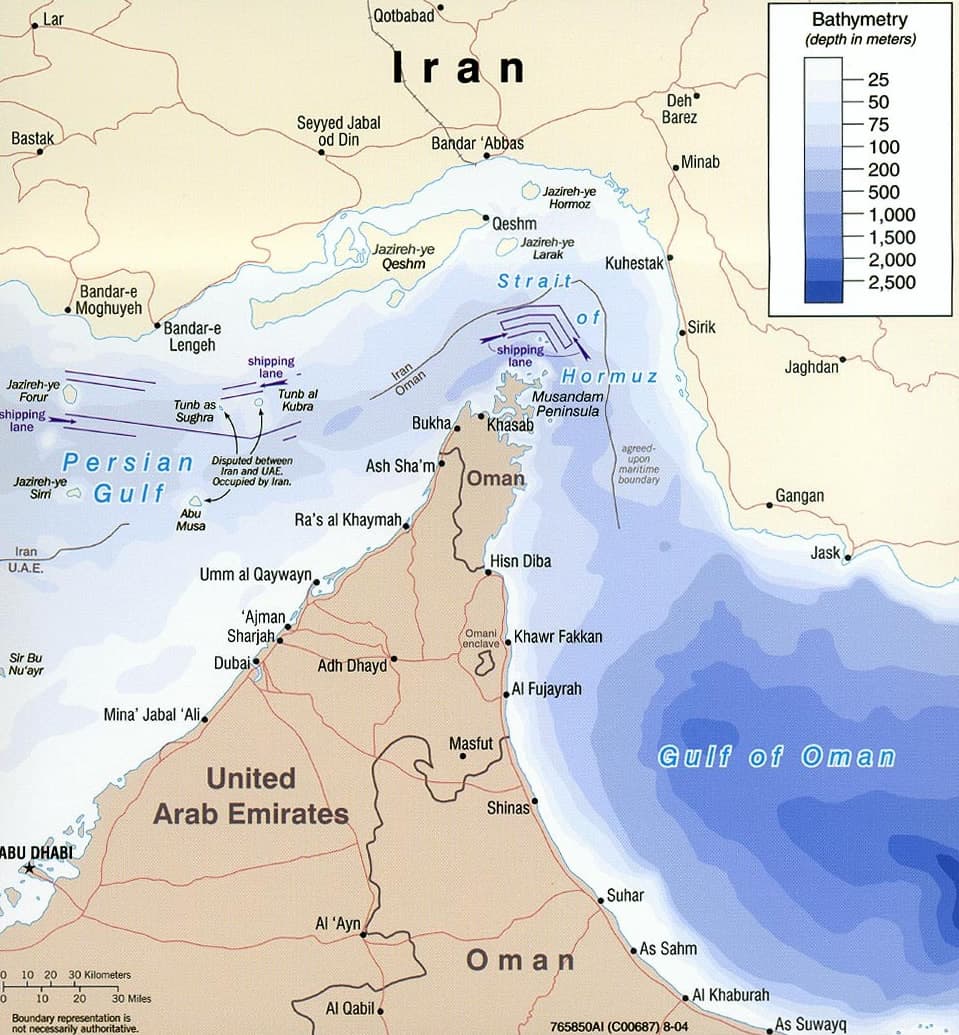
The downside risk is equally real. A breakdown of the ceasefire and a renewed conflict that disrupts shipping through the Strait of Hormuz could send energy prices significantly higher and trigger a more durable spike in Canadian inflation. The Bank of Canada's policy outlook explicitly assumes that current tensions remain contained, and any escalation would force a reassessment of both interest-rate paths and inflation expectations.
The diplomatic picture
Canada has supported the ceasefire diplomatically while maintaining its longstanding position on Iran's nuclear program and on freedom of navigation in the Strait of Hormuz. Foreign Affairs Minister Anita Anand's office has signalled close coordination with European partners and with the United States on monitoring the ceasefire's implementation.
Canadian sanctions against Iranian individuals and entities remain in force, paralleling similar measures by the European Union, the United Kingdom and the United States. The federal government has also continued to designate the Islamic Revolutionary Guard Corps as a terrorist entity, a designation that complicates any future engagement with Iran but reflects the broader Canadian policy posture toward the regime.
The role of Pakistan as mediator has prompted careful observation in Ottawa. Pakistan's elevated diplomatic profile has implications for South Asian regional dynamics and for Canada's relationships with both Pakistan and India. Recent Indian commentary has framed Pakistan's mediation role as a shift in regional balance, and Canadian officials have been monitoring the implications closely given the size and political weight of the Indian and Pakistani diaspora communities in Canada.
Energy markets and Canadian production
Canadian crude prices have stabilised somewhat since the ceasefire took effect, with West Texas Intermediate trading at levels well above pre-conflict averages but below the panic peaks of mid-March. The differential between Western Canadian Select and WTI has remained relatively narrow, providing supportive economics for Alberta and Saskatchewan producers.
The expansion of Canadian export capacity over the past several years, particularly through the Trans Mountain pipeline expansion, has improved the country's ability to translate higher global prices into actual revenue. This represents a structural change from earlier cycles when Canadian producers often saw global price spikes only partially translated into domestic returns due to pipeline constraints.
Liquefied natural gas exports have also become a more significant element of the Canadian energy story. Recent expansions on the West Coast have given Canadian producers increased ability to participate in Asian markets, where premium pricing tied to security-of-supply considerations has provided meaningful upside. The Canadian energy sector is therefore positioned to benefit from the current geopolitical environment in ways that were not available in earlier eras.
Diaspora communities and humanitarian concerns
Canada is home to one of the largest Iranian diaspora populations outside of Iran, with significant communities in the Greater Toronto Area, Greater Vancouver and Montreal. The community has been deeply affected by the conflict and its aftermath, with many families separated by border closures and many individuals concerned about the safety of relatives still in Iran.
Community organisations have called for continued Canadian engagement on humanitarian protections, including expedited family-reunification visas and humanitarian-pathway access for Iranians fleeing political persecution. Federal departments have signalled some flexibility in processing, although capacity constraints have meant that wait times for Iranian applicants remain significant.
The Iranian-Canadian community has also been politically active, with significant representation in advocacy organisations focused on human-rights conditions inside Iran. Recent demonstrations in major Canadian cities have called for stronger Canadian support for Iranian women's rights and for political prisoners. The federal government has generally been supportive of these advocacy efforts while balancing the diplomatic complexity of the broader Middle East situation.
The Israeli-Lebanese dimension
The U.S.-Iran ceasefire forms part of a broader regional pattern that includes earlier ceasefires affecting Israel, Lebanon and Yemen. The relative calm in those theatres has been welcomed, although the ceasefire framework remains fragile across all the relevant conflicts. Israel's continued operations in Gaza in particular have raised concerns about the durability of the broader peace effort.
Canada has maintained a careful diplomatic posture across the linked conflicts, supporting humanitarian access while continuing to call for de-escalation across all fronts. The Canadian humanitarian response has included financial commitments to multiple UN agencies and to various non-governmental organisations operating across the region. The size and durability of those commitments will be tested as the conflicts evolve.
The political domestic implications of the linked conflicts have been significant in Canada. Communities with ties to multiple countries in the region have been deeply affected, and Canadian political discourse on Middle East policy has been intense and at times polarised. The Carney government has generally maintained continuity with previous Canadian positions while adjusting tactical responses to specific developments.
Economic transmission to Canadian households
For ordinary Canadians, the most visible effect of the Middle East situation runs through gasoline prices and broader inflation. Pump prices in major Canadian cities have remained elevated relative to early-year levels, and the prospect of any renewed escalation in the region keeps energy markets on alert. Statistics Canada will release April inflation data on May 19, providing the next significant data point on this transmission.
The Bank of Canada has signalled that it expects the inflation impact to be temporary, with headline measures returning to the two per cent target by early 2027. Whether that path holds depends substantially on what happens next in the Middle East. A sustained ceasefire would likely allow the energy effect to dissipate; a renewed conflict could push inflation expectations higher and complicate the central bank's policy trajectory.
Mortgage holders, businesses and savers all have a stake in the inflation path, although in different directions. The federal government's fiscal projections also depend on the energy revenue trajectory in important ways. Canadian household budgets remain stretched in many regions, and any renewed energy spike would intensify affordability pressures already evident across the housing and food markets.
What is next
The immediate diplomatic horizon focuses on Iran's expected proposal for a longer-term framework. The two-week ceasefire extension was tied to that proposal, and the substantive content of any Iranian offer will significantly shape the next phase of the diplomatic process. Pakistan continues to play a mediating role, and the United States has signalled openness to extended negotiations if progress is being made.
For Canada, the policy implications run through fiscal projections, energy export strategies, sanctions enforcement, immigration processing and humanitarian commitments. Each element interacts with the others, and Canadian officials will continue to monitor developments closely. The Carney government has so far navigated the moment with a careful mix of solidarity with Western partners and pragmatic attention to Canadian interests.
For Canadian households and businesses, the most consequential question remains the sustainability of the ceasefire. A durable resolution would likely allow energy prices to ease and inflation to return to target on the projected schedule. A breakdown could send markets in the opposite direction quickly and would force significant adjustments across the policy framework. The next several weeks will be a critical test of how the broader Middle East situation evolves and what it means for Canada.
Spotted an issue with this article?
Have something to say about this story?
Write a letter to the editor