Supreme Court Upholds Quebec's Redrawn Electoral Map in 7-2 Decision
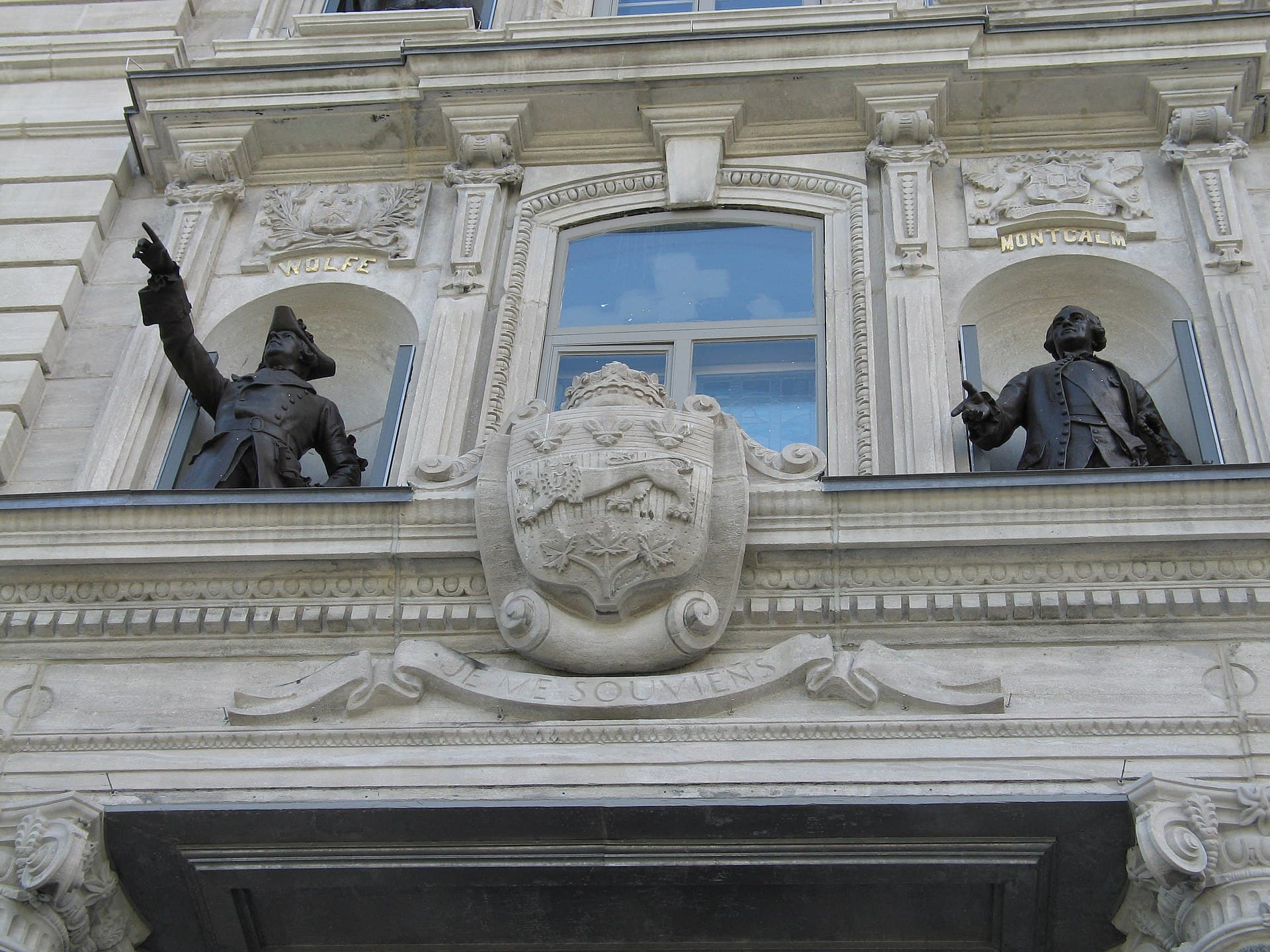
Canada's top court has upheld Quebec's redrawn provincial electoral map in a 7-2 decision released Wednesday, ending years of legal uncertainty over the boundaries that will be in place when Quebecers next head to the polls. The ruling means a riding on the Gaspé Peninsula and another in Montreal's east end will be eliminated, while two new districts will be created in the growing Laurentians and Centre-du-Québec regions.
The Supreme Court of Canada's decision came after hours of closed-door deliberations and represents one of the more consequential rulings on provincial electoral boundaries in recent memory. It clarifies the standard of judicial review that applies when minority and rural ridings are reshaped to reflect population shifts, and it gives Quebec's Chief Electoral Officer the green light to finalise lists and polling logistics under the revised map.
What the court decided
The seven-judge majority concluded that the Commission de la représentation électorale du Québec acted within its statutory mandate when it eliminated ridings whose populations had fallen significantly below the provincial average and added new districts in regions where population had grown well above the average. The majority emphasised that the variance allowed under Quebec's electoral law, which permits ridings to deviate by up to 25 per cent from the average, is not a guarantee that any particular riding will continue to exist.
The two dissenting justices argued that the elimination of the Gaspé riding in particular failed to give sufficient weight to factors of effective representation that the court had recognised in earlier jurisprudence. Their reasons highlight the geographic, linguistic and economic distinctiveness of the Gaspé Peninsula and warned that fully numeric approaches to riding boundaries can erode regional voice in the National Assembly.
The majority did not adopt that view, instead reaffirming that effective representation does not require any specific outcome and that legislatures retain considerable discretion in defining electoral boundaries within constitutional limits. The decision is binding on lower courts and will likely shape future challenges to electoral maps both in Quebec and in other provinces.
Why the case mattered
Quebec's electoral commission proposed the boundary changes in response to demographic shifts that have steadily reshaped the province over the past two decades. Population growth has been concentrated in the Laurentians, Lanaudière and Centre-du-Québec regions north and east of Montreal, while peripheral regions, including the Gaspé and parts of the Saguenay, have seen slow declines or stagnation.
Local political leaders, business groups and citizens in the affected regions challenged the proposal, arguing that population numbers alone fail to capture the unique geography and identity of the regions losing seats. The Quebec Court of Appeal had previously upheld the commission's plan, and Wednesday's Supreme Court ruling represents the final word on the dispute.
For the National Assembly, the practical effect is a redistribution of seats rather than any change in their total number. Quebec will continue to be represented by 125 elected members. The boundaries take effect at the next general provincial election, expected in October 2026, although a snap call cannot be ruled out under Premier Christine Fréchette's new government.
Reaction in the affected regions
In the Gaspé, the ruling provoked a wave of disappointment, with municipal leaders and economic-development groups expressing concern that the region's voice in Quebec City will be diluted. Several mayors said they would press the Fréchette government for compensating regional-development measures and for guarantees that the Gaspé would not lose ministerial attention as a consequence of having fewer dedicated members of the National Assembly.
In east-end Montreal, opposition focused less on cultural identity and more on the practical consequences for service delivery in working-class neighbourhoods. Community groups argued that the ridings being merged represent some of the most economically vulnerable populations in the province, and that combining them risks creating ridings that are too large for sitting members to serve effectively.
In the Laurentians and Centre-du-Québec, by contrast, regional officials welcomed the addition of new ridings as long-overdue recognition of population growth. Several local mayors framed the change as a structural acknowledgement of the regions' increased role in the provincial economy and demographics.
How the parties responded
Premier Christine Fréchette, who was sworn in earlier this month after winning the Coalition Avenir Québec leadership, said her government respects the court's decision and would work with the electoral commission to ensure a smooth transition to the new map. Fréchette also indicated that her government would consider regional-development measures aimed at the Gaspé and other peripheral regions, although no specific commitments were announced Wednesday.
The Parti Québécois, which currently leads provincial polling, called the ruling a missed opportunity to recognise the cultural and historical importance of the Gaspé riding, while signalling acceptance of the ruling as the final word in legal terms. Leader Paul St-Pierre Plamondon said the party would campaign aggressively in both the new ridings and in the regions affected by the elimination.
The Quebec Liberal Party, which has traditionally relied on strong support in some east-end Montreal ridings, said it would adapt its riding strategy to the new boundaries. Québec solidaire offered a more critical response, warning that purely numeric approaches to electoral boundaries risk hollowing out representation for marginalised communities.
What it means for Canadians outside Quebec
The decision has implications well beyond Quebec, because it sets out the test for judicial review of provincial electoral boundaries under the Charter and under provincial electoral statutes. Other provinces, including British Columbia and Ontario, have faced similar tensions between rural representation and growing urban regions, and Wednesday's ruling will inform the legal arguments available to challengers and electoral commissions alike.
The decision also indirectly touches on long-running debates about federal riding boundaries. While federal electoral redistribution operates under a separate statute and constitutional formula, the principles articulated by the Supreme Court are likely to shape how courts evaluate the work of independent commissions in any context.
Indigenous and remote-community advocates flagged the dissent's reasoning as particularly important, given the unique representational concerns of First Nations, Inuit and Métis communities whose populations are often spread thinly across vast geographies. The dissent does not change the law, but it provides a framework that future litigants may use to argue for greater weight on factors of effective representation.
The broader context
Wednesday's ruling lands in the middle of a busy spring at the Supreme Court. Earlier this month, the court delivered judgment in R. v. G.G., a criminal-law decision dealing with the timing of alleged offences, dismissing the appeal. The court is also expected to rule in the coming weeks on several federalism and Indigenous-rights cases that may carry similarly significant implications for provincial governments.
For Quebec specifically, the ruling closes one of the lingering legal questions inherited from former premier François Legault's government, which was responsible for tabling the underlying boundaries process and resisting earlier challenges. With Fréchette now at the helm, the boundaries dispute moves from the courts to the political arena, where regional grievances are likely to factor into the next provincial campaign.
Outside Quebec, the decision is being read closely by election officials, party legal teams and academic specialists in Canadian constitutional law. The Supreme Court has been notably consistent in upholding the work of independent electoral commissions, and Wednesday's ruling continues that pattern while leaving open the possibility of more searching review where effective representation concerns are particularly acute.
What is next
The Chief Electoral Officer of Quebec is expected to publish updated maps and polling logistics in the coming weeks. Returning officers in the affected regions will have to reorganise local infrastructure, and political parties will redraw their ground-game strategies accordingly. New nomination contests are likely in several of the affected ridings as candidates either move or step aside in line with the new boundaries.
The next general provincial election is the immediate horizon for the new map, and polling currently suggests a competitive race featuring the Parti Québécois, the Coalition Avenir Québec and the Quebec Liberal Party. Whether the boundary changes meaningfully alter the seat distribution remains to be seen and will likely depend on local dynamics in the new and reconfigured ridings.
Beyond Quebec, electoral commissions in other provinces will study the decision closely as they consider their own redistributions in the second half of the decade. The Supreme Court has now made clear that population is the central but not exclusive factor in electoral redistricting, and that courts will give significant deference to commissions that work within their statutory mandates.
Spotted an issue with this article?
Have something to say about this story?
Write a letter to the editorRelated Stories
Carney Government's Spring Economic Update Posts Smaller Deficit, Bets Billions on Skilled Trades
3h ago
Carney Unveils Canada Strong Fund, the Country's First National Sovereign Wealth Vehicle
3h ago
Carney Government Posts Smaller $66.9-Billion Deficit and $37.5 Billion in New Spending in Spring Economic Update
10h ago