Port of Prince Rupert cargo jumps 14% as DP World expands terminal capacity
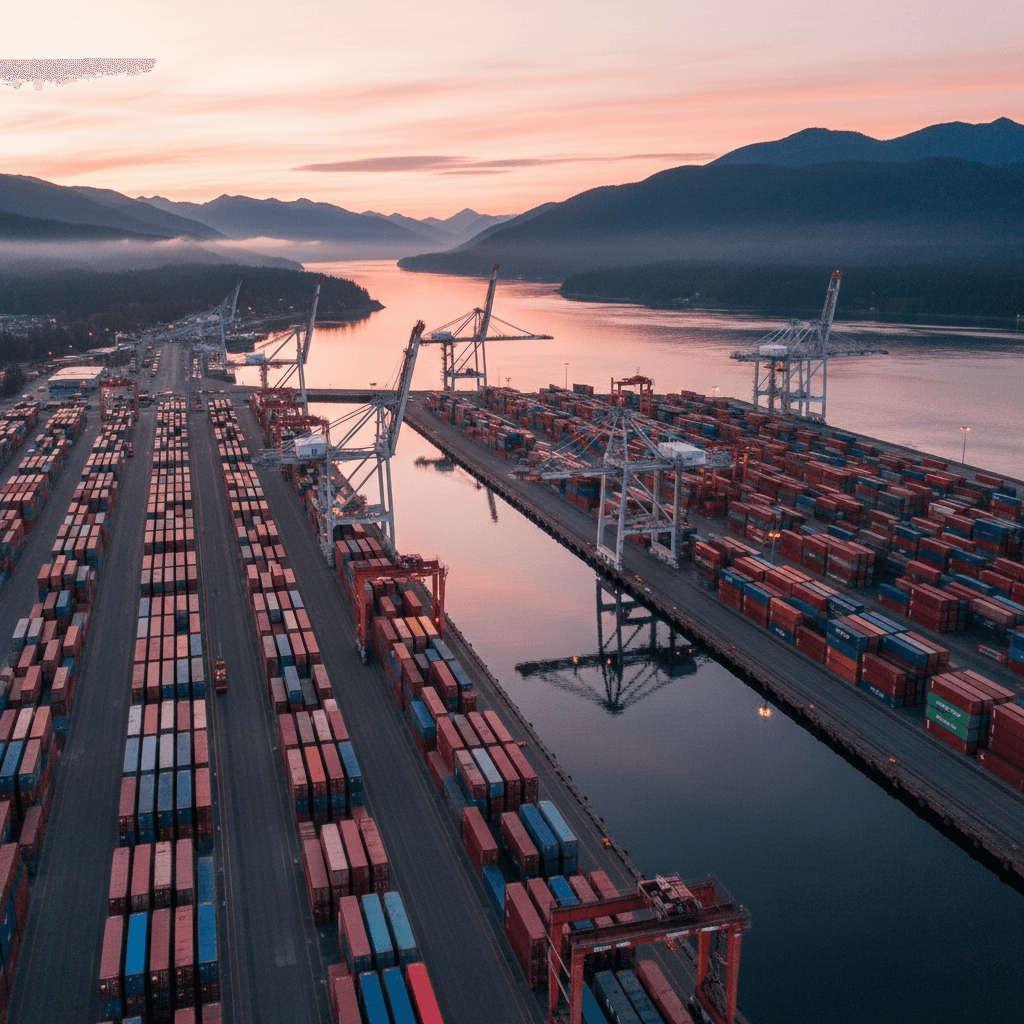
The Port of Prince Rupert closed 2025 with 26.3 million tonnes of cargo moved, a 14% increase over the previous year and a fresh sign that northern British Columbia is punching well above its weight as a Pacific gateway. DP World's expanded Fairview Container Terminal drove much of the surge, supported by shippers scrambling to beat new U.S. tariffs.
The growth, reported on April 16, positions Prince Rupert as a critical pressure valve for North American supply chains under stress from congestion at U.S. West Coast ports and rapidly shifting trade policy.
Container traffic leads the surge
Intermodal traffic, the rail-linked container business that is Prince Rupert's signature product, rose 20% year-over-year to 885,797 twenty-foot equivalent units (TEUs). That pace of growth outstripped most major North American ports during the same period.
DP World's Fairview terminal now operates at 1.6 million TEUs of annual capacity, making it Canada's second-largest container terminal after Vancouver's Deltaport. The Dubai-based operator says it has poured more than CAD$650 million into operational upgrades at Prince Rupert over the past seven years, with another CAD$100 million committed over the next three.
Tariffs rewire trade flows
A chunk of 2025's gain came from "front-loading" by importers racing to move Asian goods into North America before tariff escalations took effect. Trade analysts say that dynamic is likely to persist through at least the first half of 2026 as shippers hedge against further policy shifts.
"Customers are looking for resilient, reliable access points into the North American interior," DP World said in its year-end release, citing strong intermodal demand from U.S. Midwest destinations.
Prince Rupert's geographic advantage is well documented. It is roughly two sailing days closer to major Asian ports than any other North American gateway, and CN Rail's single-operator line to Chicago and Memphis avoids the congestion that plagues competing corridors.
Jobs and regional impact
The port supports thousands of direct and indirect jobs across northern B.C., a critical contributor in a region where resource-sector employment has softened in recent years. Provincial officials say the expansion will underpin further investment in rail yards, trucking and logistics services across British Columbia.
A statement from the B.C. government said the province is working with the Prince Rupert Port Authority and First Nations partners on infrastructure upgrades, including road and rail capacity improvements, to keep pace with growth. Coverage of trade and port developments continues on our business and law page.
What's next
DP World's planned CAD$100 million investment will focus on safety systems, berth reliability and yard automation, the company said. Prince Rupert Port Authority is expected to release updated traffic forecasts later this spring, with analysts watching closely to see whether the 2025 surge marks a structural shift or a tariff-driven spike.
Vancouver and Prince Rupert together handle the bulk of Canada's trans-Pacific container trade, giving British Columbia outsized influence over how tariff battles and supply-chain realignment play out. Any disruption at either port, from labour action to equipment failure, would reverberate across the Canadian economy.