Strait of Hormuz Crisis Lifts Canadian Energy as Oil and LNG Reroute Around Conflict
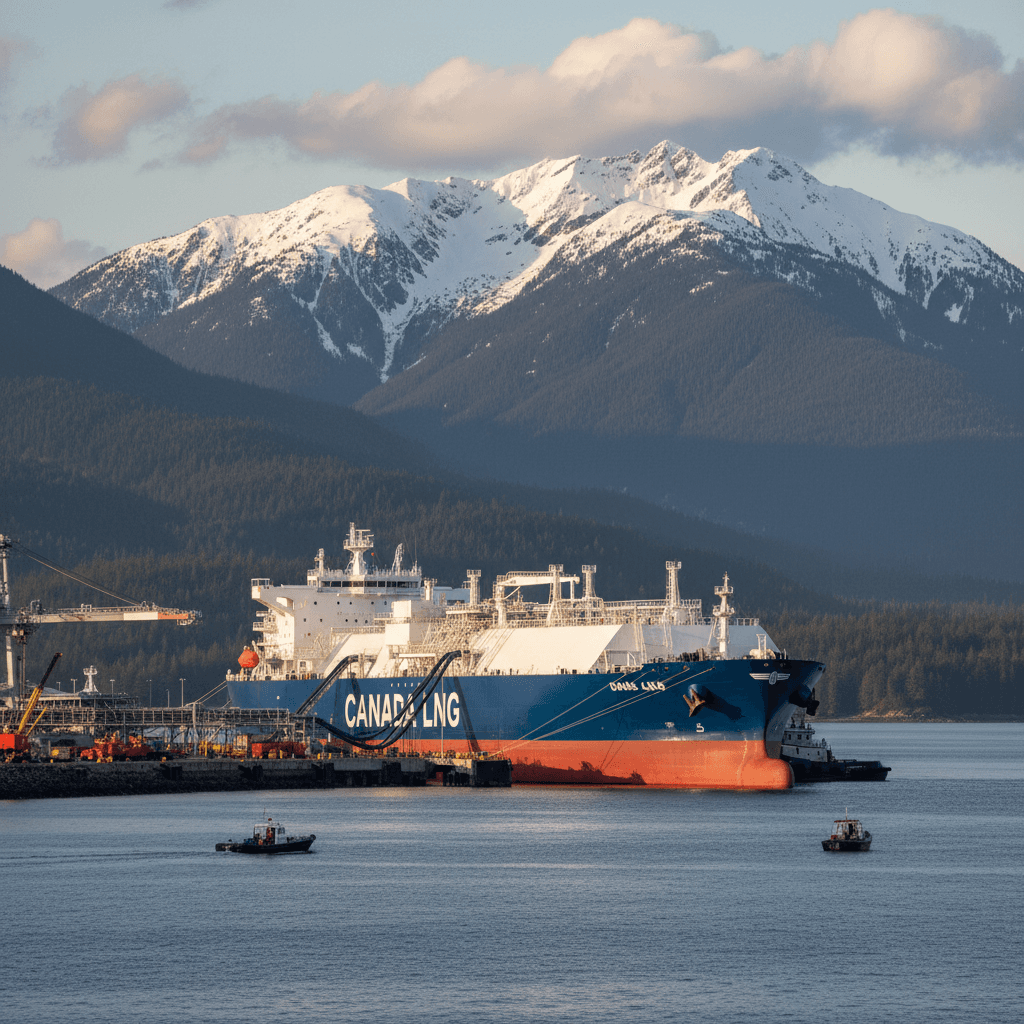
The continuing closure of the Strait of Hormuz has reshaped global energy markets and elevated Canada's role as a stable supplier in unprecedented ways. Iran has effectively blocked shipping through the narrow waterway since February 28, when the United States and Israel launched a coordinated air war that killed several senior Iranian officials, including Supreme Leader Ali Khamenei.
The blockade, now in its third month, has cut off roughly 20 per cent of the world's oil and gas exports and sent crude prices surging. For Canadian producers, exporters, and federal officials, the crisis has accelerated existing strategies to expand production and export capacity through routes that do not depend on the Persian Gulf.
The market reaction
Oil prices have climbed sharply since the conflict began. U.S. crude has settled near $107 a barrel and Brent has been trading around $118, with futures contracts continuing to climb on fears of a prolonged blockade. Brent crude futures for June touched as high as $119.94, with markets repeatedly reacting to news of additional U.S. naval deployments and stalled diplomacy.
The crisis has also affected gas markets, with retail prices in Canada rising approximately 30 per cent between March and April. Canadian drivers are paying noticeably more at the pump, even after the Carney government's Spring Economic Update introduced a temporary suspension of the federal fuel excise tax aimed at trimming roughly ten cents per litre off regular gasoline.
Inflation expectations have shifted as a result. The Bank of Canada cited the oil shock as a central reason for holding the overnight rate at 2.25 per cent at its April 29 decision, and projections released alongside the decision indicated that inflation will not return to the two per cent target until 2027 if oil prices remain elevated.
Canadian crude finds new buyers
For Canadian producers, the crisis has created an unusual market environment. Canadian crude from Alberta now moves west through the Trans Mountain Expansion pipeline, which came online in May 2024 and has nearly tripled maximum capacity to 890,000 barrels per day. Shipments through TMX have helped triple Canadian crude exports to non-United States destinations, including buyers in Asia who would normally rely on Middle Eastern supply.
The Strait of Hormuz blockade has elevated Canada's profile as a reliable Western alternative for buyers in Japan, South Korea, China, and India. Canada is now the world's fourth-largest oil producer, and the combination of stable politics, established legal frameworks, and pipeline access to tidewater has made Alberta crude particularly attractive.
Oil majors are increasingly viewing Canada as a safer long-term bet than they did even two years ago. Reuters and other outlets have reported that international companies are revisiting investment plans in the oil sands and conventional production basins, with several considering acquisitions or expanded partnerships with Canadian operators.
LNG Canada and the gas opportunity
The crisis has also highlighted Canada's emerging role as a liquefied natural gas exporter. LNG Canada in Kitimat, British Columbia, shipped its first cargo in June 2025, making Canada an LNG-exporting nation for the first time. Cargoes have reached Northeast Asian terminals without passing through the Strait of Hormuz or other chokepoints, providing direct supply alternatives to buyers concerned about Middle Eastern volatility.
Coverage in Fortune and other outlets has framed the Kitimat operation as a critical answer for Asian energy security in 2026. With Iranian LNG and Qatari supply both affected by the conflict, the ability of Canadian terminals to deliver cargoes via Pacific routes is increasingly valued at premium prices.
LNG Canada Phase 12 is expected to provide an additional 14 million tonnes of LNG per year, with a final investment decision anticipated by late 2026 or early 2027. If approved, the expansion would significantly extend Canada's LNG presence in Asian markets and underscore the geographic advantage that British Columbia ports offer over Middle Eastern alternatives.
Strategic implications for Canada
For the Carney government, the Strait of Hormuz crisis has reinforced the case for the Canada Strong Fund, which was launched in late April with an initial $25 billion endowment to invest in critical minerals, infrastructure, and advanced manufacturing. The fund is widely expected to invest in additional energy infrastructure, including transmission, port capacity, and processing facilities that support both oil and LNG exports.
Federal officials have also signalled willingness to contribute to international efforts to unblock the Strait of Hormuz, including diplomatic and military coordination with allies. Canada and partner nations have indicated they are ready to help unblock the waterway as oil prices spike, though the practical implementation of any such effort would depend on broader U.S. and allied military planning.
The crisis has also changed conversations about pipeline expansion. Alberta Premier Danielle Smith has used recent appearances, including a Chatham House address in London, to argue that Alberta is well-positioned to help meet growing global energy demand but is held back by limited infrastructure rather than a lack of resources. The argument has gained traction federally as Ottawa weighs additional pipeline capacity to tidewater.
The Canadian impact in detail
For Canadian consumers, the impact has been mixed. Higher fuel prices have increased the cost of driving, food transport, and home heating, putting pressure on household budgets. Some of that pressure has been absorbed by federal affordability measures, including the fuel tax suspension, but the broader inflationary impulse has been felt across multiple categories of household spending.
For workers in oil and gas, the situation is the opposite. Higher prices have led to higher revenues for producers, increased royalty payments to Alberta and other producing provinces, and renewed investment in upstream operations. Employment in the sector has stabilised after several years of contraction, with new opportunities in pipeline operations, LNG facilities, and oil sands projects.
For provincial governments, the situation has reshuffled fiscal positions. Alberta has benefited from higher royalties and corporate income taxes, while energy-importing provinces like Ontario and Quebec have seen modest pressure on their fiscal outlooks. The federal government's pause on the fuel excise tax represents a redistribution of burden across jurisdictions.
The geopolitical backdrop
The crisis began on February 28, 2026, when joint U.S.-Israel strikes targeted Iranian nuclear, military, and government sites. Subsequent Iranian retaliation damaged at least 16 American military sites across the Middle East, according to a recent CNN investigation. A fragile U.S.-Iran ceasefire is in place but remains contested, with Iranian officials insisting that the United States must choose between diplomacy and confrontation.
Canadian diplomats have largely taken supporting roles, working through allied frameworks rather than independent initiatives. Prime Minister Carney was scheduled to attend the European Political Community Summit in Yerevan from May 2 to May 4, marking the first time a non-European leader has participated in the gathering. The agenda includes both energy security and broader European defence cooperation.
Canada's participation in the European Union's SAFE defence procurement programme, finalized last year with an initial €2.5 million contribution and €7.5 million annually thereafter, also positions the country to contribute to allied responses to the energy and security crisis. The combination of energy production capacity and diplomatic alignment makes Canada an unusually visible player in the current environment.
Indigenous participation in energy projects
The energy windfall environment has accelerated existing conversations about Indigenous participation in major resource projects. The First Nations Major Projects Coalition, which held its 9th annual conference in Toronto in early May, has championed equity participation models in which Indigenous nations take direct ownership stakes in pipelines, transmission, processing facilities, and other infrastructure. The model has gained traction across multiple projects in British Columbia, Alberta, and Ontario.
For the LNG Canada operation in Kitimat, equity participation by First Nations along the export route has been a central component of the project's social licence. Future expansions, including the proposed Phase 12, will require continued engagement with Indigenous nations on terms that go beyond traditional consultation. The Canada Strong Fund's mandate explicitly includes supporting Indigenous-led equity participation, providing federal capital that can match commercial investment in qualifying projects.
For Trans Mountain Expansion, Indigenous engagement has continued through the operational phase, including ongoing consultations on environmental management, emergency response, and community benefit agreements. The pipeline's commercial success has produced ongoing royalty and contracting opportunities for Indigenous communities along its route, and federal officials have signalled willingness to support additional Indigenous-led infrastructure investments connected to oil and gas exports.
What's next
The most immediate uncertainty is the duration of the Strait of Hormuz blockade. U.S. and Iranian officials have continued indirect talks, but the most recent rounds have been described as stalled. President Donald Trump rejected the latest proposal from Tehran on Friday, leaving the diplomatic path uncertain even as the military situation remains tense.
For Canadian producers, the crisis offers a window of higher prices and expanded market access that could persist for months if the blockade continues. Investment decisions on additional LNG capacity, oil sands expansion, and supporting infrastructure are likely to accelerate during this window, with several major projects expected to reach final investment decisions by year-end.
For the broader economy, the question is whether Canada uses the moment to lock in long-term advantages. The Carney government's combination of fund deployment, fiscal supports, and diplomatic engagement represents one of the most active responses to a global energy crisis in recent history. How effectively those tools convert into durable infrastructure and market positioning will determine whether 2026 becomes a turning point for Canadian energy or simply a profitable interlude.
The dual character of the moment, with high prices benefiting some Canadians while squeezing others, is also a reminder that energy policy in 2026 demands careful attention to distributional impacts. Federal and provincial measures will need to continue balancing relief for affected households, support for energy workers, and investment in the broader transition to a more diversified and resilient Canadian energy system.
Spotted an issue with this article?
Have something to say about this story?
Write a letter to the editor


