Blue Jays' Spring Slide Tests the Patience of the Defending AL Champions
The Toronto Blue Jays' 2026 season has not unfolded as scripted. The defending American League champions sit at 21 wins and 26 losses, third in the AL East, after dropping eight of their past 11 games. The latest stretch, which included a tight series with the Detroit Tigers and a string of close losses, has put the team's playoff trajectory under serious pressure even with more than four months of baseball still to play.
The state of the team
The Blue Jays come into mid-May below .500 and chasing a stronger Boston Red Sox club and a Tampa Bay Rays team that has, once again, found ways to win despite a low payroll. The AL East has long been one of the most competitive divisions in baseball, and Toronto's slow start has narrowed the margin for error considerably.
Daulton Varsho drove in the go-ahead run with a 10th-inning single and Yohendrick Pinango homered to lead the Blue Jays past Detroit 2-1 on Saturday, snapping a small losing streak. The night before, Detroit edged Toronto 3-2 when Spencer Torkelson drove in the winning run with an RBI single in the ninth. Earlier in the month, Toronto beat the Minnesota Twins 11-4, with Kazuma Okamoto homering for the third time in two days and Brandon Valenzuela connecting for a home run in an eight-run eighth inning.
What is going wrong
Several issues have piled up at once. The Blue Jays' starting pitching has been inconsistent, with the team's top arms producing strong outings interspersed with games where command has slipped at critical moments. The bullpen has shown flashes of dominance but has been unable to consistently bridge the gap between the rotation and the late innings.
The offence, which carried the team through the 2025 playoff run, has been streaky. Vladimir Guerrero Jr. and Bo Bichette have produced moments but have not consistently driven runs across against quality pitching. Newer additions, including Kazuma Okamoto, have shown promise but have not yet stabilised the lineup the way the front office hoped.
The defending champions' burden
Coming off a 2025 American League pennant, the Blue Jays entered 2026 with elevated expectations. The team retained much of its championship core, added depth pieces in the off-season, and brought back a coaching staff that had become a national story during last fall's playoff run. The slow start has tested whether the foundation of that run was as solid as it appeared.
Manager John Schneider has cautioned against panic. According to the manager, the team's underlying numbers, including run differential and quality-of-contact metrics, suggest more competitive baseball than the win-loss record reflects. That is the kind of statement managers offer in May when they need their teams to keep grinding through stretches that have not gone their way.
The Canadian baseball context
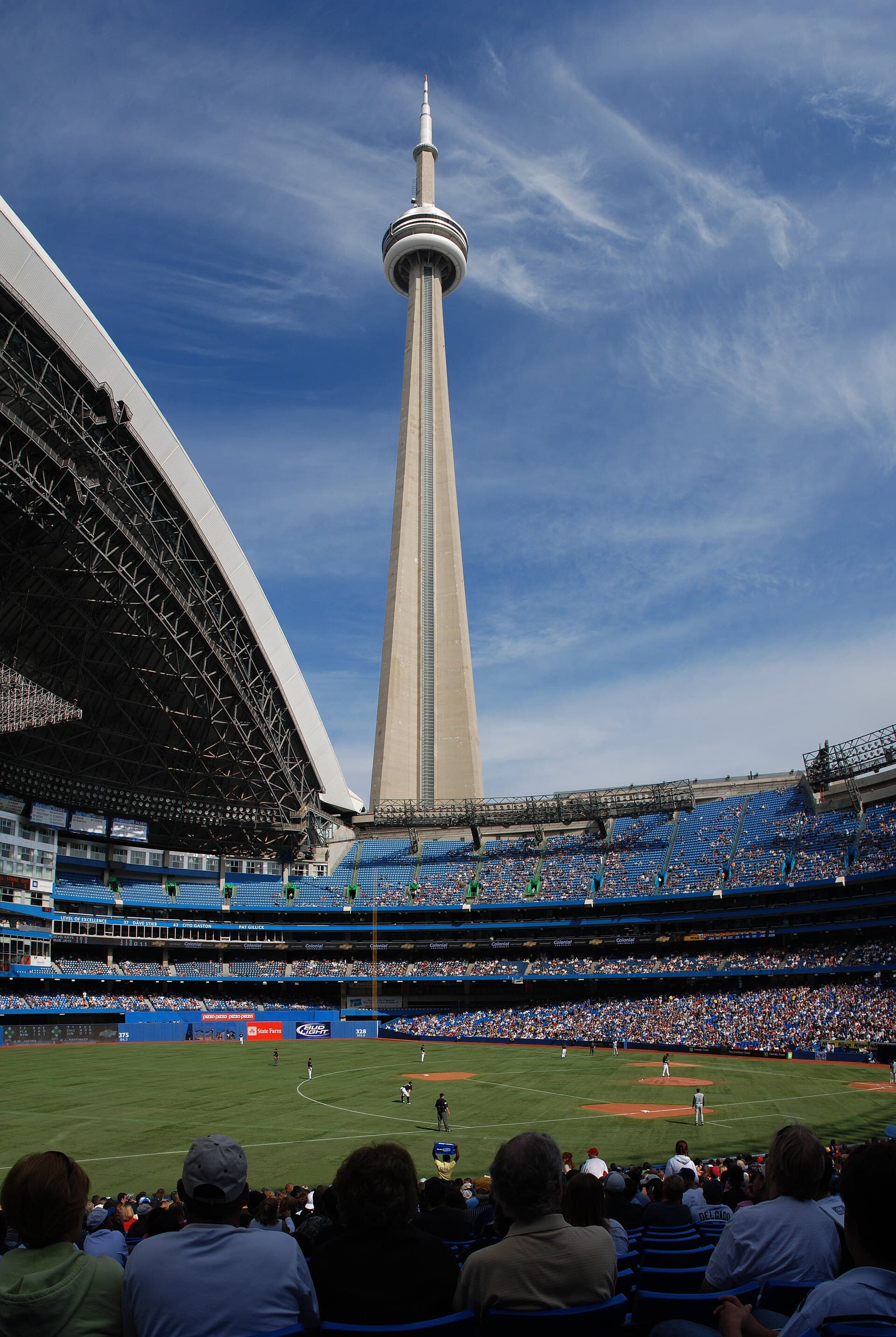
Toronto is the only major-league baseball team in Canada, and its performance shapes the rhythm of summer sports coverage across the country. A successful Blue Jays run lifts attendance at Rogers Centre, drives television ratings on regional sports networks, and increases the visibility of the broader Canadian baseball pipeline.
The team's recent track record has also helped develop a generation of Canadian baseball talent. Provincial baseball associations, junior leagues and the national programs have benefited from increased participation rates linked to the team's competitiveness. A prolonged slump can undercut some of that momentum, although the institutional support for the sport has become more durable than it was a generation ago.
The trade deadline question
If the team's struggles persist into the summer, the trade deadline will loom larger than usual. The Blue Jays have a core that, by talent, should be competitive. They also have a payroll that constrains how much additional spending the front office can absorb. Decisions on whether to add at the deadline, to stand pat, or to sell will be among the most consequential of the season.
General manager Ross Atkins has signalled that the team intends to compete this season and that he believes the roster is talented enough to recover. According to the front office, the early-season slump is a problem to solve through coaching, health and roster adjustments rather than a signal to change direction.
Injuries and roster moves
The Blue Jays have managed several short-term injuries through the early weeks of the season. Day-to-day absences in the lineup and rotation have forced the team to lean on depth pieces and minor-league call-ups more than expected. The minor-league system has provided some lift, but the team has also exposed the limits of its depth at certain positions.
Bullpen workloads have been particularly heavy. Several relievers who were targeted for moderate use through the season have been pressed into more frequent appearances. That kind of workload pattern can produce diminishing returns over a long season and is something the manager will have to manage carefully.
The fan reaction
Blue Jays fans, never short of opinions on the team's direction, have voiced frustration but have, by and large, remained engaged. Attendance at Rogers Centre has held up well, and the team's television ratings have remained strong on Sportsnet. Fan-focused discussions have shifted toward roster moves, lineup configurations and managerial choices.
The market for sports coverage of the team in Canada is intense, and the team's struggles are dissected nightly on radio and television. That scrutiny is part of the job description for major-market players, and the Blue Jays are no exception.
The historical context
The Blue Jays' 2025 American League pennant ended a long stretch in which the franchise had been competitive but had not reached the World Series. The current core of the team, anchored by Vladimir Guerrero Jr. and Bo Bichette, has played together long enough that performance expectations are firmly established. Slow starts have happened before but have generally been followed by stronger summer stretches.
Major League Baseball's regular season is long, and 21-26 records can turn around quickly with a hot stretch of pitching and timely offence. The Blue Jays' recent history includes several seasons in which slow starts gave way to playoff runs. The challenge is finding the right combination of fixes without making moves that disrupt the core.
The pitching reset
The Blue Jays' rotation has produced strong individual outings interspersed with games where command has slipped. The team's pitching coaches have been working on consistency issues, focusing on first-pitch strike rates, fastball command and pitch sequencing. The bullpen has shown flashes but has been pushed into more frequent appearances than ideal.
Pitching depth in the upper minor leagues will be tested over the coming weeks. The Blue Jays' player development system has produced significant pitching talent in recent years, and several arms at the Triple-A level are candidates for promotion. Whether those promotions come with the kind of consistent performance the team needs is one of the open questions.
The Canadian player development pipeline
The Blue Jays' competitiveness has contributed to the development of Canadian baseball talent at multiple levels. Provincial baseball associations have reported increases in participation tied to the team's success, and several Canadians are now in significant roles in major league organisations. The infrastructure for player development in Canada is more robust than it has been in previous generations.
Several Canadian-born players have made appearances for the Blue Jays in recent years, including pitchers and position players from across the country. Continued development of that pipeline is one of the franchise's longer-term investments and supports the broader health of the sport in Canada.
What's next
The Blue Jays continue their early-season schedule with games against AL East rivals and select interleague opponents over the next several weeks. The next stretch will give the team an opportunity to climb back into the divisional race if pitching and offence start to align. If they do not, the conversation will shift quickly toward the trade deadline and longer-term planning.
For now, manager Schneider, the players and the front office will continue to insist that the season is salvageable. The numbers, including the runs scored and runs allowed differential, support the case that better baseball is coming. Whether it arrives in time to make the team a playoff contender is the question that will define the rest of the spring and the summer to follow.
Spotted an issue with this article?
Have something to say about this story?
Write a letter to the editor