Strait of Hormuz Closure Drives Canadian Gas Prices as Iran War Grinds On
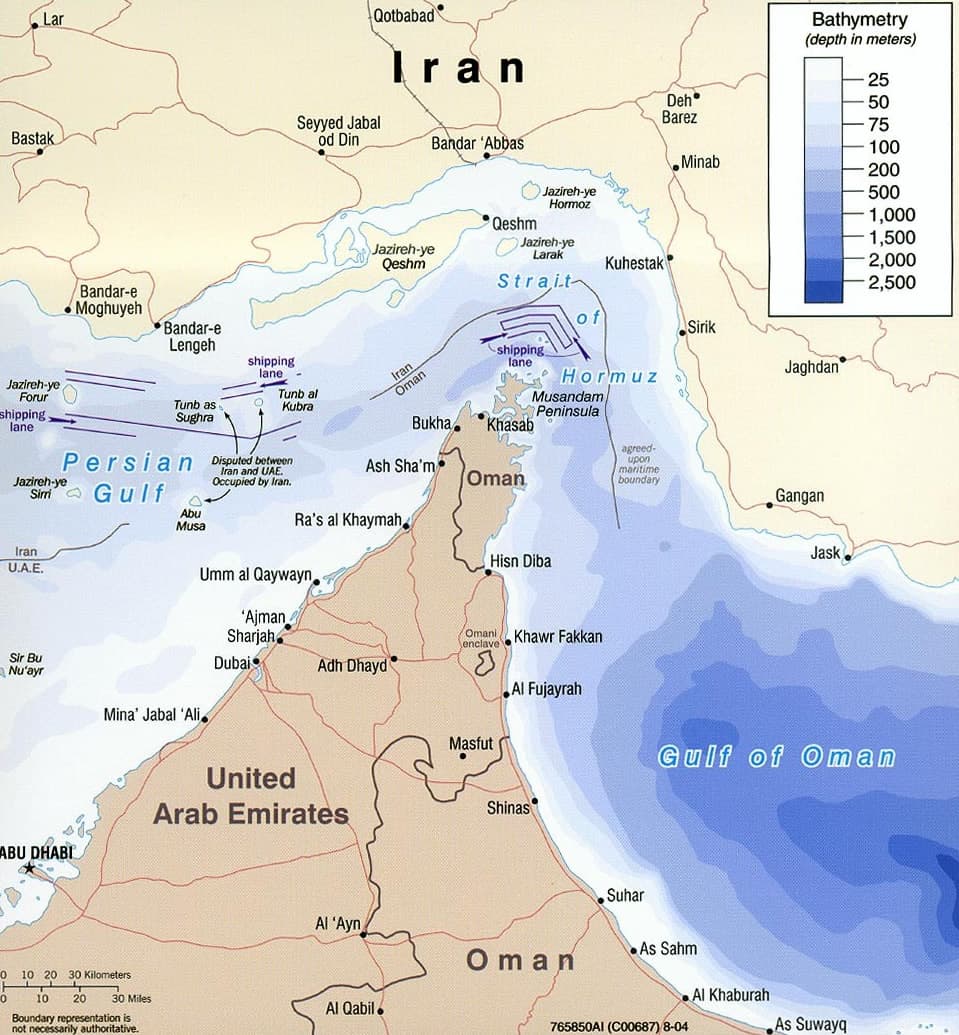
A conflict thousands of kilometres from Canada is hitting Canadians where they feel it most directly: at the gas pump. The war involving Iran that erupted in late February has severely disrupted the Strait of Hormuz, a narrow waterway that normally carries about a fifth of the world's daily oil supply, sending energy prices on a volatile climb and feeding directly into the cost of living at home.
The crisis has transformed a distant geopolitical confrontation into a tangible economic burden for Canadian households, illustrating how deeply the country remains tied to global energy markets. As the conflict grinds on with no clear resolution, the effects continue to ripple through Canadian wallets and the broader economy.
A chokepoint effectively closed
The Strait of Hormuz has been largely blocked since late February, when the United States and Israel launched an air campaign against Iran. According to widely reported accounts, the strikes killed Iran's supreme leader, Ayatollah Ali Khamenei, and Iran subsequently declared the strait closed and threatened ships attempting to pass. By early May, open transits had fallen to near zero, a collapse from the roughly 138 vessels that crossed daily before the crisis.
Iranian forces have redefined the strait as what officials describe as a vast operational area, and the disruption has been characterised by the International Energy Agency as among the largest supply shocks in the history of the global oil market. Roughly a fifth of the world's oil and a significant share of its liquefied natural gas normally pass through the waterway, making its closure a global event with global consequences.
The strait is one of the most strategically vital chokepoints on earth, a narrow passage through which an enormous volume of the world's energy flows. Its effective closure removes a substantial portion of global supply from the market, a disruption that no amount of production elsewhere can quickly replace.
The impact on Canadian prices
The effects have reached Canadian households quickly. Statistics Canada reported that gasoline prices jumped 28.6 per cent year over year in April, a major contributor to an annual inflation rate that accelerated to 2.8 per cent. The agency explicitly cited supply uncertainty caused by conflict in the Middle East as a factor pushing prices higher.
For drivers and families, the result is a familiar squeeze, with fuel costs rippling through the economy and lifting the price of goods that must be transported. A temporary suspension of the federal fuel excise tax that took effect in late April offered modest relief, but it has been no match for the scale of the global forces at work.
The pain extends well beyond the pump. Higher fuel costs raise the price of shipping goods, which feeds into the cost of groceries and other essentials, compounding the strain on households already contending with elevated living costs. Few corners of the economy are insulated from a sustained rise in energy prices.
An energy exporter's paradox
Canada occupies an unusual position in this crisis. As one of the world's largest oil producers and exporters, the country in some respects benefits from higher global prices, which lift revenues for producers and for oil-producing provinces such as Alberta. Yet Canadian consumers pay the same elevated pump prices as everyone else, creating a sharp divide between the producing regions and households across the country.
The disruption has also sharpened the national conversation about energy security and infrastructure. The recent agreement between Ottawa and Alberta to advance a new West Coast oil pipeline was framed in part around the goal of giving Canadian crude broader access to overseas markets, a priority thrown into relief by the fragility of global supply routes.
The paradox underscores a longstanding feature of the Canadian economy: resource wealth does not insulate consumers from global price shocks. A crisis that enriches one part of the country can simultaneously squeeze another, complicating the politics of energy and highlighting regional divides.
Volatile markets
Oil prices have swung sharply throughout the crisis. International benchmark Brent crude has traded around the $100 mark, while prices spiked even more dramatically earlier in the conflict, with one regional benchmark reaching record highs in March. The market has proven highly sensitive to every signal about the prospects for a negotiated end to the fighting.
That sensitivity cuts both ways. Hints of progress toward a deal have sent prices lower, while setbacks have pushed them back up. The uncertainty makes planning difficult for businesses and households alike, and it leaves Canadian fuel prices hostage to developments far beyond the country's control.
Even amid the closure, Iran has reportedly continued to move oil within the Persian Gulf, and traders watch every development for clues about supply. The result is a market characterised by sharp swings, in which a single headline about negotiations can move prices by several per cent in a day.
The diplomatic track
Efforts to ease the crisis have been halting. The United States announced an initiative aimed at helping stranded vessels exit the strait, then paused the effort to allow time for negotiations to end the war, citing what officials described as progress in talks. Whether those talks can produce a durable settlement remains deeply uncertain, and the situation on the water has remained severely constrained.
For Canada, which is not a direct party to the conflict, the diplomatic stakes are nonetheless significant. The country has an interest in the restoration of stable global energy flows and in the broader stability of a region whose disruptions reverberate through Canadian markets and household budgets.
Canada's leverage over the conflict itself is limited, but it shares with its allies a strong interest in de-escalation and the reopening of global shipping lanes. The crisis is a reminder that even events in which Canada plays no direct role can shape its economy in profound ways.
What it means for Canadians
The most immediate consequence is the cost of fuel and its knock-on effects across the economy. Higher gasoline prices feed inflation, complicate the Bank of Canada's interest-rate decisions and erode the purchasing power of households already contending with elevated living costs.
The crisis is also a reminder of how exposed Canada remains to global energy shocks despite its own vast resources. The mismatch between being a major producer and still paying world prices at the pump has become a defining feature of the current moment, fuelling debate about how the country can better insulate itself from external disruptions.
That debate touches on infrastructure, trade and energy policy, and it has lent new urgency to questions about how Canada develops and routes its own resources. The conflict has made energy security a more prominent theme in national conversation than it has been in years.
The longer-term energy lessons
The crisis has prompted a broader reckoning over how Canada manages its energy resources and its exposure to global shocks. For a country that produces far more oil than it consumes, the experience of paying world-influenced prices during a foreign supply disruption has sharpened questions about infrastructure, refining capacity and the routes by which Canadian energy reaches markets.
Much of Canada's oil flows to a single destination, the United States, often at a discount, while parts of the country still import refined products subject to global pricing. That structure leaves Canadian consumers exposed even as producers benefit from higher prices, a mismatch that the current crisis has thrown into sharp relief and that has fuelled debate about national energy strategy.
The disruption has also strengthened arguments for diversifying Canada's export markets and building the infrastructure to reach them. The recent agreement to advance a new West Coast pipeline was framed partly around this logic, reflecting a view that broader access to overseas buyers would enhance both economic returns and resilience against shocks in any single market.
At the same time, the crisis has reinforced the case made by advocates of energy transition, who argue that reducing dependence on oil and gas altogether is the surest path to insulating households from volatile global markets. The competing lessons, build more capacity versus accelerate the transition, sit at the heart of Canada's energy debate.
What is clear is that the episode has elevated energy security as a national priority in a way that few recent events have. Whatever conclusions policymakers ultimately draw, the experience of watching a distant conflict drive up the price of fuel at home is likely to shape Canadian energy policy discussions for years to come.
A test of resilience
The crisis has become a test of the resilience of the global energy system and of Canada's place within it. The disruption of a single chokepoint has demonstrated how concentrated and vulnerable the world's energy supply chains remain, with a substantial share of global oil and gas dependent on safe passage through a narrow waterway. That vulnerability has consequences that reach every corner of the global economy, Canada included.
For Canadian policymakers, the episode reinforces the value of diversified supply routes, strategic reserves and contingency planning. The ability to weather external shocks depends in part on the choices made before a crisis strikes, and the current disruption has provided a stark reminder of why energy security warrants sustained attention rather than only crisis-driven concern.
How the world responds to the crisis, and how quickly the strait can be reopened, will shape not only near-term prices but longer-term thinking about energy security. For Canada, the lessons of this episode are likely to inform debates about infrastructure, trade and the pace of energy transition for some time to come.
What's next
The trajectory of Canadian fuel prices now depends heavily on whether the conflict de-escalates and the Strait of Hormuz reopens to commercial traffic. A negotiated settlement could allow prices to retreat, while a prolonged or widening conflict could keep them elevated for months.
In the meantime, Canadians are likely to continue feeling the effects at the pump and in the broader cost of living. The crisis has underscored a hard truth: in an interconnected world, a conflict in a distant strait can shape the price of a tank of gas in cities and towns across Canada, and there is little the country can do but watch the diplomacy unfold and brace for the consequences.
Spotted an issue with this article?
Have something to say about this story?
Write a letter to the editor