Supreme Court of Canada Creates New Tort for Intimate Partner Violence
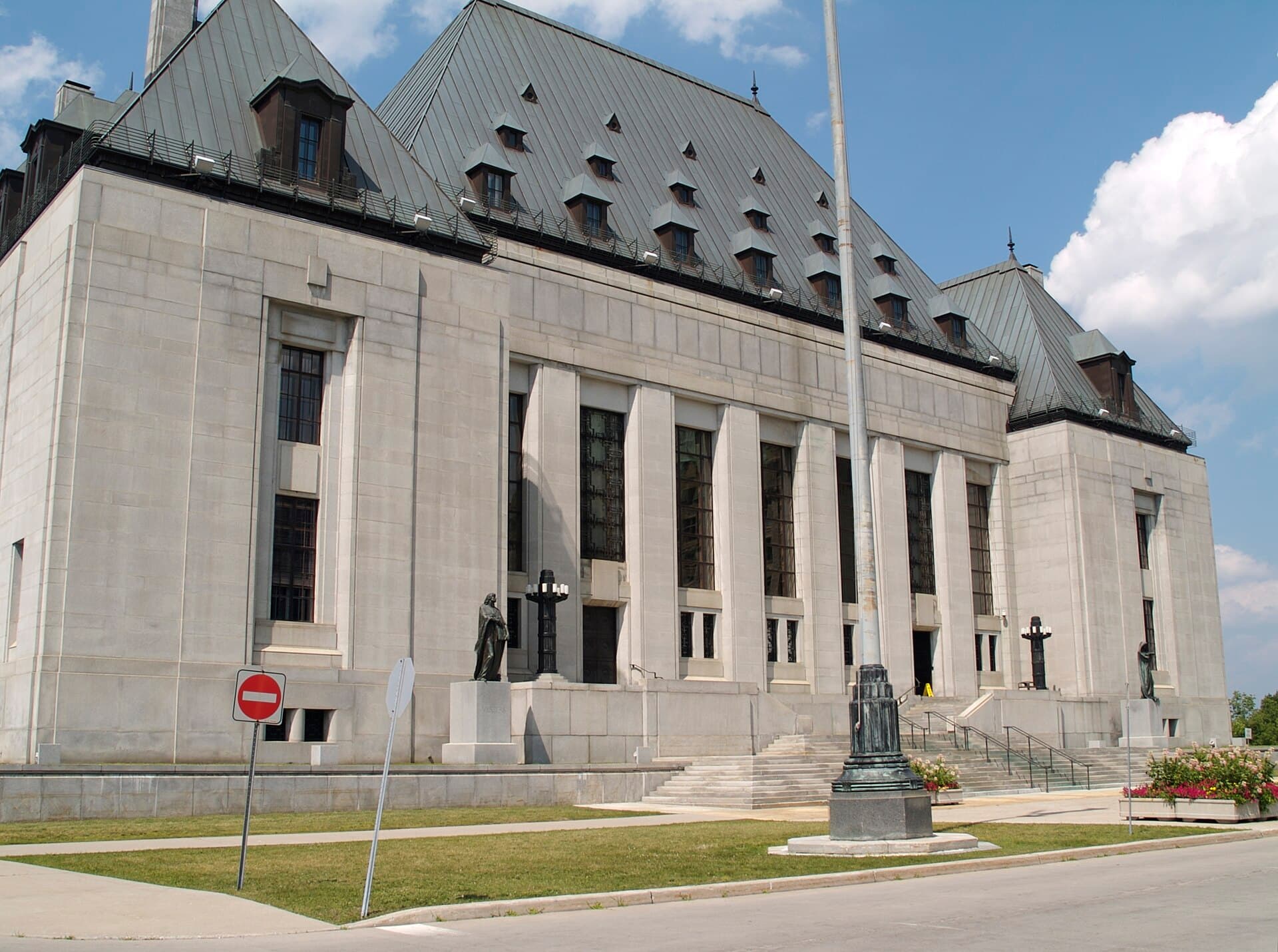
The Supreme Court of Canada has recognised a new civil wrong of intimate partner violence, a landmark ruling that will allow survivors to sue former partners for damages over patterns of abuse that reach far beyond physical assault. The decision, released on May 15 in the case of Ahluwalia v. Ahluwalia, was decided by a 6-3 majority and is expected to reshape how family courts and civil courts across the country handle claims of domestic abuse.
The ruling represents one of the most significant developments in Canadian family and civil law in years, formally giving a name and a remedy to forms of harm that the legal system has long struggled to address. It arrives at a moment of heightened national attention to gender-based violence, lending the decision a resonance that extends well beyond the courtroom.
What the court decided
The majority recognised intimate partner violence as a distinct tort, a category of civil wrong for which a person can seek monetary damages. Crucially, the court defined the harm broadly. The ruling encompasses not only physical violence but also coercive and controlling conduct, including isolation, humiliation, surveillance, financial control, sexual coercion and intimidation.
By framing the wrong around a pattern of behaviour rather than discrete incidents, the decision acknowledges what advocates and researchers have long argued: that abuse in intimate relationships often operates as a sustained campaign of control, not a series of isolated acts. That distinction matters in court, where survivors have historically struggled to fit long-term coercive conduct into existing legal categories such as battery or assault.
The case arose from a marriage that began in India in 1999 and continued in Canada after the couple emigrated in the early 2000s. According to the findings before the court, the relationship was marked by physical assaults, humiliation, intimidation and conduct intended to inflict emotional distress over roughly 16 years.
The new tort is designed to capture that cumulative reality. Rather than requiring a survivor to point to a single actionable event, it allows a court to consider the relationship as a whole and to recognise the compounding harm of behaviour sustained over many years.
How the justices divided
The ruling was not unanimous, and the 6-3 split signals genuine debate on the bench about how far civil law should reach into intimate relationships. The majority concluded that existing torts did not adequately capture the cumulative, relational nature of intimate partner violence and that a dedicated cause of action was warranted.
The dissenting justices raised concerns common to such expansions of civil liability, including the risk of overlapping or duplicative claims, the challenge of defining the boundaries of the new tort, and questions about whether family law or the criminal system is the more appropriate venue. Those competing views are likely to shape how lower courts interpret and apply the decision in the years ahead.
Debates of this kind reflect a longstanding caution in the law about creating new causes of action. Courts must weigh the need to remedy genuine harms against the risk of unintended consequences, including a proliferation of claims or uncertainty about where liability begins and ends. The closeness of the vote suggests those tensions were keenly felt.
Why it matters
For survivors, the ruling creates a clearer path to financial accountability. Damages awards can recognise harms that the criminal system, with its high burden of proof and focus on punishment rather than compensation, often leaves unaddressed. A civil claim proceeds on the balance of probabilities, a lower threshold than the criminal standard of proof beyond a reasonable doubt.
The decision also names a reality that many Canadians experience but that the law has been slow to capture. Coercive control, financial abuse and surveillance can be as damaging as physical violence, yet they have rarely had a clear legal label. By giving the conduct a name and a remedy, the court has signalled that the justice system regards these patterns as serious legal wrongs.
That recognition carries symbolic as well as practical weight. For survivors who have struggled to have non-physical abuse taken seriously, a ruling from the country's highest court affirming the gravity of coercive control can be validating, even where a lawsuit is not ultimately pursued.
Implications for the courts
Family and civil courts can expect to grapple with practical questions as the ruling takes hold. Judges will need to assess evidence of long-term patterns of behaviour, weigh the credibility of competing accounts, and determine appropriate damages for harms that are often psychological and financial rather than strictly physical.
Legal observers anticipate that the decision will prompt new guidance for lawyers and lower courts on how to plead and prove the tort, how it interacts with existing claims, and how it fits alongside family law proceedings such as divorce and the division of property. There may also be implications for limitation periods, given that abuse can span many years and survivors may come forward long after a relationship ends.
Evidentiary challenges loom large. Coercive control often unfolds in private, leaving little documentary trail, and proving a sustained pattern can require courts to weigh testimony, financial records and contextual evidence. How judges handle those challenges will shape the practical reach of the new tort.
The broader context
The ruling lands amid sustained national attention to gender-based and domestic violence. Numerous municipalities and several provinces have moved in recent years to declare intimate partner violence an epidemic, and advocates have pressed for systemic responses across the justice, health and social-service systems.
Canada is not alone in rethinking how the law treats coercive control. Several jurisdictions internationally have introduced criminal offences targeting controlling behaviour. The Supreme Court's approach is distinct in that it operates through civil liability, giving survivors a tool they can wield directly rather than relying solely on police and prosecutors.
The civil route offers survivors a degree of agency that the criminal system, controlled by police and Crown prosecutors, does not. A survivor can decide whether to pursue a claim, on what terms, and toward what remedy, shifting some measure of control back to the person who experienced the harm.
What survivors and advocates are saying
Organisations that support survivors broadly welcomed the recognition, describing it as an overdue acknowledgement of how abuse actually unfolds. Many cautioned, however, that a civil remedy is most useful to those who can access legal representation and who have some prospect of recovering damages, which may limit its reach for the most economically vulnerable.
Legal-aid availability, the cost of litigation and the emotional toll of pursuing a former partner in court were all cited as practical barriers that could blunt the ruling's impact unless paired with broader support. Advocates urged governments to ensure that the new legal avenue is matched by funding for the services survivors rely on.
There is also concern about access for those who need it most. Survivors facing financial control, one of the very harms the tort recognises, may lack the resources to mount a civil claim, raising the risk that the remedy benefits some while remaining out of reach for others.
Where the criminal and civil systems meet
The ruling raises questions about how the new civil remedy will interact with the criminal justice system, which has long been the primary state response to domestic abuse. The two systems serve different purposes: the criminal process aims to hold offenders accountable to society and impose punishment, while a civil claim allows a survivor to seek compensation directly. The recognition of the tort gives survivors a parallel avenue that operates on its own terms.
Those differences matter in practice. A criminal conviction requires proof beyond a reasonable doubt, a demanding standard that can be difficult to meet in cases of coercive control where evidence is often circumstantial. A civil claim, by contrast, proceeds on the balance of probabilities, potentially offering redress where a criminal prosecution would fail or where no charges were ever laid.
The civil route also shifts agency to the survivor. Rather than depending on police to investigate and prosecutors to charge, a survivor can decide whether and how to pursue a claim. For some, that control is itself significant, offering a path to acknowledgement and accountability that the criminal system, focused on the state's interests, does not always provide.
There are limits and complexities, however. Pursuing a civil claim requires resources, time and emotional resilience, and a damages award is only meaningful if the defendant has assets from which to pay. The interplay between civil and criminal proceedings, including questions of timing and the use of evidence across both, will also require careful navigation by courts and lawyers.
Over time, the relationship between the two systems is likely to be clarified through experience and, potentially, legislation. For now, the ruling adds a tool to a landscape that has often left survivors of non-physical abuse without recourse, signalling that the law is prepared to recognise and remedy harms it once struggled to name.
A signal to society
Beyond its legal mechanics, the ruling carries a broader social message. By recognising coercive control, financial abuse and surveillance as serious wrongs deserving of a remedy, the country's highest court has affirmed what survivors and advocates have long maintained: that abuse takes many forms, and that harm need not be physical to be profound. That affirmation, coming from the Supreme Court, carries weight well beyond the courtroom.
Such recognition can influence attitudes over time, shaping how institutions, employers and communities understand and respond to intimate partner violence. Legal milestones often contribute to shifts in public awareness, helping to validate experiences that were previously minimised or overlooked. The ruling adds judicial authority to a growing societal reckoning with the realities of domestic abuse.
Whether that message translates into meaningful change depends on what follows, from the accessibility of the new remedy to the broader supports available to survivors. But as a statement of principle, the decision marks a notable moment in how Canadian law and society regard the harms inflicted within intimate relationships.
What's next
The immediate effect of the decision is to establish the tort as a recognised cause of action nationwide. Lower courts will now begin applying it, and the first wave of cases will help define its contours, including what conduct meets the threshold and how damages are calculated.
Legislators may also respond. Provinces could choose to codify or refine the cause of action, clarify procedural rules, or expand legal-aid funding to make the remedy more accessible. The interplay between the courts and legislatures will shape how the new tort develops over the coming years.
For now, the ruling stands as one of the most consequential family-law decisions in years, reframing how Canadian courts understand the harm done within abusive relationships and signalling that the law is prepared to treat coercive control as the serious wrong that survivors have long described.
Spotted an issue with this article?
Have something to say about this story?
Write a letter to the editor