Canada and China Agree to Boost Direct Flights in Trade Diversification Push
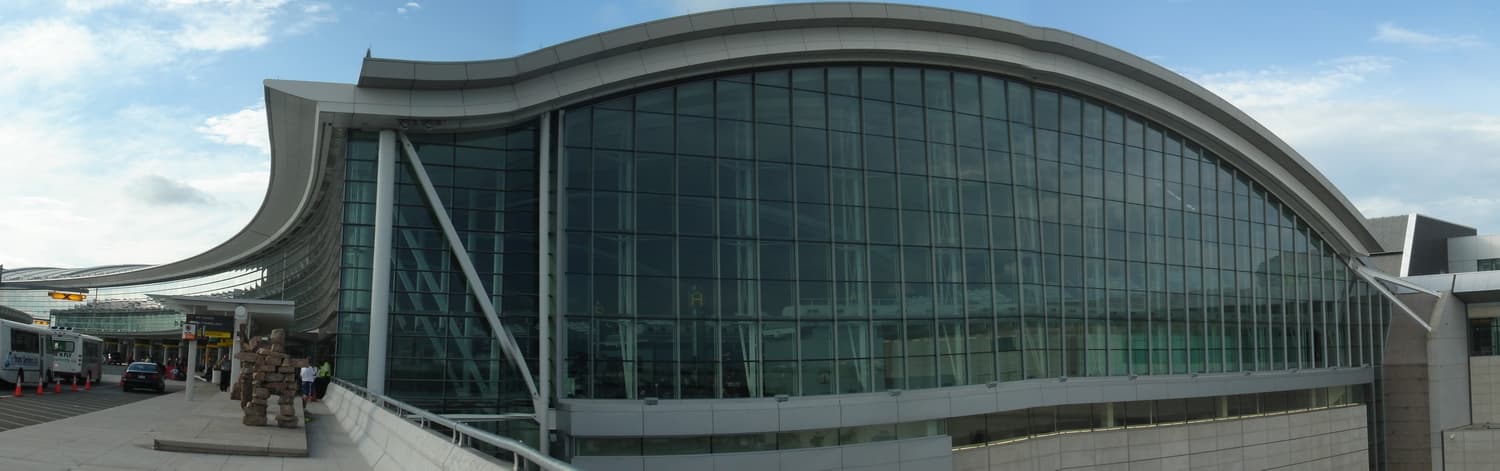
Canada and China have agreed to incrementally expand direct air service between the two countries, a move federal officials cast on Monday as a practical step toward diversifying Canadian trade away from an increasingly protectionist United States. Transport Minister Steven MacKinnon announced the deal in Ottawa, saying Canadian and Chinese carriers will be permitted to add direct passenger routes, operate up to 20 all-cargo flights per week, and gain reciprocal access to any airport in either country.
The agreement builds on Prime Minister Mark Carney's visit to Beijing earlier this year and delivers on a commitment in the federal Canada-China Economic and Trade Cooperation Roadmap. It arrives as Ottawa tries to show Canadian exporters, tourism operators and diaspora communities that alternatives to American markets exist, even if they require patient development.
China is Canada's second-largest single-country trading partner, with two-way merchandise trade reaching $124.8 billion in 2025. Canadian exports to China totalled $34.1 billion against $90.6 billion in imports, according to federal data cited by the minister.
What was announced
Under the new arrangement, Canadian and Chinese airlines can gradually add direct passenger flights, with both sides retaining the right to designate new city pairings. The 20 weekly all-cargo flight ceiling is a significant increase on previous limits and is intended to support the movement of Canadian agri-food, seafood and advanced manufacturing exports to Chinese markets.
The reciprocal any-point access is particularly notable. Previous air service agreements typically specified named city pairs. Under the updated framework, Air Canada, WestJet and Chinese carriers including Air China, China Eastern and China Southern can select destinations based on commercial demand rather than government-negotiated lists. That flexibility should in principle allow routes to open in secondary Canadian cities that have long lobbied for direct Asian service.
Federal officials said the agreement does not come with new subsidies or route guarantees. Whether carriers actually operate additional flights will depend on commercial viability, passenger demand and fuel costs. Air Canada has not commented publicly on specific expansion plans, though the airline has signalled in investor materials that it is rebuilding Asian capacity after pandemic-era reductions.
The diversification backdrop
The flight expansion is one piece of a broader Carney government effort to loosen Canada's dependence on the United States. Ottawa says it has signed 20 new trade or economic cooperation agreements on four continents in less than a year, and the Prime Minister has publicly described heavy reliance on American markets as a strategic weakness.
That shift reflects the reality of U.S. President Donald Trump's tariff regime, which has added 25 per cent duties on Canadian autos and automotive components and 50 per cent on steel and aluminum. The measures have pushed Canadian manufacturing exporters to look for alternative customers wherever they can be found, and Ottawa wants to make sure transportation infrastructure is not a bottleneck.
For Chinese exporters and investors, the expanded flight access is a quieter but equally strategic gain. Beijing has been navigating its own trade dispute with Washington and has sought to deepen commercial ties with middle powers like Canada and Australia. Officials in Ottawa have taken care to frame the deal in technical, transportation-focused terms rather than as a political alignment with China.
Reaction from industry and business groups
The Canadian Chamber of Commerce welcomed the announcement, saying easier cargo capacity is essential for Canadian exporters hoping to reach Chinese customers in consumer-facing categories. Seafood producers in Atlantic Canada and British Columbia, who have built a significant live-product business with Chinese buyers, have long argued that dedicated cargo space is a limiting factor.
Tourism Industry Association of Canada president Beth Potter said that inbound Chinese visitors remain well below pre-pandemic levels, and that direct flights are critical to recovering that market. Destination Canada has listed China among its priority tourism source markets, though the agency also acknowledges that geopolitical tensions and consular relations can influence travel decisions.
Canadian universities, whose revenue models in recent years have relied heavily on international tuition, have privately signalled cautious optimism. Chinese student enrolments have declined from their peak, and easier direct flights may support modest recovery, though federal visa policies remain the decisive variable.
The security and human rights debate
Expanding commercial ties with China has rarely been an uncontroversial move in Canadian politics, and Monday's announcement did not escape scrutiny. Opposition critics noted that the deal was unveiled without a parallel statement on the cases of Canadian citizens detained in China or on concerns about foreign interference in Canadian political processes.
Federal officials have consistently argued that expanding commercial links is compatible with raising human rights and security concerns through diplomatic channels. The Canada-China Economic and Trade Cooperation Roadmap was accompanied by a parallel framework on consular matters, according to officials speaking on background.
The Conservative opposition has said Ottawa should insist on concrete assurances about the treatment of Canadians in China before extending any new commercial privileges. The New Democrats have asked for guarantees that the expanded air service will not be used for deportations or renditions of dual nationals.
What it means for Canadians
For Canadian travellers, the practical effect of the agreement will be visible only gradually. Increased all-cargo flights may appear first, reflecting existing business demand. Passenger capacity could follow over the next year if carriers see sustainable commercial returns, particularly between Vancouver, Toronto and Chinese hubs such as Beijing, Shanghai and Guangzhou.
For Canadian exporters in agriculture, seafood, natural resources and advanced manufacturing, predictable freight capacity is a meaningful operational advantage. It is not a substitute for the American market, which remains larger and geographically closer, but it supports Ottawa's stated goal of raising Canadian exports to China by 50 per cent by 2030.
Canadian tourism operators in destinations such as Banff, Niagara Falls and Whistler, which have traditionally drawn large numbers of Chinese visitors, may see a gradual lift if carriers do follow up with additional passenger service. Local chambers of commerce have already indicated they will lobby airlines to restore routes that were suspended during the pandemic.
Airport infrastructure readiness
Canadian major airports have been preparing for a potential increase in Chinese passenger and cargo traffic for months. Vancouver International Airport, which has the most established Chinese passenger base in Canada, has invested in expanded customs and immigration processing capacity and in Mandarin-language signage and staffing.
Toronto Pearson and Montréal-Trudeau have similar investments in progress, and smaller airports including Calgary and Ottawa have signalled interest in cultivating new routes. The any-point provisions in the new framework mean that airports that successfully attract airline interest can realistically compete for service, rather than relying on politically negotiated designations.
Airport authorities across the country have also been working with federal border services and public health officials to ensure that processing infrastructure matches the expected pace of growth. Those preparations support the practical deliverability of the expanded flights.
Diaspora and student communities
Canada is home to roughly 1.8 million residents who identify as Chinese Canadian, according to Statistics Canada. For many, direct flights are not merely a commercial convenience; they are the infrastructure of family ties. The expansion will make shorter visits more feasible, and reduce reliance on connections through Tokyo, Seoul or Hong Kong.
Chinese international students, who remain a significant presence at universities in Toronto, Vancouver and Montreal, benefit indirectly from more reliable flight options for holidays and family emergencies. Universities have lobbied for reciprocal flexibility for years, and administrators have said that predictable travel reduces attrition during academic programs.
The deal also opens space for Canadian academic and cultural institutions to send delegations to China more easily. Business schools, performing arts groups and scientific research teams have all identified direct routes as a practical barrier to deeper engagement.
Federal messaging and timing
The timing of the announcement, with the federal Spring Economic Update one week away and the CUSMA review looming in July, is not coincidental. Ottawa is trying to demonstrate tangible progress on trade diversification before it rolls out a fiscal plan that will need to address the economic damage caused by American tariffs. The China flight deal gives Liberal ministers a concrete, implementation-ready story to tell.
Political communications officials inside the federal government have emphasised that the agreement builds on months of quiet work by trade and transport officials. The Canada-China Economic and Trade Cooperation Roadmap, signed earlier this year during Carney's Beijing visit, laid the groundwork. Tuesday's announcement is a deliverable under that roadmap, not a one-off.
Provincial governments, particularly British Columbia and Ontario, are expected to capitalise on the announcement with their own tourism and investment promotion messaging. Vancouver's port authority has specifically noted that the expanded cargo capacity provides opportunities to grow the Port of Vancouver's trade with China beyond traditional bulk commodities.
Competition in the Asian aviation market
Air Canada and WestJet are not the only carriers that stand to benefit from the expanded framework. Chinese carriers, particularly Air China, China Eastern and China Southern, are expected to be active participants in any route expansion. The resulting market competition should help keep fares disciplined over time.
Fifth-freedom and codesharing arrangements continue to shape how airlines schedule flights between Canada and China. Cathay Pacific, Japan Airlines, All Nippon Airways and Korean Air have historically offered alternative routings through Hong Kong, Tokyo and Seoul, and those options will continue to compete for passenger traffic alongside the new direct services.
The global airline industry has shifted its capacity planning since the pandemic, and Asian-market growth has been a consistent priority for carriers looking to rebuild long-haul profitability. Canadian carriers entering this expanded framework do so with improved aircraft economics and post-pandemic operating experience.
What's next
The agreement takes effect immediately as a framework, but airlines will need time to secure slots at Chinese airports, coordinate with customs and immigration authorities, and build schedules. Industry observers expect the first new routes to be announced later in 2026, with a realistic ramp-up over two to three seasons.
Ottawa is also continuing discussions with other Indo-Pacific partners, including Japan, South Korea and members of the Association of Southeast Asian Nations, on modernised air services agreements. Officials say the China deal is a template for what can be achieved when commercial diplomacy is patiently managed.
For Canadians watching the broader trade story unfold, the expanded flight capacity is unlikely to offset the impact of American tariffs on its own. But it is one of the more visible examples of the government's stated strategy: a country of 40 million people that wants to be less exposed to the decisions of a single trading partner, whether that partner is friendly or not.
Spotted an issue with this article?