Canada Bets on Cohere and Sovereign AI With Multibillion-Dollar Compute Push
Canada is moving to anchor the next wave of artificial intelligence on home soil, backing Toronto-based Cohere and a planned multibillion-dollar data centre as the centrepiece of a national push for so-called sovereign AI. The strategy reflects a growing conviction in Ottawa that control over computing power, data and home-grown talent has become a question of economic and national security, not just industrial policy.
The bet is substantial, and so are the stakes. As artificial intelligence reshapes industries from health care to finance, governments around the world are racing to ensure they are not left dependent on infrastructure and models controlled elsewhere. Canada, a country with deep AI research roots but a history of seeing its talent and start-ups absorbed abroad, is attempting to chart a different course.
The Cohere data centre plan
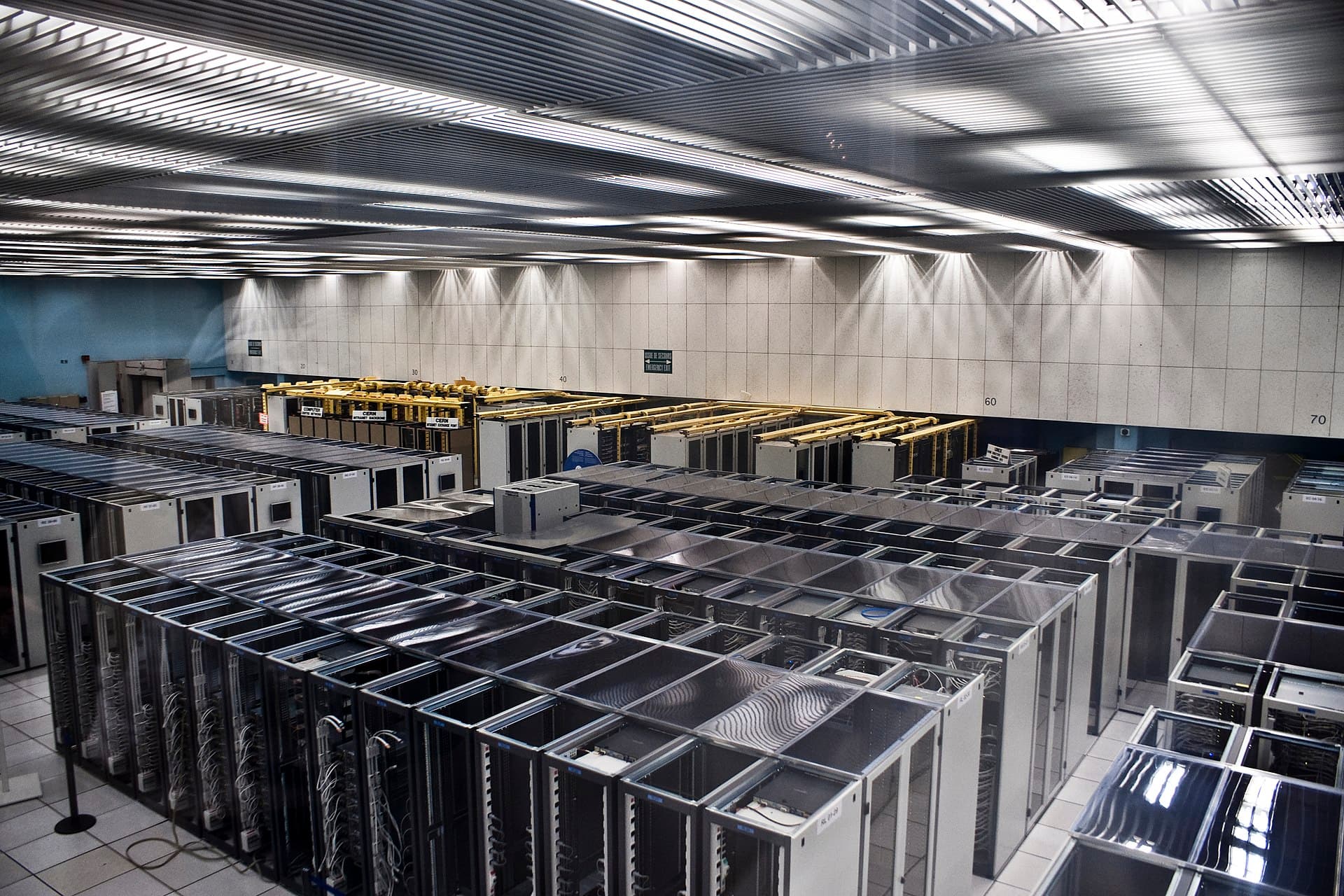
Cohere, one of Canada's most prominent AI companies, plans to deploy a multibillion-dollar data centre in Canada that would be built and operated by the infrastructure firm CoreWeave, with Cohere serving as the anchor tenant. The federal government is supporting the project with up to $240 million in funding as part of its roughly $2-billion Canadian Sovereign AI Compute Strategy.
The arrangement is designed to ensure that Canadian companies and institutions can train and run advanced AI models on domestic infrastructure rather than relying solely on data centres located abroad, primarily in the United States. For a sector where the largest players command enormous computing resources, access to compute has become a critical bottleneck and a strategic asset.
Cohere has also signalled its intent to remain Canadian-headquartered amid speculation about its future, with an executive publicly pledging that the firm will keep its base in Canada. The company has reported strong commercial momentum, fuelling discussion about a potential public listing down the road.
The data centre would provide the kind of large-scale computing capacity that advanced AI development demands, the absence of which has pushed many Canadian firms to rent capacity from foreign providers. Building that capacity at home is intended to keep both the infrastructure and the data it processes within Canadian jurisdiction.
What sovereign AI means
The term sovereign AI refers to a country's ability to build and control its own artificial-intelligence capabilities, from the physical data centres and chips to the models and the data they are trained on. Governments around the world have grown wary of depending entirely on foreign infrastructure for a technology expected to reshape economies, public services and defence.
For Canada, the rationale is twofold. There is an economic case, centred on capturing the value of a domestic AI industry that has produced globally recognised research and companies. And there is a security and policy case, rooted in concerns about data residency, supply-chain dependence and the reliability of foreign partners at a time of trade tension with the United States.
Those concerns have sharpened as the relationship with Washington has grown less predictable. Reliance on infrastructure controlled by a partner whose policies can shift abruptly carries risks that governments are increasingly reluctant to accept, particularly for a technology so central to the future economy.
Ottawa's broader AI investments
The Cohere deal is one piece of a wider government effort. The federal government recently announced support for 44 projects through the AI Compute Access Fund, representing about $66 million of a $300-million fund, with recipients spanning life sciences, health care, energy, advanced manufacturing, agriculture, finance, natural resources and transportation.
Ottawa also announced more than $17 million in support for businesses across British Columbia's technology sector, part of a regional effort to commercialise AI and quantum technologies. Taken together, the measures reflect a deliberate strategy to spread AI adoption beyond a handful of large firms and into the broader economy.
The scale of public money involved has drawn attention. Reporting indicates Ottawa has spent more than $800 million on artificial intelligence technology since 2023, including the major commitment tied to Cohere. That level of spending invites scrutiny over value for money and over how closely government and a small number of national champions should be intertwined.
The government has also become a significant customer for AI services itself, signing agreements to use domestic technology in its own operations. That dual role, as both funder and buyer, deepens the relationship between the state and the country's leading AI firms.
The economic stakes
Canada has long been a leader in AI research, home to pioneering academics and research institutes, yet it has often struggled to convert that intellectual edge into commercial scale and retained ownership. Talent and promising start-ups have frequently been drawn south of the border or absorbed by larger foreign firms.
The sovereign-compute strategy is, in part, an attempt to break that pattern by ensuring the infrastructure exists at home for Canadian firms to grow without relinquishing control. Supporters argue that domestic data centres can create high-value jobs, attract investment and keep sensitive data within Canadian jurisdiction.
The prize is significant. A globally competitive AI sector could anchor high-paying employment, draw further investment and position Canada near the centre of one of the defining industries of the era. The risk is that the bet fails to pay off, or that the benefits accrue narrowly rather than broadly across the economy.
The risks and the debate
The approach is not without critics. Some question whether governments should be placing large bets on specific companies, warning of the risks of picking winners and of public funds underwriting private infrastructure. Others point to the substantial energy and water demands of large data centres, which intersect with Canada's climate commitments and with the electricity-capacity challenges facing several provinces.
There are also strategic dependencies that domestic data centres alone cannot resolve. The most advanced AI chips are produced by a small number of foreign suppliers, and the operator of the planned facility is itself an American firm. True sovereignty in AI, analysts caution, is difficult to achieve in a deeply globalised industry.
These caveats underscore the limits of the strategy. Building data centres on Canadian soil addresses one dependency, but the chips that power them, and much of the operational expertise, still come from abroad. Sovereignty in such an industry is a matter of degree rather than an absolute.
What it means for Canadians
For workers and businesses, the strategy could expand access to AI tools and create opportunities in a fast-growing sector. For the public, the investments raise the perennial question of whether large industrial bets pay off, and whether the benefits will be broadly shared or concentrated among a few firms and regions.
The energy dimension is likely to become more prominent as data centres expand. How Canada powers its AI ambitions, and whether it can do so without undermining climate goals or straining household electricity costs, will shape the debate in the years ahead. Several provinces are already grappling with how to expand generation capacity, and large new data centres would add to that demand.
A global race for AI capacity
Canada's push for sovereign AI is part of a worldwide scramble among governments to secure their place in an industry expected to reshape economies and security. Nations across Europe, Asia and the Middle East have announced their own strategies to build computing capacity, attract talent and reduce dependence on a handful of dominant foreign providers. The competition for capital, chips and expertise has become intense.
That global context shapes the stakes for Canada. Falling behind in computing infrastructure could leave Canadian firms unable to compete, while a credible domestic capacity could attract investment and position the country as a partner of choice for allies seeking alternatives to a concentrated market. The window to establish that position, many in the industry argue, is narrow.
The geopolitics of technology add another layer. As trade tensions and security concerns reshape global supply chains, the ability to develop and run advanced AI within trusted jurisdictions has taken on strategic significance. Canada's efforts reflect a judgment that AI infrastructure, like energy and critical minerals, is becoming a domain where national resilience matters.
For all the ambition, the path is fraught with practical hurdles. Securing access to the most advanced chips, building facilities at scale, meeting the enormous energy demands and retaining the specialised talent required are formidable challenges, and success is far from assured. The strategy represents a bet that the rewards justify the risks and costs.
The outcome will help determine whether Canada can convert its long-standing strength in AI research into lasting economic and strategic advantage. For a country that has often seen its innovations scaled and owned elsewhere, the sovereign-AI push is a deliberate attempt to change that trajectory at a pivotal moment for the technology.
Privacy and public trust
As Canada builds out its AI capacity, questions of privacy, governance and public trust loom large. Keeping data within Canadian jurisdiction is one of the stated rationales for sovereign infrastructure, reflecting concerns about how personal and sensitive information is stored and used. Domestic data centres can help ensure that information remains subject to Canadian law and oversight rather than the rules of other countries.
Yet building the infrastructure is only part of the equation. How AI systems are governed, how they are deployed by both companies and government, and how their risks are managed will shape whether the public comes to trust the technology. The government's dual role as funder and user of AI heightens the importance of clear rules and transparency around its own adoption of these tools.
Sustaining public confidence will require attention to those concerns alongside the economic and strategic ambitions. A sovereign-AI strategy that delivers economic benefits but neglects questions of accountability and privacy could face a backlash, while one that builds trust could strengthen the foundation for the technology's broader adoption across Canadian society.
What's next
Construction timelines, site selection and the rollout of the compute strategy will be watched closely in the coming months. So too will Cohere's commercial trajectory and whether it follows through on its pledge to remain Canadian-headquartered.
The success of the strategy will ultimately be measured not by the size of the announcements but by whether Canada can build an AI sector that is durable, domestically controlled and economically meaningful. For a country that has often watched its innovations commercialised elsewhere, the sovereign-AI push represents a deliberate attempt to keep more of the value, and the control, at home.
Spotted an issue with this article?
Have something to say about this story?
Write a letter to the editor