Canada on the Long Road to NATO's Five Per Cent Defence Pledge
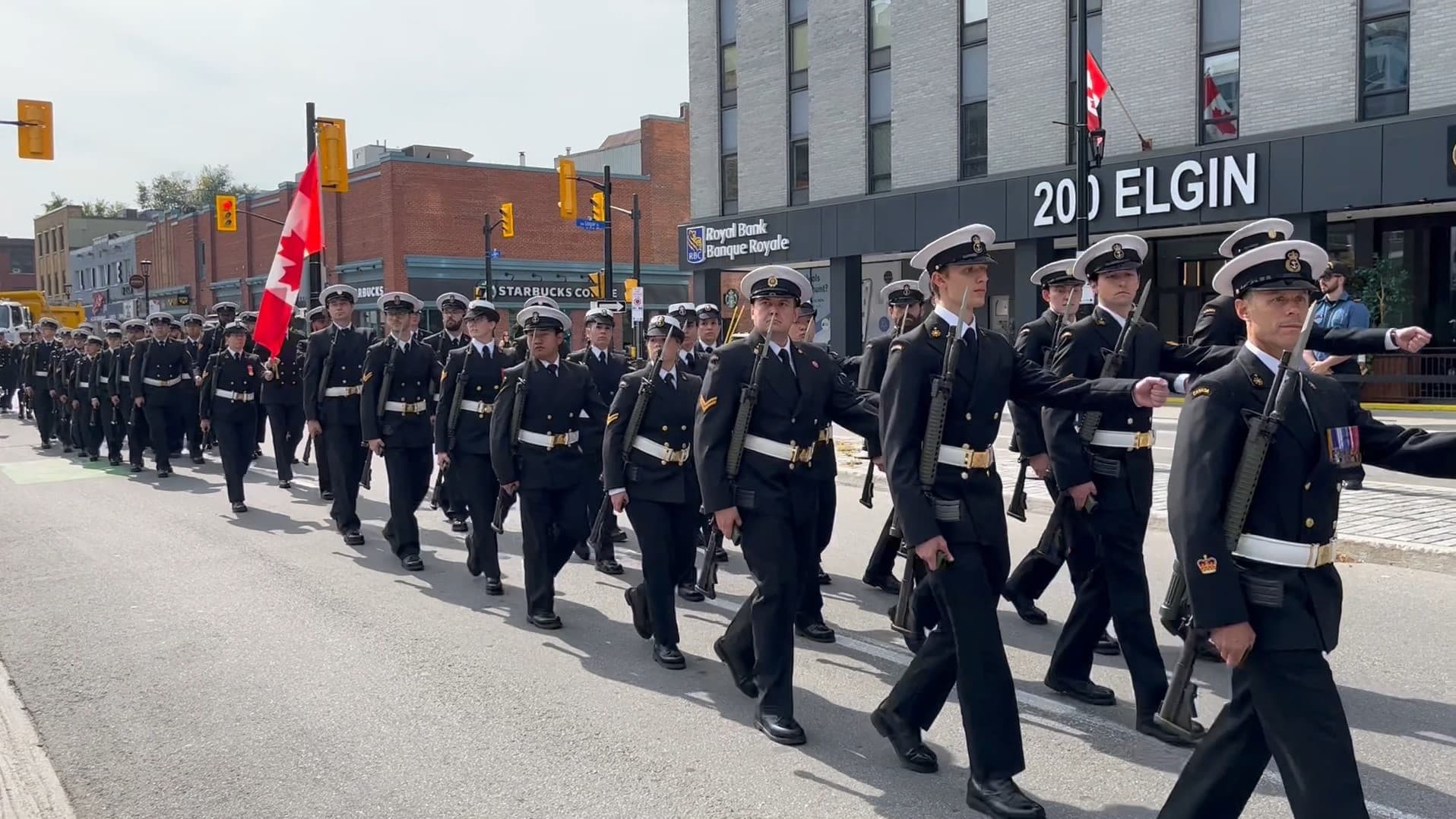
The Carney government's announcement on March 26 that Canada had achieved the NATO 2 per cent of GDP defence spending target in the 2025-26 fiscal year was the kind of milestone that the federal government had been working toward for more than a decade. It was also the easy part. NATO's new pledge, agreed at the 2025 Hague summit, commits members to investing 5 per cent of GDP annually on defence and defence-related spending by 2035, an order of magnitude that the prime minister himself has acknowledged would imply Canadian defence spending approaching $150 billion a year by the end of the decade.
The new target is structured in two parts. Allies committed to allocate at least 3.5 per cent of GDP annually to core NATO defence requirements by 2035, and an additional 1.5 per cent to broader defence-related infrastructure and industry, including ports, airports, infrastructure to support critical-minerals development and export, telecommunications, and emergency-preparedness systems. The 1.5 per cent expansion is intended to recognise that modern security depends as much on resilient infrastructure and economic capacity as on traditional military hardware.
Where Canada is now
Canada is investing more than $63 billion in defence across the Department of National Defence, the Canadian Armed Forces, and other government partners in the current fiscal year. The 2 per cent threshold was reached half a decade ahead of the previous federal government's schedule, partly as a result of accelerated equipment purchases and partly because the Canadian dollar value of GDP movements affected the ratio calculation.
The bulk of the current spending continues to go to personnel, operations, and maintenance, with capital procurement representing a growing but still constrained share. Recent procurement decisions have included F-35 fighter jets, new naval vessels, and upgrades to North American Aerospace Defense Command surveillance and detection capabilities. Several of these procurements have multi-year delivery schedules, and the cost picture extends well beyond the current decade.
The path to 5 per cent
Reaching 5 per cent of GDP by 2035 implies defence spending nearly tripling over the next decade. Canada's GDP is projected to grow modestly over that period, which means the absolute dollar increase required is significantly larger than the proportional shift suggests.
Carney has been clear that the path to the new target will be deliberate rather than abrupt. The federal government's planning approach has emphasised long-term procurement decisions, infrastructure investments that count toward the 1.5 per cent expansion, and personnel-recruitment improvements that have been central to the Canadian Armed Forces' ongoing capacity challenges.
The C.D. Howe Institute and other think tanks have published analyses arguing that achieving the 5 per cent target while maintaining fiscal discipline will require difficult trade-offs across the federal budget. Tax-policy choices, program-spending reviews, and decisions about how to allocate any new revenue will all be central to the medium-term fiscal planning that the government will be rolling out over coming budget cycles.
The 1.5 per cent expansion
The decision to define the 5 per cent target as 3.5 per cent core defence plus 1.5 per cent defence-related infrastructure was one of the most consequential negotiating outcomes of the Hague summit. For Canada, the 1.5 per cent expansion provides flexibility. Investments in the Port of Vancouver, the Port of Montreal, Halifax port infrastructure, Arctic infrastructure, telecommunications resilience, and critical-minerals supply chains can all reasonably count toward the broader category.
The Carney government has been advancing several initiatives that align with the 1.5 per cent definition. The Build Communities Strong Fund, the major-projects framework, and continued investment in critical-minerals development all have direct or indirect security relevance. Ports infrastructure investments, including capacity additions at major Canadian gateways, have been positioned in part as security-related.
The challenge with the 1.5 per cent expansion is accounting. NATO's reporting frameworks have evolved to recognise the broader category, but the specifics of what counts and how have been the subject of continuing technical discussions among allies. Canada has been advocating for a relatively broad definition that accommodates the kinds of investments that reflect a modern industrial-base approach to security.
The Operation Unifier example
One of the recent decisions that illustrates the broader pattern is the Carney government's extension of Operation Unifier, the Canadian military training mission to Ukraine, until 2029. The mission has trained more than 47,000 members of Ukraine's security forces since 2015, including approximately 13,000 trained at various locations across Europe since Russia's full-scale invasion in February 2022.
Canada has committed more than $25.5 billion in overall multifaceted aid to Ukraine since February 2022, including $8.5 billion in military assistance. The approximately $2 billion in military assistance for 2026-27 is drawn from previously approved funding of $1.75 billion from Budget 2025 and an additional $300 million announced more recently.
Operation Unifier and broader Ukraine support are part of how Canada signals its continued NATO commitment in a moment of significant alliance turbulence. The political context for the alliance has been complicated by various U.S. administration positions on European security, and Canadian officials have been working to demonstrate continued Canadian commitment to NATO partners regardless of U.S. positions.
The European Union dimension
Canada officially joined the European Union's Security Action for Europe (SAFE) initiative at the Munich Security Conference in February 2026. SAFE is a key pillar of the EU's Readiness 2030 plan, and Canada's participation enhances defence readiness on both sides of the Atlantic. The cooperation is one of several signals of Canada deepening transatlantic relationships beyond the U.S. specifically.
The broader political context, including continuing trade-policy tensions with the United States, has reinforced the case for diversifying Canadian security partnerships. Several European countries have been Canada's longstanding security partners, and the SAFE initiative provides a structured vehicle for continued engagement.
Defence Minister Carignan and the army's posture
Defence Minister Jenny Carignan has said that Canada is updating a large-scale plan to prepare the entire nation for the possibility of global war, characterising Russia as the principal threat because of its behaviour. Canada's top general has also been engaged in reassuring Ukrainian counterparts that NATO remains a stable, vital force despite alliance tensions.
The political messaging from Defence has been deliberately direct. The minister has emphasised that Canadians need to take the security environment seriously and that the country's defence posture has to reflect the realities of a more contested international system. That framing is designed to support both political consensus around increased defence spending and personnel-recruitment objectives.
Personnel and recruitment
One of the most persistent challenges for the Canadian Armed Forces has been recruitment. The CAF has been understrength relative to its authorised personnel ceiling for several years, and various recruitment-improvement initiatives have produced incremental but not transformative results.
The 5 per cent target compounds the recruitment challenge. New equipment, new infrastructure, and new operational commitments all require personnel to operate them. The Department of National Defence has been working on a series of recruitment and retention reforms, including streamlined enrolment processes, improved compensation, and renewed emphasis on military-family support, but the gap between current strength and required strength remains significant.
The political consensus question
One of the open questions about the 5 per cent target is whether it will retain political consensus across the next several federal elections. The current Conservative Party position is broadly supportive of higher defence spending, although the specifics of how to fund it have not been fully detailed. The NDP and the Bloc Québécois have raised questions about the trade-offs involved, particularly with respect to social spending and climate-related investments.
The political consensus question will be tested over the next several budget cycles. Defence-spending decisions made in the next two or three years will significantly affect Canada's ability to reach the 2035 target, and the political durability of those decisions will be tested by competing demands across federal and provincial budgets.
What's next
The federal budget cycle, which has not yet been formally scheduled for 2026, will provide the next major opportunity for the federal government to outline its medium-term defence spending plans. NATO's next summit will be a key forum for assessing collective progress toward the 5 per cent target and for refining the specifics of how the broader 1.5 per cent category will be reported.
For Canadian taxpayers, the implications of the 5 per cent target will become more concrete over the rest of this decade. The shift in spending priorities required to support that target will affect federal fiscal choices across multiple cycles, and the distributional effects, including which sectors and regions benefit most from defence and defence-related investment, will be central to the political conversation that follows.
Spotted an issue with this article?
Have something to say about this story?
Write a letter to the editor