Canada Pledges $120 Million for Sudan as Civil War Enters Fourth Year
Canada has pledged $120 million in new humanitarian and development funding for Sudan, where a civil war that began three years ago has pushed tens of millions into acute hunger and displaced more people than any other conflict in the world. Foreign Affairs Minister Anita Anand announced the package on April 15, with Randeep Sarai, Secretary of State for International Development, delivering the commitment at the International Sudan Conference in Berlin.
The funding tops up $220 million Canada had already pledged for people inside Sudan and those who have fled the conflict to neighbouring countries. It is framed as both a response to an urgent humanitarian catastrophe and as a diplomatic signal that Ottawa is continuing to fund crises that risk falling off the international agenda as other conflicts absorb attention.
What the funding covers
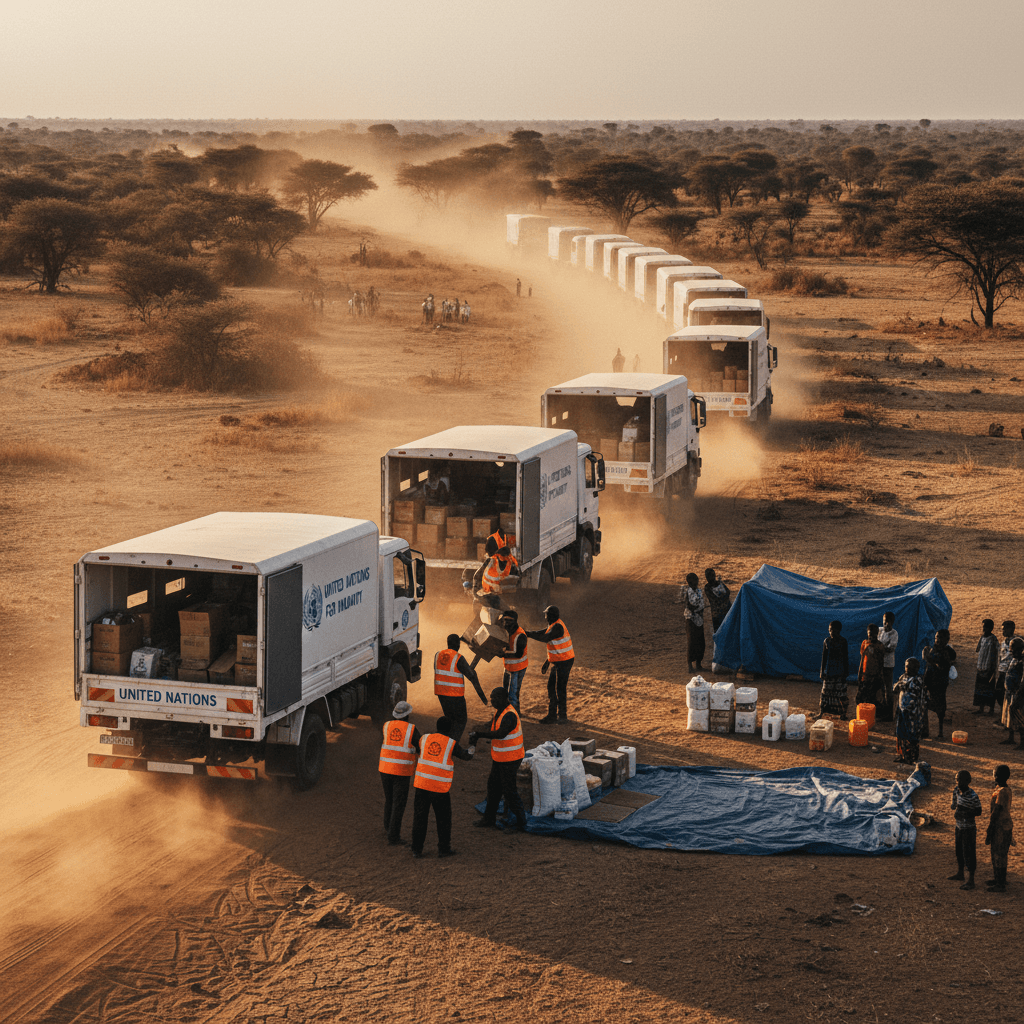
Of the $120 million announced, more than $94 million is directed to humanitarian assistance in 2026. That funding will support life-saving emergency food, health services, protection programs and logistics for delivering aid into Sudan through United Nations agencies and accredited non-governmental organisations.
A further $25 million is directed to development assistance. A major portion, $18 million, goes to Save the Children Canada to deliver education for more than 60,000 children whose schooling has been interrupted by the war. Education funding in active conflicts is an area where Canada has consistently prioritised its contributions, reflecting research that shows educational continuity as a long-term indicator of recovery and stability.
The package also includes $1.25 million for peace and stabilisation efforts, including support for civilian-led initiatives in Sudan. Those programs reflect Canada's continued engagement with non-military pathways to conflict resolution, including dialogue between civil society actors inside Sudan and regional partners.
The Sudanese crisis
Sudan's civil war, which began in April 2023 between the Sudanese Armed Forces and the Rapid Support Forces, has produced what aid agencies describe as the largest humanitarian crisis in the world. Estimates of internal displacement and refugee flows have crossed 10 million, with famine conditions declared in multiple regions over the past year.
Hunger has been used as a weapon by both sides, according to international humanitarian agencies and investigative reporting. Sieges, blockades of aid convoys, attacks on agricultural infrastructure and targeting of food distribution centres have all been documented. The Integrated Food Security Phase Classification system has classified famine conditions in several parts of the country.
Neighbouring countries, particularly Chad, Egypt, South Sudan and Ethiopia, have absorbed large refugee flows and are under significant stress. Canadian funding for Sudan includes direct support for those neighbouring countries to manage the humanitarian burden they have inherited from the conflict's spillover.
Canada's broader engagement
Ottawa has combined its financial commitments with diplomatic engagement aimed at supporting civilian-led transition pathways. Canadian diplomats have engaged with the African Union, the United Nations Security Council and regional actors, including Egypt and Saudi Arabia, whose influence shapes the contours of any eventual negotiation.
The Canadian diaspora from Sudan, concentrated in Greater Toronto, Ottawa, Montreal and Winnipeg, has been an active voice in pressing Ottawa to sustain engagement. Community organisations have worked with the federal government on family reunification, consular support and advocacy, and the pressure from those communities has been an important political input into continued funding.
Canada has also co-chaired donor coordination conversations with partners in Europe and the Gulf. The Berlin conference, where Canada's new pledge was delivered, brought together more than 50 governments and international organisations and produced significant collective funding commitments, although falling short of the $4.1 billion UN appeal for 2026.
Why it matters for Canadians
Canadian engagement in Sudan sits within a longer tradition of humanitarian leadership that has linked Canada to crises in contexts as varied as Afghanistan, Ukraine and the Sahel. For a country with Canada's diplomatic profile, sustained humanitarian commitments are a significant foreign policy asset, particularly at a moment when global attention is fragmented across multiple emergencies.
The commitment also has domestic resonance. Canada's Sudanese community, numbering in the tens of thousands, has direct connections to families and communities affected by the war. Canadian funding decisions in Sudan matter at kitchen tables in Mississauga, Calgary and Halifax as much as in Khartoum or Port Sudan.
For the development and aid sector in Canada, continued funding through recognised channels supports a network of NGOs, think tanks and academic institutions that form the country's humanitarian infrastructure. That infrastructure is a public good, and funding stability is central to its effectiveness.
The Berlin conference
The International Sudan Conference in Berlin, co-hosted by Germany, France and the European Union, was the major donor coordination event of the spring. The conference aimed to produce new financial commitments, align donor priorities, and reinforce political pressure on the warring parties to engage with ceasefire discussions.
Co-hosts had set ambitious targets for the conference, reflecting the scale of the humanitarian needs identified by the United Nations. The final tally of commitments fell short of the UN's $4.1 billion appeal, but did produce significant new funding from donors including the European Union, Germany, the United Kingdom, Saudi Arabia and the United Arab Emirates.
Canada's commitment, delivered by Secretary of State Sarai, was welcomed by co-hosts as a signal that middle-power donors remain committed to Sudan. Diplomatic observers noted that continued engagement by countries including Canada is essential to preventing Sudan from becoming an isolated crisis funded only by a narrow set of actors with limited interest in civilian outcomes.
Humanitarian access and risks
Delivering aid in Sudan is exceptionally difficult. Aid convoys have been blocked, looted or destroyed. Humanitarian workers have been killed, kidnapped and displaced. Banking and logistics infrastructure in large parts of the country has collapsed, making even cash transfers a complex undertaking.
Canada's funding is channelled through agencies with established operational capacity, including the World Food Programme, the Office of the United Nations High Commissioner for Refugees, and UNICEF, as well as accredited NGOs such as Save the Children and Médecins Sans Frontières. Accountability and monitoring frameworks apply, although the operational environment produces inherent delivery risk.
Canada has also emphasised protection of humanitarian workers as a priority in its multilateral diplomacy. Canadian officials have supported language at the UN General Assembly and Security Council calling for accountability for attacks on aid workers, an issue that has grown in salience as operational casualties have climbed across multiple conflicts.
Connections to other crises
Sudan sits within a wider arc of instability that includes the broader Sahel, the Horn of Africa, and Red Sea maritime tensions. Canada's engagement in Sudan is connected to Canadian maritime operations in the Red Sea, to diplomatic posture on the Nile dams question, and to the country's broader engagement with African partners on peace and security.
The Iran war's disruption of global shipping through the Strait of Hormuz and of oil markets has complicated humanitarian logistics everywhere. Higher fuel and shipping costs compound the challenge of moving aid, making the effective purchasing power of Canadian dollars in Sudan lower than nominal values suggest.
Climate change is a further stressor. Droughts and erratic rainfall across the Sahel have eroded agricultural output, and Sudan's conflict is compounding rather than occurring against a stable ecological backdrop. Canadian development funding has increasingly incorporated climate resilience into its design, reflecting that intersection.
Voices from the Canadian Sudanese community
Canadian Sudanese community organisations have been vocal participants in shaping Ottawa's response. Associations in Toronto, Ottawa, Montreal and Calgary have coordinated letters to MPs, public demonstrations and policy submissions to Global Affairs Canada. Their focus has included humanitarian funding levels, diplomatic pressure on the warring parties, and family reunification pathways for Sudanese Canadians whose relatives remain at risk.
Family reunification has been one of the most politically fraught elements of the response. Canadian Sudanese community members have pressed the federal government to expand the Temporary Resident Permit pathway for Sudanese family members, and to accelerate processing for applications already in the system. Immigration, Refugees and Citizenship Canada has expanded Sudan-related intake, although community advocates have argued that processing remains slower than the urgency of the situation requires.
Religious communities, particularly mosques in the Greater Toronto Area and churches with longstanding ties to Sudan, have also supported the response. Fundraising campaigns organised by community members have raised meaningful contributions, often channelled through Canadian-accredited NGOs or directly to local partners in Sudan. The combination of government aid and diaspora-led giving has been essential to sustaining Canadian support for the crisis.
What's next
Implementation of the Canadian commitment will run through existing partners over 2026 and subsequent years. The humanitarian component is expected to disburse quickly, consistent with the urgent protection needs, while development funding including the education tranche will build over longer time horizons.
Ottawa is signalling that continued engagement beyond 2026 is likely, with the Secretary of State's public comments framing current commitments as part of a multi-year trajectory. Canadian NGOs working in Sudan have pressed for predictable multi-year envelopes as a precondition for planning, and internal Global Affairs Canada conversations are reportedly moving in that direction.
For Sudan itself, the trajectory remains deeply uncertain. A durable political settlement remains elusive, and humanitarian indicators continue to worsen. Canadian funding matters, but it functions alongside diplomatic, regional and political efforts that will determine whether the crisis stabilises or continues to deepen over the coming year.
Spotted an issue with this article?