Carney Calls US Economic Ties a Weakness as Tariff Fight Deepens
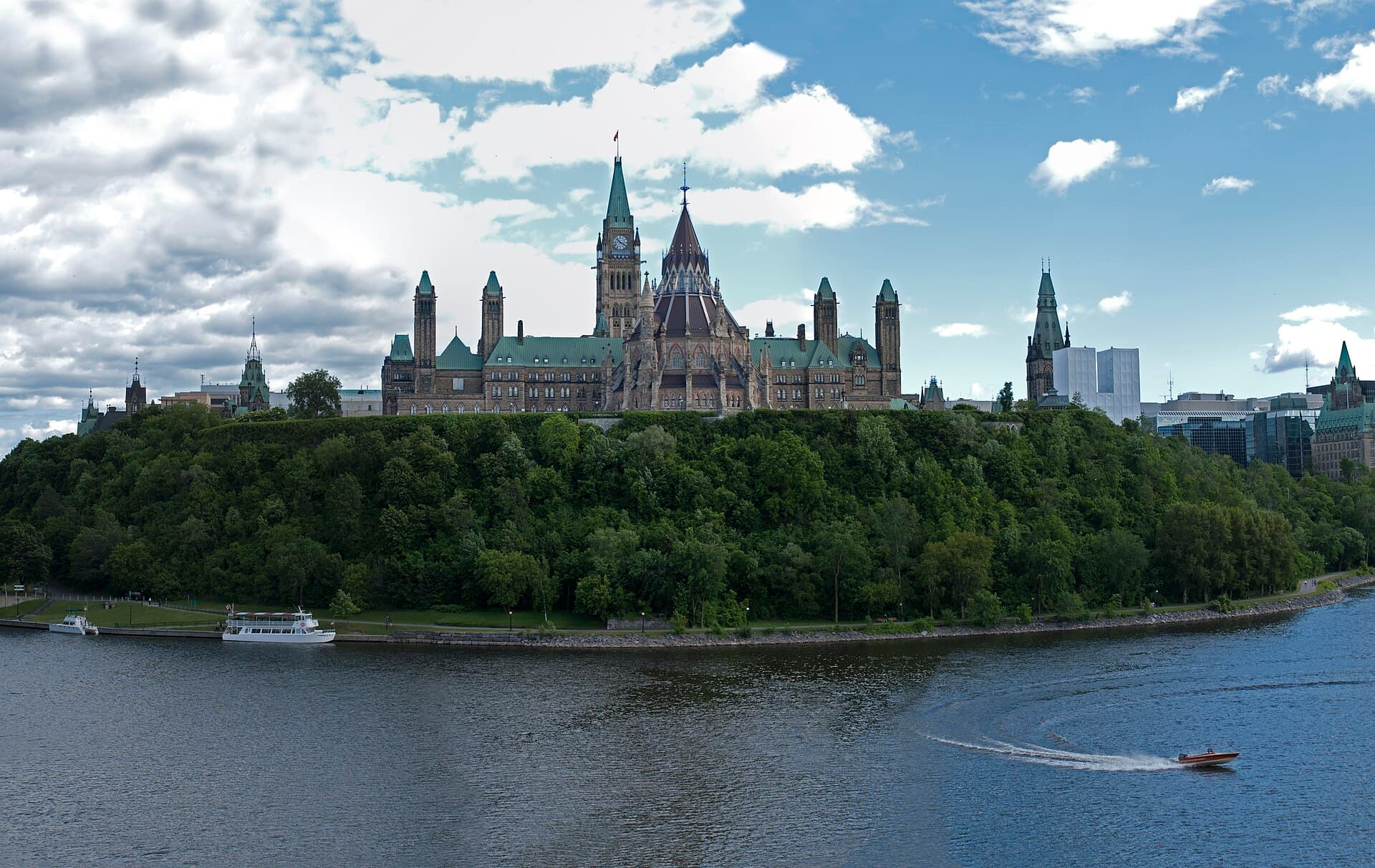
Prime Minister Mark Carney has told Canadians that the country's close economic ties to the United States have shifted from a strength to a weakness that must be corrected. Delivered in a video address over the weekend and repeated in subsequent public comments, the framing marks the most explicit official recognition that the Trump administration's tariff regime is forcing a strategic rethink of how Canada organises trade, investment and security.
Carney's language lands at a moment when tariffs imposed by the Trump administration have been weighing directly on Canadian manufacturing, steel, aluminum and softwood lumber industries, and when a scheduled July review of the Canada-United States-Mexico Agreement looms as the next structural inflection point. The prime minister's office is pushing a twin-track strategy: continued negotiation with Washington alongside aggressive diversification of trade and investment partners.
What Carney said
In his video address, Carney said Canada's strong economic ties to the United States were once a strength but are now a weakness, and that it is time for Canada to take care of itself. He emphasised that Canada retains the economic fundamentals and institutional capacity to thrive, but only if it chooses to act with the structural seriousness the moment requires.
The language echoes themes that Carney first articulated during the federal election campaign and has continued to develop since forming government. According to the Prime Minister's Office, it is intended as a framing device rather than a specific policy announcement, signalling to voters, investors and diplomatic partners that the government is not treating the tariff dispute as a temporary irritant.
President Donald Trump responded publicly, saying that Canada lives because of the United States and criticising Carney's comments. The exchange underscores that the relationship between the two leaders remains politically charged, even as working-level contacts between officials in Ottawa and Washington continue.
The tariff landscape
The Trump administration's tariff framework has raised effective US tariff rates to levels not seen since the Great Depression, according to analysis from the Penn Wharton Budget Model. Canada has been sheltered from the worst of those tariffs by CUSMA exemptions, with 86.3 per cent of Canadian and Mexican imports claiming exemption under the agreement by February.
Not all sectors have been so protected. Steel, aluminum, automobiles and softwood lumber have been hit with targeted tariffs, producing direct job losses and margin compression. Affected firms have drawn on emergency loan facilities announced by Ottawa earlier this year, and several have publicly paused investment plans until the tariff picture clarifies.
The asymmetry of the tariff package, sparing some sectors while hitting others, complicates Ottawa's response. Retaliatory tariffs on US inputs, which Ottawa paused earlier this month, had drawn criticism from Canadian manufacturers dependent on American supply chains. Balancing targeted retaliation with broader support for affected industries remains the government's central operational challenge.
Diversification strategy
Carney's government has paired its tariff response with an aggressive push to diversify Canada's trade partners. Recent announcements have included a $2.6 billion uranium supply deal with India, accelerated talks on a comprehensive economic partnership agreement with New Delhi, and expanded engagement with European, Indo-Pacific and Latin American markets.
Critical minerals have become the leading edge of that diversification. Canada's lithium, nickel, cobalt, copper and uranium resources are attracting interest from governments and companies that want to reduce exposure to Chinese supply chains, and Ottawa has positioned those resources as a strategic lever in a way it has not done previously.
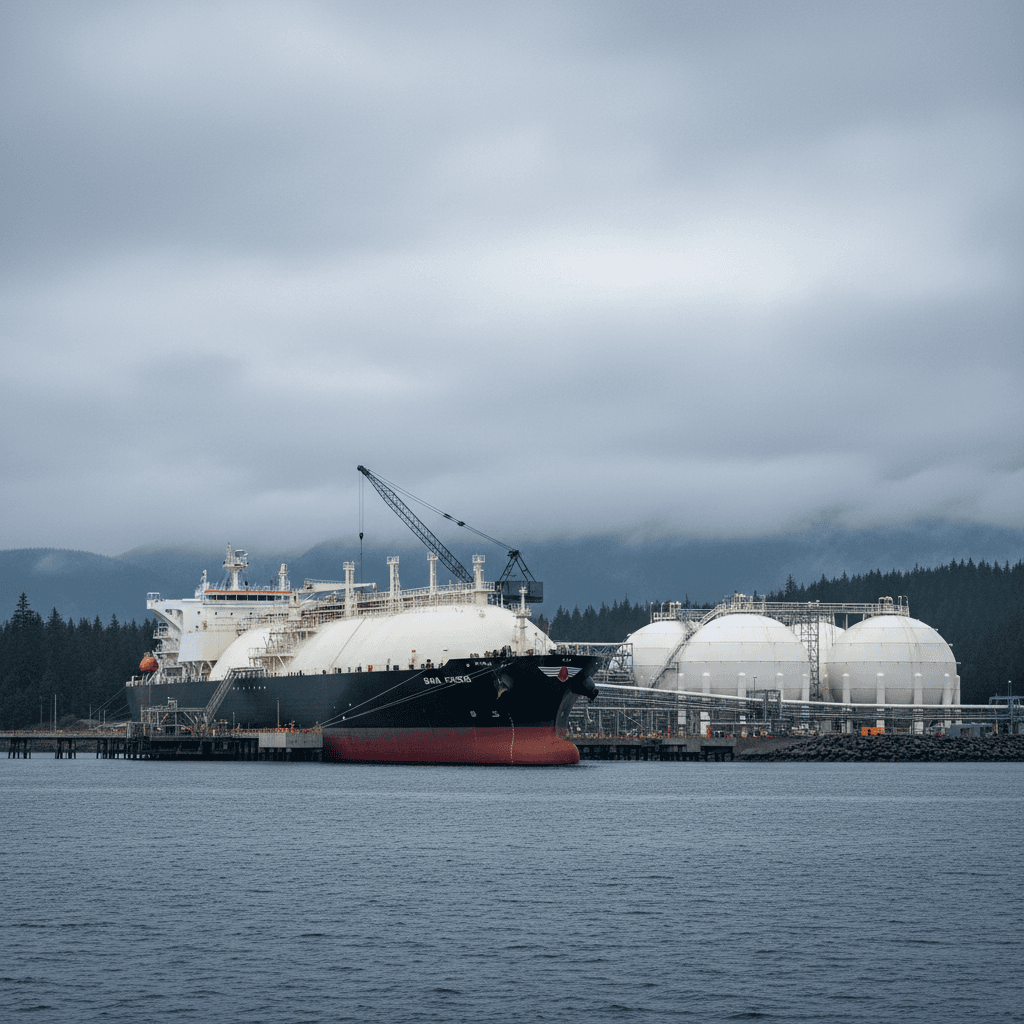
Energy exports, including oil, LNG and LPG, are another area where the government sees structural opportunity. The Iran war has destabilised Middle East supply, opening market space in Asia for Canadian energy. Finance Canada has emphasised that several new LNG facilities are coming online over the next two years, giving Canada incremental export capacity at a moment when Asian buyers are actively looking for diversification.
The CUSMA review
The scheduled July review of CUSMA looms as the most important formal venue for the current tariff dispute. The review mechanism built into the agreement, originally designed to encourage periodic updates, has become a flashpoint under the Trump administration, which has signalled interest in substantial renegotiation rather than routine review.
Canadian officials have been preparing for the review with unusual intensity. Trade Minister-level outreach, provincial engagement and business community consultation have been running in parallel since the beginning of the year. The government's objective is to enter the review with a unified national position and a prepared playbook for multiple scenarios.
Mexico, the third CUSMA party, is also navigating the Trump tariff regime. President Claudia Sheinbaum has taken a distinct rhetorical approach from Carney, but Canadian and Mexican negotiators are in regular contact, and there is recognition that some positions will be more effective when advanced jointly by both CUSMA partners.
Provincial dimensions
Tariffs have landed unevenly across the Canadian provinces. Ontario, with its concentration in auto and steel manufacturing, and Quebec, with its aluminum and aerospace sectors, are the most directly affected. Alberta and British Columbia, with energy exports largely protected under CUSMA exemptions, have been relatively insulated so far.
Provincial governments have adopted varied rhetorical positions. Alberta and Saskatchewan have emphasised diversification through new energy projects and international partnerships. Ontario has leaned on coordinated labour and industrial policy with Ottawa. Quebec has focused on sector-specific support for aluminum and aerospace, where high-value manufacturing jobs are concentrated.
The federal-provincial dynamic is complicated by the tariff issue's intersection with Indigenous consultation, infrastructure priorities and energy corridors. Carney has made first ministers' engagement a higher priority than his immediate predecessors, and the tariff response has become one of the most consequential files at those tables.
Markets and inflation
Financial markets have been volatile through the tariff cycle. The Toronto Stock Exchange has broadly tracked US markets, with additional sensitivity around Canadian-specific exposures. The Canadian dollar has traded in a wide band since the beginning of the year, reflecting the balance between tariff risks and strength in commodity export markets.
Inflation pressures have intensified as a result of both tariffs and the Iran war. The Bank of Canada's spring rate decisions have reflected the tension between softening domestic growth and imported price pressure. Canadian households have felt those pressures most visibly at the pump, where the Iran war has driven prices up before the federal excise tax suspension provided some relief.
Investor sentiment remains cautious. The combination of tariff uncertainty, energy volatility and geopolitical risk has weighed on business investment decisions. Ottawa's policy push is partly aimed at establishing enough certainty of direction that firms can plan confidently even against external noise.
Security and sovereignty
Carney's characterisation of the US relationship as a weakness also reaches into sovereignty and security dimensions. Canada recently announced it had met the NATO 2 per cent defence spending target and committed to a trajectory toward 5 per cent by 2035, a structural commitment that reflects both alliance dynamics and a recognition that reliance on US security guarantees is itself a variable to be managed.
Arctic sovereignty, coastal defence, cyber resilience and intelligence-sharing are all areas where the Canada-US relationship has historically been deeply integrated. Officials have emphasised that the government's policy is not to decouple from the US in these areas, but to build redundancy and optionality where single points of failure have previously been tolerated.
Public opinion in Canada has shifted markedly. Polling over the past year shows rising support for defence spending, for diversification of trade partners, and for assertive responses to US trade measures. That shift gives the government political space to make moves that would have been politically difficult a few years ago.
Labour markets and affected workers
Behind the high politics of tariffs, Canadian workers are absorbing the shock in concrete ways. Steel workers at operations in Hamilton, Regina and Sault Ste. Marie have seen shifts reduced or layoffs imposed as US demand for Canadian steel has contracted. Auto parts suppliers in Windsor, Oshawa and the Eastern Townships have flagged order cancellations and capacity reductions to Employment and Social Development Canada.
Employment Insurance claims in affected sectors have risen noticeably over the past two months, and the government has extended work-sharing provisions to give employers flexibility to reduce hours rather than terminate positions. Retraining programs targeting affected workers have been expanded, and provincial labour ministries in Ontario and Quebec have been coordinating with Ottawa on sector-specific supports.
Organised labour has pressed Ottawa to combine tariff response with a more expansive industrial policy that targets retained production in Canada rather than simply backstopping firms through temporary support. The Canadian Labour Congress and Unifor have both engaged publicly on that agenda, and their demands increasingly shape the political space within which the government is crafting its response.
What's next
The immediate priorities are the July CUSMA review and the implementation of the diversification agenda. On trade, expect continued high-level engagement with India, the European Union, Japan, Korea and ASEAN partners, with specific sectoral deals where feasible.
Domestically, the spring sitting of Parliament will see debate on tariff-related support measures, on the fuel excise tax suspension, and on elements of the government's economic resilience strategy. The fall economic update is expected to provide a consolidated fiscal picture of how the tariff response is tracking.
For Canadians, Carney's weakness framing is meant to signal that the government views the current moment as a pivot point rather than a passing disturbance. Whether the political and economic system can deliver the structural adjustments the prime minister is describing will be the defining question of his mandate.
Spotted an issue with this article?