Fréchette Sworn In as Quebec Premier as Bill 9 Expands Secularism Rules
Christine Fréchette was sworn in as Quebec's 33rd premier on April 15, becoming only the second woman in the province's history to hold the office. She inherits a Coalition Avenir Québec government that is pushing through Bill 9, a new law that broadens the reach of state secularism into daycares and publicly funded post-secondary institutions, and a diplomatic stand-off with Prime Minister Mark Carney over the use of the Charter of Rights notwithstanding clause.
Fréchette succeeds François Legault, who stepped aside after a caucus process that saw her emerge as the consensus choice. She takes office with an election looming this fall and a mandate that is both narrow and politically charged: deliver continuity on flagship CAQ files, including language and secularism, while repairing federal relations strained by years of Charter-clause disputes.
A quick handover, then straight into Bill 9
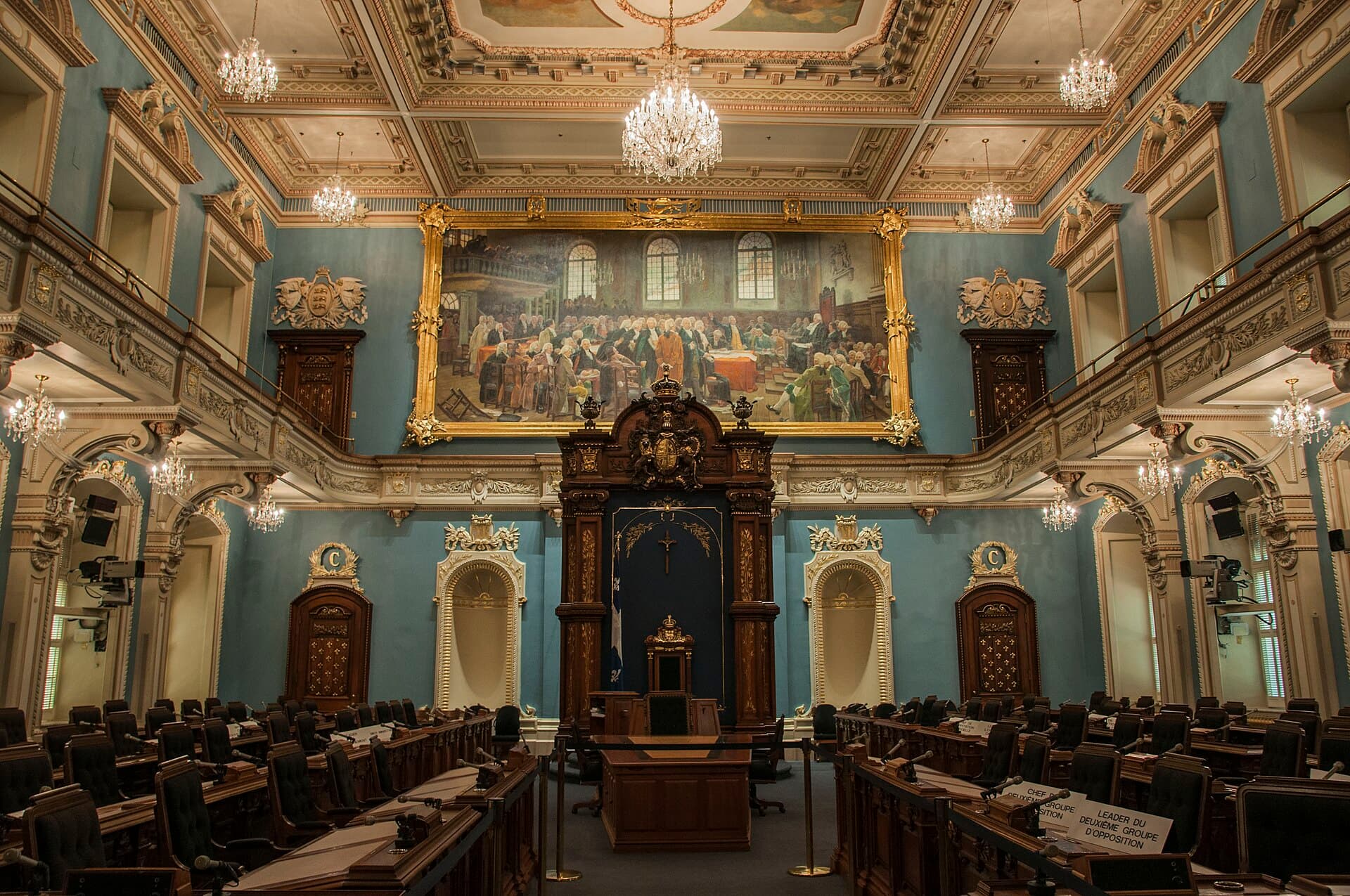
The new premier was sworn in by Lieutenant Governor Manon Jeannotte at a ceremony in the red room of the National Assembly. The cabinet shuffle that followed was deliberately modest, signalling continuity with Legault's policy direction. Fréchette retained most senior portfolios and left the secularism and language files in experienced hands.
Bill 9, which extends the existing prohibition on wearing religious symbols at work to daycare workers and certain post-secondary education staff, had been tabled before the leadership change. The new premier has explicitly endorsed it, backing away from earlier internal signals that she might water down portions of the law. According to statements from her office, she views Bill 9 as a logical extension of Bill 21, the 2019 secularism law that remains the CAQ's signature legislation.
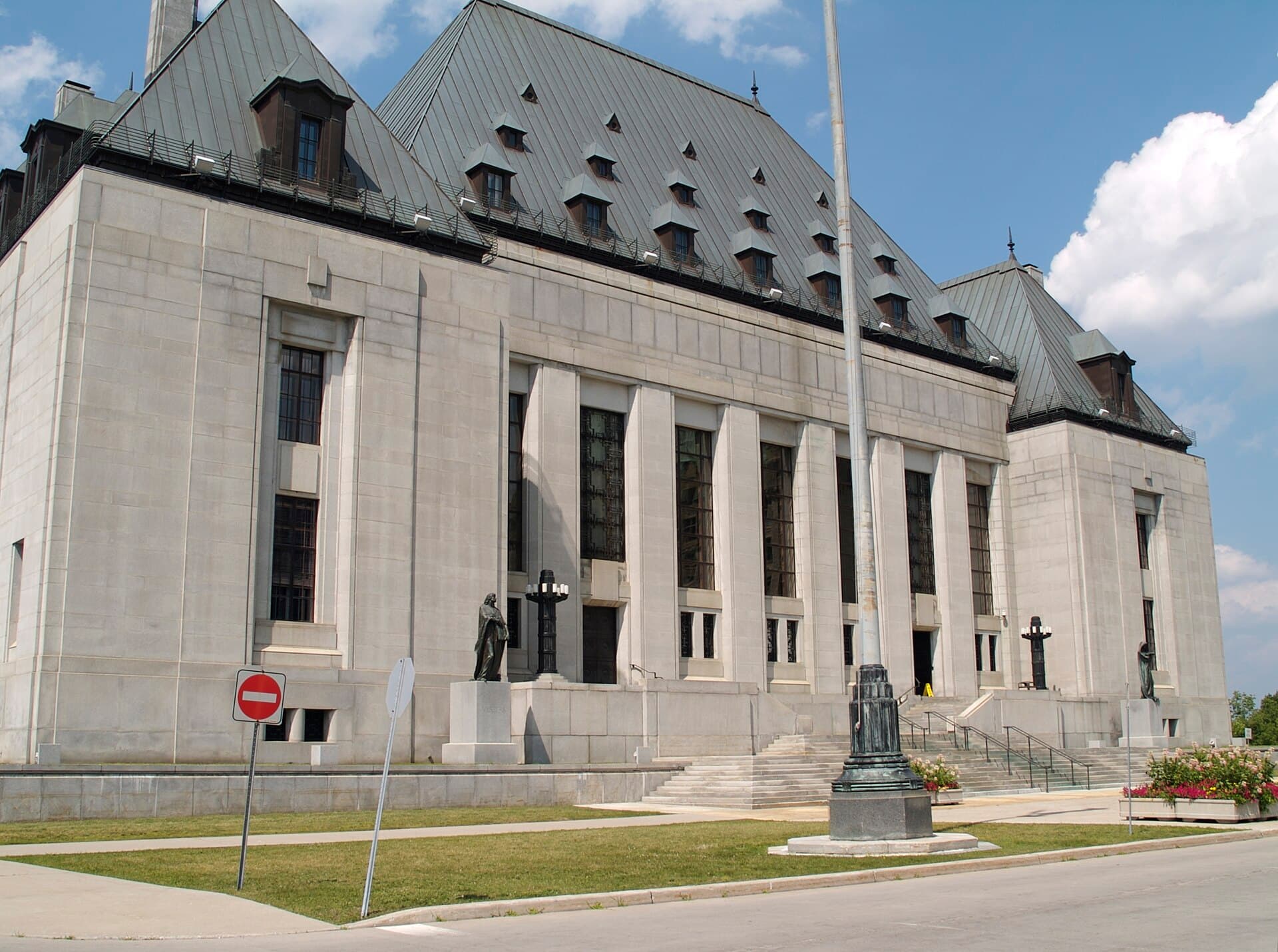
Opposition parties have accused the government of entrenching religious discrimination into new workplaces. Civil liberties organisations have signalled that court challenges will follow, likely layered onto existing litigation against Bill 21 that is still working through the Supreme Court of Canada's docket.
Who is Christine Fréchette
Fréchette, first elected in 2022, served as immigration minister in the Legault government and more recently as minister responsible for economic development. She comes from a policy background rather than a partisan one, having spent years leading the Chambre de commerce de l'Est de Montréal and working on labour market policy at the provincial and federal levels.
Colleagues describe her as methodical and technocratic, a contrast with Legault's more populist style. Her immigration portfolio gave her high visibility in the debate that led to the CAQ's decision to slash permanent immigration targets to 45,000 a year starting in 2026, a cut that she defended as necessary to preserve French-language capacity in public services.
Politically, she takes over a government that has slid in polls over the past year, with voters frustrated by a housing crunch, long wait lists in health care, and a sense that the post-pandemic recovery has been uneven across regions. Her most urgent task is to rebuild the CAQ's brand in time for an election that must be held by October 2026.
The Bill 9 debate
Bill 9 widens the categories of workers who cannot wear visible religious symbols on the job. The law explicitly captures staff at subsidised daycares and certain employees of publicly funded post-secondary institutions, a significant expansion from Bill 21's original reach into teachers, police officers and certain front-line public servants.
Supporters, including prominent CAQ backbenchers and some editorialists, frame the bill as a defence of a distinctive Quebec model of laicity. Critics argue it targets Muslim, Jewish and Sikh workers in particular, and that it conflicts with federal protections under the Canadian Charter of Rights and Freedoms.
As with Bill 21, the Quebec government plans to invoke the notwithstanding clause to shield the law from Charter challenges. That use of Section 33 has drawn sharp criticism from Carney, who described pre-emptive invocation of the clause as corrosive to the rights framework. Fréchette has signalled that she will defend Quebec's prerogative while pursuing a less confrontational tone than her predecessor.
The Carney-Fréchette meeting
The new premier travelled to Ottawa within 48 hours of being sworn in for a working meeting with the prime minister. Both sides described the encounter as cordial. Fréchette told reporters she was reassured by Carney's comments distinguishing between using the Charter and respecting provincial competence, and she described herself as relieved by the tone of the conversation.
Carney has taken a notably more measured approach to federal-provincial relations than some of his predecessors, emphasising coordination on economic files such as critical minerals, energy corridors and housing. Aides in both capitals said the leaders agreed to a quarterly cadence of bilateral meetings and to a joint working group on labour market integration of newcomers.
Even so, the structural tension over the notwithstanding clause remains. Carney has left open the possibility of federal intervention at the Supreme Court against pre-emptive uses of Section 33, a move that would be politically explosive in Quebec. Fréchette's office has stressed that any such step would immediately recalibrate the relationship.
Immigration and demographics
Fréchette's record on immigration gives her credibility on a file the CAQ has made central to its identity. The province has pledged to hold permanent immigration at 45,000 per year starting this year, a 45 per cent cut from recent peaks, citing pressures on housing, health care and French-language capacity.
That policy has drawn criticism from Quebec business groups, who argue that the shortfall will worsen labour scarcity in manufacturing, hospitality and construction. Employer associations are lobbying for faster processing of temporary foreign workers and for greater flexibility around regional economic immigration pilots.
Federal negotiators are watching closely. Ottawa's own plan sets overall Canadian immigration targets, and Quebec's share has traditionally been carved out by agreement. If the province's numbers fall faster than federal totals, Ottawa will need to calibrate allocations to other provinces to meet national labour-market objectives.
Economic inheritance
The new premier takes office as the Quebec economy absorbs a double shock from the United States trade war and the Iran-driven energy price surge. The province's manufacturing base, concentrated in aerospace, transportation and processed goods, is exposed to both direct tariffs and indirect cost pressures.
Finance Quebec projects the provincial deficit will widen this fiscal year as tariff-related support for firms and higher debt-service costs weigh on the books. Credit agencies have not moved on Quebec's rating, but analysts have flagged the combination of demographic slowdown, public-sector wage settlements and new immigration caps as headwinds to medium-term fiscal capacity.
Fréchette has signalled that the fall economic statement will accelerate infrastructure spending on housing and transit, using federal co-funding channels where possible. Her team is also reviewing the province's approach to energy pricing, with Hydro-Québec preparing a long-term supply plan that will shape industrial policy for a decade.
The opposition landscape
The opposition benches that Fréchette must contend with look different from the ones Legault faced through the last mandate. The Parti Québécois has rebuilt steadily under leader Paul St-Pierre Plamondon, anchoring itself on sovereignty, language and affordability files, and polling has placed the PQ consistently ahead of the CAQ over the last year. A formal referendum commitment remains the defining cleavage in Quebec politics, and Fréchette has signalled that her government will frame the election campaign around economic stewardship and federalism rather than constitutional negotiation.
The Quebec Liberal Party is approaching the campaign with new leadership and a strategy that prioritises Montreal, the Outaouais and anglophone and allophone communities that have historically anchored its support. The party's urban base has been restive over housing, transit and secularism, and Fréchette's defence of Bill 9 will give the Liberals a sharp wedge on civil liberties. Québec Solidaire, meanwhile, will press the CAQ from the left on housing, climate and immigration.
For Fréchette, the risk is that her technocratic style, while a strength in policy management, does not translate into the kind of campaign charisma that mobilises voters. Her staff is reportedly gaming out a communications strategy that leans into her economic credentials and her career outside party politics. The fall campaign, when it comes, will test whether that pitch is enough to hold a CAQ base that has been drifting toward the PQ.
What's next
Parliamentary debate on Bill 9 will dominate the legislative calendar through the spring. Committee hearings are expected to run into late May, with final adoption possible before the summer recess. Court challenges are near certain, meaning the law's practical implementation may unfold in parallel with litigation.
Polling over the coming months will tell observers whether Fréchette's technocratic style resonates with voters fatigued by a long CAQ tenure. The Parti Québécois leads in public opinion, with the Quebec Liberal Party rebuilding under a new leader and Québec Solidaire holding strength in Montreal.
The premier's first test of authority will come when the fall election is called. Until then, she will be judged on how she balances the CAQ's secularism instincts with a more collaborative posture toward Ottawa, and whether she can credibly present herself as an economic steward at a moment when Quebec households are feeling the pinch of both federal trade fights and international energy shocks.
Spotted an issue with this article?