Canadian Drivers Feel Hormuz Squeeze as Iran Tensions Keep Crude Above $110

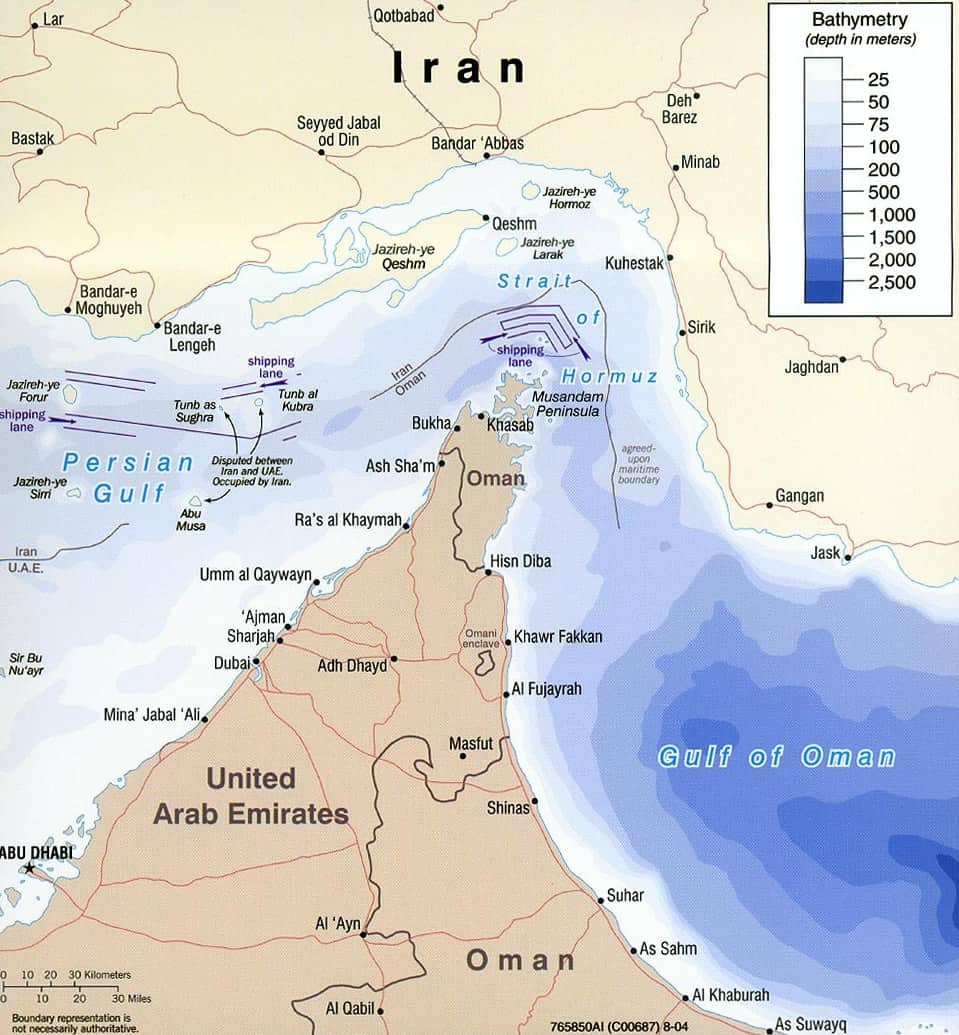
The Strait of Hormuz remains the most volatile chokepoint in the global energy system, and the implications are being felt at gas pumps and grocery stores across Canada. Oil markets have stayed elevated through the spring, with Brent crude trading near $114 a barrel after another flare-up in early May saw the United States and Iran trade fire and Tehran briefly threaten to close the waterway once again.
For Canadian consumers and policymakers, the disruption has been a slow-burning economic shock. Gasoline prices surged in March in the largest monthly increase ever recorded by Statistics Canada, and the elevated energy backdrop has driven inflation higher just as the Bank of Canada had been hoping to keep rates moving toward more accommodative territory.
The Carney government, like other G7 governments, has been navigating the crisis without a clear path to de-escalation. With the Iranian regime still rebuilding after coordinated US and Israeli strikes earlier this year, and with the broader Middle East configuration uncertain, the energy market is likely to remain on edge for some time.
What is happening in the Gulf
Shipping traffic through the Strait of Hormuz, which carries roughly 20 per cent of the world's oil trade, has been largely blocked or significantly reduced since late February when the United States and Israel launched air strikes on Iran. Iran briefly announced in mid-April that the strait was open to shipping during a ceasefire in Lebanon, but tensions have flared repeatedly since.
Recent confrontations have included exchanges of fire between US and Iranian forces near the strait, attacks on commercial vessels, and renewed strikes on energy infrastructure in several Gulf Cooperation Council countries. Maritime data has shown shipping traffic falling sharply at times, with daily transits dropping into single digits during peak crises compared with the more than 120 per day that prevailed before the war.
Brent crude has stayed in a range that markets considered unimaginable a year ago. Prices peaked above $120 during the most intense phase of the conflict and have since settled into the $110 to $115 range, roughly 40 per cent above pre-war levels. The supply shortfall from disrupted production has been estimated at roughly 14.5 million barrels per day during the worst stretches.
How Canada is exposed
Canada is a net exporter of oil, but Canadian consumers pay prices set by international markets. When global crude spikes, gasoline and diesel prices rise in Canada even though much of the domestic supply originates from Alberta's oil sands. The April 2026 reading from Statistics Canada showed gasoline prices up 5.9 per cent year over year in March, with monthly gains exceeding 21 per cent, a record for that data series.
The impact has been visible in consumer price index data, with inflation moving higher in recent months after a sustained period of moderation. The Bank of Canada has held its policy rate steady at 2.25 per cent through April, citing the energy shock as a key reason for caution about further easing. The next rate decision is scheduled for June 10.
Industrial sectors are also affected. Trucking companies, airlines, and heavy industry have all faced higher fuel and input costs, with some of those increases being passed on to consumers and others being absorbed in tighter margins. Energy-intensive sectors such as mining and steel production have flagged the squeeze in their quarterly results.
Producer-side dynamics
Canada's oil and gas industry has benefited financially from the price environment. Producers in the Western Canadian Sedimentary Basin have seen revenues climb significantly, and Alberta's provincial finances have benefited from higher royalty income. The Trans Mountain Pipeline expansion, which opened additional export capacity to the Pacific coast last year, has allowed more Canadian crude to reach markets in Asia and the US West Coast, partially offsetting some of the supply disruption from the Gulf.
Investment activity in Canadian energy has picked up modestly, though many companies have remained disciplined on spending given the volatility of the broader market. Public companies have prioritised shareholder returns over major new capital projects, a pattern that has held even as prices have climbed.
The Carney government has signalled support for the energy sector's contribution to Canadian fiscal capacity, while also reinforcing its broader push for emissions reductions through the National Electricity Strategy and the previously announced oil and gas emissions cap framework. The tension between these priorities is one of the defining domestic policy debates of the moment.
Diplomatic response
Canada has continued to coordinate with G7 partners on diplomatic and sanctions responses to the Iranian regime. Global Affairs Canada has emphasised support for maritime freedom of navigation and condemned attacks on commercial shipping, while maintaining a posture that prioritises de-escalation.
The Royal Canadian Navy has not been directly deployed to the Gulf in significant numbers during the current crisis, with Canadian assets remaining focused on Atlantic, Pacific and Arctic missions. However, Canada continues to participate in multinational maritime initiatives in the broader Indo-Pacific region that have indirect relevance to Gulf security.
The Carney government has also been engaged in discussions with allies about contingency planning for further escalation, including coordinated releases from strategic petroleum reserves if a renewed major supply disruption occurs. Canada itself does not maintain a strategic petroleum reserve on the scale of the United States, but does participate in International Energy Agency arrangements that could be activated in coordinated response.
What it means for Canadians
For drivers, the immediate impact is higher prices at the pump that show no clear sign of reversing in the near term. For households, energy costs feed through into broader expenses, including heating, food and transportation costs. Lower-income Canadians and rural residents who depend heavily on personal vehicles are disproportionately affected.
For businesses, the elevated price environment is forcing strategic adjustments. Logistics companies are investing in fuel efficiency, manufacturers are reviewing supply chains, and retailers are managing margin pressure. Some sectors, particularly those tied to Canadian energy production, are benefiting financially, but the broader effect on the economy is mixed.
For monetary policy, the persistence of higher energy prices complicates the Bank of Canada's mandate. While core inflation has remained more contained, the headline reading has risen, and the central bank has signalled that it will move cautiously until it has greater confidence that inflation is sustainably returning to the 2 per cent target.
Geopolitical outlook
The situation in Iran remains unsettled following the loss of Supreme Leader Ali Khamenei in the initial coordinated strikes earlier this year. New leadership in Tehran has not produced a stable de-escalation, and various factions within the regime have pursued different strategies, including continued attacks on shipping and energy infrastructure.
US President Donald Trump has continued to warn of further military action if Iran does not agree to a comprehensive peace deal, while also signalling willingness to negotiate under certain conditions. The path forward depends heavily on whether the regime in Tehran can stabilise its internal politics enough to enter sustained negotiations.
For Canada, the geopolitical posture is to remain closely coordinated with allies while protecting Canadian commercial interests and supporting maritime security in international waters. Canadian diplomatic engagement with regional partners, including Saudi Arabia, the United Arab Emirates and Qatar, has continued throughout the crisis.
Impact on the Canadian diaspora
Canada is home to one of the largest Iranian diaspora populations in the world, with major communities in Toronto, Vancouver and Montreal. The conflict has had significant emotional and practical impacts on these communities, including concerns about family members remaining in Iran, restrictions on travel and remittances, and broader questions about Canadian foreign policy.
Several Iranian Canadian advocacy organisations have called for stronger Canadian sanctions on the Islamic Revolutionary Guard Corps and for additional support for Iranian dissidents. Others have emphasised the importance of humanitarian engagement and have raised concerns about the impact of broad economic sanctions on ordinary Iranians.
The Canadian government has continued to maintain a position that combines sanctions on regime figures and entities with limited diplomatic engagement, while supporting consular assistance for Canadians affected by the conflict. The complexity of the situation makes any single policy approach difficult to optimise for the multiple priorities involved.
Energy security as a long-term concern
The crisis has reinforced the importance of energy security as a Canadian policy priority. Even though Canada is broadly self-sufficient in oil and gas production, the country's exposure to international price movements and to supply chain disruptions makes energy security a meaningful concern. The Trans Mountain Pipeline expansion, completed in 2024, has provided important additional flexibility, but eastern Canadian provinces continue to rely significantly on imported crude.
The federal government's broader infrastructure strategy includes consideration of additional pipeline capacity, refining capacity and strategic reserves. The Bill C-5 fast-tracking framework could potentially apply to energy security infrastructure, although no specific projects have been announced under that authority.
Critical minerals, electricity transmission and renewable energy capacity are all part of the broader energy security picture. The Carney government's emphasis on doubling the electricity grid by 2050 is partly framed in terms of reducing fossil fuel exposure, which would have long-term implications for Canadian vulnerability to global oil shocks.
What's next
The Bank of Canada's June 10 rate decision will be the next major domestic data point. Most market economists expect another hold, with the path for the rest of the year heavily dependent on how energy prices evolve. The federal government is expected to release additional information about its energy security planning in coming weeks.
Internationally, the focus remains on whether any meaningful de-escalation can be achieved in the Strait of Hormuz, and whether oil prices can begin a sustained move back toward more normal ranges. Most forecasters expect elevated prices to persist through the summer, with significant downside potential if a comprehensive peace agreement is reached and significant upside risk if the conflict expands.
For Canadian households and businesses, the message is that the energy shock is likely to remain a factor in the economic picture for some time. Adjustments in spending, investment and policy that account for sustained higher fuel prices are becoming the new operating environment.
Spotted an issue with this article?
Have something to say about this story?
Write a letter to the editor