Canadian Women Wrap FIFA Series in Brazil Eyeing 2027 World Cup
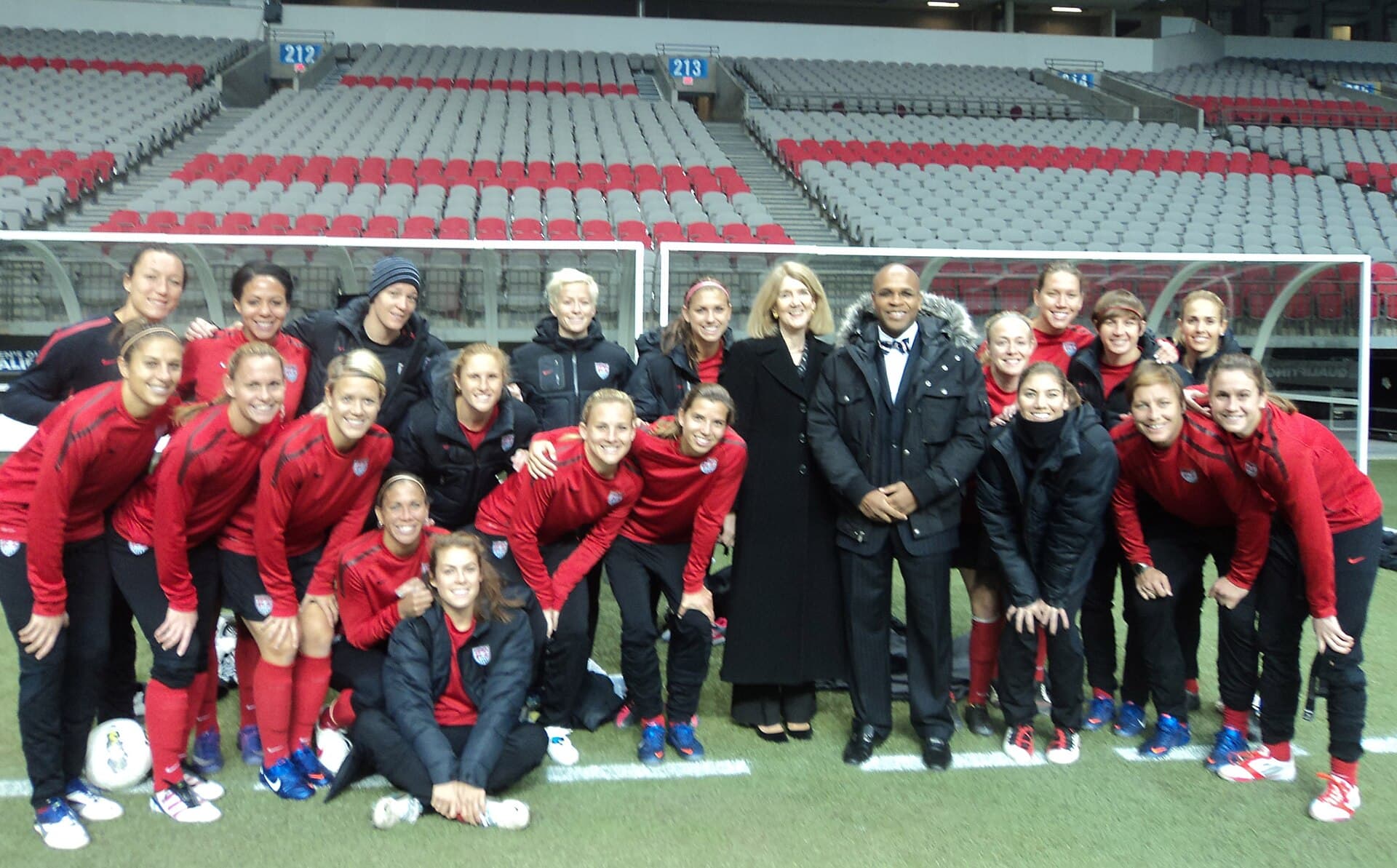
Canada's women's national soccer team wrapped up its April international window in Cuiabá, Brazil this week, closing out the FIFA Series 2026 tournament that also featured the hosts Brazil, Korea Republic and Zambia. With the 2027 FIFA Women's World Cup set to be hosted by Brazil, Canadian head coach Casey Stoney used the window as a purposeful testing ground for tactics, player pool combinations and performance in humid South American conditions.
The tournament followed a broader Canada Soccer strategy of using international windows as development opportunities rather than pursuit of headline results. A 24-player roster selected by Stoney's staff travelled to Cuiabá, blending established senior players with emerging talent from the NWSL, European clubs and the Northern Super League.
Why Brazil matters
The 2027 FIFA Women's World Cup will be hosted by Brazil, marking the first time the senior women's tournament is staged in South America. Cuiabá, the host city for this FIFA Series window, sits in a humid tropical climate zone that will be representative of conditions across several 2027 tournament venues.
For Canadian players, training and competing in that environment early is a material advantage. Hydration protocols, rotation planning, pace management and recovery routines all need to be tuned for tropical conditions, and the only way to learn those lessons is through actual match minutes.
Canada Soccer has indicated that further windows in South America are likely between now and the 2027 tournament. The federation's investment in acclimatisation experiences is a direct response to lessons from past major tournaments in which environmental factors have shaped late-stage performance.
The roster picture
Stoney's 24-player roster for the window blended continuity with experimentation. Several senior players who have been central to the program through the past two World Cup cycles were named, while new call-ups from the Northern Super League and North American collegiate pipelines continue to broaden the pool.
Program continuity remains strong through players such as Jessie Fleming, Ashley Lawrence and Kadeisha Buchanan, who have anchored Canada's midfield, fullback and central defence positions through the last decade. At the same time, emerging players in the forward ranks and in central midfield give the coaching staff more options than recent rosters have featured.
The Northern Super League, launched in 2025 as Canada's first top-flight women's professional league, is producing a new development channel. Players from NSL clubs are increasingly candidates for national team call-ups, strengthening the domestic pipeline that had relied heavily on NWSL, Champions League and overseas experience.
Rebuilding after a long cycle
The Canadian program is in a rebuild phase after a difficult run that included an early exit at the 2023 FIFA Women's World Cup in Australia and New Zealand and a post-tournament period marked by administrative and funding tension between players and the federation. Stoney took over the head coach role with a mandate to reset both performance and culture.
Public statements from the coaching staff have emphasised that the path to 2027 runs through development windows like this one rather than through maximising short-term results in friendly matches. Canada Soccer has aligned its scheduling to support that philosophy, placing priority on opposition profile and logistical conditions rather than on immediate rankings points.
Veteran players have publicly supported that approach while also holding the coaching staff accountable for a visible tactical identity. Transparency between the playing group and the federation has improved markedly over the past 18 months, although the underlying structural issues that drove earlier labour action remain under active negotiation.
Tactical evolution
On the field, Stoney's coaching has emphasised possession-based build-out, flexible formation structures, and high-press triggers calibrated to specific opponents. The FIFA Series window gave the staff a chance to test those principles against opposition with different profiles: Brazil's attacking speed, Korea Republic's structured defence, and Zambia's tactical discipline.
One central tactical question remains the shape of Canada's attacking third. With Christine Sinclair retired from international play, the program has been searching for a reliable primary scorer. The window produced useful minutes for several candidates in that role, although no single player has yet consolidated ownership of the position.
Midfield distribution has been the strongest through-line of Canada's tactical work. Fleming's role as an advanced midfield connector remains a defining feature of the team's build-out, and the staff has experimented with double pivots behind her to free Fleming for higher-value touches in the final third.
The NSL connection
The Northern Super League's first full season continues in parallel with the international window. Clubs in Toronto, Ottawa, Montreal, Halifax, Calgary and Vancouver are building operations and fan bases, and the early attendance and broadcast numbers have exceeded initial projections.
The NSL is the most significant structural addition to Canadian women's football since the senior national team won Olympic gold in 2020. A domestic top flight gives young players a professional development pathway that does not require emigration, and it creates a commercial ecosystem that can support the broader national program.
For Canada Soccer, the symbiosis between the NSL and the national team is explicit. League match schedules are being coordinated with international windows to reduce player load conflicts, and several NSL clubs have formal development relationships with Canada Soccer's performance departments.
World Cup countdown
From this April window, the qualifying window for the 2027 FIFA Women's World Cup remains ahead, with CONCACAF competition scheduled to intensify over the next year. Canada will need to navigate regional qualifying while continuing to prepare for the tournament proper, and balancing those twin demands will shape roster decisions through 2026 and into 2027.
Rankings and seeding at the 2027 tournament will partly depend on results in upcoming windows. FIFA's ranking algorithm rewards higher-profile opposition, and Canada Soccer's scheduling has been tuned to extract maximum ranking value where possible without compromising the development agenda.
Broadcast partners in Canada have committed to full live coverage of the national team's preparation and of the NSL. TSN broadcasts through the FIFA Series window as part of a broader partnership that will carry through to the World Cup itself, giving Canadian viewers sustained access to the program's build-up.
The men's side of the program
On the men's side, the Canadian men's national team is preparing for a June window that will include friendlies in Edmonton against Uzbekistan and in Montreal against the Republic of Ireland. Those matches sit within the broader preparation for Canada's co-hosting of the men's FIFA World Cup in 2026, with Toronto and Vancouver as Canadian host cities.
Unlike the women's team, the men's program is operating on a compressed timeline to the tournament it is co-hosting. Coach Jesse Marsch has publicly articulated roster priorities and a tactical shape that he intends to carry into the summer, and the June window is expected to sharpen both personnel choices and system execution.
The co-hosting arrangement places unprecedented logistical pressure on Canada Soccer, on host city governments in Toronto and Vancouver, and on federal agencies responsible for entry, security and transit. Preparation on the men's side, while distinct from the women's program, sits alongside it in a defining year for Canadian soccer.
Canada's broader soccer moment
The Canadian women's program sits inside a soccer ecosystem that is experiencing its most ambitious moment in decades. Canada will co-host the 2026 FIFA World Cup on the men's side with the United States and Mexico, with Toronto and Vancouver among the 16 host cities. The operational, political and commercial demands of that tournament are pushing Canadian soccer infrastructure to a level of visibility and investment that it has never previously sustained.
That environment directly benefits the women's program. New training facilities, expanded broadcast contracts and a deepening youth participation pipeline all produce spillover effects that reach the women's national team and the Northern Super League. The overlap between men's and women's program calendars is carefully managed by Canada Soccer's performance staff, and facilities investments typically serve both senior teams.
Youth development remains the foundation of any sustained program. The federal government has announced targeted investments in community youth soccer experiences as part of the broader World Cup 2026 preparation, and provincial associations across Canada are expanding participation programs. The talent pipeline feeding the Canadian senior teams over the next decade will be shaped by how effectively those investments reach under-served communities and emerging regional markets.
What's next
For the women's program, the next training camp is expected later in the spring, with more friendlies and potential FIFA window competition scheduled through the summer and fall. The coaching staff will continue to assess player performance and integration, balancing veteran stability with opportunities for emerging players.
The NSL regular season runs through the summer and into the autumn, giving the coaching staff a steady diet of high-quality domestic footage to evaluate. Clubs will be watching their national team call-ups carefully as both recognition of player development and as a factor in roster management.
Looking ahead to 2027, the Canadian women's program aims to arrive in Brazil with the tactical identity, physical preparation and collective culture needed to compete deep into the tournament. The April FIFA Series window in Cuiabá, modest in raw result terms, was a meaningful early step in that journey.
Spotted an issue with this article?