Moody's cuts New Brunswick outlook to negative, cites deficits and U.S. trade risk
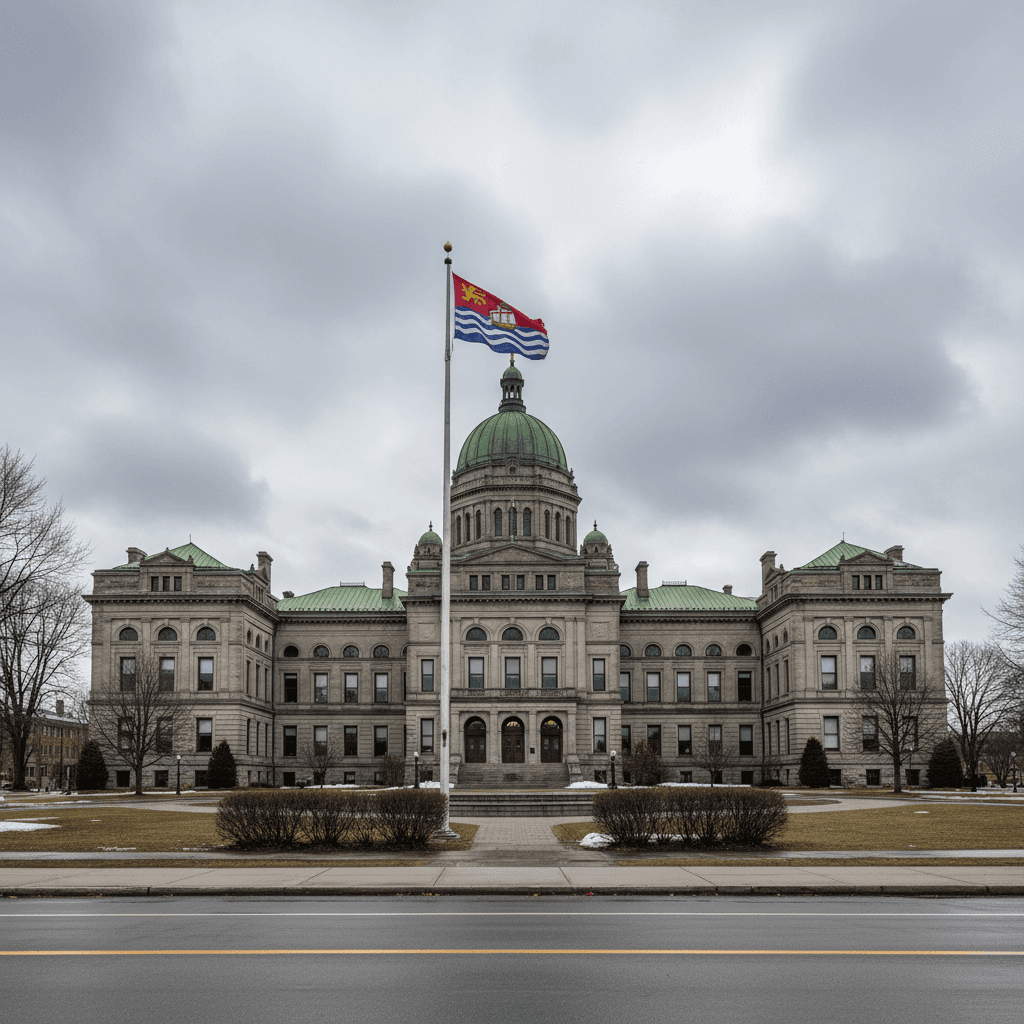
Moody's Ratings moved New Brunswick's fiscal outlook from stable to negative on April 10, citing the province's widening deficit trajectory and revenue risks tied to U.S. trade tensions. The agency also lowered New Brunswick's baseline credit assessment from AA2 to AA3, though the province's long-term debt rating remains at Aa1.
The downgrade in outlook is a warning flag for Atlantic Canada's largest provincial economy, signalling that borrowing costs could rise if the government's finances do not stabilize and that investor sentiment toward the region is softening.
What Moody's flagged
The agency pointed to New Brunswick's projected $1.39-billion deficit for 2026-27, with comparable shortfalls forecast for the following two fiscal years. Global News reported that analysts singled out exposure to U.S. tariffs on forestry, seafood and manufactured goods as a swing factor that could deepen revenue pressure.
- Outlook: stable to negative
- Baseline credit assessment: AA2 to AA3
- Long-term debt rating: unchanged at Aa1
- Projected 2026-27 deficit: $1.39 billion
Moody's also flagged NB Power's financial health as a concern, pointing to reliability issues at the Point Lepreau nuclear generating station and the rate increases required to stabilize the utility's balance sheet.
How the province is responding
Premier Susan Holt called the preservation of the Aa1 long-term rating "encouraging" and said the government remains committed to returning to balance over the medium term, according to CBC News coverage of the announcement. Opposition critics countered that the outlook change is the first tangible market verdict on the Holt government's spending plans.
Finance officials argue that U.S. trade policy is largely outside the province's control and that the baseline assessment downgrade reflects that external risk rather than a domestic policy failure. Bond markets did not show a large immediate reaction, but investors typically price in negative outlooks gradually as they watch for follow-through fiscal updates.
NB Power remains the wild card
New Brunswick's Crown utility has been a persistent drag on provincial finances. Reliability issues at Point Lepreau have forced the utility to buy more replacement power, and regulated rate hikes approved in recent years have not fully closed the gap. CTV Atlantic reported that Moody's singled out the utility's trajectory as a factor that could either stabilize the outlook or trigger a further downgrade.
Any provincial backstop for NB Power debt would land directly on the province's books, which is why rating agencies track utility results alongside the core budget.
Regional implications
Three of four Atlantic provinces are now running structural deficits, and PEI this week tabled a record $410-million shortfall. Investors typically compare the region's fiscal frames as a bloc, meaning pressure on one province can nudge spreads on the others. The Holt government's spring update, expected in May, will be the next formal test of whether New Brunswick can hold the line Moody's drew this week.
What's next
Moody's typically resolves a negative outlook within 12 to 24 months, either by confirming stability or by moving on the underlying rating. That window puts pressure on the province's 2027 budget to show a credible glide path to balance, with NB Power's reliability and U.S. tariff developments acting as swing variables. Further coverage is available via The Canadian Wire's politics desk.