Ottawa Moves to Ban Crypto ATMs in Financial Crime Crackdown
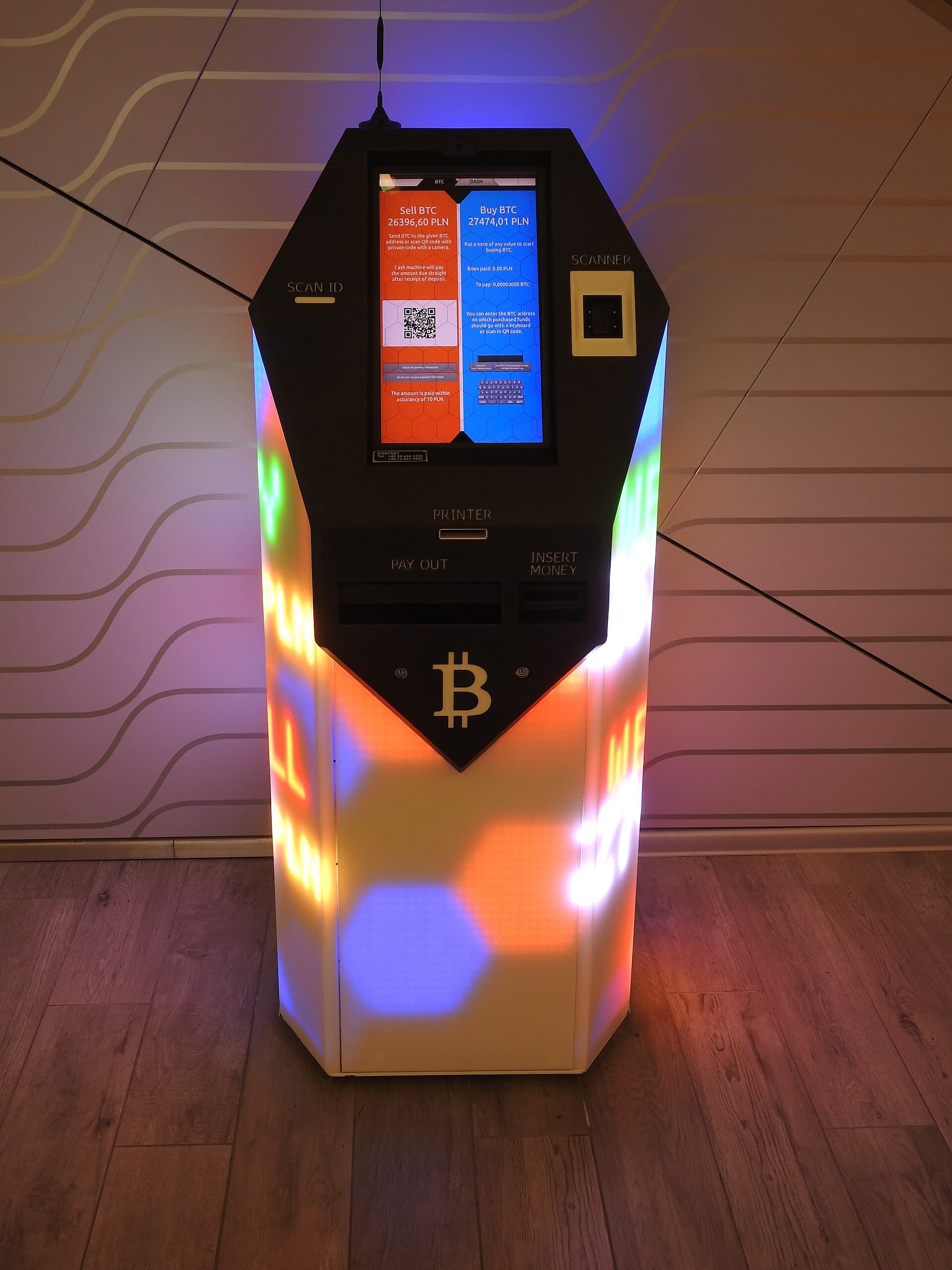
The federal government plans to ban cryptocurrency automated teller machines from operating in Canada as part of a wider package of financial crime measures unveiled in this week's spring economic update. Ottawa described the decision as overdue, citing internal intelligence reports that flagged the kiosks as a primary vehicle for scammers extracting money from elderly Canadians and for organised crime groups laundering cash proceeds.
What was announced
Tuesday's spring economic update outlined the government's intention to introduce legislation banning cryptocurrency ATMs nationally. Officials at the Department of Finance briefing journalists on the measure said legislation will be tabled in the coming weeks, with a phase-out period to give existing operators time to wind down their businesses and refund customer balances where applicable.
Roughly 3,800 cryptocurrency ATMs operate in Canada today, the highest number per capita of any country in the world. The kiosks allow customers to insert cash and receive an equivalent amount of cryptocurrency, typically Bitcoin or stablecoins, transferred to a digital wallet. Many operate in convenience stores, gas stations and shopping centres in urban and suburban communities.
The government framed the ban as a closure of a regulatory loophole rather than a broader move against the cryptocurrency sector. Canadians will retain access to regulated digital asset exchanges that conduct identity verification and ongoing monitoring, and to brick-and-mortar money service businesses where staff can scrutinise transactions.
The fraud picture
The federal government cited findings from FINTRAC, the country's financial intelligence agency, that flagged crypto ATMs as a leading method for scammers to convert victim payments into untraceable assets. Common schemes include phone calls impersonating tax officials, romance scams that build trust over weeks before requesting money, and tech support frauds where victims are pressured to convert savings into cryptocurrency to escape supposedly imminent threats.
According to data referenced by federal officials, reported losses to crypto-related scams in Canada have climbed sharply over the past five years, with seniors disproportionately affected. The Canadian Anti-Fraud Centre has repeatedly warned that the irreversible nature of cryptocurrency transactions makes recovery of stolen funds extremely rare.
Police forces in Ontario, Quebec and British Columbia have spent the past year publicly urging the government to act, citing investigations stalled by the difficulty of tracing transactions through unhosted wallets and offshore exchanges.
The financial crime package
The crypto ATM ban is one piece of a broader anti-money-laundering and anti-fraud package in the spring update. Other measures include expanded powers for FINTRAC to compel records from reporting entities, tighter scrutiny of large cash transactions in real estate, new sanctions tools targeting shell companies and beneficial ownership transparency requirements aligned with international standards.
The government also confirmed funding for an expanded financial crime unit at the RCMP and additional resources for the Public Prosecution Service of Canada to pursue complex cross-border cases. The package was previewed earlier in the year by Public Safety Minister David McGuinty and is intended in part to address criticism from the Financial Action Task Force, the global body that periodically reviews Canada's compliance with anti-money-laundering standards.
Industry reaction
The Canadian crypto ATM industry, represented in part by the Canadian Web3 Council, said it accepts the need to act on fraud but argued that an outright ban goes further than necessary. Industry advocates pointed to enhanced know-your-customer rules, transaction caps and machine-level identity verification systems they say could address the fraud risk while preserving access for users who do not have traditional banking relationships.
Operators warned that thousands of small businesses host the machines and earn fees from each transaction. The government has offered no formal compensation for hosts or operators losing revenue, although the legislation is expected to provide a wind-down window of several months.
Bitcoin advocates argued that the ban will push transactions into less visible channels, including peer-to-peer trades arranged via messaging apps, where consumer protections are weaker than at supervised kiosks. Banking sector representatives, by contrast, broadly welcomed the move, noting that the financial system absorbs significant compliance and dispute costs from frauds originating at crypto ATMs.
What it means for Canadians
For most Canadians, the practical effect of the ban will be limited. The kiosks have been a niche product even at their peak, with most cryptocurrency activity in the country flowing through online exchanges. Active digital asset users will continue to access regulated platforms, and Canadians will retain the ability to buy and sell cryptocurrency as before.
For potential victims, however, the ban removes one of the most common conduits used by scammers to move funds quickly. Police forces argue the in-person nature of crypto ATM use means many fraud attempts could be interrupted if the machines are no longer available, since scams typically rely on urgency and pressure to keep victims from reflecting or seeking help.
Provincial responses
The provinces have welcomed the federal move, with several attorneys general indicating they will work with Ottawa on the implementation framework. British Columbia, where the Civil Forfeiture Office has handled an increasing number of crypto-related cases, was among the most vocal supporters of an outright ban.
Quebec's financial sector regulator, the Autorité des marchés financiers, has been ahead of the federal government on this file, having already imposed strict rules on crypto ATM operators. Ontario's regulator has taken a more permissive approach but is expected to align with the federal legislation once enacted.
Alberta's response has been more reserved, reflecting the province's generally lighter touch on financial regulation, but officials have not signalled any intent to challenge the federal ban.
Reaction from opposition parties
The NDP welcomed the ban and pressed the government to go further by tightening rules on online exchanges and hosted wallets. Conservatives broadly supported the measure, although some MPs raised concerns about overreach and the definition of regulated digital asset products under the legislation. The Bloc Québécois said the move aligns with longstanding provincial concerns about consumer protection in the cryptocurrency space.
International context
Canada's move places it among a small group of countries that have moved to restrict cryptocurrency ATMs at the national level, although the specific approaches vary. The United Kingdom's Financial Conduct Authority has used licensing rules to effectively prevent unregistered crypto ATMs from operating, while several European Union member states have imposed strict supervision requirements that have squeezed the kiosk business model. The United States has taken a more decentralised approach, with state-level regulators leading enforcement actions rather than federal legislation.
The federal Financial Action Task Force, of which Canada is an active member, has been pressing member states to tighten oversight of all virtual asset service providers, including ATM operators. Canada's most recent FATF mutual evaluation flagged the kiosks as an area where additional supervision was needed, and the impending ban will respond to that recommendation more aggressively than many had expected.
Crypto industry advocates noted that the ban does not address other widely flagged risks in the digital asset space, including offshore exchanges that operate without Canadian registration and decentralised finance platforms that operate outside the regulated perimeter altogether. Federal officials have signalled that those areas remain under active review and may be subject to future regulatory action.
What's next
Legislation is expected in the coming weeks, with provisions covering the phase-out timeline, refund obligations and enforcement powers. The legislation will likely be combined with the larger financial crime package to expedite passage. Operators will have a defined window in which to refund customer balances and dismantle their machines.
Beyond the ban, federal officials said they will publish guidance for Canadians who are presently being pressured by scammers to send money via crypto ATMs, urging anyone in such a situation to stop and contact their bank, the police or the Canadian Anti-Fraud Centre. Awareness campaigns are expected to roll out in tandem with the legislative process.
Provincial consumer protection ministries are also expected to play roles in coordinating refunds and informing the public about transitional arrangements. Pharmacy and convenience store associations whose members have hosted the machines have been in discussions with the federal government about how the wind-down period will be managed. Several large host chains have already begun unwinding contracts with operators in anticipation of the ban becoming law.
For Canada's broader financial crime regime, the ban marks a clear policy choice: if a financial product is being used overwhelmingly for fraud, the government is prepared to remove it from the market rather than continue layering on additional rules. Whether that posture extends to other areas where consumer protection and financial innovation collide will be tested over the months ahead.
The senior victim profile
The most poignant dimension of the cryptocurrency ATM debate has been the disproportionate impact on senior Canadians who fall victim to fraud schemes. Police forces across the country have publicised heart-breaking cases of retirees pressured into draining their savings at kiosks under threats from scammers impersonating tax officials, family members in distress or law enforcement agencies.
Seniors' advocacy groups have welcomed the ban but stressed the importance of broader public education about scam tactics, the role of family conversations in early detection and the need for community-level support for elderly Canadians who may not have ready access to digital financial literacy resources. The Canadian Anti-Fraud Centre has produced materials specifically designed for seniors, although uptake has been uneven.
The ban also raises questions about how communities will support potential victims when their preferred channel is closed. Scammers will likely shift tactics, and law enforcement and consumer protection agencies will need to remain vigilant as the threat landscape evolves.
The financial system response
Canada's major banks have developed enhanced fraud detection systems aimed at identifying patterns of unusual activity in customer accounts that might indicate scam victimisation. The interaction between bank-level monitoring and the absence of crypto ATMs as an outlet for scam proceeds may produce a meaningful reduction in successful frauds, although the financial system cannot eliminate the threat on its own.
Industry working groups have been collaborating with police forces, FINTRAC and consumer protection agencies to share intelligence and best practices. The crypto ATM ban will be one variable in a broader fraud prevention strategy that includes account monitoring, customer education and regulatory innovation.
Spotted an issue with this article?
Have something to say about this story?
Write a letter to the editor